
How Digital Resistance Works: Electromagnetic vs. Physical Plates
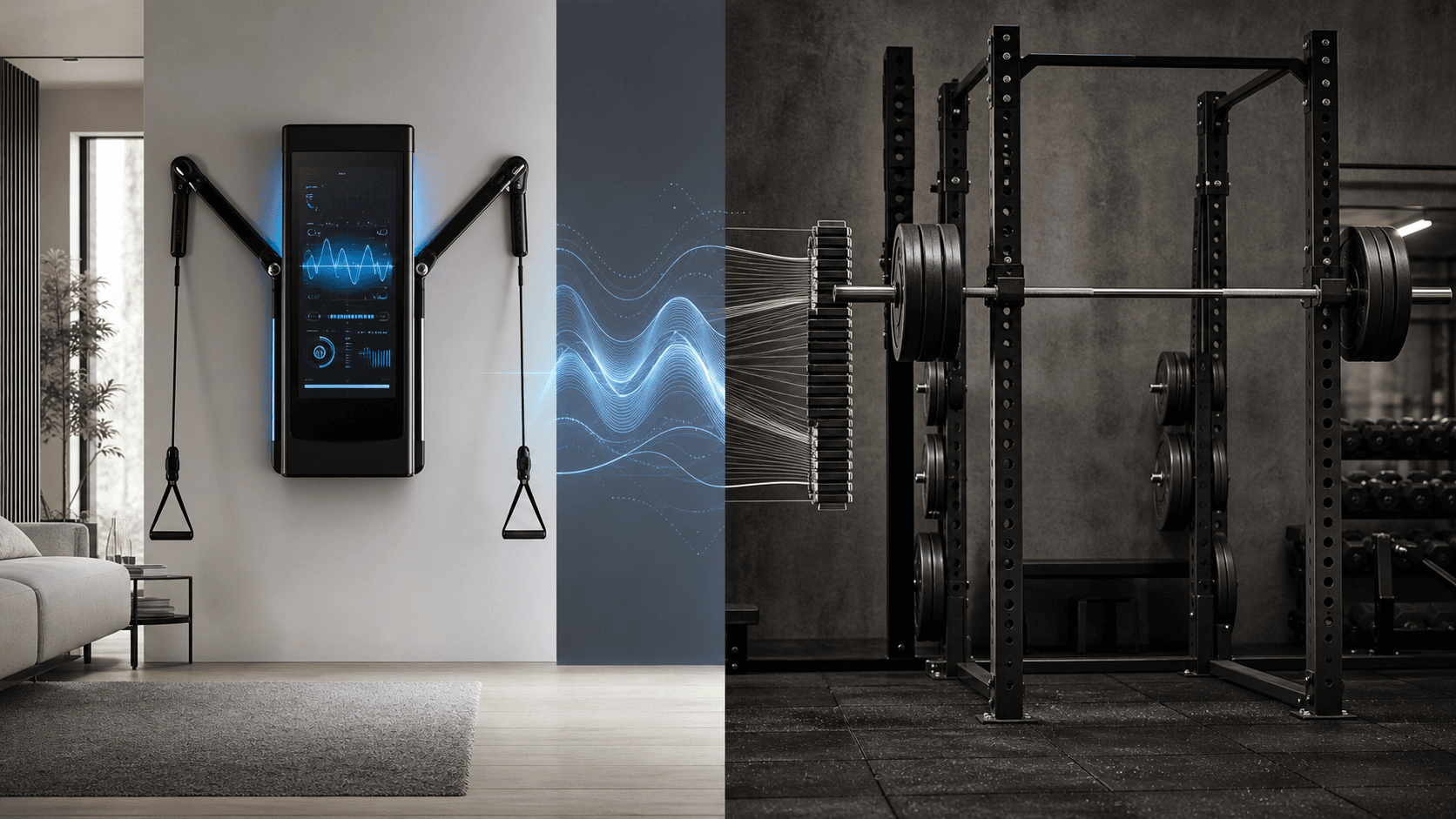
Before comparing training outcomes, it helps to understand the fundamental difference in how resistance is generated. Free weights rely on gravity acting on a fixed mass — a 45-pound plate is always 45 pounds, regardless of where you are in the range of motion. Digital resistance systems like Tonal and Speediance replace physical plates with electromagnetic or motorized mechanisms that create resistance electronically.
Tonal 2 uses electromagnetic resistance delivered through two articulating arms. The system generates up to 250 lbs of total resistance (125 lbs per arm) by varying the electrical current applied to the magnetic field. Speediance uses a similar electromagnetic approach, with a maximum of 220 lbs (110 lbs per arm). In both cases, the resistance is controlled by software, not by the physical weight of iron or steel.
This distinction matters for training because electromagnetic resistance has no momentum. When you lift a barbell, the initial push off the chest or out of the bottom of a squat benefits from stored elastic energy in the plates and bar. Digital resistance has zero inertia — the resistance is present at full force from the very first millimeter of movement. That changes how the muscles experience the load.

Comments
Join the discussion with an anonymous comment.