
If you have downloaded a polished workout app, followed it for a week or two, then quietly stopped opening it, you are in very crowded company. One cited fitness-app study reported that 74% of users stopped within 10 sessions, and 26% used the app only once; the figure comes from 2017, so it should not be treated as a fresh real-time measurement, but it still names the problem clearly enough: many people do not slowly outgrow fitness apps — they bounce early. Women also make up more than 60% of fitness app users in several studies, which means this is not a niche failure of willpower. It is a product-fit problem landing on a very large group of users. [1]
That matters because most conversations about fitness apps for women still start in the wrong place. They ask which app has the prettiest interface, the liveliest trainer, the biggest workout library, or the most motivating reminders. Those things can make the first session easier to start. They do not necessarily make the tenth, twentieth, or fiftieth session more useful.
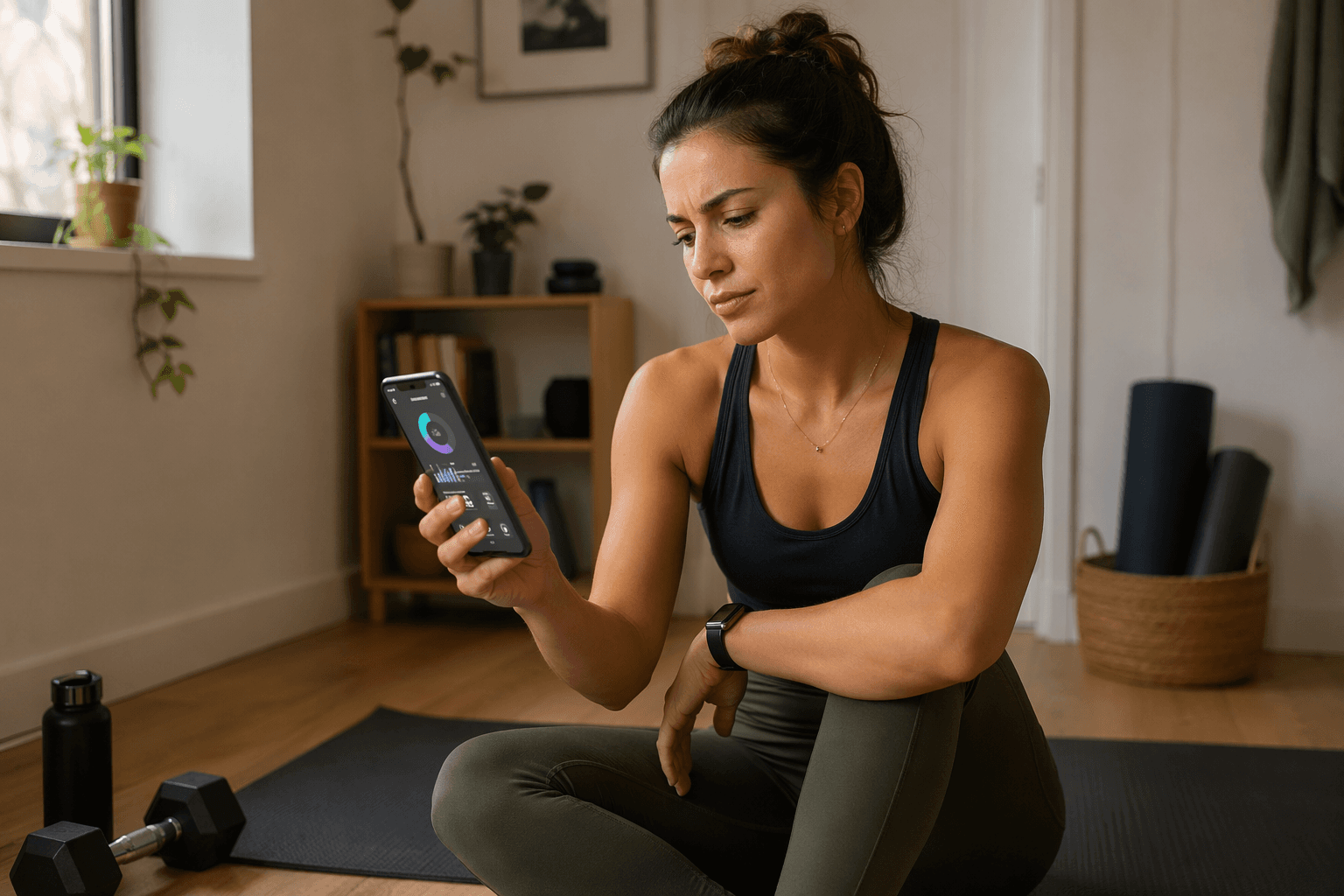
The more useful question is blunter: did the app give you a reason to keep training after the novelty wore off? If the answer was no, quitting may have been less about discipline and more about the app failing to make your training clearer, better matched to your life, or visibly productive.
What women keep using is not always what apps keep selling
A 2024 study of 395 Chinese female fitness app users found that health value and utilitarian value directly predicted continuance intention. Health value had the stronger relationship, with β=0.440 and p<0.001; utilitarian value also predicted continuance, with β=0.171 and p<0.05. Hedonic value — the entertainment or fun factor — did not have a significant direct effect on whether women intended to keep using the app. [1]
That study is not a perfect stand-in for every U.S. user. It focused on Chinese female users and apps such as Keep and YueDong Zone, so the findings should be applied carefully. Still, the pattern is hard to ignore because it matches what many abandoned app trials feel like afterward: the app may have been pleasant, cheerful, and full of content, yet it did not help the user train better over time.
A separate qualitative study of female fitness app users points in the same direction. Women described valuing instructiveness, personalization, interaction, ease of use, and convenience — practical attributes that reduce friction and improve confidence, not just decoration layered on top of workouts. [2]
This is where a lot of app design gets slippery. A badge can reward you for showing up without telling you whether your squat got stronger. A streak can make missed days feel dramatic without explaining whether your weekly plan is still recoverable. A giant class library can feel abundant while leaving you to assemble a program from scratch.
The fitness app market was valued at $12 billion in 2025 and projected to reach $38 billion by 2034, so the crowded app-store shelf is not going away. [3] But for the woman training in a living room before work, after bedtime, or between meetings, the size of the category is not the problem to solve. The problem is choosing an app that will still make sense when motivation is average.
The three filters that matter before you subscribe
Before comparing brand names, run any app through three filters: programming logic, equipment-fit, and progress visibility. They are not glamorous. They are also where many apps reveal whether they are built for repeat training or just repeat opening.
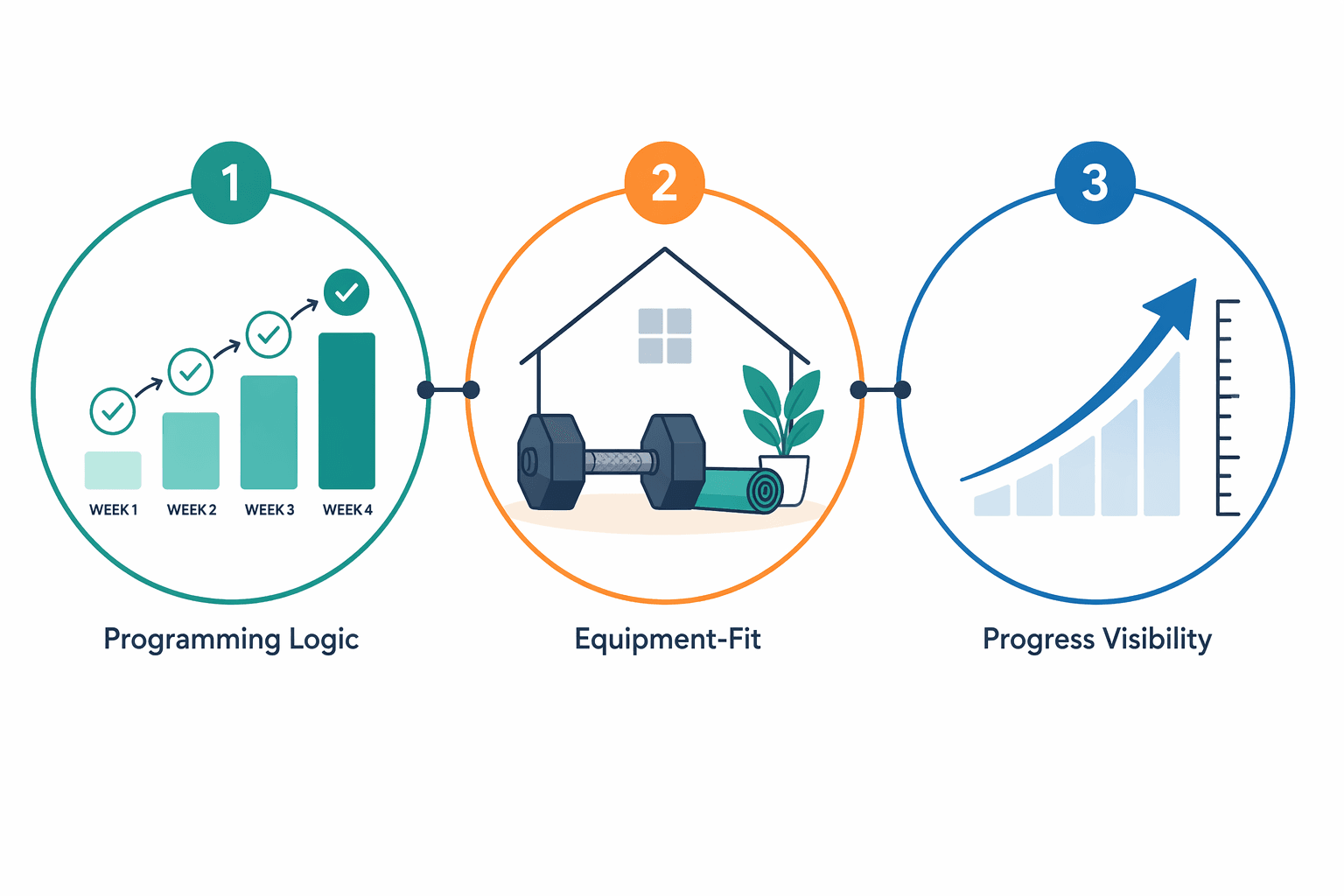
Programming logic: does the plan actually progress?
This is the filter worth spending the most time on because it is the easiest one for apps to fake. A workout library is not a program. A calendar full of random sessions is not automatically a plan. A trainer saying “you’ve got this” is not the same as a progression model.
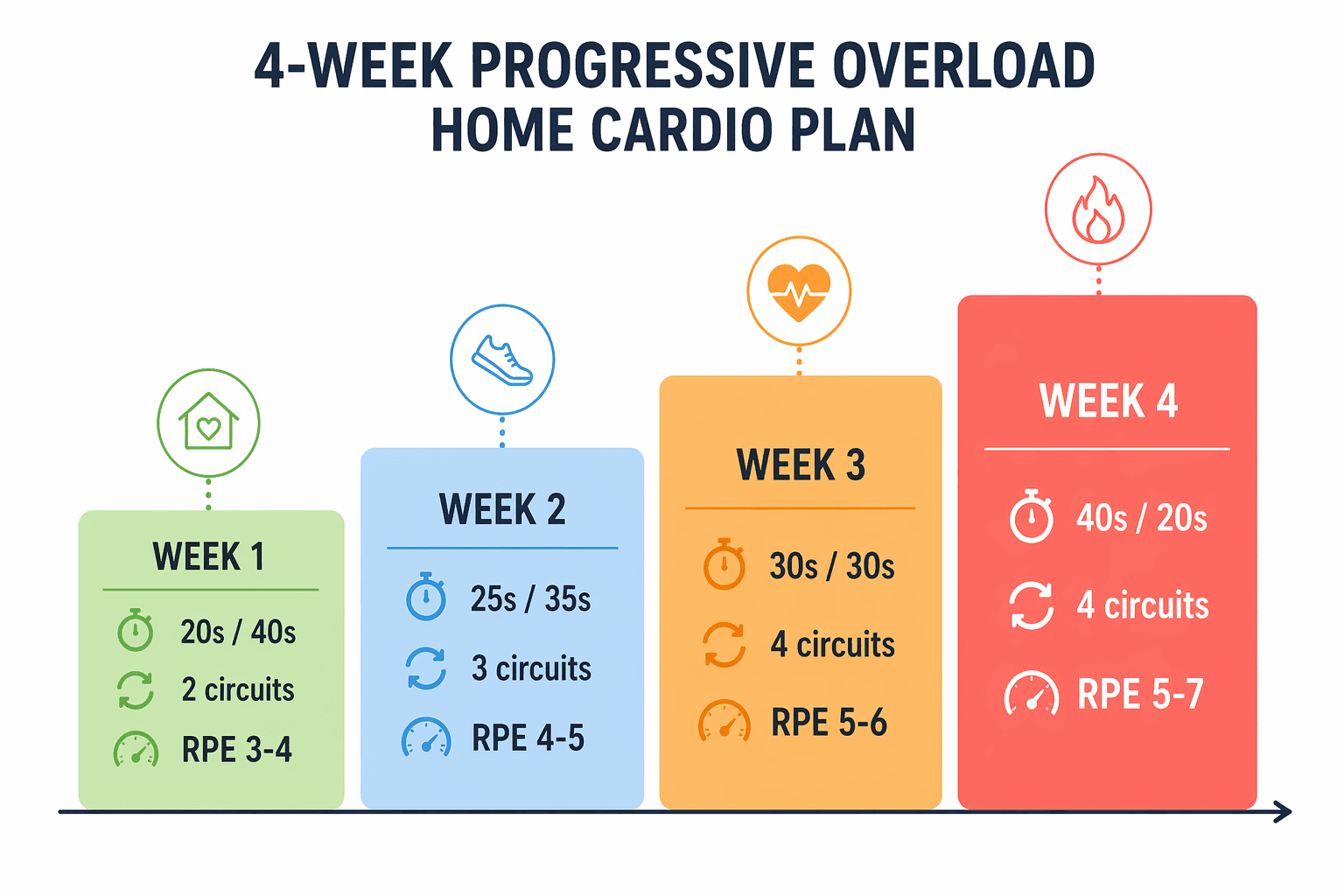
A useful program has a visible reason for what comes next. If you did goblet squats this week, does the app tell you whether to add reps, add load, slow the tempo, reduce rest, change the variation, or repeat the same target until it feels cleaner? If you miss two workouts, does it adjust the week, or does it leave you with a guilty calendar and no clue where to re-enter?
For strength training especially, week-to-week progression is not a luxury feature. It is the part that turns “I exercised” into “my body had a reason to adapt.” Without it, you can sweat faithfully and still end up guessing whether you are undertraining, overreaching, or simply repeating the same comfortable session because the app never asked more of you.
Look for signs that the app understands training continuity:
- Programs run for multiple weeks, not only as one-off workouts.
- Exercises repeat often enough for you to improve at them.
- The app gives targets for reps, sets, load, rest, intensity, or effort.
- There is a clear path when a workout is too easy, too hard, or missed.
- The app distinguishes goals: strength, hypertrophy, conditioning, mobility, weight loss support, or general movement.
The test is simple: after browsing a program preview, you should be able to explain why week four is different from week one. If the only answer is “different videos,” keep looking.
Equipment-fit: does the app match the workout you can actually do?
Home training is where many fitness apps for women overpromise by accident. They may advertise “at-home workouts,” then quietly assume you have a bench, multiple dumbbell pairs, long resistance bands, a yoga block, sliding discs, and enough floor space to lunge in every direction. That is not personalization. That is a shopping list disguised as convenience.
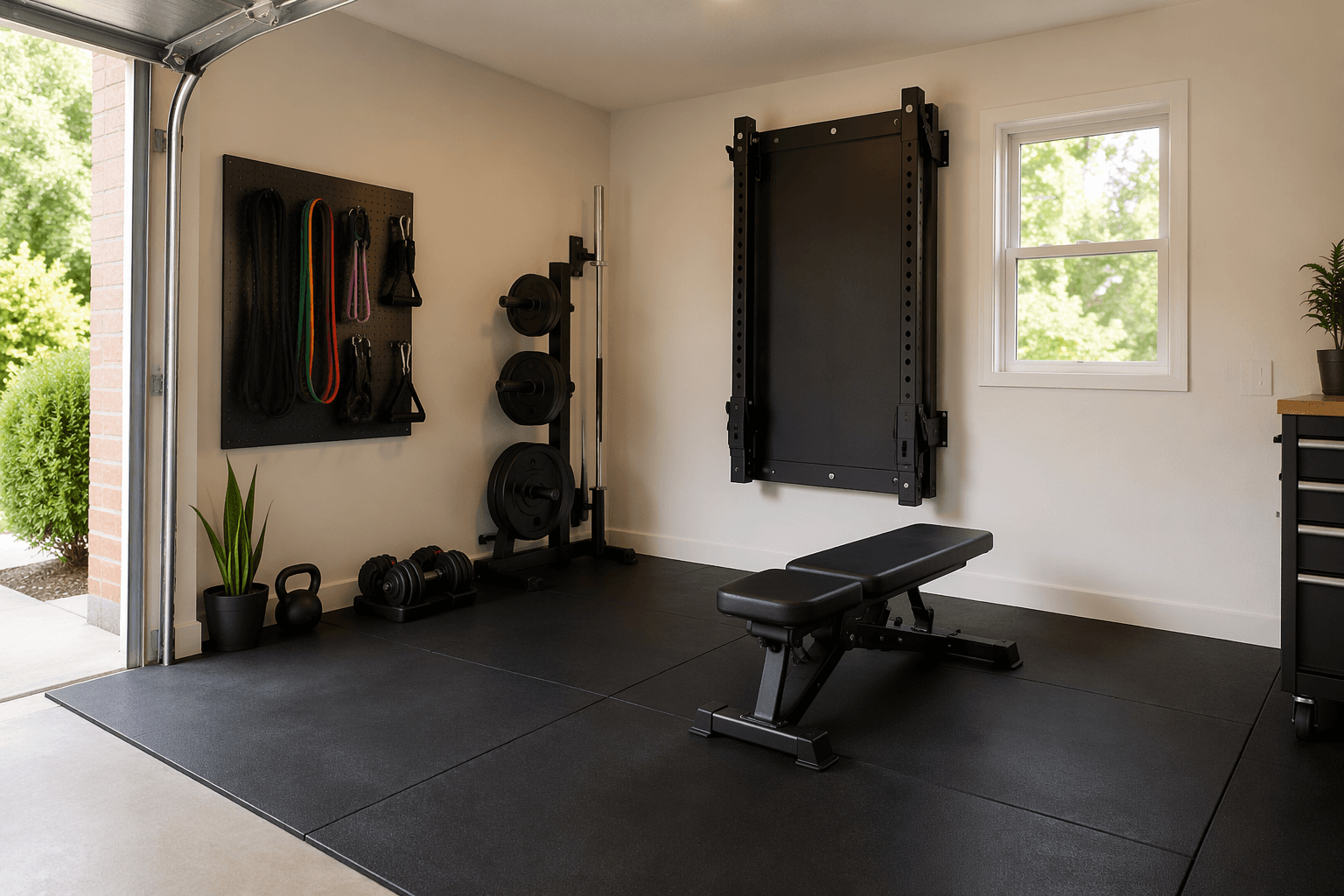
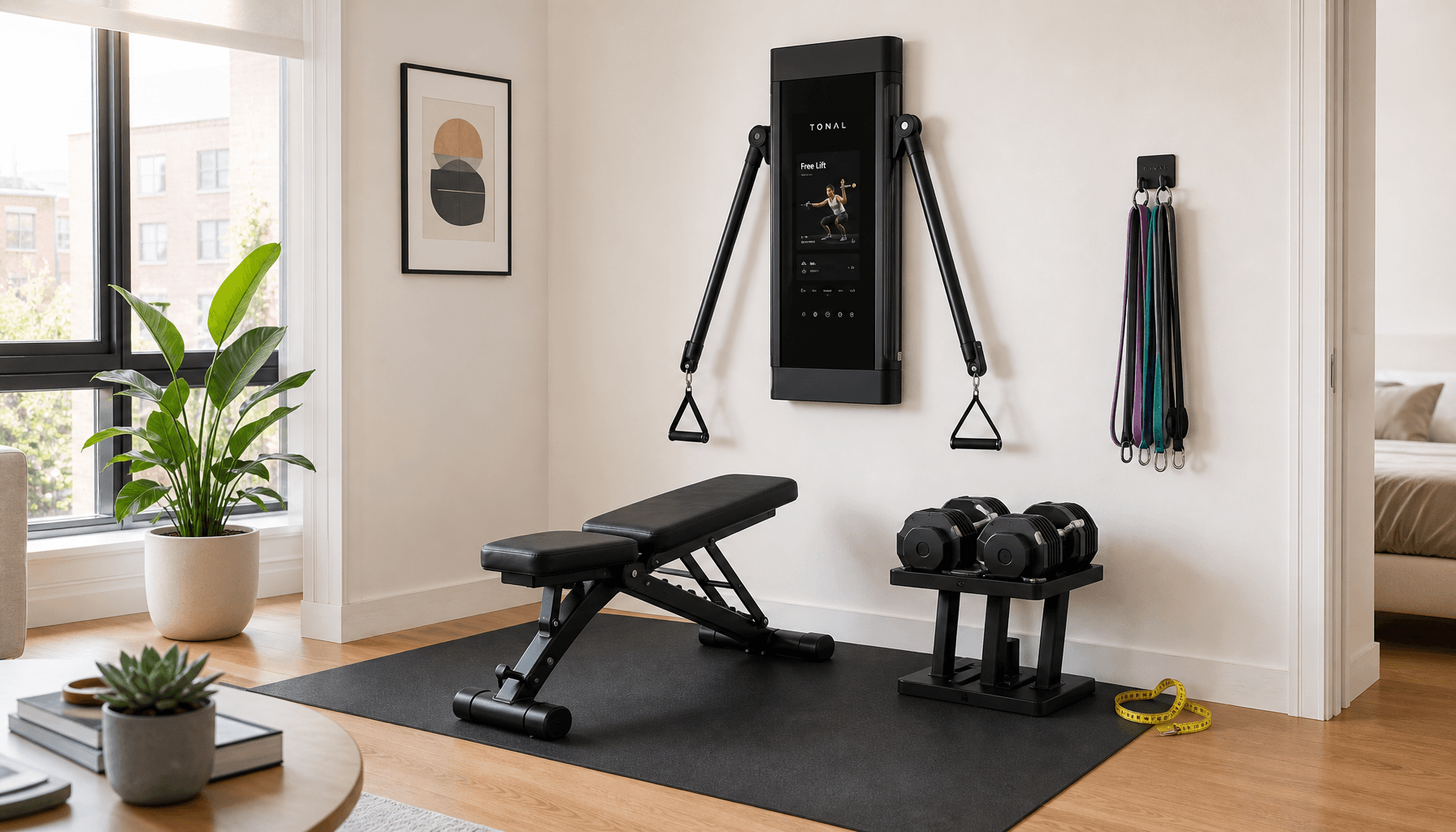
Equipment-fit means the app’s best programming works with what you already own or can reasonably access. A woman with one pair of light dumbbells needs a different plan than a woman with adjustable dumbbells and a bench. A renter training in a small apartment needs different options than someone using a garage gym. A postpartum beginner, a barbell lifter, and a traveler using hotel-room space should not all be squeezed through the same “no equipment” label.
The app should let you filter before you start and adapt after you start. If it only tells you halfway through a workout that you need a cable machine, the burden shifts back to you. Now you are pausing, substituting, searching, and wondering whether the substitute still matches the goal of the session. That is exactly the kind of friction that looks like “I fell off” two weeks later.
A better equipment-fit screen would answer boring but important questions: dumbbells or no dumbbells? Adjustable dumbbells or fixed weights? Bench or floor only? Pull-up bar? Bands? Gym access? Apartment-friendly impact level? It should also say what you will lose if you choose a lighter-equipment version. Sometimes the honest answer is that a barbell strength program is not the right match for a living room, even if the coaching is excellent.
Progress visibility: can you see improvement that is not just attendance?
Completed sessions count, but they are a thin version of progress. The app should also help you see whether you lifted more, performed more reps, used better range of motion, shortened rest with the same output, completed a harder variation, improved consistency across weeks, or felt a movement become more controlled.
This is where streaks can be useful but insufficient. A streak tells you that you returned. It does not tell you whether the training dose is working. For a beginner, even simple tracking — weights used, reps completed, perceived difficulty, workout notes, or benchmark movements — can make the difference between “I think nothing is happening” and “I can see that the same workout is getting easier.”
If you want a related look at why apps lose users from a retention-design angle, see Why Most Fitness Apps for Women Fail to Retain Users. Here, the narrower stickiness test is whether the app delivers enough health value and practical utility for a woman to keep training long enough to improve.
How popular apps look through the stickiness lens
Prices below were checked in May–June 2026. Subscription prices change often, so treat them as a snapshot, not a promise.
| App | What it tends to do well | Where to be careful | Best fit |
|---|---|---|---|
| Caliber | Programming logic, exercise instruction, equipment-fit, and progress tracking | Coaching tiers raise the price if you want more human support | Women who want structured strength training with a free starting point |
| Stronger By The Day | Progressive strength programming | Requires gym equipment and is less suited to minimal-equipment home training | Women who want barbell-focused strength work |
| Sweat | Convenience, variety, large workout library, and female-led programs | Progressive overload may be weaker than the content volume suggests | Women who value guided variety and easy access |
| Nike Training Club | Free access, trainer-led workouts, broad categories | Limited programming continuity compared with more structured strength apps | Women who want a no-cost option for general training |
| Future | Human coaching, interaction, personalization, and accountability | High monthly cost | Women who want 1:1 coaching and can justify the price |
| EvolveYou | Convenience, variety, and female-coach-led programs | Still needs to be checked for progression and equipment match by goal | Women who want guided programs with a polished app experience |
Caliber: the strongest all-around example of the three filters
Caliber is the app that most cleanly shows what “useful enough to return to” can look like. Garage Gym Reviews rated it 4.6 out of 5 and notes a free-forever tier, more than 500 exercise videos, a Pro tier at $19 per month with group coaching, and Premium coaching starting at more than $200 per month for 1:1 support. [4]
The important part is not simply that Caliber has videos. Plenty of apps have videos. Caliber’s advantage is that it behaves more like a strength-training system: it gives users a structured place to log work, repeat movements, and watch performance change. For someone training at home with limited equipment, that can be more valuable than having thousands of workouts she never repeats long enough to improve.
Its pricing also makes the free-versus-paid decision clearer. A user can test whether the structure works before paying for more coaching. For a deeper cost lens, see Free vs Paid Workout Apps for Women: When the Subscription Is Actually Worth It.
Stronger By The Day: excellent logic, narrower equipment-fit
Stronger By The Day is a good reminder that the best app on paper may still be the wrong app for a specific home setup. CNET lists it at $15 per month or $100 per year and describes it as designed for women following a barbell strength program. [5]
For the right user, that specificity is a strength. Progressive overload is built into the program design, and the app is not pretending that random variety is the same as strength development. But the equipment requirement is real. If you do not have access to a barbell, plates, rack, and related gym setup, the app’s strongest feature may remain mostly theoretical for you.
This is why equipment-fit sits so high in the framework. A smart program you cannot perform consistently is not a sticky program. It is a reminder that you chose the version of fitness you wish you had access to.
Sweat: convenience and variety are not the same as progression
Sweat has obvious appeal: Garage Gym Reviews cites a $25 monthly price, a $135 annual price, more than 50 programs, 13,000+ workouts, and 1 million+ monthly users. The same review also criticizes the app for lacking progressive overload principles. [4]
That combination captures a common trap. A huge library can make an app feel generous during the trial period. It can also make the user responsible for choosing, sequencing, and adjusting workouts herself. If the goal is general movement, variety may be enough. If the goal is visible strength or body-composition progress, the user should look closely at whether a chosen program actually advances week by week.
Nike Training Club: a strong free option with continuity limits
Nike Training Club deserves attention because it has been completely free since 2020 and offers hundreds of workouts across more than 10 categories led by certified trainers. [6] Free matters. For many users, removing the subscription decision lowers the barrier enough to start moving again.
The caution is programming continuity. Nike Training Club can be a very good general fitness tool, especially for someone who wants guided workouts without paying. It may be less satisfying for someone who needs a tightly progressed strength plan with clear performance tracking. If you are specifically comparing no-cost options, Best Free Fitness Apps for Women That Are Actually Free is the more focused next read.
Future: the clearest case for human feedback, at a serious price
Future sits at the opposite end of the cost spectrum. Good Housekeeping lists it at $199 per month and highlights its 1:1 human coaching model. [7]
From the research lens, the appeal is obvious. Interaction and personalization were among the attributes women valued in the qualitative study, and Future is built around those attributes rather than treating them as add-ons. [2] A real coach can adjust around travel, equipment, pain points, missed sessions, and changing goals in a way most automated apps still struggle to match.
The price is the filter. Future may be worth it for someone who has repeatedly failed with cheaper self-guided apps and wants external review. It is harder to justify if the main need is simply a clear program and basic tracking.
EvolveYou: polished variety that still needs the same test
EvolveYou is priced at $22.99 per month or $119 per year and is led by female coaches. [8] Its appeal is easy to understand: guided programs, a women-centered training environment, and enough variety to make home workouts feel less stale.
That does not exempt it from the same three questions. Does the program progress? Does it match your equipment? Can you see improvement beyond completed sessions? A brand can be designed for women and still leave an individual woman with the wrong plan.
A five-minute test before you pay
Before subscribing, choose one program inside the app and inspect it as if you were already tired on a Tuesday. Not inspired. Not shopping. Just trying to get the work done.
- Open the first four weeks of the program if the app allows it. Check whether exercises repeat and progress, or whether the plan is mostly a rotating playlist.
- Compare every required movement with your real equipment and space. If substitutions are constant, the app is already asking you to do extra programming work.
- Find the tracking screen. Look for reps, load, workout notes, effort, measurements, benchmark workouts, or performance trends — not only badges.
- Check what happens when you miss a session. A useful app helps you re-enter; a flimsy one makes the calendar look messy and leaves the decision to you.
- Decide whether the app’s main strength matches your goal. Coaching, variety, free access, strength progression, and convenience are not interchangeable.
If you still want a broader app roundup after applying this framework, use Best Workout Apps for Women in 2026: A Comparison by Goal, Budget, and Life Stage as a next step. The comparison will be more useful once you know what you are filtering for.
The app you stick with is usually not the most entertaining one. It is the one that makes training clear enough to repeat, realistic enough to fit your equipment and schedule, and measurable enough that your effort stops disappearing into a streak counter.
References
- How to Encourage Continuous Use of Fitness Apps among Female Users? — PMC — https://pmc.ncbi.nlm.nih.gov/articles/PMC11241510/
- Exploring female fitness app users' motivations and perceptions: A qualitative study — PMC — https://pmc.ncbi.nlm.nih.gov/articles/PMC11537609/
- Fitness App Market Size, Share, Growth, Analysis, Report, 2034 — Straits Research — https://straitsresearch.com/report/fitness-app-market
- Best Workout App For Women (2026): Expert Tested And Approved — Garage Gym Reviews — https://www.garagegymreviews.com/best-workout-app-for-women
- The Best Workout Apps for Women to Stay Active and Motivated — CNET — https://www.cnet.com/health/fitness/best-workout-apps-for-women/
- The 10 Best Workout And Fitness Apps Of 2026 — Forbes Health — https://www.forbes.com/health/weight-loss/best-fitness-apps/
- 10 Best Workout Apps of 2026, Tested by Personal Trainers — Good Housekeeping — https://www.goodhousekeeping.com/health-products/g27112869/best-workout-apps/
- The 12 Best Workout Apps Of 2025: Fitness Apps Trainers Actually Use — Women's Health — https://www.womenshealthmag.com/fitness/g21971119/best-workout-apps-for-women/
Comments
Join the discussion with an anonymous comment.