
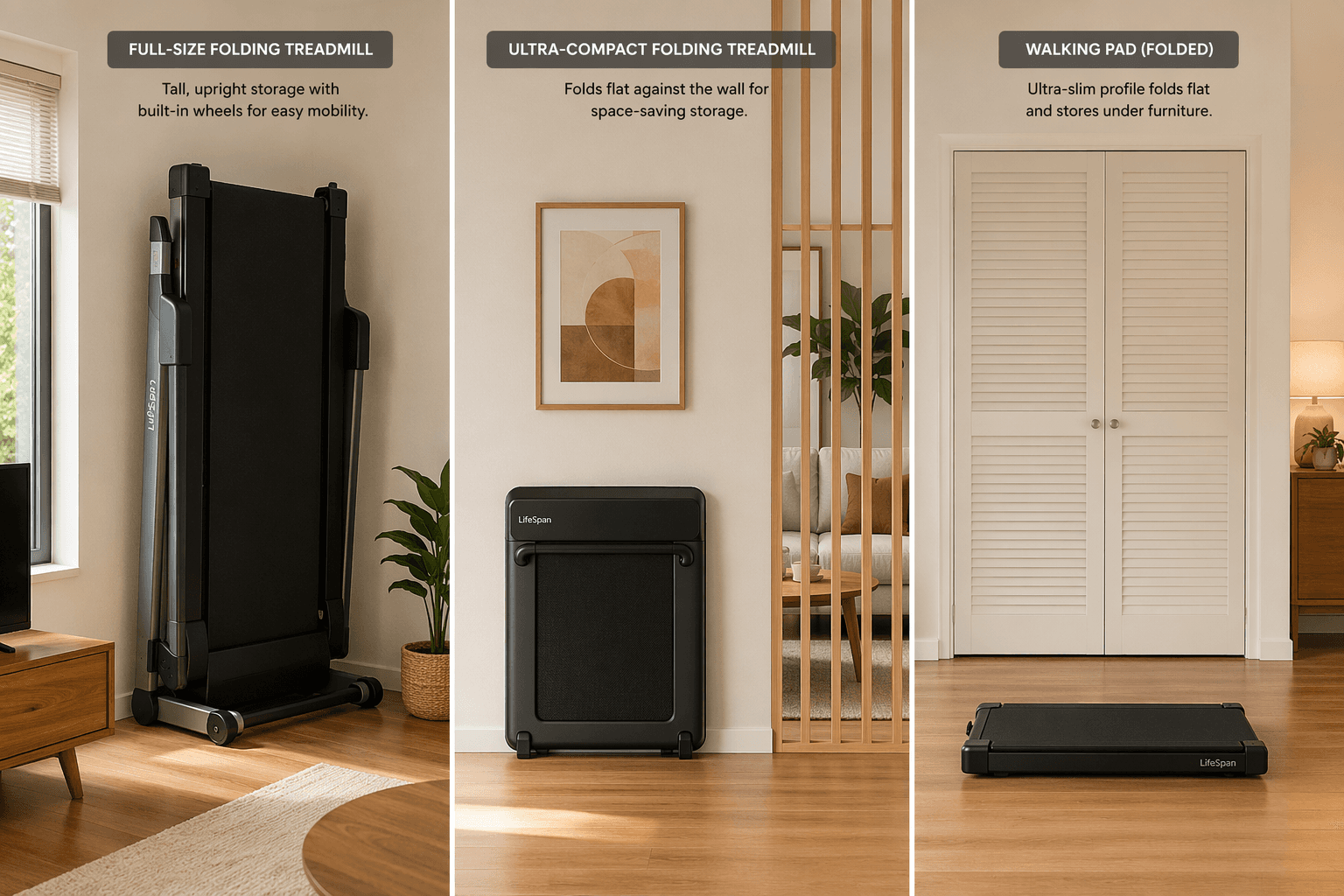
Introduction: The Folding Assumption
Walk into any big-box fitness retailer or scroll through Amazon's treadmill category, and the message is consistent: folding is the default. The logic seems airtight — a treadmill that folds takes up less space when not in use, so why would anyone buy a non-folding model? The assumption is so widespread that many buyers never seriously consider a fixed-frame machine, even when they have the floor space to accommodate one.
That assumption deserves scrutiny. The folding mechanism introduces a hinge point into the frame, which affects structural rigidity. It limits how large the motor can be, how long the deck can extend, and how much weight the machine can support. These aren't theoretical concerns — they show up in testing data, warranty claims, and the real-world experience of runners who push their equipment past walking speed.
This article is not a list of the best folding treadmills. It is a decision framework. We will walk through the measurable differences between folding and non-folding designs — frame stability, motor power, weight capacity, deck dimensions, safety requirements, and long-term cost — so you can decide whether the space tradeoff is worth it for your specific situation. For many buyers, the answer is no.
Folding vs. Non-Folding: Head-to-Head Comparison Table
The table below summarizes the key differences across the dimensions that matter most for a purchase decision. The data draws from multiple testing sources, including Garage Gym Reviews, TreadmillReviews.net, Runner's World, and TechFitnessLab, using specific models that represent the current state of each category.
| Dimension | Folding (Typical Range) | Non-Folding (Typical Range) | Why It Matters |
|---|---|---|---|
| Frame Stability | Moderate — hinge point introduces flex; wobble possible at high speeds | High — continuous frame rail, no hinge, better rigidity | Stability affects running form confidence and long-term frame fatigue |
| Motor Power (CHP) | 2.5 – 4.25 CHP | 3.0 – 5.0+ CHP | Higher CHP supports sustained running, heavier users, and longer motor life |
| Weight Capacity | 250 – 400 lbs | 350 – 500+ lbs | Higher capacity means a stronger frame and motor, and better durability at any weight |
| Running Deck Length | 55 – 60 inches | 60 – 65+ inches | Longer decks accommodate taller runners and longer strides at speed |
| Price Range (MSRP) | $649 – $2,499 | $2,000 – $4,000+ | Non-folding models carry a price premium, but often include commercial-grade components |
| Portability | Good — wheels, lighter frame, can be moved by one person | Poor — very heavy, difficult to reposition without help | Relevant if you need to relocate the machine or clean underneath frequently |
| Storage Footprint (Folded) | 42" L x 37" W x 71" H (upright) to 51" x 21" x 4.6" (walking pad) | N/A — does not fold; occupies full footprint permanently | The primary advantage of folding: reclaiming floor space when the machine is not in use |
| Safety Requirements | Gas shock mechanism, latch/pin lock, pinch point awareness, child/pet hazard when stored upright | None beyond standard electrical and moving-part safety | Folding introduces specific risks that require attention, especially in homes with children |
Comments
Join the discussion with an anonymous comment.