
The Post-Rack Question: You Have Squats, What's Missing?
If you've already built a home gym around a squat rack and barbell, you've covered the most fundamental lower-body movement pattern. Barbell back squats, front squats, and their variations load the entire posterior chain and quadriceps through a deep range of motion. But even the most well-programmed squat work leaves two gaps that become increasingly noticeable as training volume and specificity increase.
The first gap is isolation. Squats are a compound movement — they distribute load across multiple muscle groups. The rectus femoris, the quadriceps head that crosses both the hip and knee joints, receives less stimulus during squats than the vastus group, and the hamstrings act primarily as stabilizers rather than prime movers. The second gap is volume tolerance. Loading the spine with a barbell for high-repetition sets or back-off work after heavy singles introduces fatigue and injury risk that limits total leg training volume.
The solution for most intermediate home gym owners comes down to two categories of add-on equipment: a leg extension and curl combo machine, or a leg press and hack squat combo machine. Each fills a different hole in rack-based training. This comparison breaks down the muscle focus, space cost, price, and programming fit of each option so you can make an informed decision based on your specific constraints and goals.
Leg Extension/Curl Combos: Direct Isolation for Quads and Hamstrings
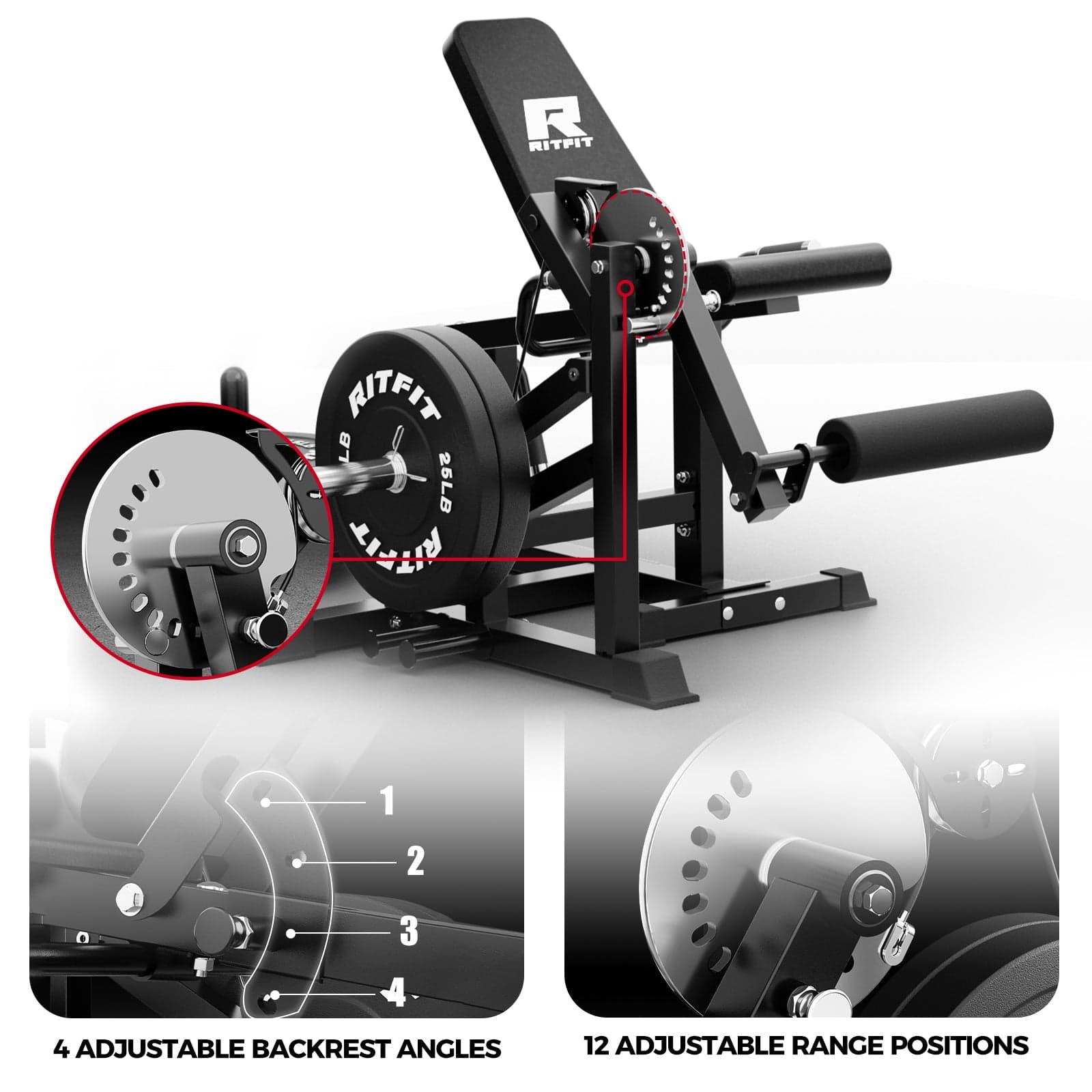
A leg extension and curl combo machine is exactly what the name implies: a single frame that supports both seated leg extensions (knee extension against resistance) and prone or seated leg curls (knee flexion against resistance). These machines target the quadriceps and hamstrings in isolation, meaning the resistance travels through a single joint rather than distributing across the hips, knees, and spine.
What They Target
Leg extensions primarily work the quadriceps — the rectus femoris, vastus lateralis, vastus medialis, and vastus intermedius. Leg curls target the hamstrings — the biceps femoris, semitendinosus, and semimembranosus. Because these are single-joint movements, they allow you to load the target muscle to failure without the systemic fatigue of a squat, making them ideal for finisher work or as a primary movement on a dedicated leg isolation day.
A 2024 study by Larsen et al. found that the angle of hip flexion during leg extensions significantly influences which part of the quadriceps grows most. Less hip flexion — meaning a more upright torso position — produced greater rectus femoris hypertrophy. This finding makes adjustable backrests a meaningful differentiator between combo machines. Machines that offer multiple backrest angles let you shift the stimulus between the rectus femoris and the vastus group simply by changing your seat position.
For hamstrings, a 2021 study by Maeo et al. compared seated and prone leg curls and found that both produced significant hypertrophy, but seated leg curls — where the hips are flexed to 90 degrees — created greater overall hamstring growth. This matters because many combo machines offer only prone leg curls (lying face down), while higher-end models include a seated curl position or an adjustable pad that accommodates both.
Space and Price
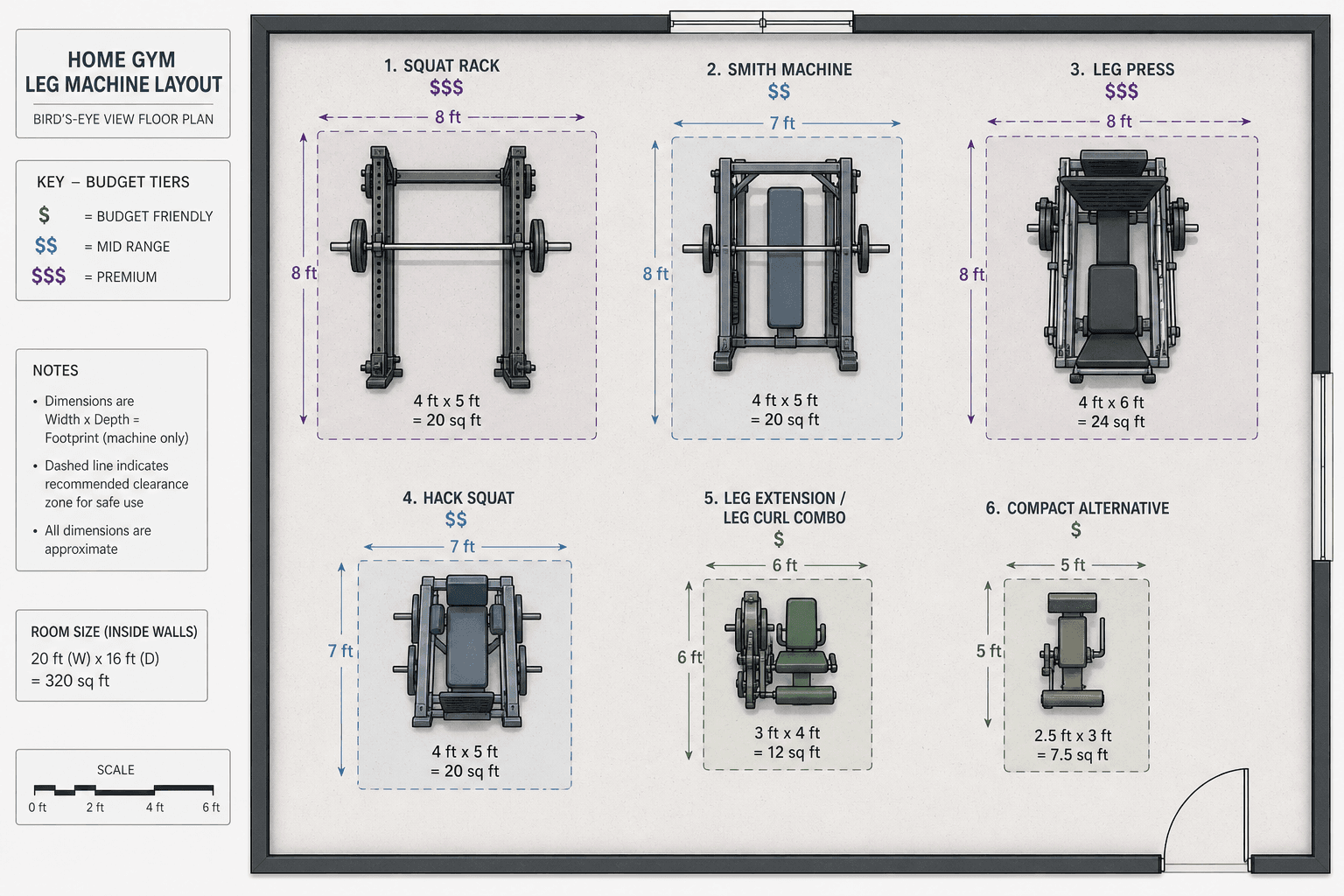
Leg extension/curl combos are the most space-efficient way to add direct leg isolation to a home gym. Most units require between 15 and 20 square feet of floor space. The RitFit PLC01, for example, has a footprint of 50.9 inches by 43.5 inches — roughly 15.37 square feet — and weighs 109 pounds. It costs $399.99 and earned a Garage Gym Reviews score of 4.06 out of 5, with reviewers calling it "the new budget king" at roughly half the price of comparable units from Gronk Fitness.
The PLC01 uses cable-driven, plate-loaded resistance with a 3:2 pulley ratio, meaning the user feels 1.5 times the weight loaded on the sleeve. This design provides more consistent tension through the full range of motion compared to hinged plate-loaded alternatives at similar price points, where the resistance curve can drop off near full contraction. The machine has four adjustable backrest angles and 12 range-of-motion settings, giving it a level of adjustability that is uncommon in the sub-$500 category.
Other options in this category include the Titan Fitness Seated Leg Curl/Extension Machine, the Gronk Fitness Leg Extension Curl Machine, and the GMWD Leg Extension and Curl Machine. Prices range from roughly $400 to $1,100 depending on build quality, resistance type (plate-loaded vs. selectorized), and adjustability features.
Leg Press/Hack Squat Combos: Volume Capacity and Back-Friendly Alternatives
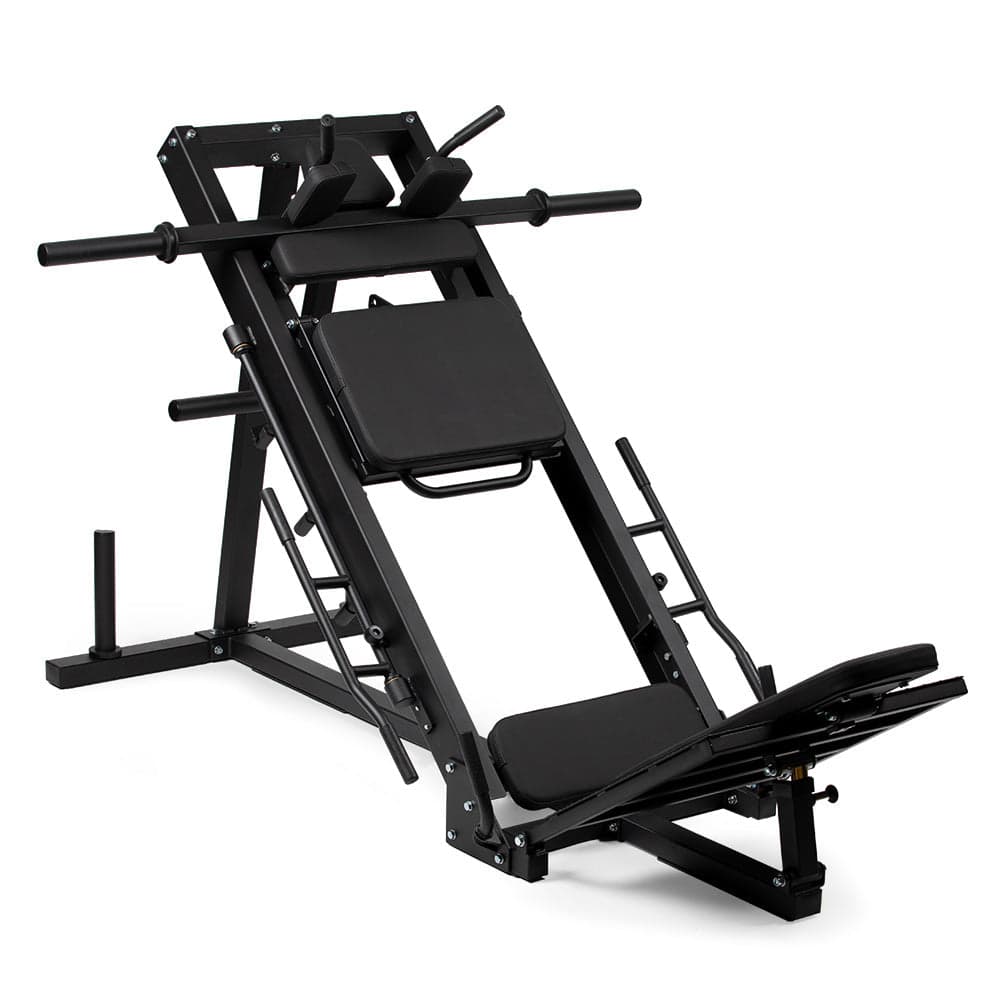
A leg press and hack squat combo machine combines two compound leg movements into a single frame. The leg press — typically a 45-degree angled sled — allows you to push weight away from your body using your legs while your back and hips are supported. The hack squat, which shares the same sled and frame, shifts your body position so the load travels more vertically, emphasizing the quadriceps more directly.
What They Target
Leg press and hack squat combos target the quadriceps, glutes, and calves with a volume capacity that barbell squats cannot match. Because the spine is supported — either by the back pad on the leg press or the shoulder pads on the hack squat — you can load the legs without the axial fatigue and injury risk of a barbell on your back. This makes these machines particularly valuable for lifters with lower-back concerns, those recovering from spinal injuries, or anyone who wants to accumulate high-repetition leg volume without CNS drain.
A 2020 systematic review by Martín-Fuentes et al. examined quadriceps activation during leg press variants and found that the vastus medialis and vastus lateralis showed the greatest activation among the quadriceps muscles. Foot placement changes the muscle contribution: a narrow stance targets the quads more directly, while a wider stance shifts load toward the glutes and hamstrings. This adjustability gives the leg press a versatility that isolation machines lack — you can emphasize different regions of the lower body without changing equipment.
The hack squat function on these combo machines provides a more vertical squatting plane than a barbell squat, which reduces the shear forces on the lower back and allows lifters to train through a full range of motion with the weight centered over the feet. This makes it a useful alternative for lifters who struggle with squat depth due to mobility limitations or who want to overload the quads without the balance demands of a free-weight squat.
Space and Price
The trade-off for this volume capacity is floor space. Leg press/hack squat combos typically require 25 to 40 square feet — roughly double the footprint of an extension/curl combo. The RitFit BLP01, for example, is a plate-loaded combo unit priced between $650 and $2,500 depending on configuration and retailer. Titan Fitness, Force USA, and Powertec also offer combo units in this category, with prices climbing as build quality, weight capacity, and adjustability increase.
The larger footprint is driven by the sled's travel path. A 45-degree leg press requires enough clearance for the sled to move through its full range of motion without hitting the floor or ceiling, and the frame must be robust enough to handle loads that can exceed 500 pounds. These machines are heavy — often 300 to 500 pounds — and moving them once assembled is difficult. If you plan to rearrange your gym layout, factor in the weight and bulk of the unit before purchasing.
Head-to-Head Comparison: Leg Extension/Curl vs. Leg Press/Hack Squat
The table below compares the two combo categories across the criteria that matter most for a home gym add-on decision. Use it as a quick-reference tool when evaluating specific models.
| Criterion | Leg Extension/Curl Combo | Leg Press/Hack Squat Combo |
|---|---|---|
| Primary muscle focus | Quadriceps (rectus femoris, vastus group) and hamstrings in isolation | Quadriceps, glutes, and calves through compound movement |
| Secondary muscle activation | Minimal — single-joint isolation | Glutes, hamstrings, calves, and core (stabilization) |
| Typical footprint | 15–20 sq ft | 25–40 sq ft |
| Price range | $400–$1,100 | $650–$2,500 |
| Resistance type | Cable-driven (smooth, consistent tension) or hinged plate-loaded | Plate-loaded sled (direct, high load capacity) |
| Adjustability | Backrest angle, range of motion, pad positions | Foot platform angle, back pad angle (varies by model) |
| Spinal load | None — seated, supported position | Minimal to none — back supported on leg press; shoulder-supported on hack squat |
| Volume capacity | Moderate — limited by isolation fatigue | High — can handle 2–3x barbell squat volume |
| Best for | Adding direct quad/hamstring isolation after squats; finisher work; targeting rectus femoris growth | High-volume leg training; back-friendly squat alternative; quad and glute hypertrophy |
| Build quality range | Budget to mid-range (lighter frame, lower weight capacity) | Mid-range to premium (heavier frame, higher weight capacity) |
| Resale value | Moderate — high demand for compact isolation machines | Moderate to high — durable machines hold value well |
What the Research Says: Muscle Activation and Hypertrophy
The decision between these two combo categories is not just about space and budget — it is also about what the research says regarding muscle growth. Three studies in particular provide actionable guidance for machine selection.
Hip Flexion Angle and Rectus Femoris Growth (Larsen et al., 2024)
The 2024 Larsen study found that less hip flexion during leg extensions — a more upright torso — leads to greater rectus femoris hypertrophy. This is the quadriceps head that crosses both the hip and knee joints, and it is often underdeveloped in lifters who rely primarily on squats. If you choose a leg extension/curl combo, look for a machine with multiple backrest angles so you can adjust your hip position to target the rectus femoris more directly. The RitFit PLC01's four adjustable backrest angles make it a strong candidate for this purpose.
Seated vs. Prone Leg Curls for Hamstring Hypertrophy (Maeo et al., 2021)
The 2021 Maeo study compared seated and prone leg curls and found that both produced significant hamstring growth, but seated curls — performed with the hips flexed to 90 degrees — resulted in greater overall hypertrophy. This is relevant because many leg extension/curl combos offer only prone leg curls. If hamstring development is a priority, look for a combo that includes a seated curl position or an adjustable pad that allows both positions. The PLC01 includes a prone curl function; higher-end models may offer seated curl capability.
Quadriceps Activation During Leg Press Variants (Martín-Fuentes et al., 2020)
The 2020 systematic review by Martín-Fuentes et al. found that the vastus medialis and vastus lateralis showed the greatest activation among the quadriceps muscles during leg press exercises. This means the leg press is particularly effective for building the outer and inner quad sweep — areas that contribute significantly to leg aesthetics and knee stability. The review also noted that foot placement and knee angle change muscle contribution, giving the leg press a versatility that isolation machines lack.
Programming Guidance: How to Integrate Each Combo Into Your Leg Day
Owning the machine is only half the equation — knowing how to program it into your existing leg day split determines whether it actually improves your training. Below are practical programming approaches for each combo type.
Programming a Leg Extension/Curl Combo
The most common use case for an extension/curl combo is as a finisher after barbell squats. Because squats already load the quads and hamstrings through a compound movement, adding isolation work at the end of the session targets the muscles that squats underdevelop — particularly the rectus femoris and the hamstrings in their knee-flexion role.
- Finisher protocol: After your main squat work, perform 2–3 sets of leg extensions at 15–20 reps, followed by 2–3 sets of leg curls at 12–15 reps. Use a weight that brings you to failure within the target rep range. Rest 60–90 seconds between sets.
- Isolation-focused leg day: If you train legs twice per week, dedicate one session to compound work (squats, deadlifts) and the other to isolation work. On isolation day, use the extension/curl combo as your primary movement: 4 sets of leg extensions at 10–15 reps, 4 sets of leg curls at 10–15 reps, and finish with single-leg work or calf raises.
- Rectus femoris emphasis: Use a more upright backrest position (less hip flexion) during leg extensions to bias the rectus femoris. Pair this with a more reclined position on a separate day to target the vastus group.
Programming a Leg Press/Hack Squat Combo
A leg press/hack squat combo is most valuable as a primary compound movement for volume work or as a squat alternative. Because the spine is supported, you can push the legs to higher rep ranges and total volume without the CNS fatigue of heavy barbell squats.
- Volume leg day: After a heavy squat session (3–5 reps), move to the leg press for back-off volume work: 3–4 sets of 15–20 reps with a moderate load. The goal is to accumulate metabolic stress and blood flow to the quads without taxing the spine further.
- Squat replacement: If you have lower-back concerns or want a break from barbell squats, use the leg press as your primary compound movement for 4–6 weeks. Program 3–4 sets of 8–12 reps with progressive overload, and add hack squats as an accessory for quad emphasis.
- Foot placement variation: Use a narrow stance on the leg press to target the quads, a wide stance to target the glutes and adductors, and a high foot position to emphasize the glutes and hamstrings. Rotate foot placement across training cycles to ensure balanced development.
Decision Flowchart: Which Combo Belongs in Your Home Gym?
The right choice depends on your current equipment, primary goals, available space, and budget. The flowchart below guides you through the key decision points.
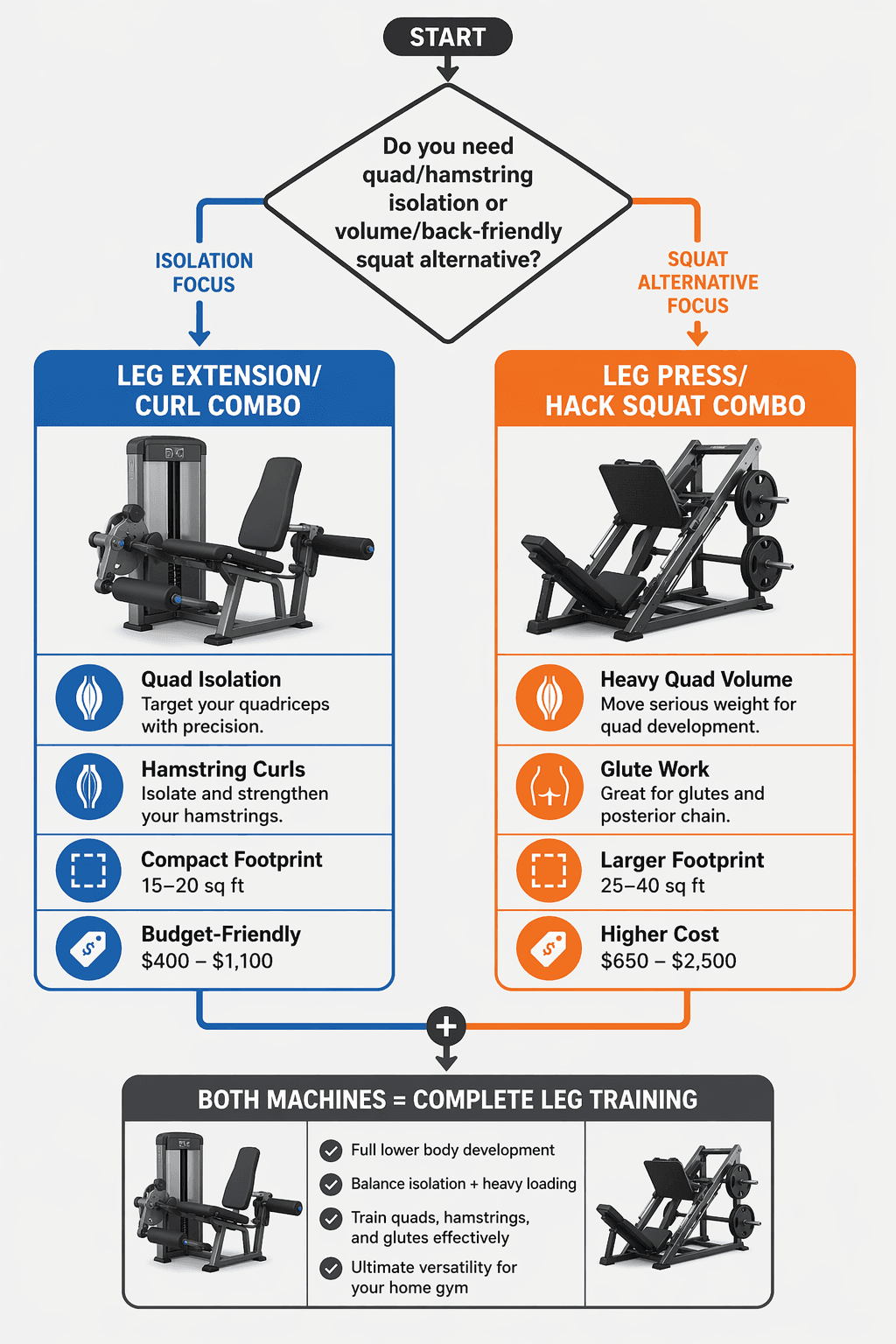
If you have less than 20 square feet of available floor space and a budget under $1,000, a leg extension/curl combo is the clear choice. It adds the isolation work that barbell squats miss, fits in a corner of most home gyms, and costs roughly half what a leg press/hack squat combo commands.
If you have 25–40 square feet available and a budget of $1,000 or more, a leg press/hack squat combo offers greater versatility. It allows you to train legs with high volume, provides a back-friendly squat alternative, and covers multiple movement patterns (squat, hip hinge, knee extension) in a single machine.
If you have both the space and the budget — roughly 35–50 square feet and $1,500–$3,500 — owning both machines covers all major leg movement patterns: squat (barbell), hip hinge (barbell or leg curl), knee extension (leg extension), and compound push (leg press/hack squat). This combination gives you the most complete leg training setup possible in a home gym.
Comments
Join the discussion with an anonymous comment.