
A smart home gym system can look apartment-friendly in a product photo and still fail the second it reaches your lease, your floor, or your living room layout. The problem usually is not the workout library. It is the wall that cannot be drilled into, the neighbor below who hears impact through the floor, or the “compact” machine that only becomes compact after you move the coffee table, ottoman, and dining chairs.
For an apartment, the first filter should be physical: no permanent wall mounting, near-silent resistance, and stored footprint under 4 sq ft if the room has to return to normal after training. Coaching, AI form feedback, and polished screens matter only after the system proves it can be installed, used, and put away without becoming a housing problem.
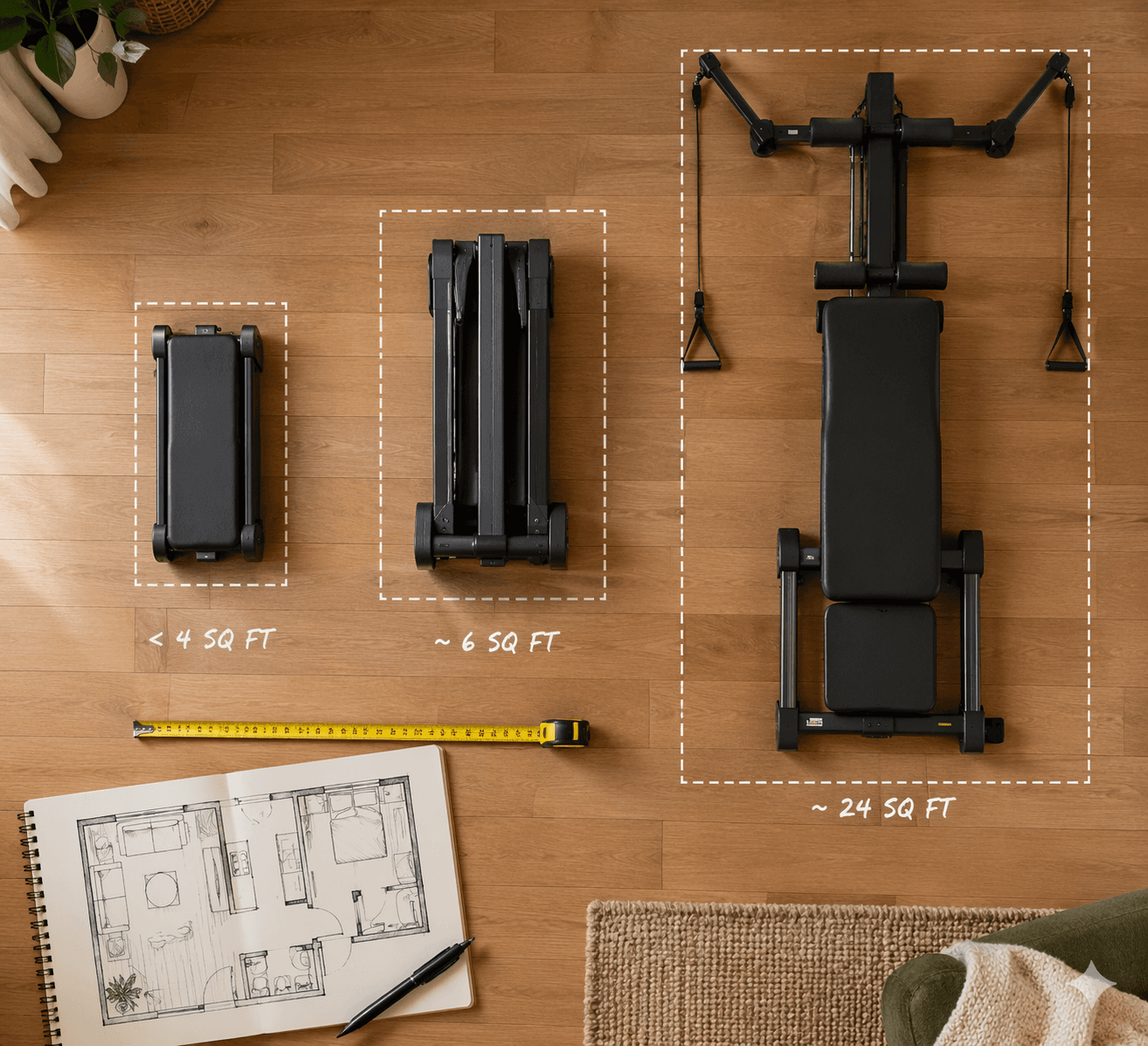
The apartment test most smart gym comparisons skip
A garage gym can absorb bad assumptions. An apartment cannot. If a system needs studs, a large camera-tracking zone, plate loading, or a permanent corner of the room, those are not minor setup notes. They decide whether the purchase works at all.
| System | Installation | Active workout clearance | Stored or folded footprint | Noise profile | Companion devices | Renter risk |
|---|---|---|---|---|---|---|
| Tonal / Tonal 2 | Professional wall mounting into studs 16 inches on center; ceiling height of at least 7'10" cited in apartment checklist materials [1] | 7'x7' clearance cited in buying-guide materials [5] | Fixed wall installation; not a fold-away system | Digital resistance is near-silent because there is no plate impact [1] | Built-in screen and connected platform | High: landlord permission, stud spacing, wall repair, and ceiling height can all block installation |
| Tempo Move | Cabinet-style unit, not a wall-mounted mirror | 6'x6' clear tracking area for Tempo Vision [2][3] | Furniture-like cabinet, but the workout zone is the real footprint | Uses free weights; manufacturer-source materials claim dropped plates can exceed 90 dB, a figure that should be independently verified before treating it as a general acoustic benchmark [1] | Requires iPhone XR or later and a TV with HDMI [2][3] | Medium: no wall holes, but the clear space and device requirements can make it less compact than it sounds |
| Speediance | Freestanding digital-resistance system; no wall mounting required [1][2] | 30–50 sq ft clearance when deployed [5] | Folds for storage [1][2] | Digital resistance, so no plate impact noise [1] | Integrated connected training experience | Low to medium: stronger fit for renters, but still needs a real training zone when open |
| MaxPRO SmartConnect | Portable unit; no wall installation required | Depends on exercise setup and anchor use rather than a fixed platform | Weighs under 10 lbs [4] | Cable-resistance training avoids free-weight plate impact | App-connected training; setup varies by exercise | Low: best for shared spaces and people who cannot dedicate a room corner |
| AEKE K1 | Positioned as a compact digital-resistance system | Apartment-focused materials emphasize small-space use [1] | Stores in 3.2 sq ft of floor space [1] | Digital resistance, so no plate impact noise [1] | Connected smart-gym experience | Low on stated storage footprint; caveat that product claims come from the manufacturer |
That table is the real comparison. If a system fails installation, noise, or footprint, it does not matter how good the coaching interface is. It may still be excellent equipment for a homeowner or a larger dedicated room, but that is a different problem.
Installation: the lease usually decides before the app does
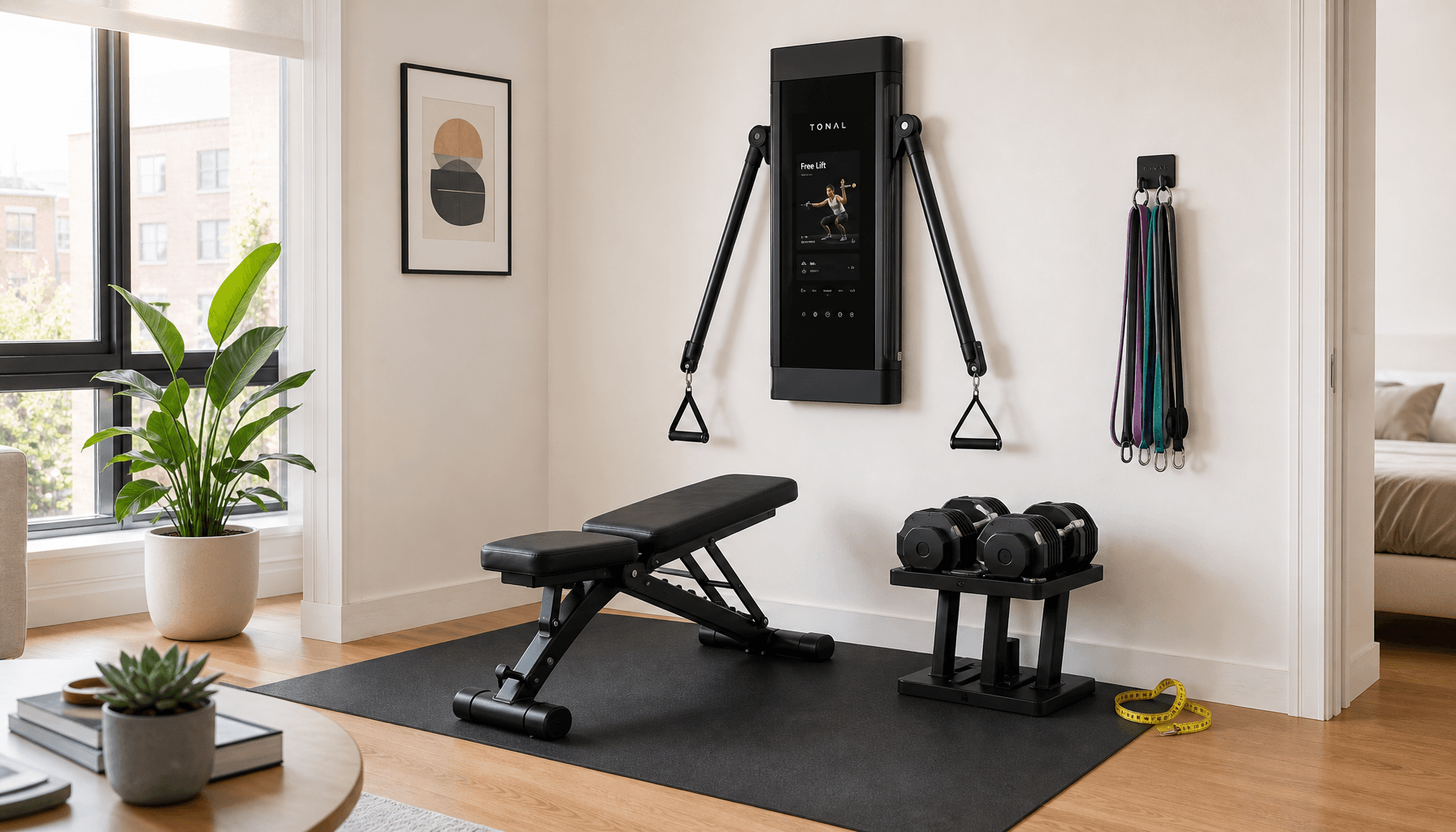
Tonal is the cleanest example of why apartment buyers need a separate standard. As a piece of strength technology, its digital resistance is compelling: no plates to rack, no dumbbells to scatter, no metal-on-metal impact. But Tonal 2’s apartment problem appears before the first rep. The system requires professional wall mounting into studs 16 inches on center, and apartment-focused materials cite a minimum ceiling height of 7'10" [1].
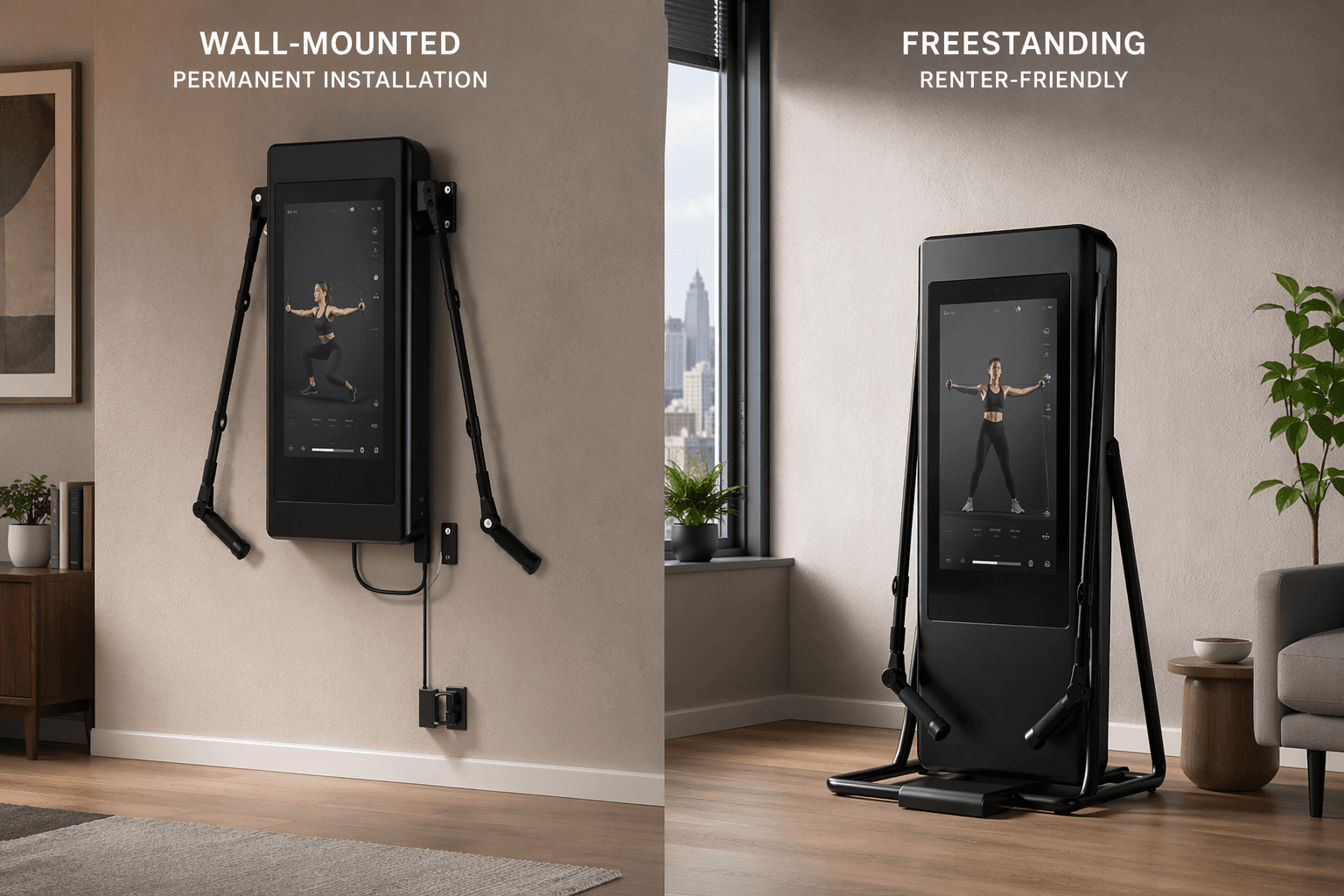
That is not a footnote for renters. It can mean asking a landlord for permission, confirming stud spacing behind finished walls, accepting visible wall work, and dealing with move-out repairs. Even when a building technically allows mounting, the buyer is taking on a fixed installation in a home they may not control long-term.
This is where freestanding systems move ahead. Speediance avoids the wall entirely and folds for storage, which is exactly the kind of design difference that matters in a rental [1][2]. MaxPRO goes further in portability: it weighs under 10 lbs while offering up to 300 lbs of resistance, making it the easiest option here to move between a bedroom, living room, hallway, or even a building gym space if that is where training has to happen [4].
Noise: digital resistance helps, but impact still matters
Noise in an apartment is not only about how loud the machine sounds to the person using it. It is about vibration through floors, sudden impact, and whether a normal evening workout becomes someone else’s ceiling problem.
Digital resistance systems such as Tonal, Speediance, and AEKE avoid the obvious clank of plates because there are no traditional weight stacks or loose plates hitting the floor [1]. That does not make every exercise silent — feet still move, benches can shift, and floors can transmit impact — but it removes one of the biggest apartment failure points.
Tempo Move is different because its smart component tracks form while the resistance comes from physical weights. The manufacturer-sourced apartment checklist claims that dropped free-weight plates can exceed 90 dB, comparable to a lawnmower in a living room; because that number comes from a manufacturer, it should be treated as a caution rather than an independently verified acoustic conclusion [1]. The practical point is narrower and still useful: any system using loose weights brings back impact risk that digital-resistance systems avoid.
Footprint: storage size is not the same as workout size
A smart gym can be compact while stored and demanding while in use. That distinction matters in apartments because the training zone is often also the living room, office, dining area, or route to the kitchen.
Tempo Move is the system most likely to be underestimated on this point. The cabinet-like form sounds apartment-friendly, and it avoids a permanent wall installation. But its Tempo Vision tracking requires a 6'x6' clear space, plus an iPhone XR or later and a TV with HDMI [2][3]. In a real apartment, that can mean the TV wall, couch position, rug edge, and coffee table all become part of the equipment decision.
Tonal has a similar active-space issue from a different direction. Its wall-mounted form looks visually tidy, but buying-guide materials cite a 7'x7' workout clearance requirement [5]. A machine can be flat against the wall and still demand most of the room once the arms are in use.
Speediance is more honest as a furniture problem: it is freestanding and foldable, but it still needs 30–50 sq ft of clearance when deployed [5]. That is not tiny. It is, however, easier to negotiate than a mounted wall system because the equipment can leave the center of the room when the workout ends.
AEKE K1 has the most apartment-specific storage claim in the set, with a stated stored footprint of 3.2 sq ft [1]. That number is useful because it gets below the practical 4 sq ft threshold. It also needs a caveat: AEKE is the manufacturer, so its own product claims should not be weighed the same way as independent measurements. Still, the metric itself is the right one. Apartment buyers need stored floor area, not just product glamour shots.
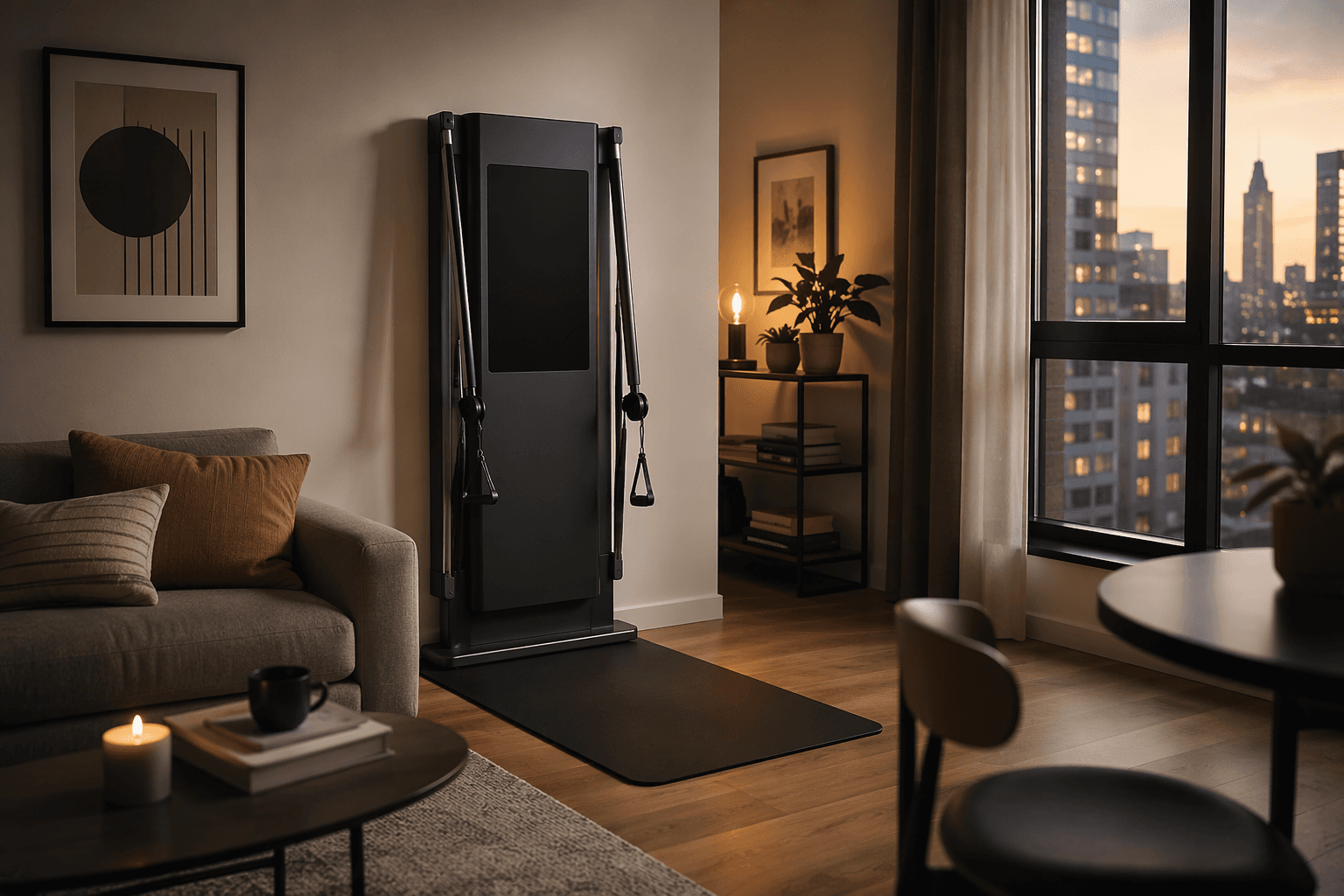
Product-by-product fit
Tonal: excellent technology, difficult rental math
Tonal should not be dismissed as a gimmick. It solves a lot of strength-training friction: adjustable digital resistance, guided workouts, and no loose plates taking over the floor. For someone who owns the wall, has the ceiling height, and wants a fixed premium installation, it can make sense.
For many renters, though, Tonal is the wrong default recommendation. Professional wall mounting into 16-inch-on-center studs and the cited 7'10" ceiling minimum are hard constraints, not preferences [1]. Add the 7'x7' workout clearance from buying-guide materials, and the elegant wall unit becomes a serious apartment commitment [5].
The quiet digital resistance helps its apartment case. The installation weakens it. If landlord permission, stud access, or move-out repair is even slightly uncertain, Tonal belongs in the “only if your apartment specifically allows it” category.
Tempo Move: no wall holes, but not as small as it sounds
Tempo Move is easier to place than a wall-mounted smart gym because it uses a cabinet-like setup rather than a fixed mirror or wall unit. It is also the current Tempo option to discuss: the larger Tempo Studio has been discontinued, which CNET and Garage Gym Reviews both note in their 2026 coverage [2][3].
The apartment catch is the tracking environment. Tempo Move needs a 6'x6' clear workout area for its 3D Tempo Vision camera system, an iPhone XR or later, and a TV with HDMI [2][3]. That is a lot of dependency for a small room. If your TV is mounted across from a couch with no open floor between, the cabinet may fit while the workout does not.
Tempo Move also keeps physical weights in the equation. That may appeal to people who prefer dumbbell-based training, but it makes floor protection and neighbor noise more important than with digital-resistance systems.
Speediance: the strongest all-around apartment fit if you have deployable floor space
Speediance is the cleanest answer for many renters who want a full smart strength system without drilling into a wall. It is freestanding, uses digital resistance, and folds for storage [1][2]. Those three traits directly answer the apartment test: no landlord negotiation, no plate impact, and no permanent takeover of the room.
The remaining issue is active footprint. Buying-guide materials cite 30–50 sq ft of clearance when deployed [5]. In practice, that means Speediance suits apartments where furniture can shift briefly or where one corner can become a training zone during workouts. It is not a magic solution for a room with no open floor, but it is much less punishing than a system that requires wall work.
MaxPRO SmartConnect: best when portability matters more than a built-in gym feel
MaxPRO is the option for the apartment dweller who cannot promise any single room will always be available. It weighs under 10 lbs and offers up to 300 lbs of resistance [4]. That makes it less like a piece of gym furniture and more like a connected strength tool you can move around the apartment.
The trade-off is that it does not deliver the same fixed, all-in-one smart-gym presence as a larger system. Exercise setup can depend on anchors, body position, and the space available for a given movement. For renters in studios, shared apartments, or rooms that have to become something else immediately after training, that trade-off may be worth it.
AEKE K1: the most direct under-4-sq-ft storage example, with source caution
AEKE K1 stands out because its stated storage footprint is 3.2 sq ft [1]. That is the kind of number apartment shoppers actually need. A machine that stores below 4 sq ft has a better chance of living beside a sofa, behind a chair, or along a wall without turning the room into a permanent gym.
The caution is the source. AEKE’s small-apartment checklist is useful because it frames the right constraints — installation, noise, active footprint, and storage footprint — but AEKE also sells a competing product. Its own product claims should be checked against independent reviews where available. Even with that caveat, K1 belongs on the apartment shortlist because it is built around the storage problem instead of pretending it does not exist.
How to choose without overbuying
Start with the room before the product page. Measure the stored spot first, then the active training zone. If the machine needs a TV, camera line of sight, phone model, wall studs, or a ceiling minimum, those requirements belong in the first pass, not in the fine print after you have already decided you like the interface.
- If you rent and cannot drill: remove wall-mounted systems from the default shortlist unless your landlord has clearly approved the installation.
- If you have downstairs neighbors: favor digital resistance or cable resistance over loose free weights, and use a mat to reduce footfall and equipment vibration.
- If your living room must reset after workouts: prioritize folded or stored footprint, not just the product’s assembled dimensions.
- If your only open area is in front of the TV: verify camera-tracking distance and device requirements before choosing a form-tracking system.
- If you move often: portability and low setup friction are worth more than a premium fixed installation.
Subscriptions, exercise libraries, and coaching style still matter, but they come after the apartment test. A beautiful training interface cannot compensate for a system that needs wall work you are not allowed to do or a tracking zone your room cannot provide.
The practical shortlist
For most apartment dwellers, Speediance is the strongest full-system fit because it is freestanding, foldable, and digital-resistance based [1][2]. It still needs usable workout clearance, so it is best for apartments where a training zone can temporarily open up.
MaxPRO SmartConnect is the better choice when portability is the main constraint. If you train in different rooms, share space with roommates, or move frequently, its under-10-lb weight matters more than having a large integrated console [4].
AEKE K1 is the under-4-sq-ft storage example to watch, with the important caveat that its strongest apartment claims currently come from the manufacturer [1]. Tempo Move can work if you already have a 6'x6' clear zone, compatible iPhone, and TV setup, but it should not be treated as automatically compact [2][3]. Tonal remains a premium fixed-installation system that only makes renter sense when wall mounting, ceiling height, and move-out obligations are already solved [1][5].
The best smart home gym system for an apartment is not the most advanced one on paper. It is the one you can install without permission, use without creating impact noise, and put away without surrendering the room.
References
- Smart Home Gym Equipment Buying Checklist for Small Apartments — AEKE
- Best Smart Home Gym Equipment (2026) — Garage Gym Reviews
- Best Smart Home Gyms for 2026 — CNET
- MaxPRO SmartConnect Review — PCMag
- Smart Home Gym Buying Guide — AEKE
Comments
Join the discussion with an anonymous comment.