
A treadmill listing that says “3.5 HP motor” in the spec table and “4.25 HP” in the sales copy is not giving you two equally useful numbers. For runners shopping for the best treadmill for home training, the number to look for is CHP — continuous horsepower — because it describes sustained output. Peak HP is the impressive-looking figure a motor may hit briefly, and it does not have a standardized treadmill testing protocol behind it.
That distinction matters most after the return window closes. A motor that feels fine during a five-minute showroom test can start to labor months later when it is asked to hold running speeds several days a week. The belt hesitates. The motor runs hotter. The pace that used to feel steady starts to feel uneven. At that point, the shopper is no longer comparing spec sheets; they are negotiating with downtime, warranty language, and repair costs.
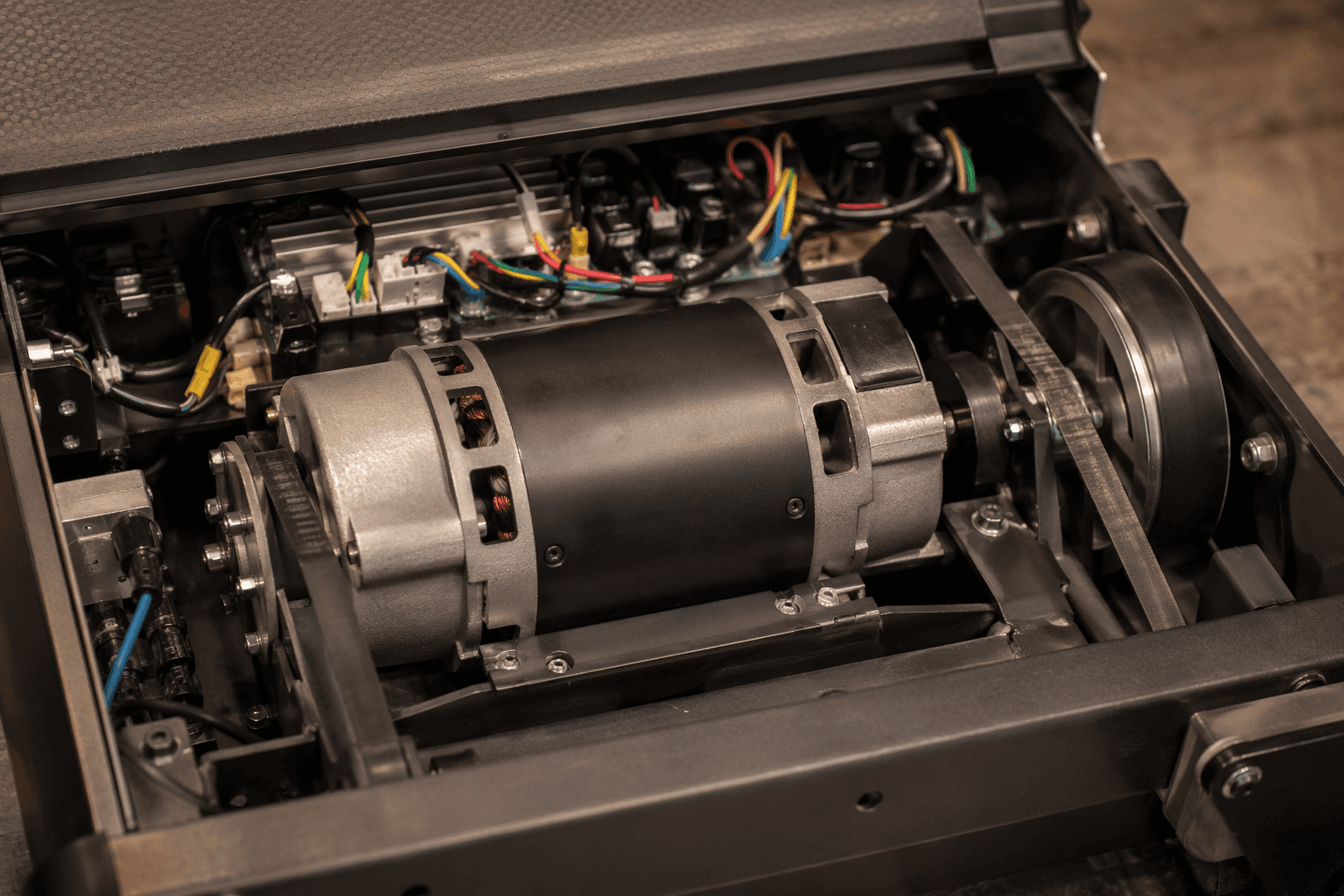
Read CHP first, then decide whether the treadmill matches your training
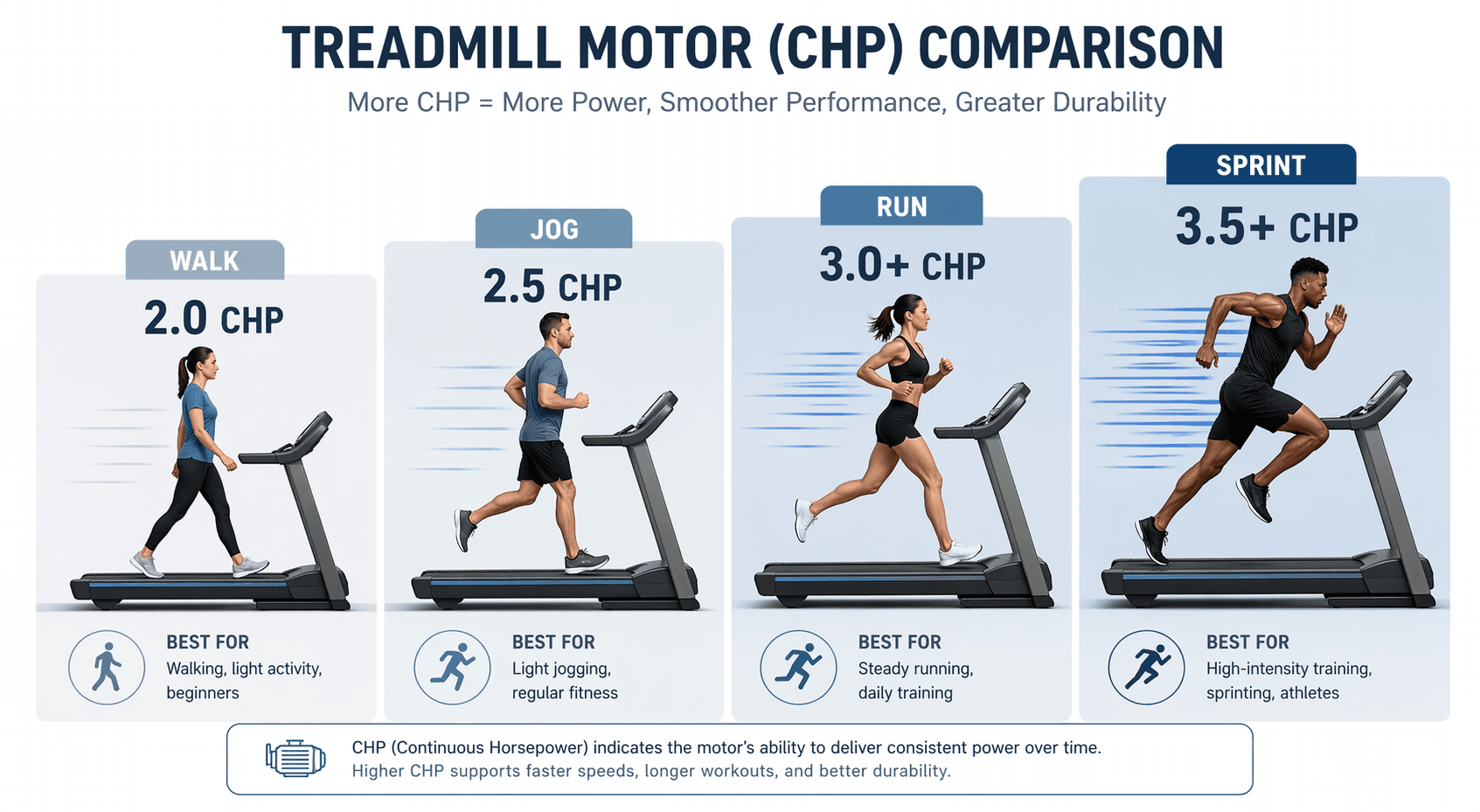
CHP is the motor spec that belongs at the top of the comparison. Industry buying guidance commonly separates treadmill motor needs by use: about 2.0 CHP for walking, 2.5 CHP for jogging, 3.0 CHP or higher for running, and 3.5 CHP or higher for high-volume running.[1][2]
| Primary use | Motor target | What it means in practice |
|---|---|---|
| Walking | Around 2.0 CHP | Enough for lower-speed sessions where the motor is not repeatedly asked to hold running pace. |
| Jogging | Around 2.5 CHP | A better fit for moderate speeds, but still not the threshold I would use for a runner training several days a week. |
| Regular running | 3.0+ CHP | The practical minimum for runners training four or more times per week at 6+ mph. |
| High-volume running | 3.5+ CHP | The safer target for heavier weekly mileage, longer sessions, faster work, or multiple runners in the same household. |
The 3.0 CHP line is where a treadmill starts to make sense for a runner rather than an occasional jogger. If your normal week includes four runs, intervals, tempo work, or long steady efforts, a 2.5 CHP treadmill is asking a smaller motor to live a harder life. It may still move the belt on day one. The question is whether it can keep doing that while warm, loaded, and used repeatedly.
Body weight and workout style change the stress on the motor, too. A light runner doing short easy runs is not asking the same thing as a larger runner doing hour-long sessions, hill workouts, or fast intervals. That is why a treadmill with just enough CHP on paper can feel borderline in actual training. The motor has to overcome belt friction, user load, incline demands, and speed changes, not simply produce a number in a product table.
For a runner deciding between two otherwise similar treadmills, the motor comparison should usually be ruthless: a true 3.0 CHP rating beats a louder peak-HP claim. A 3.5+ CHP motor is more reassuring than a 3.0 CHP motor if the machine will see marathon training blocks, daily use, or more than one regular runner. A treadmill advertised mainly around a peak number is asking you to trust the least comparable part of the listing.
Peak HP is the number to distrust
Peak horsepower is not useless because it is always fake. It is useless for comparison because it does not tell you what the motor can sustain. One brand may highlight a maximum output reached briefly under favorable conditions. Another may put the continuous rating in the technical table and the larger peak figure in the headline. The shopper sees two precise-looking numbers and has no clean way to compare them.
When a page uses “HP” without saying whether it is continuous, assume you still do not have the motor answer. Look for “CHP,” “continuous duty,” or a manufacturer specification that clearly describes sustained horsepower. If all you can find is a peak claim, the listing has skipped the number runners need most.
RPM tells you whether the motor is working hard to look strong
Horsepower is only part of the motor story. RPM — revolutions per minute — helps explain how the motor produces that output. The more reassuring treadmill motor guidance favors motors under 4,000 RPM, while motors over 5,000 RPM are treated as a warning sign because they may produce less torque and wear faster.[1]
That RPM guidance should be read correctly. It is not a formal public standard that every manufacturer is required to follow. It is experience-based industry guidance, and it is useful because it catches a mistake shoppers make all the time: assuming the higher number is always the better number.
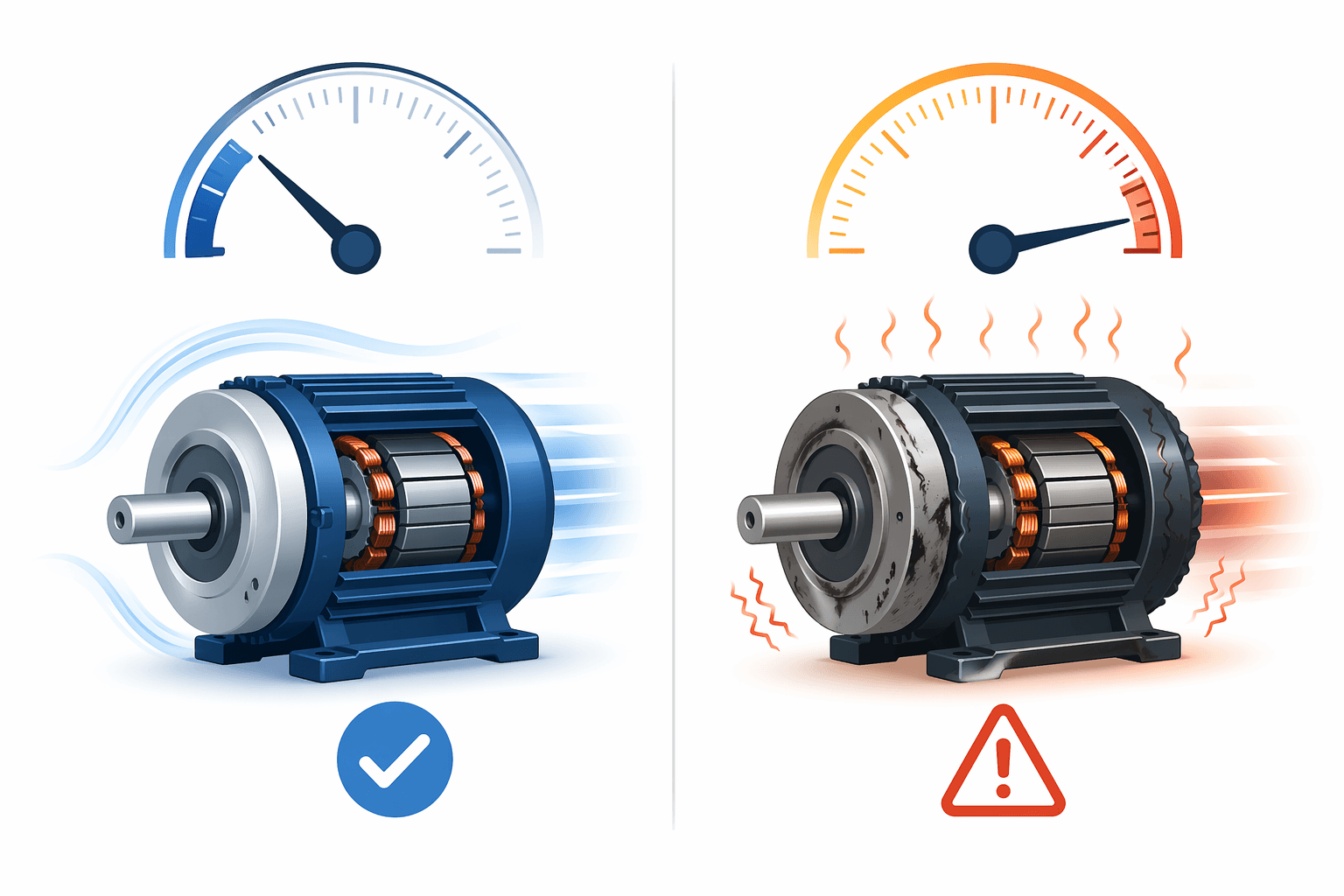
A motor spinning faster can sometimes compensate for a smaller or less robust design, but running belts need torque. They need the motor to keep turning steadily while a person lands, pushes off, changes speed, and sometimes adds incline. If the motor has to spin very fast to deliver its advertised output, that can mean more heat and more wear. For a runner, the smoother-looking spec is often a moderate-RPM motor with enough CHP, not the motor with the biggest headline horsepower.
This is where spec sheets become frustrating. Many brands display CHP more readily than RPM. If the RPM is listed and it is under 4,000, that is a positive sign. If it is over 5,000, I would treat the treadmill as less appealing for serious running unless other evidence — warranty, build quality, user load rating, and service reputation — is unusually strong. If RPM is not listed at all, CHP and warranty length have to carry more of the screening work.
DC and AC motors are a tradeoff, not a purity test
Most home treadmills use DC motors because they are quieter and more energy-efficient. AC motors are generally associated with higher durability under heavier loads and higher duty cycles, but they cost more and draw more power.[2]
That does not make AC the automatic answer for a home runner. A light-commercial or commercial-style AC motor may be attractive if several people will use the treadmill, if sessions are long and frequent, or if durability matters more than noise and cost. But a well-built DC motor with enough CHP, a sensible RPM rating, and a strong warranty can be the more practical home choice.
The category label alone is not enough. A cheap AC motor is not magically better than a carefully built DC motor. Within each type, manufacturers still make different choices about cooling, components, control boards, belts, and warranty coverage. Motor type helps you understand the design direction; it does not excuse weak CHP or a thin warranty.
Use the motor warranty as a quality check
A motor warranty is not just a customer-service promise. It is a manufacturer telling you how long it is willing to stand behind one of the most expensive parts of the treadmill. Warranty guidance commonly treats less than 5 years on the motor as a poor signal, 5 to 10 years as standard, and lifetime parts coverage as a premium indicator.[1][2]
This is where the fine print matters. A long frame warranty does not necessarily mean the motor is equally protected. A generous parts warranty may still exclude labor after a shorter period. A lifetime motor warranty may sound excellent, but the value depends on what the warranty covers, how claims are handled, and whether the brand remains easy to reach.
The financial reason to care is simple: treadmill motor replacement is commonly cited in the $150 to $500 range before labor.[3] That range is broad enough to avoid pretending every repair is the same, but concrete enough to make weak warranty coverage feel less abstract. If a treadmill is already borderline on CHP and hides behind a short motor warranty, the buyer is carrying more of the risk.
If warranty terms are the deciding factor for you, it is worth reading a dedicated guide to treadmill warranties rather than relying on the badge displayed near the price.
How long should a treadmill motor last?
With proper maintenance, a treadmill motor is often estimated to last 7 to 12 years, but that is not a clean promise.[1] The estimate depends heavily on how often the treadmill is used, how hard it is used, user body weight, belt condition, lubrication, cleaning, heat, and whether the motor is operating near its limits.
A runner using a treadmill five days a week places a different load on the machine than someone walking twice a week while watching TV. Dust buildup, a dry belt, and poor belt alignment can make even a good motor work harder than it should. A treadmill that starts with just enough motor for your training also has less margin as parts age.
This is why lifespan claims should be treated as conditional. A good motor specification improves your odds; it does not cancel maintenance. For a broader look at how repairs fit into ownership math, a 5-year treadmill cost-of-ownership guide is the better place to compare motor risk with belt, deck, console, and service costs.
A quick way to screen treadmill motor specs
When two treadmills both look runner-capable, narrow the motor decision before getting distracted by screens, app trials, or incline animations.
- Ignore peak HP as a comparison metric. Use CHP or continuous-duty horsepower.
- For regular running four or more times per week at 6+ mph, require at least 3.0 CHP.
- For high-volume running, faster workouts, longer sessions, heavier users, or multiple runners, prefer 3.5+ CHP.
- If RPM is listed, favor motors under 4,000 RPM and be cautious with motors over 5,000 RPM.
- Treat the motor warranty as a build-quality signal: under 5 years is weak, 5 to 10 years is normal, lifetime parts coverage is a premium sign.
- Read lifespan claims as conditional on maintenance, use frequency, user load, and belt condition.
After that, the rest of the treadmill can come back into the conversation: deck size, cushioning, incline, speed range, controls, folding design, and service access. If you want the full picture beyond motor specs, use a broader best home treadmill guide for your running style. But for the motor line itself, the decision is much narrower than the marketing makes it look: trust sustained CHP, check RPM when you can, and make the warranty prove the manufacturer is willing to live with the same motor it is selling you.
References
- Treadmill Motors: What You Need to Know — treadmillreviews.net
- Treadmill Motors: What You Need to Know — BarBend
- Home Treadmill Buying Guide: Avoid These 7 Pitfalls — fitnesspowerhouse.com

Comments
Join the discussion with an anonymous comment.