
Before you search used fitness equipment near me, decide how much uncertainty you are willing to buy. Used gym equipment can cost 40–70% less than new, especially mid-range and commercial-grade pieces that have already taken their big depreciation hit, but that range is not a magic discount stamped on every dusty treadmill in a garage.[1] The real savings show up only when the equipment is simple enough to inspect, priced against realistic resale value, and possible to get home without turning the pickup into a small logistics project.
A good local buy usually clears five gates: you can find comparable listings, confirm the exact model before visiting, test the equipment under load, move it safely, and still have enough margin left that a minor repair would not wipe out the deal. If one of those gates fails, the low price is just the opening bid on your time.
The Local Buying Protocol
Use this flow before you message sellers. It keeps the hunt from turning into three evenings of saved listings and one bad Saturday drive.
| Step | What to do | Why it matters |
|---|---|---|
| Search in the right places | Use Facebook Marketplace, Craigslist, OfferUp, Play It Again Sports, specialty resellers, and gym liquidators differently. | Each source has a different mix of price, risk, inventory quality, and seller accountability. |
| Pre-screen before visiting | Ask for model numbers, age, working status, photos of wear points, and pickup constraints. | A seller who cannot answer basic questions may also be unable to prove condition. |
| Bring a small inspection kit | Take a tape measure, flashlight, towel, adjustable wrench, phone charger, and cash only after inspection. | Most bad buys reveal themselves when you measure, plug in, tighten, lift, or listen. |
| Run a five-minute inspection | Check frame, electronics, moving parts, upholstery, model reputation, service history, and warranty or return protection. | This is where “works fine” becomes either visible evidence or background noise. |
| Price the whole purchase | Add transport, missing parts, repairs, subscription costs, and resale difficulty. | The cheapest listing is not always the lowest-cost equipment. |
| Walk away cleanly | Leave if the seller refuses testing, the frame is compromised, electronics fail, or the move is unrealistic. | A no-deal is cheaper than owning a problem with handles. |
If you are still deciding what kind of setup you actually want, sort that out before browsing. A used cable machine is not a bargain if your training would be better served by a rack, bench, and adjustable dumbbells. For budget planning, see what a home fitness budget actually buys or how to build a budget home gym under $500. Those decisions make the used market much easier to filter.
Where to Search, and What Each Source Is Good For
There is no single best marketplace. A dense metro area might have dozens of racks within a 20-minute drive. A rural buyer may need to widen the radius, wait longer, or pay a reseller to avoid burning half a day on one uncertain listing. The useful question is not “Which platform is cheapest?” It is “Which platform gives me the best odds for this type of equipment?”
| Source | Best for | Buyer risk | Price flexibility | Effort required |
|---|---|---|---|---|
| Facebook Marketplace | Home gym basics, racks, benches, plates, dumbbells, cardio machines | Medium: seller quality varies widely | High, especially for bulky items | Medium: fast-moving listings require quick filtering |
| Craigslist | Older commercial gear, garage cleanouts, sellers who prefer simple listings | Medium to high: fewer platform protections | High | Medium: search quality depends heavily on local market |
| OfferUp | Consumer cardio, smaller accessories, casual local sellers | Medium: condition details can be thin | Medium to high | Low to medium |
| Play It Again Sports | Inspected used basics, beginner gear, buyers who want an easier return path | Lower than private-party listings | Lower | Low |
| Specialty used-equipment resellers | Commercial treadmills, selectorized machines, refurbished cardio, full-room packages | Lower, depending on warranty and service policy | Low to medium | Low to medium |
| Gym liquidation sources | Commercial racks, plates, machines, rowers, large cardio batches | Medium: wear can be heavy and pickup can be complicated | Medium | High |
Facebook Marketplace is usually the first stop because inventory is broad and local. It is especially useful for power racks, benches, plates, dumbbells, adjustable dumbbells, and ordinary cardio equipment. The downside is speed. Good listings disappear quickly, and bad listings often rely on vague photos and “barely used” language. Search by category and by brand, but also search the plain terms people use when they do not know what they own: “weight set,” “squat rack,” “exercise bike,” “rowing machine,” “gym equipment,” and “moving sale.” Gray Matter Lifting’s platform advice is based on long personal buying experience rather than a formal market study, but the practical search behavior tracks what local buyers see every week: the best deals are often poorly titled.[2]
Craigslist still matters in some regions, especially for older commercial equipment, estate cleanouts, and sellers who are not interested in social-platform messaging. The listings can be thinner, the photos can be worse, and the safety precautions need to be stricter. Meet in daylight when possible, bring help for heavy equipment, and do not let a seller rush you through testing because “someone else is coming.”
OfferUp can be useful for smaller items and consumer cardio machines, but the same rule applies: if the listing has no model number, no plugged-in photo, and no clear shot of the wear points, you do not yet have enough information to drive. Ask first. A normal seller can take one more photo.
Play It Again Sports and local used sporting-goods stores trade lower risk for a higher price. That is not a flaw; it is the product. You may pay more than a private-party listing, but you can often inspect indoors, compare multiple items in one visit, and sometimes get a short warranty or return option. For a beginner buying a first bench, pair of dumbbells, or exercise bike, that premium may be more rational than gambling on a seller’s driveway description.
Specialty used-equipment resellers are worth checking when the item has electronics, belts, bearings, or a commercial service history. Their prices are usually less exciting, but inspected equipment, delivery options, and warranty coverage can matter more than shaving another $100 off a treadmill that you cannot repair yourself. The trade is simple: private sellers are cheaper; resellers reduce some inspection and recourse risk.
Gym liquidations can produce excellent commercial pieces, but they are not automatically beginner-friendly. Commercial machines may be large, heavy, scratched, and sold as-is. Before bidding or arranging pickup, confirm dimensions, disassembly requirements, loading help, and whether the equipment uses standard residential power. A commercial elliptical that cannot clear your basement stairs is not “built like a tank” in the helpful sense.
Pre-Screen the Listing Before You Drive
The best inspection happens before the address is shared. A short message can remove half the bad listings without leaving your driveway.
- Ask for the exact brand and model number, not just “NordicTrack treadmill” or “Rogue-style rack.”
- Ask whether everything works today, not whether it worked the last time they used it.
- Ask for a photo or short video of powered equipment turned on and moving.
- Ask about missing pins, collars, cables, safeties, remotes, chargers, manuals, or proprietary parts.
- Ask where the item is located inside the home and whether stairs, narrow doors, gravel driveways, or disassembly are involved.
- Ask whether they are the original owner and whether they have a receipt, service record, or warranty paperwork.
The point is not to interrogate someone selling a bench for $80. The point is to find out whether the seller can verify the claim they are making. “I don’t know the model, but here are clear photos of the label and joints” is workable. “It works fine, I just don’t have a way to plug it in” is not enough for powered equipment.
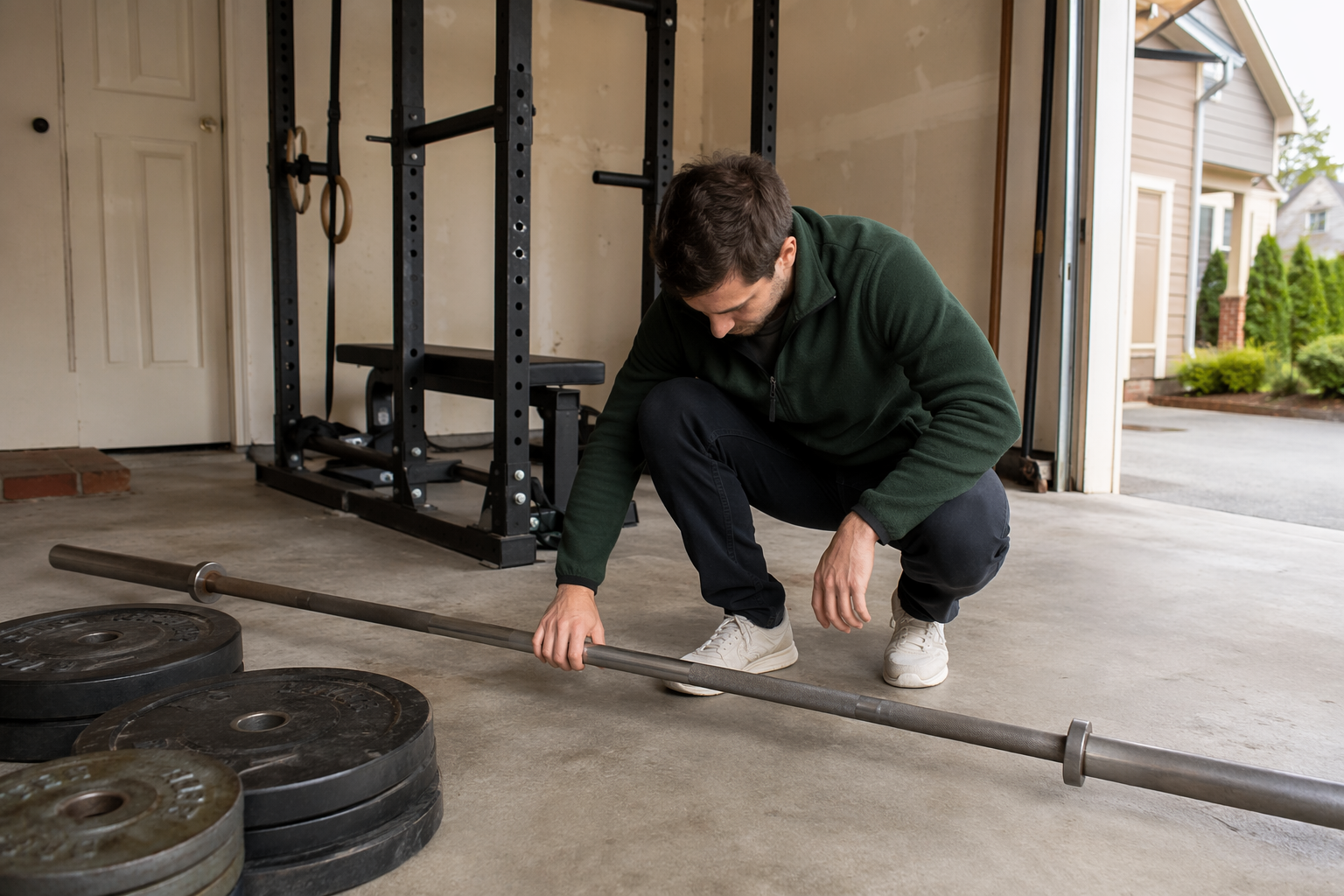
The Five-Minute On-Site Inspection
Once you arrive, slow down. Sellers often keep talking while buyers stop inspecting. Put your hands on the equipment. Move it. Load it if appropriate. Plug it in. The strongest used-equipment checklists converge on the same seven areas: frame integrity, electronics, moving parts and noise, upholstery, brand and model reputation, service history, and warranty or return protection.[3][4][5]
1. Frame Integrity
Start with the structure. On racks, benches, plate-loaded machines, and cardio frames, look for bent uprights, cracked welds, deep rust, missing bolts, elongated holes, wobble, and repairs that look newer than the surrounding metal. Surface scratches are normal. A compromised frame is different. If a rack leans, a bench rocks, or a machine shifts under bodyweight, do not let a cheap price talk you into becoming the quality-control department.
2. Electronics
For treadmills, ellipticals, bikes, rowers with monitors, and connected equipment, power the unit on yourself. Test every speed or resistance control you can. Press incline buttons. Check the display. Confirm that buttons respond without delay or dead spots. If there is a touchscreen, Wi-Fi login, subscription lock, remote, safety key, or proprietary charger, treat that as part of the item, not an accessory you can sort out later.
3. Moving Parts and Noise
Move the equipment through its actual range. Walk or jog on a treadmill for more than a few seconds. Pedal a bike with resistance applied. Pull a rower hard enough to hear the flywheel. Run cable machines through the full path and watch whether the cable tracks cleanly. Grinding, clicking under load, belt slipping, uneven resistance, and pulleys that jump their track are not cosmetic problems.
4. Upholstery and Contact Points
Pads, seats, handles, straps, and grips tell you how the equipment was treated. Torn upholstery is not always a deal-breaker on a bench or machine, but replacement cost belongs in the price. Sweat corrosion around handles, consoles, bolts, and seat rails matters more than a scuffed corner. On benches, push down and shift your weight; a cracked pad board or loose hinge is easy to miss if you only look from above.
5. Brand and Model Reputation
Brand reputation helps, but it does not replace inspection. A respected rack with missing safeties may be a worse buy than a less fashionable rack that is complete and straight. For cardio and connected equipment, search the exact model while you are standing there. Look for discontinued parts, common error codes, subscription requirements, and whether the manufacturer still supports the console or app.
6. Service History
Service history matters most when the equipment has belts, motors, decks, bearings, cables, or electronics. Ask what has been replaced and when. A seller may not have paperwork, especially for private home equipment, but the answer still tells you something. “I lubricated the treadmill belt last month and have the manual” lands differently from “I never had to do anything to it” on a 10-year-old machine.
7. Warranty or Return Protection
Private-party sales are usually final. Resellers and used sporting-goods stores may offer a short warranty or return window, commonly in the 30–90 day range. That does not make every reseller item a bargain, but it changes the risk calculation. A slightly higher price with recourse can be sensible for powered equipment; for iron plates, it may not matter.
Which Used Equipment Is Usually Worth Trusting
The safer used buys share one trait: ordinary buyers can judge most of the risk with their eyes, hands, and ears. That is why boring equipment so often wins.
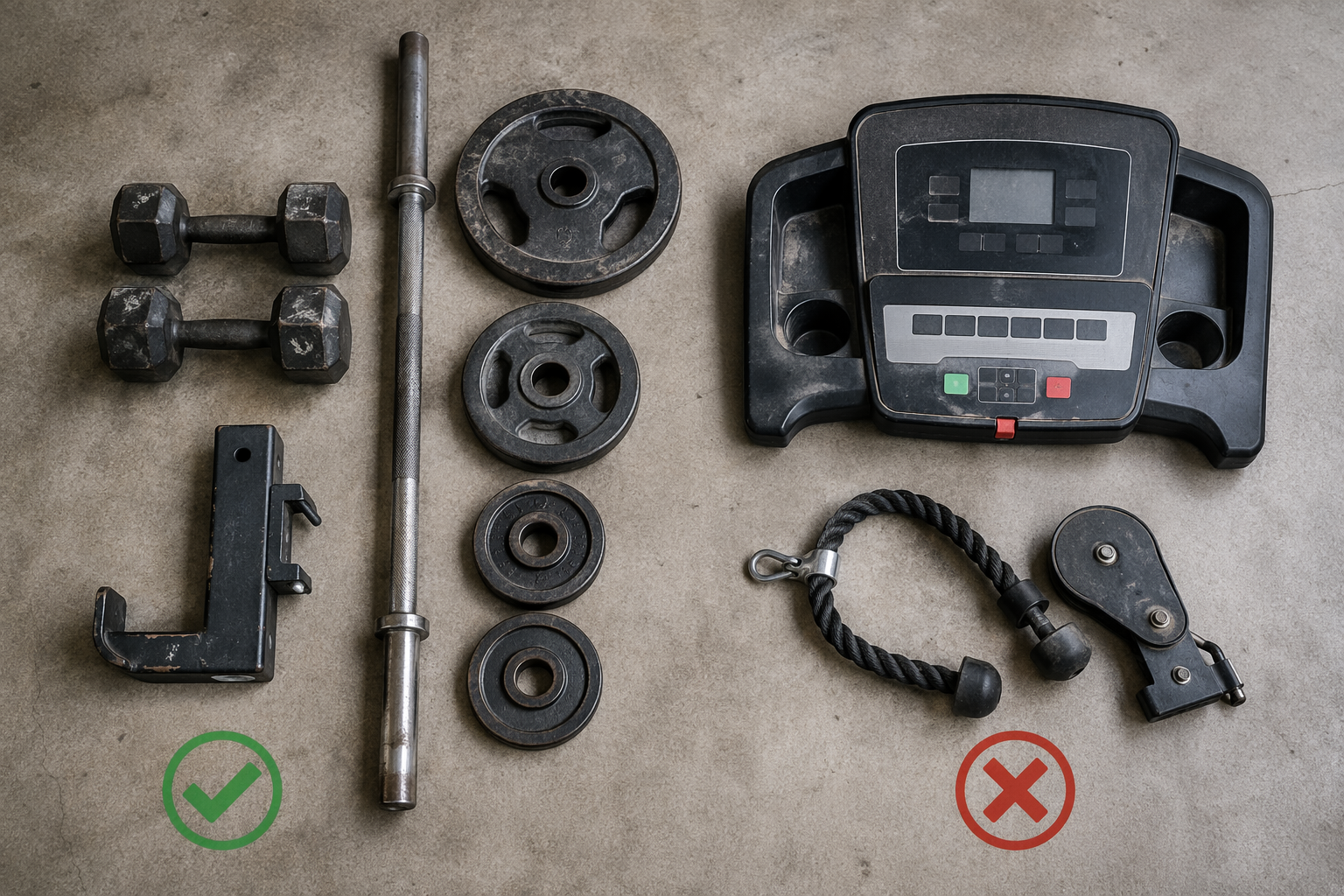
Best Used Buys: Free Weights, Racks, and Simple Strength Gear
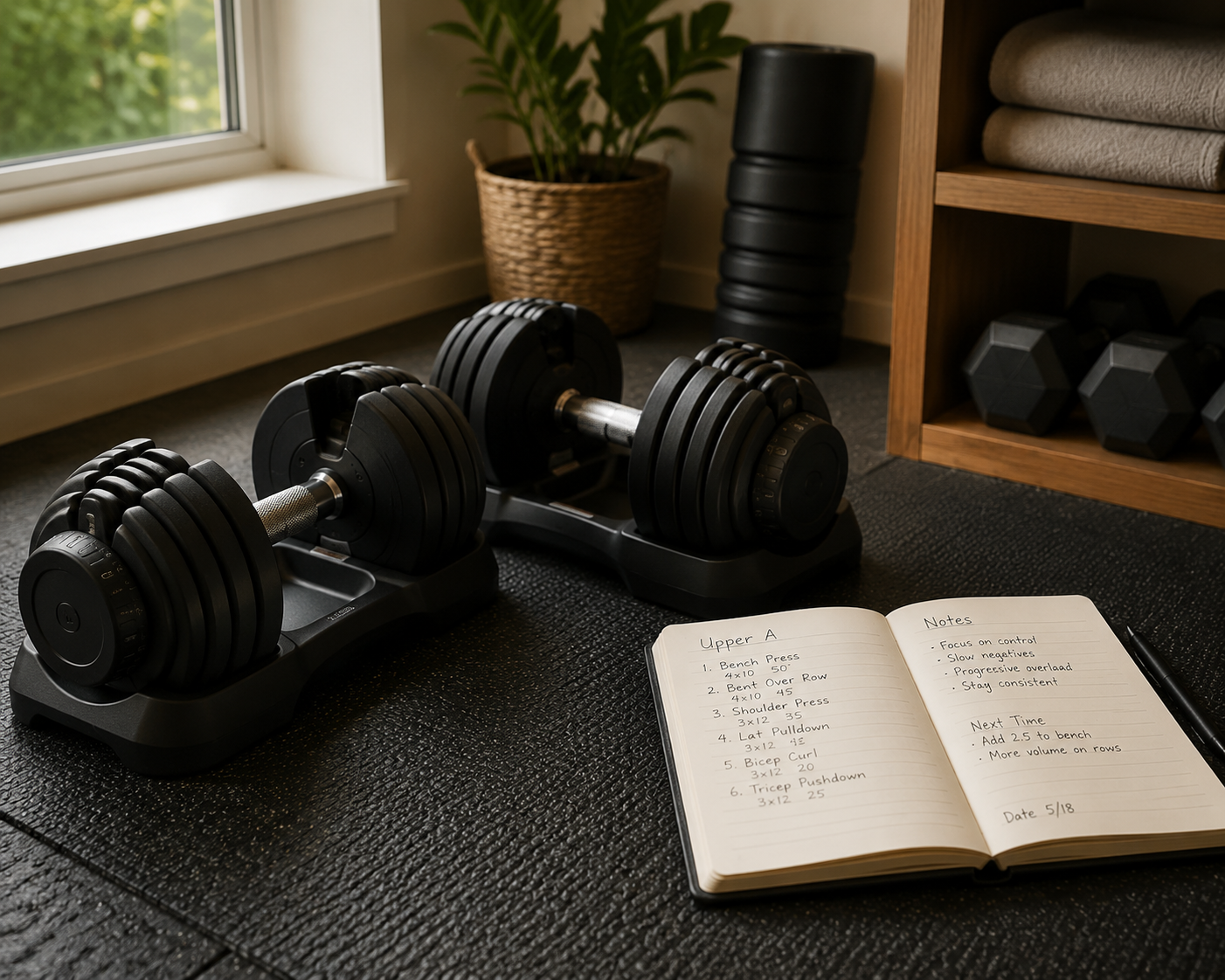
Dumbbells, barbells, weight plates, kettlebells, power racks, squat stands, flat benches, and basic adjustable benches are the backbone of the used market. They can be scratched, faded, and ugly while still being completely functional. Multiple buyer guides identify free weights, racks, plates, and Concept2 rowers as among the safest secondhand categories because they are durable and easier to inspect than motorized equipment.[5][6]
For plates, check weight markings, sleeve fit if they are bumpers, cracks, chips around the center hole, and severe rust. For dumbbells, look for loose heads, bent handles, cracked rubber, and pairs that do not match. For barbells, roll the shaft on the floor or in a rack to check straightness, spin the sleeves, look for rust in the knurling, and check whether the sleeves have excessive side-to-side play.
Racks deserve a little more attention because missing parts can be expensive. Confirm the hole size, upright size, safeties, J-cups, pull-up bar, crossmembers, and hardware. If the seller disassembled it, ask for photos from before teardown or assemble enough of it to confirm the structure is complete. A pile of steel is not automatically a rack.
If you are building around limited space, used strength basics can still work, but measure first. A rack that fits on paper may still fail because of ceiling height, plate storage, barbell loading clearance, or the path from the garage door to the room. For apartment or small-room constraints, compare the purchase against compact home exercise equipment options before committing to something you cannot comfortably use.
Good With Caution: Mechanical Bikes and Plate-Loaded Machines
Mechanical-resistance bikes, air bikes, spin bikes, plate-loaded machines, and simple cable stations can be good used buys when the wear points are visible and parts are not proprietary. Brazyn Life and TZFIT both place mechanical-resistance bikes and plate-loaded machines in the safer-with-caution zone rather than the highest-risk category.[5][6]
On bikes, test resistance changes, crank smoothness, pedal threads, seat and handlebar adjustments, and flywheel noise. On plate-loaded machines, inspect pivot points, bushings, guide rods, cables, pulleys, stops, and pads. A machine that moves smoothly empty may still bind under load, so add plates if the seller has them.
Higher Risk: Treadmills, Ellipticals, and Smart Equipment
Treadmills can be worth buying used, but they are where optimism gets expensive. Motors, belts, decks, incline mechanisms, consoles, and control boards can all hide problems during a quick glance. Ellipticals add linkages and stride mechanics that may feel fine for 20 seconds and irritating after 20 minutes. Smart and connected equipment adds another layer: app support, subscription requirements, account transfer, screen function, software age, and whether the machine becomes limited without an active service.
This is where a reseller, warranty, or lower price cushion matters. If a treadmill is cheap because the seller wants it gone before moving, fine—test it thoroughly and price the risk. If it is cheap because the console flickers, the belt slips, or the incline groans, the repair exposure is already visible.
Price the Deal Against Resale Reality
The 40–70% savings range is a calibration tool, not a promise. It fits many used mid-range and commercial-grade purchases, especially older commercial pieces, but local supply, brand demand, condition, and transport difficulty change the number fast.[1] A five-year-old commercial rower from a respected brand is not priced the same way as a lightweight consumer treadmill with unknown mileage.
Garage Gym Reviews’ resale pricing guidance notes that stronger brands can retain substantially more value than budget brands; Rogue racks, for example, may retain around 80% or more, while budget brands may sit closer to about 50% depending on condition and market.[7] That does not mean you should overpay for a logo. It means popular, durable gear may not discount as deeply because the next buyer also knows what it is.
Before negotiating, compare three things: the seller’s price, the cost of buying new or refurbished, and the cost of the next-best used option within your driving radius. If the listing is common, negotiate harder. If it is rare, complete, close, and easy to move, the fair price may be the one that prevents someone else from buying it first.
Do Not Forget Transport Cost
Transport is part of the price. Add the cost of renting a truck, buying straps, bringing a second person, removing doors, disassembling the machine, and possibly paying for delivery. A $300 treadmill that needs a rented van and three hours of wrestling may be worse than a $450 treadmill from a reseller that delivers and gives you a short return window.
Measure the equipment, your vehicle, doorways, stair turns, and final training space. Confirm whether the item separates into manageable pieces. If the seller says, “It came down here somehow,” that is not a moving plan.
When Timing Helps
Used gym listings appear all year, but timing can improve selection. Gray Matter Lifting identifies January–February, May–June, and September as useful buying windows: after New Year’s resolution purchases cool off, during moving season, and around fall routine resets.[2] Treat that as practical pattern recognition, not a guarantee. In a strong local market, the best listing is still the one you are ready to inspect when it appears.
If you have a flexible plan, keep a short watchlist instead of chasing everything. For example, “rack under 84 inches, 2x3 or 3x3 uprights, complete safeties, within 30 miles” beats “home gym stuff.” Buyers who know their constraints move faster and make fewer emotional exceptions.
How to Negotiate Without Making the Deal Weird
Good negotiation starts with evidence. Do not send a lowball number just because the item is used. Point to missing parts, visible wear, transport burden, comparable local listings, or the fact that powered equipment cannot be fully tested. If the item is accurately described, fairly priced, and in demand, paying the asking price may be the smartest move.
- Use clear offers: “If it powers on and the belt runs smoothly, I can do $400 and pick up today.”
- Keep repair risk specific: “The safety key is missing and I can’t test it fully, so I’d be at $250.”
- Do not negotiate against problems you did not inspect: save final price changes for the driveway, not after loading.
- Bring the agreed amount, but do not hand over cash until testing is complete.
- Be willing to leave politely. Another listing is almost always cheaper than a bad machine.
For beginners, it also helps to separate wants from first purchases. A used functional trainer can be great, but not if it absorbs the entire budget while you still lack basic resistance options. If you are unsure what to prioritize, start with home gym equipment for beginners or compare home gym equipment systems before committing to a bulky used centerpiece.
A Simple Go or No-Go Standard
Buy the used item when the category is inspectable, the condition matches the listing, the price reflects local resale reality, the missing parts are minor or priced in, and the move home is boring. Be stricter with motors, screens, subscriptions, and anything too heavy to remove without a plan.
Walk away when the seller will not let you test it, the frame is bent or cracked, powered functions fail, the item depends on unsupported software, or the transport problem is bigger than the discount. Used fitness equipment is a good deal only when the price, condition, category risk, transport burden, and repair exposure still make sense after inspection.
References
- PreOwnedGym.com Buyer's Guide, PreOwnedGym.com
- Where to Buy Used Gym Equipment, Gray Matter Lifting, 2026
- Smart Gym Owner's Checklist, UsedGymEquipment.com, July 2025
- 6 Qualities to Look for When Buying Used Gym Equipment, Global Fitness
- 2026 Buyer's Guide, Brazyn Life
- Used Fitness Equipment Buying Guide, TZFIT
- Garage Gym Equipment Pricing Trends, Garage Gym Reviews

Comments
Join the discussion with an anonymous comment.