
How to Choose Your First Workout App: A Decision Framework for Complete Beginners
Overwhelmed by the number of workout apps? This guide helps complete beginners find the right match by walking through four key dimensions: your fitness goal, budget, equipment access, and preferred instruction style.
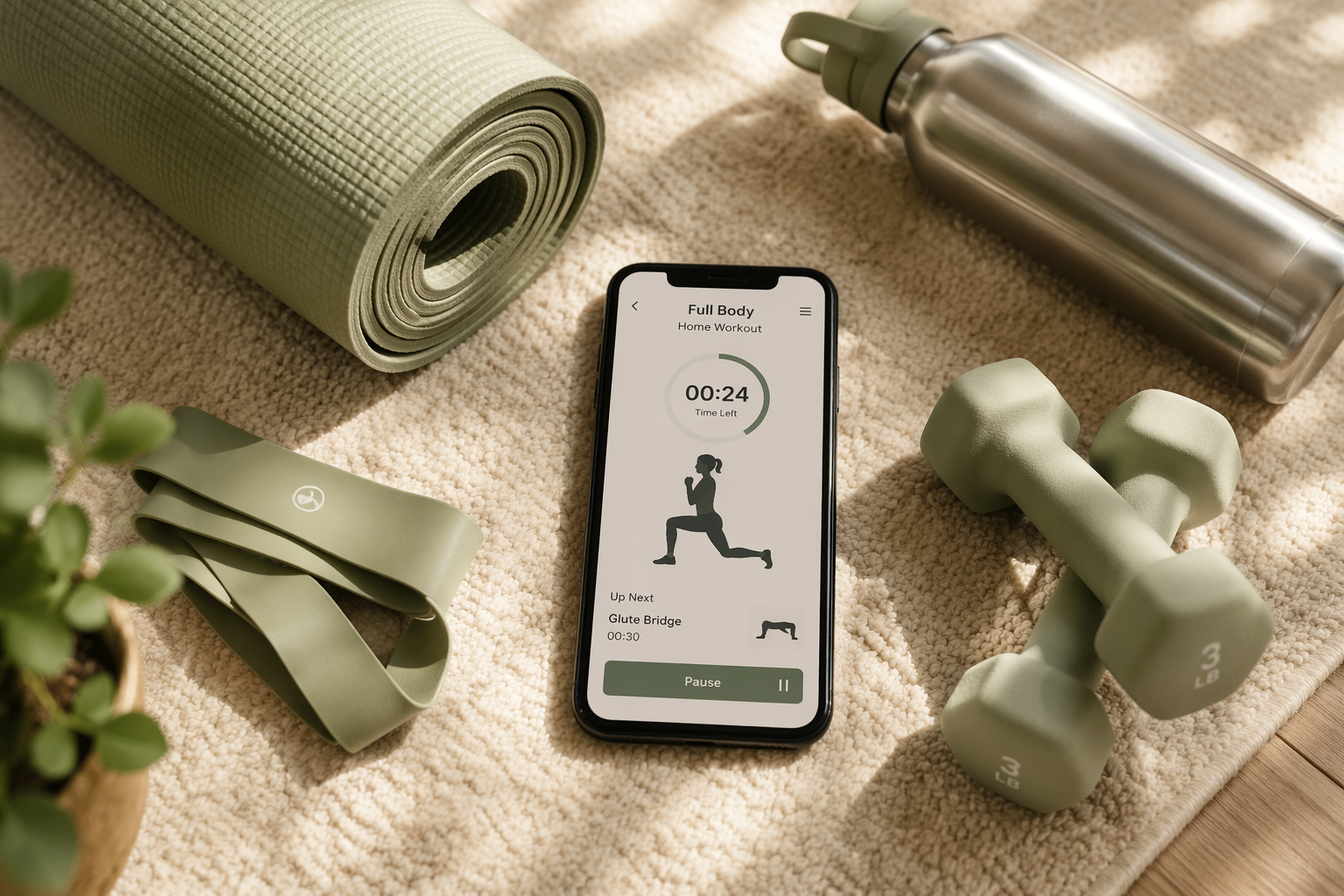
Why Most Beginners Download the Wrong App (and Quit)
The app store is full of five-star reviews from people who already work out. That is not you. You are starting from zero — no gym membership, no routine, maybe no idea what a deadlift looks like. You search "workout apps for beginners" and get back a wall of options: free apps, paid apps, apps that need a smart gym, apps that promise six-pack abs in 30 days.
The problem is not that there are too many apps. The problem is that most beginners pick an app that was designed for someone else. They download a strength-logging app when they need guided cardio. They sign up for a $200/month coaching service when a free app would have worked just as well. The mismatch has nothing to do with motivation and everything to do with not knowing what questions to ask before downloading.
The 4-Dimension Decision Framework: Goal × Budget × Equipment × Instruction Style
Every workout app can be evaluated along four independent dimensions. Your job is not to find the app that scores highest on all four — it is to find the app that matches your specific combination. Here is what each dimension means for a beginner.
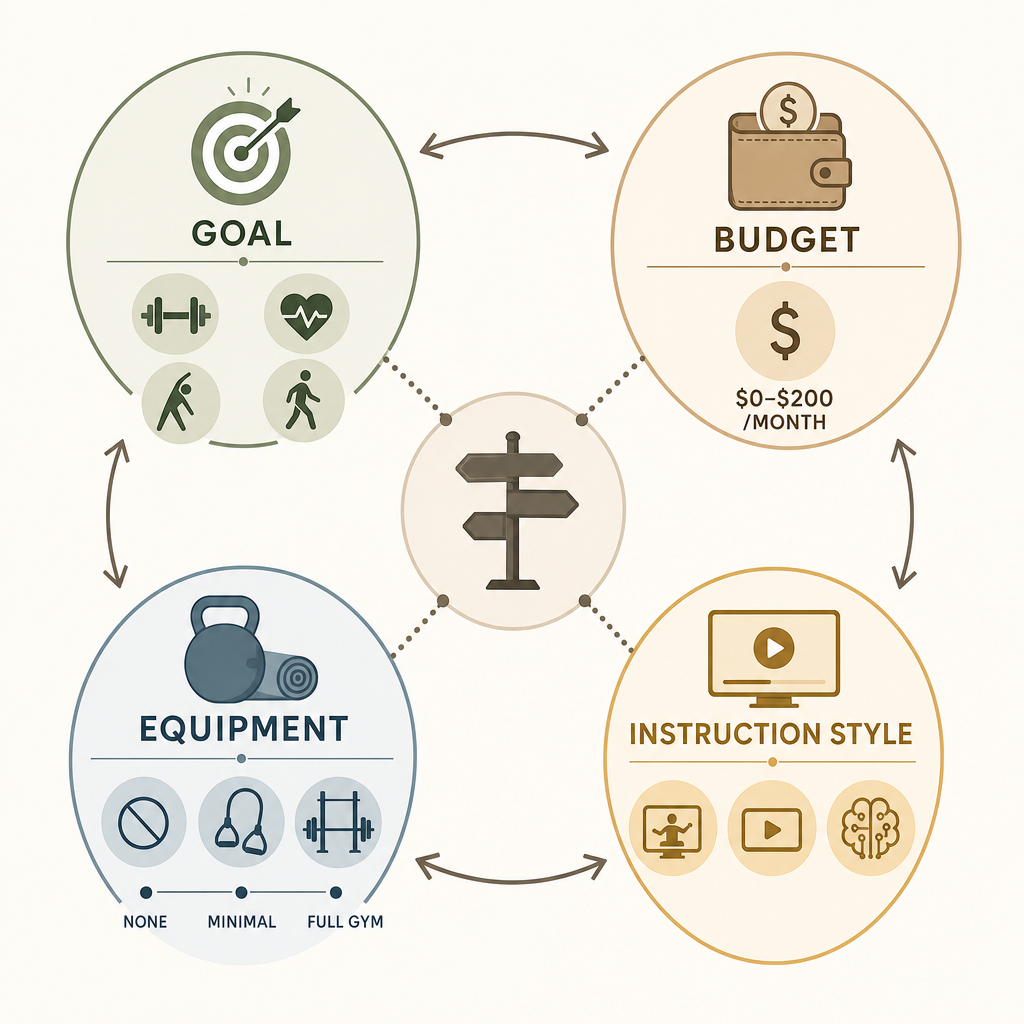
Dimension 1: Your Fitness Goal
Be honest about what you actually want to do, not what you think you should do. The four common beginner goals are:
- General movement and cardio — you want to feel better, move more, and build a habit. You are not worried about muscle size or a specific number on the scale.
- Strength building — you want to get stronger, lift heavier things over time, and see visible changes in your body composition.
- Flexibility and mobility — you want to move better, reduce stiffness, and maybe incorporate yoga or Pilates into your week.
- Weight loss — you want to drop body fat and are open to a mix of cardio, strength, and nutrition guidance.
Most apps serve one or two of these well. An app that excels at guided strength training (like Caliber or StrongLifts 5x5) will feel frustrating if what you really want is a follow-along dance cardio class.
Dimension 2: Your Budget
The range is wide: from completely free (Nike Training Club) to $199/month (Future). The key insight is that price correlates with accountability structure, not workout quality. A free app with well-designed beginner programs will produce better results than an expensive app you do not use because the coaching style does not fit you.
PCMag notes that $10–15 per month is considered a good rate for a workout app, and anything above $25 per month is too high for a standard subscription. The exception is apps that include a real human coach, which can cost $150–200 per month.
Dimension 3: Your Equipment Access
Garage Gym Reviews found that the best beginner apps have at least 70% of their workout library requiring minimal or no equipment. If you have zero equipment, you need an app that is built around bodyweight movements. If you have a pair of dumbbells or resistance bands, your options expand significantly.
Do not buy equipment to match an app. Choose an app that matches the equipment you already have or are willing to buy for under $50.
Dimension 4: Your Preferred Instruction Style
This is the dimension most beginners ignore, and it is often the one that determines whether they stick with the app past the first week. There are three common instruction styles:
- Follow-along classes — a trainer on video leads you through the workout in real time. You press play and follow. Best for people who want to be told exactly what to do without thinking.
- Self-paced demos — you see a demonstration of each exercise, then complete your sets on your own timer. Best for people who want to learn proper form and move at their own pace.
- AI-driven or coach-driven programming — the app generates a custom plan based on your assessment, progress, and feedback. Best for people who want a personalized program and are willing to follow a structured schedule.
None of these is inherently better. The right one depends on whether you prefer being led, learning independently, or having a program built for you.
A Guided Quiz: Which App Type Fits Your Situation?
Answer these four questions. Your answers will route you to one of three archetypes below.
- What is your primary goal? (A) General movement and cardio / (B) Strength building / (C) Flexibility or weight loss
- What is your monthly budget for a fitness app? (A) $0 / (B) $10–20 / (C) Up to $200 for real coaching
- What equipment do you have? (A) None / (B) A mat and maybe light dumbbells / (C) Access to a gym or full home setup
- How do you prefer to be guided? (A) Follow-along videos / (B) Self-paced demos with a timer / (C) A coach who plans my workouts
Archetype 1: The 'Just Move' Beginner (Guided Cardio and General Fitness)
You want to start moving your body regularly. You are not trying to deadlift 200 pounds or run a marathon. You want short, follow-along sessions that fit into your day without requiring equipment or planning. This is the most common beginner archetype, and the app market serves it well — if you know where to look.
The apps that work best here share three traits: they are free or very low cost, they offer sessions under 30 minutes, and they show modifications on screen so you never feel like you cannot keep up.
Top Recommendations for This Archetype
| App | Price | Best For | Key Feature for Beginners |
|---|---|---|---|
| Nike Training Club | $0 (fully free) | General fitness, bodyweight workouts | Hundreds of trainer-led sessions; filter by workout type, muscle group, and equipment; most require minimal or no equipment |
| FitOn | $0 (free) or $19.99/mo (Pro) | Guided classes with celebrity trainers | Modifications shown on screen for every exercise; structured 'Beginner' plans available |
| Apple Fitness+ | $9.99/mo or $79.99/yr | iPhone users who want variety | Dedicated 'Workouts for Beginners' collection; classes show modifications with multiple trainers; 5 to 45 minute sessions |
| Daily Burn | $19.95/mo | True beginner program | 8-week 'True Beginner' program with no equipment needed for the first phase |
Nike Training Club is the strongest option for a zero-cost start. Good Housekeeping named it the best app for beginners, noting that its interface lets you filter by workout type, muscle group, and equipment — and that most sessions are bodyweight or minimal-equipment. FitOn is a close second because it shows modifications for every exercise, which is critical when you are still learning what a proper squat or lunge feels like.
Archetype 2: The 'I Want Real Strength' Beginner (Progressive Strength Training)
You do not just want to move — you want to get stronger. You want to see the number on the dumbbell go up over time. You are willing to follow a structured program, but you need clear guidance on form and progression. This archetype requires an app that understands progressive overload: the principle of gradually increasing the weight, frequency, or number of repetitions to stimulate muscle growth.
The apps that work here are not follow-along class platforms. They are program-based apps that give you a workout to complete on your own schedule, with video demos for each exercise and a built-in progression system.
Top Recommendations for This Archetype
| App | Price | Best For | Key Feature for Beginners |
|---|---|---|---|
| Caliber | $0 (free) or $19/mo (Pro) or $200+/mo (Premium with coach) | Structured strength programs with form coaching | Free version includes 500+ exercises, ad-free, custom program based on your assessment; instruction rated 4.5/5 by testers |
| Boostcamp | $0 (free) | Following proven strength programs | Access to programs from知名 coaches and Reddit communities; strong word-of-mouth among beginners |
| StrongLifts 5x5 | $0 (free basic version) | Simple barbell strength progression | Minimalist app focused on the 5x5 program; ideal for beginners who want a straightforward linear progression |
Caliber stands out because its free version is genuinely useful — Garage Gym Reviews gave it a 4.6/5 overall score and noted that testers rated its instruction quality 4.5/5 for easy-to-follow videos. The app builds a custom program based on a movement assessment, which is exactly what a beginner who wants real strength needs: a starting point that matches their current ability, not a generic template.
Archetype 3: The 'I Need a Coach' Beginner (High-Accountability Programming)
You have tried going it alone before. Maybe you downloaded a free app, did three workouts, and stopped. You know that you need someone to be accountable to — a real person who checks in, adjusts your program, and keeps you on track. This is the most expensive archetype, but for the right person, it is also the most effective.
The defining feature of this category is a real human coach. Not an AI algorithm, not a pre-recorded video — a person who writes your weekly plan, reviews your form via video, and messages you to see how your workout went.
Top Recommendations for This Archetype
| App | Price | Best For | Key Feature for Beginners |
|---|---|---|---|
| Future | $199/mo | 1:1 personal coaching with daily check-ins | A real coach creates weekly custom plans; you send video feedback and messages through the app; accountability rated 5/5 by testers |
| Caliber Premium | $200+/mo | Structured strength training with coach support | Same assessment-based programming as the free version, but with a dedicated coach who adjusts your plan based on progress |
Future earned a 4.3/5 score from Garage Gym Reviews, with testers giving accountability a perfect 5/5. The value proposition is straightforward: for $199 per month, you get daily personalized programming and a coach who knows your name. Compare that to in-person personal training at $50–150 per session, and the math starts to make sense if you train three or more times per week.
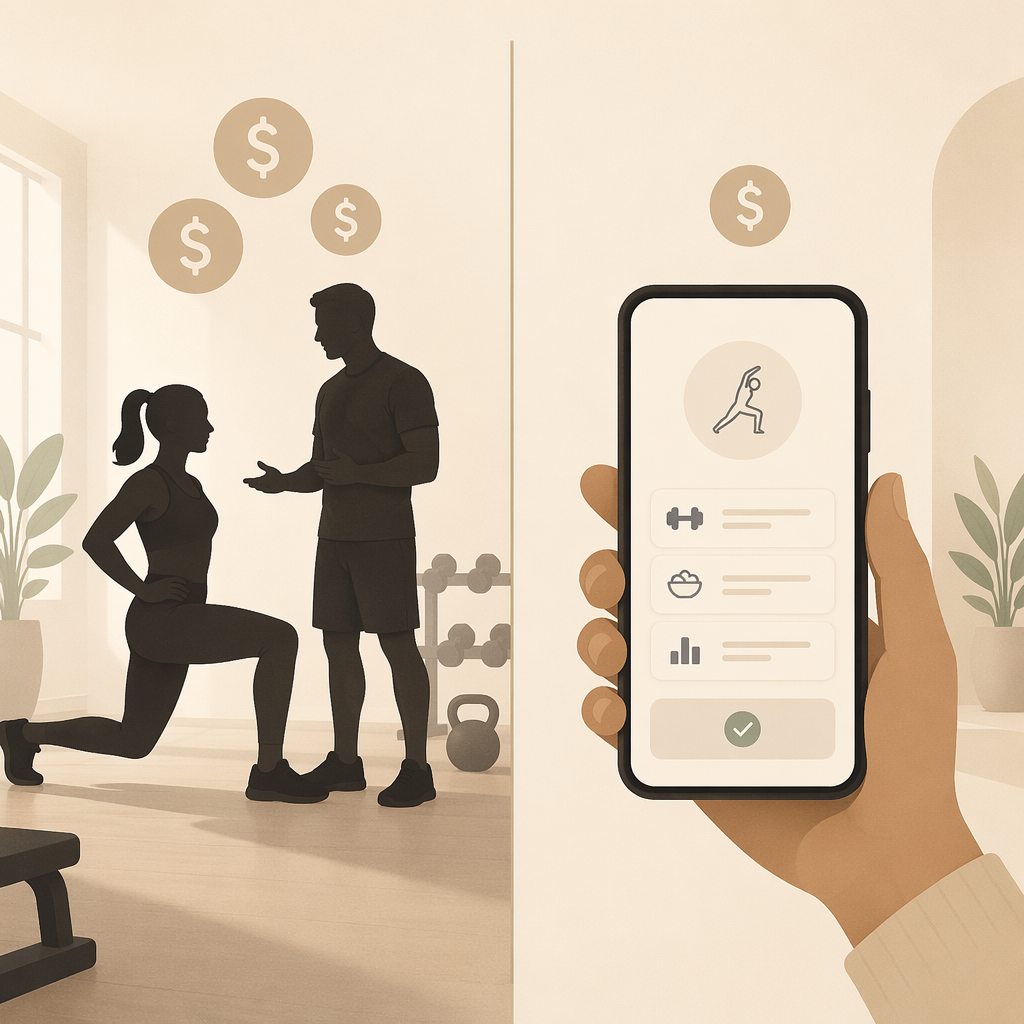
Cost Comparison: In-Person Training vs. App Subscriptions
One of the most common questions beginners ask is whether paying for an app is worth it compared to hiring a personal trainer. The answer depends entirely on how much accountability you need and how often you train.
| Option | Monthly Cost | Sessions per Month | Cost per Session | Accountability Level |
|---|---|---|---|---|
| Free app (Nike Training Club) | $0 | Unlimited | $0 | Self-directed |
| Low-cost app (Apple Fitness+) | $9.99 | Unlimited | $0.33 (if used daily) | Self-directed with variety |
| Mid-cost app (Daily Burn) | $19.95 | Unlimited | $0.67 (if used daily) | Structured program |
| Premium app with coach (Future) | $199 | Unlimited (daily programming) | $6.63 (if used daily) | 1:1 human coach |
| In-person personal trainer | $400–$1,200 | 8–12 sessions | $50–$150 per session | 1:1 human coach, in person |
The key takeaway: if you train four times per week, a $199/month coaching app costs about $12.44 per session. An in-person trainer at $75 per session would cost $300 per week. The app is not a replacement for hands-on form correction, but for a beginner who needs programming and accountability, it is a fraction of the cost.
Your First 30 Days: A Simple Plan Template
Choosing the right app is step one. Using it consistently is step two. Here is a simple template for your first month, based on recommendations from Daily Burn and Garage Gym Reviews:
- Session frequency: 3 days per week for the first two weeks. Add a fourth day in week three or four if you feel ready.
- Session length: 15 to 25 minutes. Do not go longer. The goal is consistency, not intensity.
- Workout type: Bodyweight or minimal-equipment workouts. Daily Burn states that bodyweight workouts done four times a week for three months produce real fitness gains in previously inactive people.
- Progression: In week one, focus on learning the movements. In week two, focus on completing all reps with good form. In weeks three and four, focus on completing the workout without pausing the video.
Do not worry about missing a day. If you miss one, just do the next one on schedule. The habit is built by showing up most of the time, not by being perfect.
This result comes from one real apartment under the stated conditions — it is a strong signal, not a guarantee your space will measure identically.
Builds this evidence supports
No build currently links to this specific test. Browse all builds with a matching tag.
Spot something off?
If this result didn't match your own space, let us know — floor-damage and noise claims carry real deposit-risk consequences if we get them wrong.