
Yes, the Fitbit Inspire 3 fitness tracker is still worth buying in Q3 2026, but only for the right person: someone who wants a small, comfortable, low-cost band for steps, sleep, basic heart-rate trends, and nearly weeklong battery life. At its usual discounted price around $69–79, it still does the boring daily jobs well enough to justify buying it instead of a cheap no-name tracker.
It is not the right buy for runners who want phone-free route tracking, anyone training by heart-rate intervals, or buyers who want ECG, Google Wallet, or the newest Fitbit platform certainty. It is also no longer a “set it up whenever” purchase: the Fitbit-to-Google account migration deadline has already passed, and unmigrated Fitbit account data is scheduled for deletion on July 15, 2026.[1]
The 2026 Buying Decision Is Narrower Than the Launch Reviews Made It Look
The Inspire 3 launched in September 2022, so a 2026 buyer is not really deciding whether it was a good tracker at launch. The better question is whether a nearly four-year-old budget band still gives enough useful feedback to be worth choosing over newer cheap trackers and discounted smartwatches.
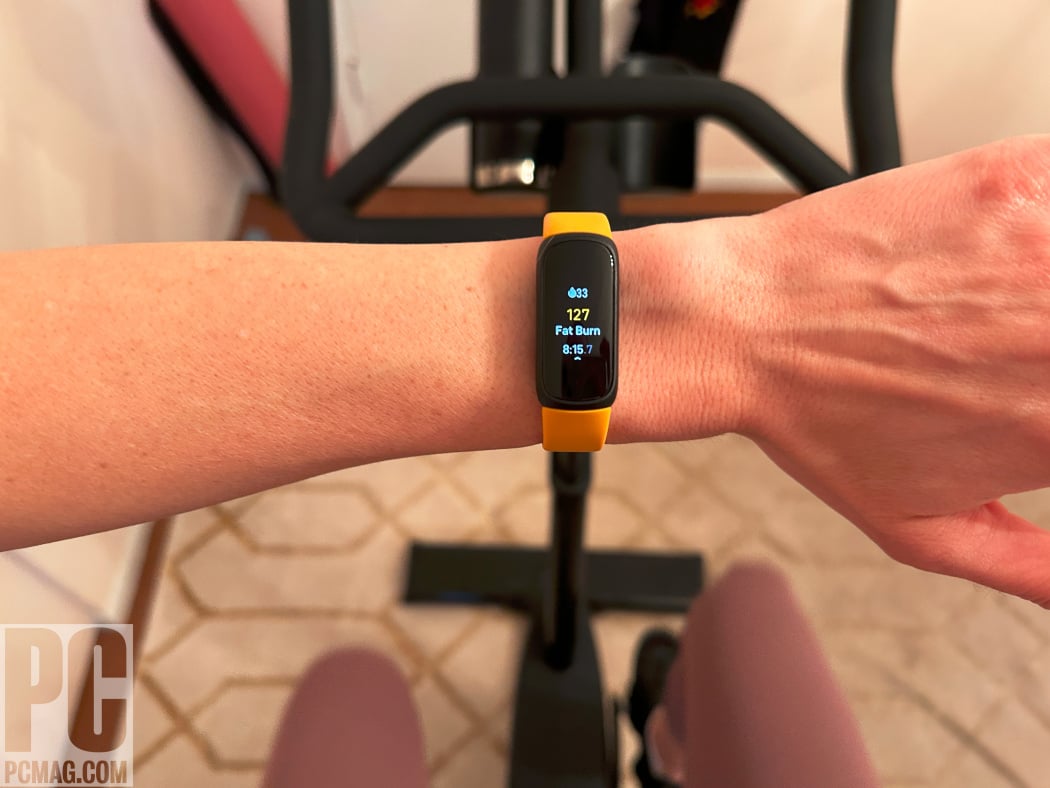
The answer depends less on the spec sheet than on the job you want it to do. For a casual walker, student, sleep-focused beginner, or Inspire 2 owner, the Inspire 3 still covers the basics cleanly: steps, sleep stages, heart-rate trends, reminders to move, notifications, and a bright color screen. PCMag’s review found about eight days of normal battery life and about three days with the always-on display enabled, which is close enough to Fitbit’s 10-day claim to matter in real life.[2]
For a runner, cyclist, or data-heavy exerciser, the same device starts to feel old quickly. It has no onboard GPS, so outdoor pace and route tracking depend on a connected phone. Its advanced health feature list is thin, too: no ECG, no Google Wallet, and no serious smartwatch-style app ecosystem. Those omissions are not fatal in a $70 sleep-and-steps band, but they are deal-breakers if you expect a training watch.
| Buy it in 2026 if... | Skip it in 2026 if... |
|---|---|
| You mainly want steps, sleep, reminders, and long battery life. | You run without your phone and need built-in GPS. |
| You want a tracker that is small enough for 24/7 wear. | You train by heart-rate zones or intervals. |
| You can buy it around $69–79 and understand the Premium upsell. | You want ECG, Google Wallet, or advanced health sensors. |
| You already use or are comfortable using a Google account. | You are worried about long-term battery degradation or Fitbit platform uncertainty. |
What Still Holds Up
The reason the Inspire 3 still has a case is simple: the things it does best are the things beginners are most likely to keep using. A tracker that needs charging every night, feels bulky in bed, or buries basic stats behind a fussy interface tends to become drawer clutter. The Inspire 3 avoids most of that.
Battery Life Is Still Its Quiet Advantage
PCMag’s roughly eight-day result in normal use is the kind of battery figure that changes behavior.[2] You can wear the band to bed, charge it while showering or sitting at a desk, and avoid the nightly charging ritual that makes some smartwatches worse sleep trackers in practice. Turning on the always-on display cuts that advantage sharply, but most Inspire 3 buyers are better off leaving raise-to-wake enabled and keeping the longer runtime.
That matters more than it sounds. Sleep tracking only works when the device is actually on your wrist. Step streaks only work when the tracker is charged before you leave the house. The Inspire 3’s battery life supports the kind of low-effort consistency that first-time buyers need.
Sleep Tracking Remains One of the Main Reasons to Choose It
The Inspire 3’s strongest everyday feature is sleep tracking. PCMag praised its sleep tools, and CNET described the tracker as especially strong for sleep, noting automatic nap detection and detailed sleep-stage analysis.[2][3] That does not mean the band can diagnose a sleep disorder or perfectly identify every minute of REM sleep. It means it gives a beginner a usable pattern: bedtime consistency, wake timing, restlessness, and broad sleep-stage estimates.
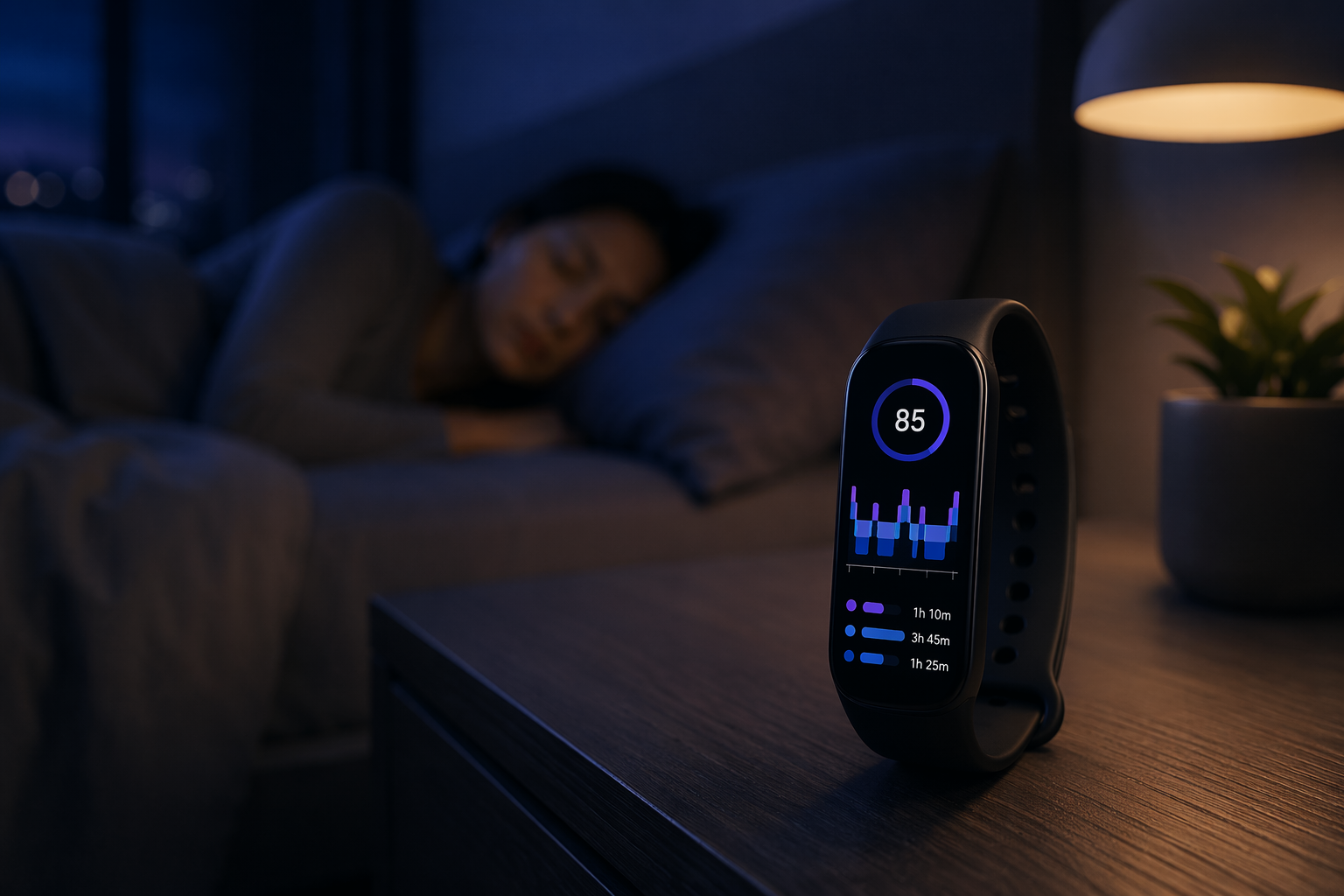
For someone buying a tracker mostly to stop guessing about sleep, that is enough. The band is light, small, and easy to wear overnight, which gives it an advantage over larger watches that look more capable on paper but get removed before bed.
Step Counting Is Better Than Budget Buyers Usually Get
Step count is not glamorous, but it is still the feature many people actually check. Wirecutter found the Inspire 3 was off by just 0.32% compared with a validated lab pedometer over two days, an unusually strong result for a budget tracker.[4] That kind of accuracy makes the device easier to trust for daily movement goals, especially for users who care more about walking consistency than sport metrics.
It is worth keeping the claim narrow. Good step counting does not prove perfect calorie estimates, perfect workout detection, or medical-grade health tracking. It does mean the Inspire 3’s most basic fitness number is not just decorative.
The AMOLED Screen Helps More Than the Spec Sheet Suggests
The color AMOLED display was one of the Inspire 3’s obvious upgrades over older Fitbit bands, and it still makes the device feel less dated than its age suggests. A budget tracker can be accurate and still annoying if the screen is dim, cramped, or ugly enough that you stop checking it. The Inspire 3’s display is small, but it is bright and readable enough for quick glances at steps, time, heart rate, and notifications.
That is the correct level of ambition for this product. It is not trying to replace a phone or a smartwatch. It is trying to give you the next useful number without asking for much attention.
The 2026 Problems You Should Not Ignore
The Inspire 3’s discounted price makes it tempting, but cheap can become expensive when a device is old, subscription-shaped, or mismatched to your use. These are the issues that matter now, not just the missing features reviewers mentioned in 2022.
The Google Account Migration Deadline Has Already Passed
As of today, July 10, 2026, the May 19, 2026 Fitbit-to-Google account migration deadline is behind us. The Verge reported that all Fitbit accounts must become Google accounts, and that data from accounts not migrated is set to be deleted by July 15, 2026.[1]
For a new buyer, this mostly means you should expect the Google account path from the start. For an existing Inspire 2 or older Fitbit owner, it is more serious: do not buy an Inspire 3 assuming your old Fitbit account history is safely waiting. Check migration status first, especially if your purchase decision depends on preserving years of sleep, weight, or activity data.
The Best Fitbit Features Still Nudge You Toward Premium
The Inspire 3 usually includes a six-month Fitbit Premium trial, but the paid tier costs $9.99 per month or $79.99 per year after that trial.[2][3] Features such as Daily Readiness Score, deeper sleep data, and longer-term trends are part of the reason Fitbit feels polished, but they also change the real cost of ownership.
This does not make the tracker a bad buy. You can still use the core device without paying forever. But if you are buying the Inspire 3 because you saw rich recovery scores or deeper sleep insights in screenshots, price the subscription before treating a $70 band like a $70 total purchase.
No Built-In GPS Means Runners Should Be Cautious
The Inspire 3 can use connected GPS through your phone, but it does not have onboard GPS. If you already carry your phone on every walk or run, that may be fine. If you want to leave your phone at home and still record route, pace, and distance, this is the wrong tracker.
This is the easiest place to make a bad purchase. A casual walker may never notice the limitation. A runner will notice it on the first phone-free workout.
Heart-Rate Accuracy Evidence Is Useful, but Dated
DC Rainmaker’s in-depth testing found the Inspire 3 could produce decent steady-state heart-rate readings, but it also showed cadence-lock problems at the start of runs and completely inaccurate readings during outdoor cycling.[5] That is enough to keep the Inspire 3 out of serious training-watch territory.
The caveat is important: that testing reflects 2022 firmware, and there is no similarly detailed 2025–2026 retest to rely on. Firmware updates may have changed performance, but without fresh testing, the honest conclusion is narrower: do not buy the Inspire 3 if heart-rate accuracy during intervals, cycling, or hard workouts is central to your training.
Battery Degradation Is a Long-Term Risk, Not a Lab-Proven Average
A new Inspire 3 can still be attractive because of its battery life. A used or aging Inspire 3 is a different calculation. Google Support community threads include multiple user reports of Inspire 3 units dropping to roughly three to four days of battery life after more than two years of ownership.[6]
Those are user reports, not a controlled battery-aging study, so they should not be treated as a guaranteed outcome. They do matter for a 2026 buyer, though. If you expect to keep a tracker for several years, the Inspire 3’s age makes the battery question more relevant than it was in early reviews.
Should You Wait for an Inspire 4?
There is no confirmed Inspire 4 as of July 2026. Wareable reported in October 2025 that Google confirmed new Fitbit devices for 2026, but there has been no Inspire 4 leak, announcement, or launch indication by July 2026.[7]
That uncertainty cuts both ways. Waiting could get you a newer band if Google updates the Inspire line later in 2026. Waiting could also mean skipping a good discount on a tracker that already does what you need. The Fitbit Air, released at $99 in May 2026, also sits in the same budget neighborhood, but its existence does not automatically make the Inspire 3 obsolete.[8]
If your current tracker is dead, uncomfortable, or missing sleep tracking you actually want, waiting for an unannounced model is hard to justify. If your Inspire 2 still works and you mainly want a newer platform with longer support runway, patience is more defensible.
The Right Buyer for the Inspire 3 in 2026
The Inspire 3 still makes the most sense for someone who wants a tracker, not a wrist computer. Its best buyer is counting walks, trying to sleep more consistently, checking resting heart-rate trends, and wearing the band all day without thinking about it. That buyer probably carries a phone anyway, does not need tap-to-pay, and would rather charge once a week than manage another screen every night.
- Buy it if you find it around $69–79 and want a slim sleep-and-steps tracker.
- Buy it if battery life and comfort matter more than apps, payments, or advanced sensors.
- Buy it if you are comfortable using a Google account for Fitbit going forward.
- Skip it if you need built-in GPS, reliable hard-workout heart-rate data, ECG, or Google Wallet.
- Skip it if a possible late-2026 Fitbit refresh would bother you more than paying extra later.
The clean buying rule is this: buy the Fitbit Inspire 3 at its discounted price if you want a low-cost sleep-and-steps band with long battery life. Skip it if GPS, hard training accuracy, advanced sensors, or long-term platform certainty matter more than saving money.
References
- The Fitbit-to-Google Account Migration Deadline Moves to 2026, The Verge
- Fitbit Inspire 3 Review, PCMag
- Fitbit Inspire 3 Review: A Tiny Fitness Tracker With Big Battery Life, CNET
- Budget Fitness Tracker Accuracy Compared, Wirecutter
- Fitbit Inspire 3 In-Depth Review, DC Rainmaker
- Google Support community threads, Google Support
- Best Fitbit 2026: Every Model Reviewed and Compared, Wareable, October 2025
- Best Fitbit 2026, Business Insider
Comments
Join the discussion with an anonymous comment.