
Fitbit vs Garmin vs Apple Watch: Which Fitness Tracker Ecosystem Is Right for You in 2026?
Comparing the three major wearable ecosystems in 2026 to help you decide which platform fits your phone, fitness level, and budget, with a focus on their diverging subscription models, battery life, and device options.
We’re Past the Point Where Any Fitness Tracker Will Do
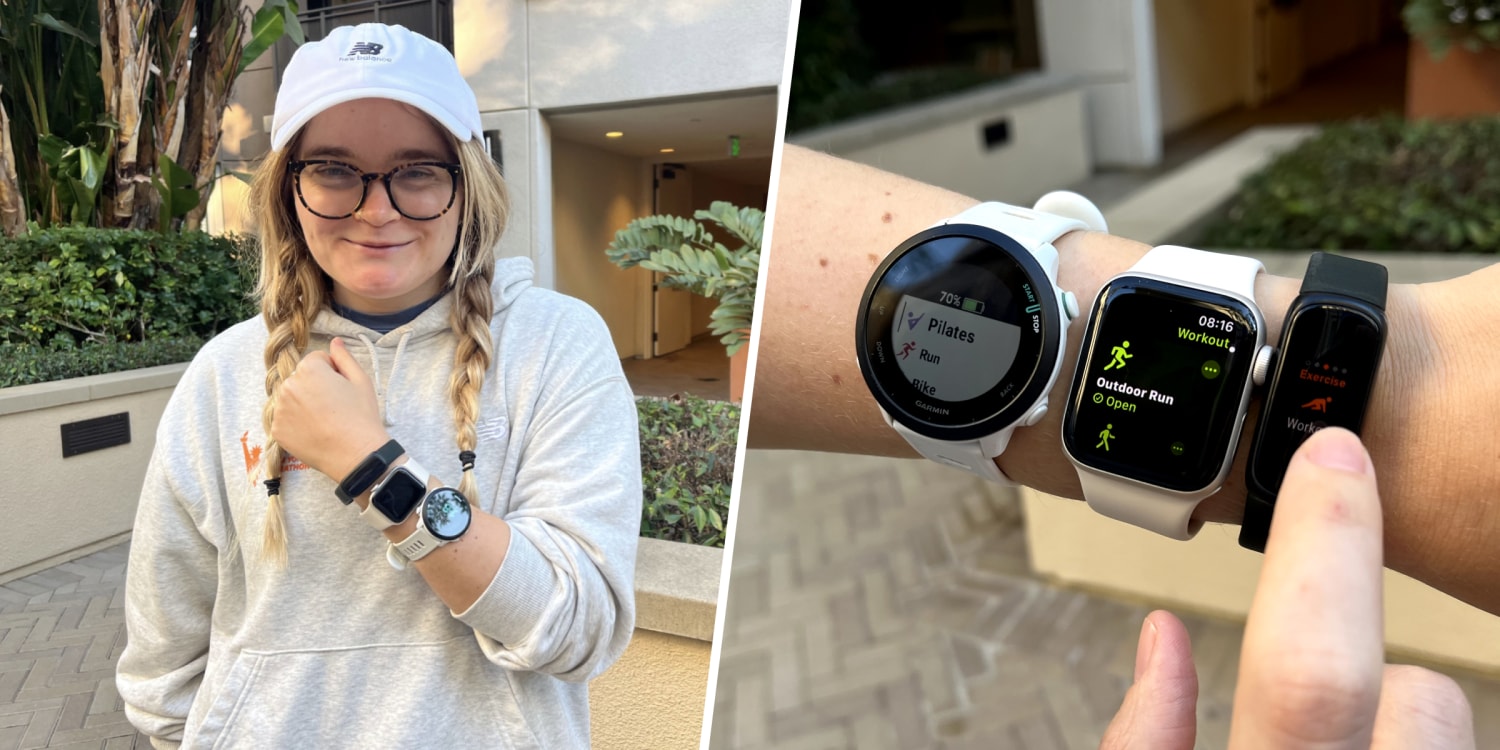
A few years ago you could grab any half-decent tracker and get steps, sleep, and a basic app. That era is over. In 2026, the three big ecosystems—Fitbit (now Google’s), Garmin, and Apple—have pulled so far apart that your choice is no longer about features. It is about your phone, your willingness to pay a monthly subscription, and how often you want to charge the thing. Look at the anchor devices: the Fitbit Air costs $99 (12g, 7-day battery, no screen). The Garmin Vivoactive 6 costs $300 (11-day battery, free advanced analytics). The Apple Watch SE 3 costs $249 (18-hour battery, iPhone only). Same category, completely different trade-offs. The price gap is bait. The subscription gap and the battery gap are the real story.
Your Phone Is the First Filter
Before you look at any feature list, check which OS your phone runs. Apple Watch only pairs with iPhone. That is not a preference—it is a technical lock. Fitbit and Garmin work with both iOS and Android, no workaround required. This single fact filters out at least a quarter of the buyer pool immediately.
The Real Cost: Device Price vs. Subscription
A $99 Fitbit Air looks like a steal. Add two years of Fitbit Premium at $100/year, and the total becomes $299—the same as a Garmin Vivoactive 6 that includes all its advanced analytics for free. The Apple Watch SE 3 at $249 also has no subscription. That $99 Air becomes $199 in year one if you want the AI coach. The table below shows the two-year picture:
| Device | Upfront Price | Yearly Subscription | 2-Year Total |
|---|---|---|---|
| Fitbit Air | $99 | $100 (Premium) | $299 |
| Garmin Vivoactive 6 | $300 | $0 | $300 |
| Apple Watch SE 3 | $249 | $0 | $249 |
Fitbit’s free tier covers steps, heart rate, and basic sleep stages. But advanced sleep insights, the AI Health Coach (Gemini-powered), and adaptive fitness plans require Google Health Premium at $9.99/month or $99.99/year. Garmin’s free Connect platform includes Body Battery, Training Readiness, sleep score, and running dynamics—features that rival Fitbit’s paid tier. Garmin has introduced an optional Connect+ at $70/year for live tracking and AI, but the core analytics remain free. The contrast is stark: what Fitbit locks behind a paywall, Garmin gives away. For a deeper look at the full Garmin lineup, see our Garmin buyer’s guide.
Battery Life: The Spec That Determines Whether You Wear It to Bed
Battery life sounds like a minor detail. It is not. If you want consistent sleep tracking—one of the main reasons to buy a fitness tracker—the device needs to stay on your wrist every night, including weekends. That means it cannot live on a charger overnight.
- Fitbit Inspire 3: tested at 8.5 days (advertised 10). Fitbit Air: up to 7 days.
- Garmin Vivoactive 6: 11 days (5 days with always-on display enabled).
- Apple Watch SE 3: 18 hours. Series 11: up to 24 hours.
Anything under three days forces nightly charging. That makes sleep tracking a deliberate nightly choice rather than a background behavior. The Apple Watch’s 18–24 hour battery means you have to choose between sleep data and a full charge the next morning. Fitbit and Garmin users can wear the device to bed, pop it on the charger during a shower, and put it back on with plenty of juice left. I think battery life is the single most underrated spec in 2026. It determines whether you actually wear the thing to bed. For more on why screenless devices like the Air handle this trade-off especially well, read our screenless tracker guide.
The Three Brands, One Trade-Off Each
Fitbit still offers the lowest barrier to entry. The $99 Fitbit Air is unique: screenless, 12 grams, water resistant to 50 meters, tracks heart rate, sleep, SpO2, skin temperature, and stress. A 5-minute charge gives about a day of use. It is the lightest and most discreet tracker on the market. The Inspire 3 ($99.95) adds a color screen and up to 10 days of battery but no built-in GPS. The Charge 6 ($159.95) brings GPS, ECG, and 40+ exercise modes. The free Google Health app covers the basics, but the best features—AI Health Coach, adaptive workout plans, deeper sleep analysis—require the $9.99/month subscription. The Air’s heart rate and sleep tracking closely matched the Apple Watch Ultra 3 in testing, and the new sleep models claim 15% better accuracy at detecting interruptions. Still, the screenless design is a trade-off: no glanceable notifications, no on-wrist controls. Some users will love the zero-distraction approach; others will miss the convenience. Fitbit is best for budget-focused casual users who don’t mind a subscription, or for anyone who wants the cheapest reliable heart-rate and sleep tracking. But the math works out: a $99 Air plus Premium quickly becomes a $199 Air in year one.
Garmin has built its reputation on deep, free analytics. The Vivoactive 6 ($300) comes with Body Battery, Training Readiness, sleep score, workout animations, and 11 days of battery—all with no subscription. The Forerunner 265 ($350) adds multi-band GPS and advanced running metrics. Even the entry-level Forerunner 55 ($200) offers 14-day battery and real-time pace updates, though it lacks a touchscreen. The new Connect+ subscription ($70/year) adds AI-powered insights and live tracking, but the core analytics remain free. This contrast with Fitbit is stark: what Fitbit locks behind a paywall, Garmin gives away. For a deeper look at the full Garmin lineup, see our Garmin buyer’s guide.
The Apple Watch SE 3 ($249) is the best smartwatch experience in this price range: bright display, seamless iPhone integration, GPS, emergency SOS, and no subscription. The Series 11 ($399) adds FDA-cleared hypertension alerts, sleep apnea notifications, and up to 24 hours of battery. Both are powerful health tools. But the battery is the elephant in the room. 18–24 hours is a full day of use, but you charge every night. That means no overnight sleep tracking unless you put it on after a partial charge and forgo the morning alarm. The Apple Watch is unmatched as a smartwatch with fitness capabilities. If you want a device that tracks sleep 24/7 without intervention, the Apple Watch is the wrong choice.
The Decision: Three Filters in Order
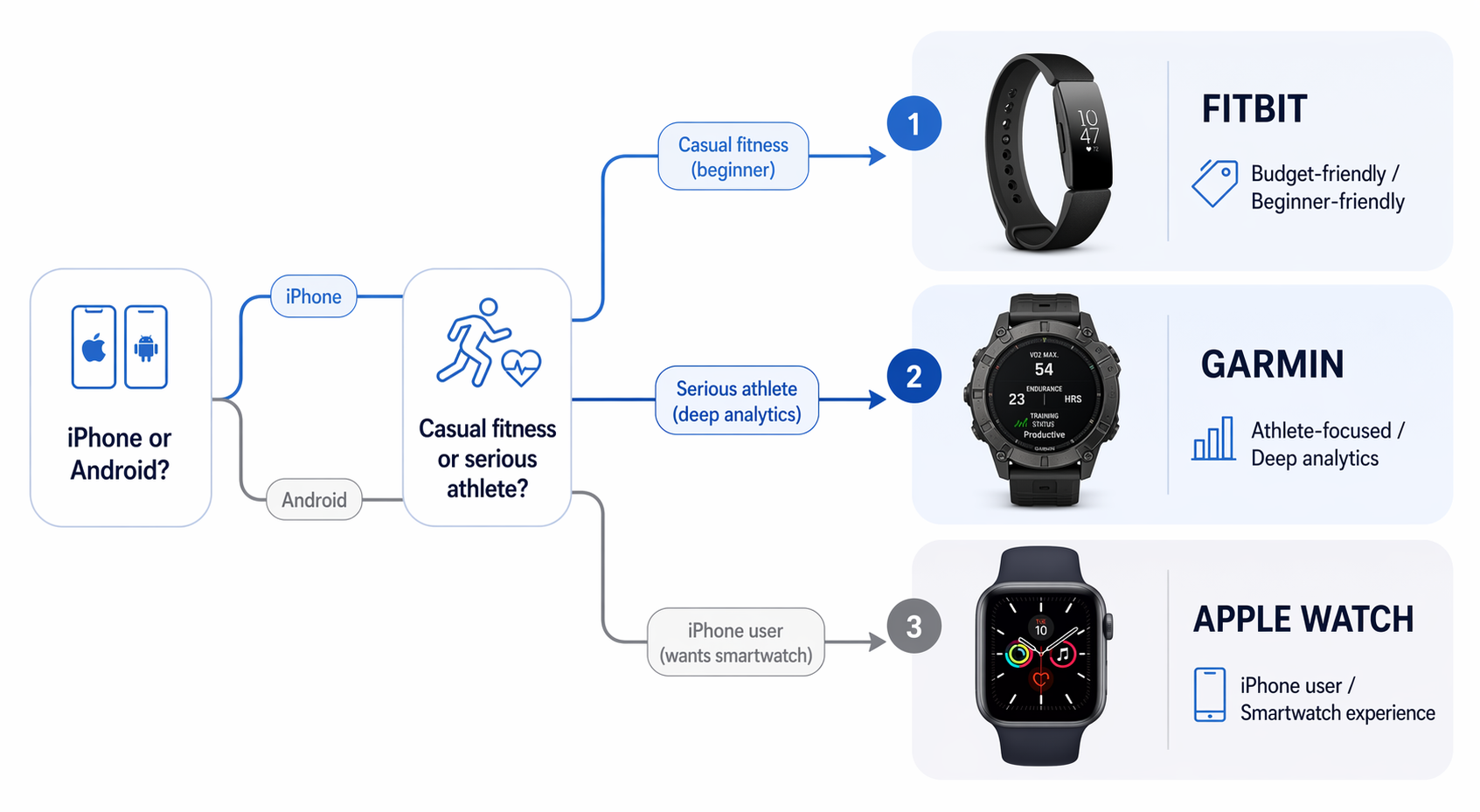
Start with your phone. Android users: Apple Watch is out. Choose between Fitbit (lowest entry price, subscription expands features) and Garmin (higher upfront, better free analytics, longer battery). iPhone users: you have all three options. If you want the best smartwatch and can charge daily, the Apple Watch SE 3 is excellent value at $249 with no subscription. If you prioritize sleep tracking, battery life, or advanced training data, look at Fitbit or Garmin instead.
The wild card is the Google Pixel Watch 4 ($349), which runs Wear OS and is Fitbit-powered. It offers up to 40 hours of battery, ECG, and satellite SOS on the LTE model—but it is Android-only and costs more than the Apple Watch SE. It competes more directly with Garmin’s mid-range than with the Air. For a fuller decision framework by user profile, see our profile-based guide.
- If you hate subscriptions and love data, buy Garmin. The Vivoactive 6 or Forerunner 265 give you deep analytics with no ongoing cost.
- If you want the cheapest entry with solid tracking and don't mind a subscription for AI coaching, buy Fitbit Air or Inspire 3.
- If you are an iPhone user who wants a smartwatch first and can charge every night, buy Apple Watch SE 3.
- If you are an Android user who wants a smartwatch with better battery than Apple Watch, the Pixel Watch 4 is a strong contender.
The old advice—"any of these will do"—no longer applies. The ecosystems have diverged. Your choice now depends on your wallet and your charging habit, not just your workout routine.
This result comes from one real apartment under the stated conditions — it is a strong signal, not a guarantee your space will measure identically.
Builds this evidence supports
No build currently links to this specific test. Browse all builds with a matching tag.
Spot something off?
If this result didn't match your own space, let us know — floor-damage and noise claims carry real deposit-risk consequences if we get them wrong.