
Which Garmin Fitness Tracker Should You Buy in 2026? A Use-Case-Based Guide
Most home fitness enthusiasts and gym-goers are better off with a Garmin Vivoactive 6 or Venu 4 than a flagship Fenix or Forerunner. This guide uses a three-axis decision framework – activity type, advanced metrics needs, and size/weight tolerance – to help you find the right Garmin without overbuying.
You Probably Don’t Need the Most Expensive Garmin
The Vivoactive 6 at $300 is WIRED’s best fitness tracker overall. The Fenix 8 starts at $1,300, weighs up to 96 grams, is dive-rated, and lasts 29 days on a charge. If you lift in your living room and run a few times a week, which one makes sense? The industry default is to push the flagship. That is wrong for most people. I look at three things: what you actually do, whether you need the most accurate heart data, and how much weight you want on your wrist all day.
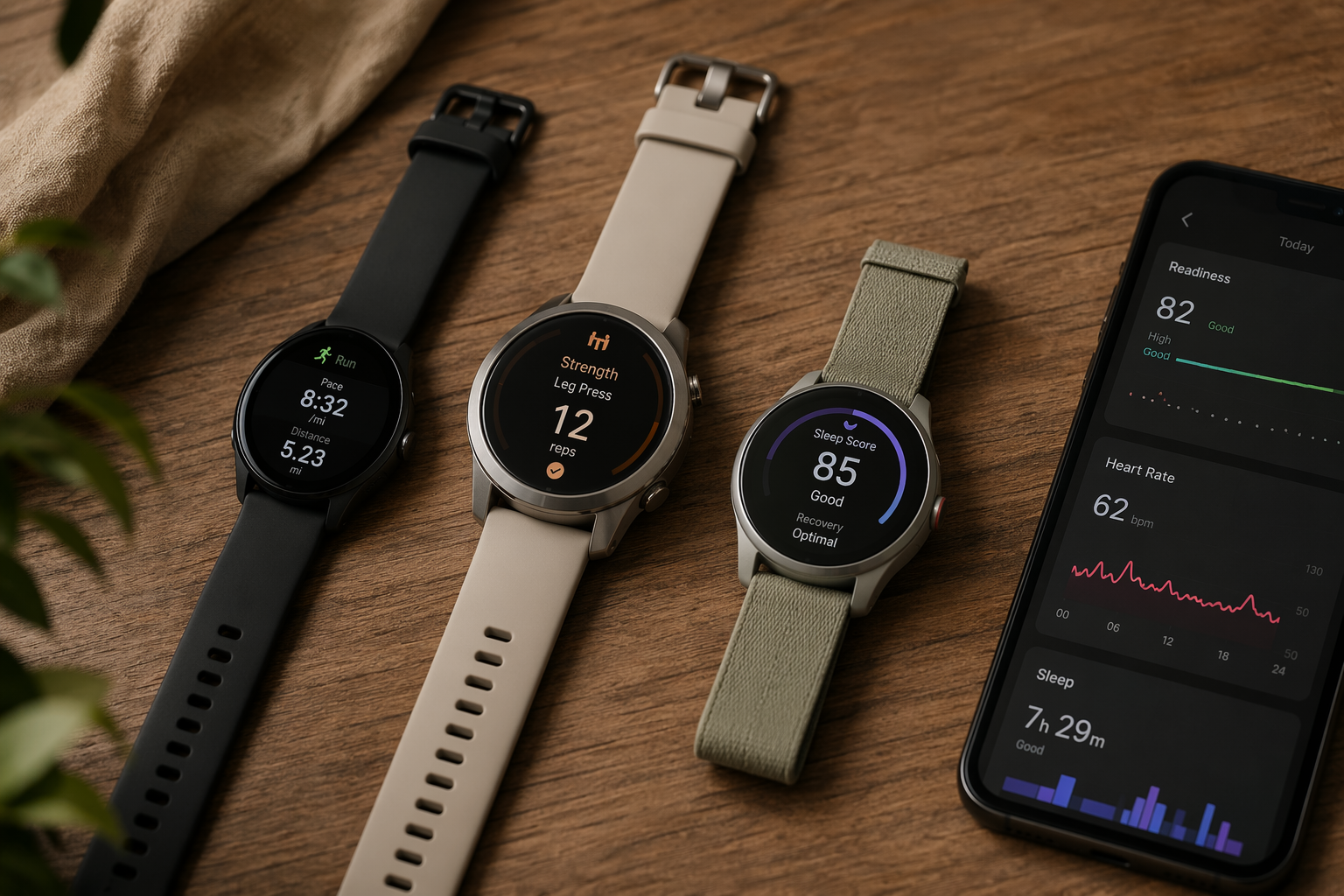
Three Questions to Replace the Spec Sheet
Stop comparing battery life in isolation. Ask yourself:
- What am I doing? Gym sessions, casual runs, long-distance running, or outdoor adventures?
- Do I need the most accurate heart rate data (e.g., for structured intervals) or is a good-enough reading fine?
- How much weight and bulk am I willing to wear every day?
Here is how the main 2026 models line up against those three questions:
| Model | Price | Battery (smartwatch) | Sensor | Weight | Best for |
|---|---|---|---|---|---|
| Vivoactive 6 | $299.99 | 11 days | Elevate V4 | 36g | General fitness, home gym, budget |
| Venu 4 | $549.99 | 12 days | Elevate V5 + flashlight | ~50g | Lifestyle fitness, want premium sensor |
| Forerunner 265 | $449.99 | 13 days | Elevate V4 | ~47g | Dedicated runners, basic metrics |
| Forerunner 570 | $549.99 | 14 days | Elevate V5 | ~54g | Serious runners, advanced training |
| Forerunner 970 | ~$800+ | 15 days | Elevate V5 | ~60g | Elite runners, multi-band GPS |
| Fenix 8 | $1,300+ | 29 days | Elevate V5 | 53-96g | Outdoor adventure, dive, multi-week trips |
The Vivoactive 6 and Venu 4 sit at the sweet spot for anyone who exercises indoors or on roads a few times a week. They cover the full range of workout modes, track sleep and recovery, and sync with the free Garmin Connect app. Move up to the Forerunner or Fenix lines and you are paying for features that, for home gym use, are just extra grams on your wrist.
Why the Elevate V5 Sensor Gap Might Not Matter for You
The Elevate V5 sensor is genuinely more accurate than the V4. TechRadar tested the Vivoactive 6 (V4) and Venu 4 (V5) against a Polar H10 chest strap: the V4 averaged 18 bpm difference, the V5 averaged 5 bpm. That sounds like a huge gap — and it is for certain workouts. But I would not let that number scare you into a $250 upcharge unless you train with short, intense intervals.
If your heart rate stays between 120 and 150 bpm — a steady-state cardio session, a moderate bike ride, a weightlifting circuit — the V4’s error is much smaller than 18 bpm because the sensor is more stable when your movement is predictable. The large error appears during HIIT, interval runs, or any activity with rapid changes in velocity and arm motion. In those cases, the V5’s faster sampling and additional red LED make a real difference.
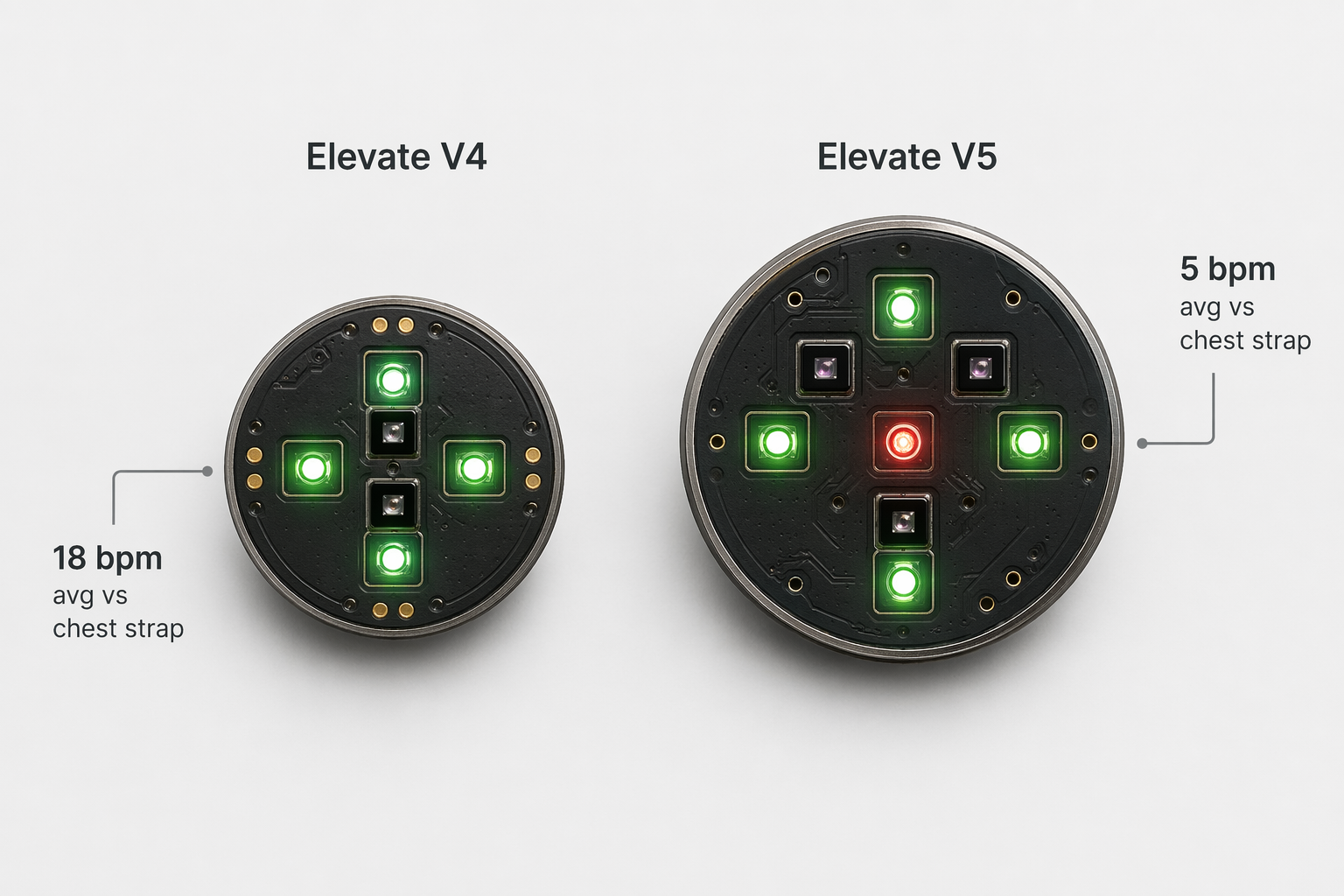
Also keep in mind that CNET’s 30-mile test of the Venu 4 found a heart rate error of 3.89% (5.5 bpm) — an excellent result, but model-specific. You cannot generalize that to all Garmin models, especially those with the V4 sensor. For a deeper dive into wearable accuracy across brands, see our 2026 accuracy report.
Flagship Trade-Offs: Weight, Bulk, and Unused Features
The Fenix 8 is an impressive piece of engineering. It is also a terrible choice for anyone who does not dive, hike for weeks, or need multi-band GPS in remote terrain. Here is what you accept when you buy a flagship:
- Weight: The Fenix 8 weighs 53–96 grams depending on the casing. The Vivoactive 6 weighs 36 grams. On your wrist all day, that difference is noticeable, especially during sleep tracking.
- Cost: A Fenix 8 costs over $1,300. The Vivoactive 6 costs $300. For the price of one Fenix, you could buy a Vivoactive 6 plus a year of high-quality coaching or a good set of dumbbells.
- Unused features: Dive rating, multiband GPS, offline topo maps, and a titanium bezel. None of these improve a home gym workout.
The Forerunner line is more reasonable for runners, but again, the 970’s extra cost and weight only help if you are training for a marathon and want the most precise pace and distance tracking. For a 5K-runner who also lifts, the 265 or even the Venu 4 will do the same job.
Should You Pay $70/Year for Connect+?
Garmin’s new Connect+ subscription costs $69.99 per year and adds AI Active Intelligence, live activity strength mirroring, and integrated nutrition logging. The free Garmin Connect app already gives you all the essential tracking — sleep, stress, body battery, workout summaries, and trend charts. Does Connect+ justify the annual fee? Generally, no. The one exception: if you do structured strength training and want to edit reps and weight in real time during a session, or if you already pay for MyFitnessPal and would switch to Garmin’s nutrition integration. For everyone else, free alternatives like Hevy or Setgraph handle strength logging better, and the free Connect app covers everything else.
That verdict from the5krunner is on the nose. We have a full review of Garmin Connect+ here if you want the details.
The Bottom Line for Home Gym and Indoor Trainers
If you exercise in a home gym, a commercial gym, or do most of your cardio indoors, here is my recommendation as simply as I can put it:
- Buy the Vivoactive 6 ($300) unless you train with high-intensity intervals and need the most accurate heart rate data. It is light, affordable, has an 11-day battery, and does not require a subscription.
- Buy the Venu 4 ($550) if you want the V5 sensor for intervals, a built-in flashlight for early-morning or late-night sessions, and a slightly more premium design. You still pay less than half the price of a Fenix.
- Buy the Forerunner 970 only if you are a serious runner who needs multi-band GPS and training load analysis for a structured running program.
- Do not buy the Fenix 8 unless you dive, hike multi-day trails, or work in conditions where a rugged watch is genuine safety equipment. For indoor training, it is mostly extra weight and cost.
For more specific recommendations on which Garmin works best for home gym training, check out our guide on the best Garmin for home gym users.
This result comes from one real apartment under the stated conditions — it is a strong signal, not a guarantee your space will measure identically.
Builds this evidence supports
No build currently links to this specific test. Browse all builds with a matching tag.
Spot something off?
If this result didn't match your own space, let us know — floor-damage and noise claims carry real deposit-risk consequences if we get them wrong.