
The Real Cost of a Fitness Tracker Ring: Upfront Price vs. Total Cost of Ownership Over 5 Years
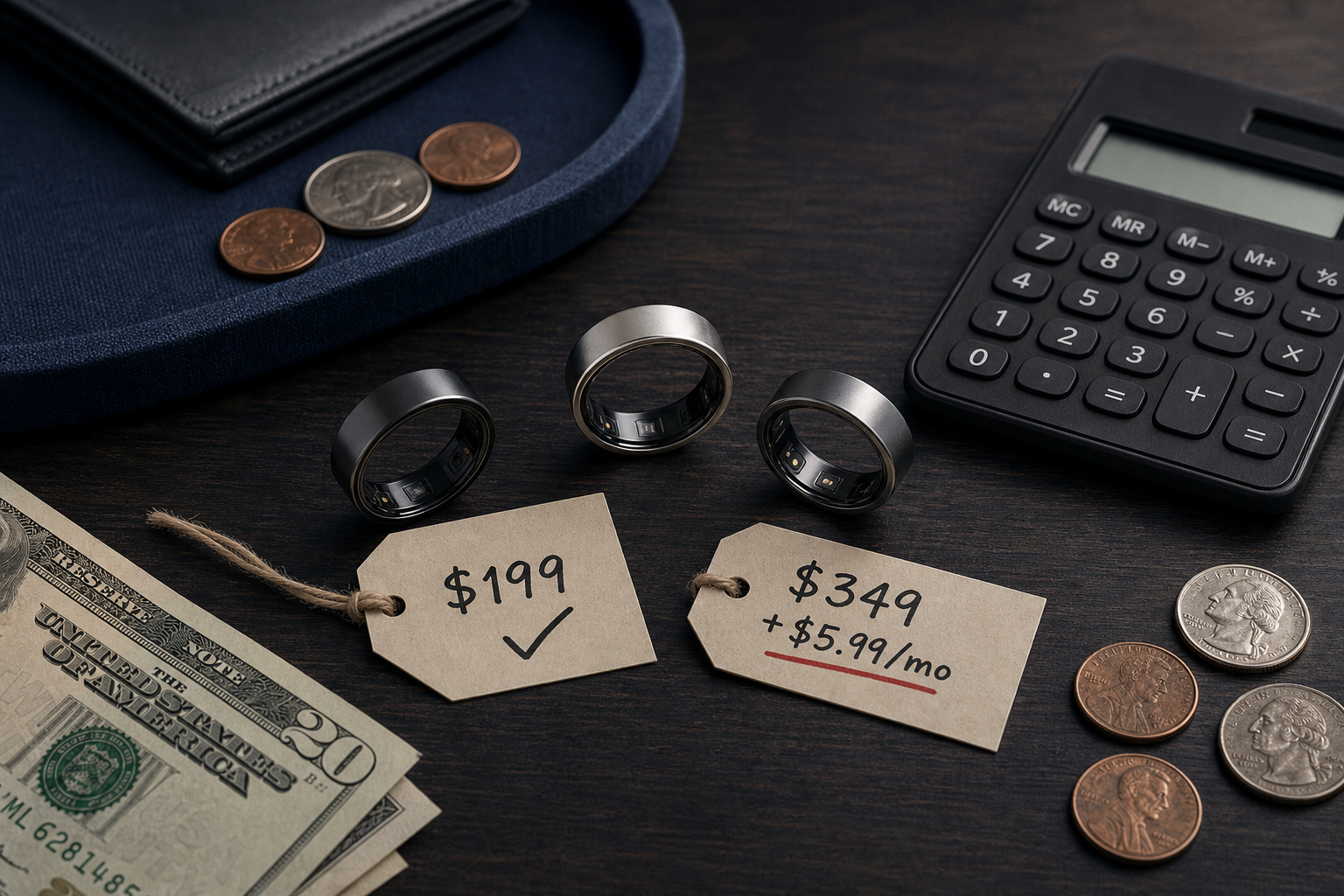
A $349 ring with a $5.99/month subscription can cost over $860 in five years. This guide calculates the total cost of ownership for 8 top smart rings — including Oura, RingConn, Samsung, and Ultrahuman — to help budget-conscious home fitness shoppers see past the sticker price.
Why Sticker Price Doesn't Tell the Full Story
When you see a $349 price tag on a fitness tracker ring, it's easy to think that's the total investment. But for some models, that's just the entry fee. The real financial commitment includes a monthly subscription that keeps on charging year after year. For budget-conscious home fitness shoppers, understanding this difference is the difference between a smart purchase and an expensive surprise.
This guide calculates the total cost of ownership (TCO) for eight major smart rings over 1, 3, and 5 years. We're not comparing features or debating form factors — that ground is already covered in our comprehensive wearable buyer's guide. Here, the focus is strictly on the math: upfront price, subscription fees, and what you actually pay over time.
Total Cost of Ownership: 8 Smart Rings Compared (1-Year, 3-Year, 5-Year)
The table below lays out the full cost picture for each ring. The "Total Cost" columns include the upfront price plus all subscription fees for that period. Models with no subscription have a flat cost regardless of how long you own them.
| Model | Upfront Price | Subscription | 1-Year Total | 3-Year Total | 5-Year Total |
|---|---|---|---|---|---|
| Oura Ring 4 | $349 | $5.99/mo ($71.88/yr) | $420.88 | $564.64 | $708.40 |
| RingConn Gen 2 Air | $199 | None | $199 | $199 | $199 |
| RingConn Gen 2 | $299 | None | $299 | $299 | $299 |
| Ultrahuman Ring Air | $349 | None | $349 | $349 | $349 |
| Samsung Galaxy Ring | $399 | None | $399 | $399 | $399 |
| Amazfit Helio Ring | $149.99 | None | $149.99 | $149.99 | $149.99 |
| Renpho LYNX | $179.99 | None | $179.99 | $179.99 | $179.99 |
| Leep Ring | $199 | None | $199 | $199 | $199 |
The numbers tell a clear story. The Oura Ring 4, despite a mid-range upfront price, becomes the most expensive ring in this comparison by year three. Meanwhile, the RingConn Gen 2 Air at $199 total costs less than half of Oura's first year alone. The Samsung Galaxy Ring, at $399 with no subscription, is a premium upfront investment but never charges another dollar.
What the Oura Subscription Actually Buys You
Oura's $5.99 monthly fee (or $69.99 annually) isn't just for data storage. It unlocks a tier of analytics that the free tier of the app doesn't provide. Here's what the subscription includes, according to Wareable and WIRED:
- Deeper analytics and historical trends: The free app shows your last night's sleep score and today's readiness. The subscription unlocks weeks, months, and years of trend data, letting you spot patterns in your HRV, resting heart rate, and sleep stages.
- AI Advisor: Oura's AI-powered coach provides personalized recommendations based on your biometric data, such as suggesting an earlier bedtime or a recovery day.
- Meal logging: You can log meals and see how your diet affects your sleep and readiness scores.
- Symptom Radar: This feature detects early signs of strain or illness by analyzing deviations in your baseline metrics, like a spike in resting heart rate or a drop in HRV.
For users who are serious about long-term health optimization, these features can be genuinely valuable. The question is whether that value is worth $71.88 per year, every year. If you are the type of person who checks your readiness score daily and adjusts your training accordingly, the subscription may justify itself. If you just want to track your sleep and steps, it's likely overkill.
For a deeper explanation of what metrics like HRV and readiness scores actually mean and how to use them, see our guide to wearable recovery metrics.
What You Get (and Lose) with No-Subscription Rings
The no-subscription rings in this comparison — RingConn, Samsung, Amazfit, Renpho, and Leep — all provide core functionality without a monthly fee. That includes sleep tracking (duration, stages, and consistency), heart rate monitoring, activity tracking (steps, calories), and in many cases, SpO2 and stress tracking. You are not buying a paperweight; you are buying a fully functional device.
What you lose compared to Oura's subscription tier is primarily depth and personalization:
- Long-term trend analysis: Most no-subscription apps show daily or weekly data but limit how far back you can view historical charts without a fee. Some, like RingConn, provide trend views natively.
- AI coaching and personalized insights: Oura's AI Advisor is unique. No other ring offers a comparable AI-driven coaching feature without a subscription.
- Advanced features like Symptom Radar: This is exclusive to Oura's paid tier.
Here's a quick look at what each no-subscription ring offers at its price point:
- RingConn Gen 2 Air ($199): The best value in the category. Per WIRED, it's the "Best Subscription-Free Smart Ring." It covers sleep, heart rate, SpO2, and activity tracking with a 7-10 day battery.
- RingConn Gen 2 ($299): Adds sleep apnea monitoring and VO2 max tracking, plus a longer 10-12 day battery. Wareable notes it has the strongest feature-per-dollar ratio among no-subscription rings.
- Samsung Galaxy Ring ($399): Android-only and best paired with a Samsung phone per ZDNET and PCMag. No subscription, but the premium price reflects Samsung's ecosystem integration.
- Amazfit Helio Ring ($149.99): The most affordable option, but limited to sizes 8, 10, and 12 with a short 3-4 day battery life, per Wareable.
- Renpho LYNX ($179.99): A solid budget pick with no subscription, per Wareable.
- Leep Ring ($199): Another no-subscription option at the same price point as the RingConn Gen 2 Air, per Wareable.
For a broader look at screenless trackers that don't charge a monthly fee, including fitness bands, check out our guide to subscription-free screenless trackers.
FSA/HSA Eligibility: A Hidden Cost Saver
All major smart rings — including Oura, RingConn, Samsung, and Amazfit — are eligible for purchase with Flexible Spending Accounts (FSA) and Health Savings Accounts (HSA). This is confirmed by ZDNET's testing. If you have one of these pre-tax accounts, you can use those funds to pay for the ring, effectively reducing your out-of-pocket cost by your marginal tax rate (typically 20-30%).
Which Ring Is Right for Your Budget?
The right ring depends on how much you want to spend upfront and how much you are willing to pay over time. Here are our value verdicts organized by budget tier.
Under $200: Best for Subscription-Averse Shoppers
- RingConn Gen 2 Air ($199): The clear winner. No subscription, strong core tracking, and a price that stays flat forever.
- Leep Ring ($199): A direct competitor to the RingConn Gen 2 Air at the same price. Compare features before buying.
- Renpho LYNX ($179.99): The cheapest no-subscription ring. Good for basic tracking, but check size availability and battery life.
- Amazfit Helio Ring ($149.99): The lowest upfront cost, but limited size options and short battery life make it a niche pick.
$200–$350: Best for Feature Seekers Who Want to Avoid Subscriptions
- RingConn Gen 2 ($299): The strongest feature-per-dollar ratio in this tier. Sleep apnea monitoring, VO2 max, and a 10-12 day battery with no subscription.
- Oura Ring 4 ($349 + subscription): Only choose this if you are committed to using the advanced analytics, AI Advisor, and long-term trend data. Be prepared for the $71.88 annual fee.
$350+: Best for Android Users Who Want Premium Features Without a Fee
- Samsung Galaxy Ring ($399): No subscription, but Android-only and best with a Samsung phone. A premium upfront investment with no ongoing costs.
For a more comprehensive feature-based comparison that covers workout accuracy, battery life, and design, see our full smart ring buyer's guide for 2026.
This result comes from one real apartment under the stated conditions — it is a strong signal, not a guarantee your space will measure identically.
Builds this evidence supports
No build currently links to this specific test. Browse all builds with a matching tag.
Spot something off?
If this result didn't match your own space, let us know — floor-damage and noise claims carry real deposit-risk consequences if we get them wrong.