
Fitness Tracker Rings in 2026: A Buying Guide for Home Gym Enthusiasts
Smart rings are excellent recovery and sleep tools, but they are not workout trackers. This guide compares the top models—Oura Ring 4, RingConn Gen 2, Samsung Galaxy Ring, and more—for home fitness enthusiasts who already train with barbells and dumbbells and want to know if a ring adds value alongside or instead of a wrist wearable.
Introduction: The Smart Ring Market in 2026 — What Changed and Why It Matters for Home Gym Athletes
The smart ring market has undergone a rapid transformation heading into mid-2026. Two years ago, the category was essentially a one-player show dominated by Oura. Today, the competitive landscape includes serious contenders from RingConn, Samsung, Ultrahuman, and Circular, each pushing sensor density, battery life, and form factor in different directions. For home fitness enthusiasts who already train consistently with barbells, dumbbells, and cardio equipment, the question is no longer "Are smart rings legitimate?" but rather "Which one fits my training context, and what should I realistically expect it to do for me?"
The core thesis of this guide is straightforward: fitness tracker rings in 2026 have matured into excellent recovery and sleep tools, but they are not workout trackers. If you are a home gym athlete looking for real-time heart rate zones during a set of deadlifts, GPS tracking for outdoor runs, or on-wrist pace and distance data, a smart ring will frustrate you. If, however, you want a discreet, comfortable device that tracks your sleep architecture, resting heart rate variability (HRV), body temperature trends, and readiness to train — and you are willing to accept that workout tracking is a secondary, limited feature — then a smart ring may be the most useful wearable you own.
This year also brought significant legal turbulence. Oura filed patent lawsuits against Samsung, RingConn, Ultrahuman, Reebok, Zepp Health (Amazfit), and Nexxbase (Luna Ring) in late 2025. The outcomes of several of these cases remain unknown, and they have already affected product availability — most notably, the Ultrahuman Ring AIR is currently unavailable for purchase in the United States due to Oura's active patent dispute. RingConn's Gen 2 was subject to a US import ban in 2025 before the company agreed to royalty payments, restoring availability. These legal dynamics mean that the market you see today could shift again before the end of the year.
This guide is written specifically for home fitness readers who already train with heavy equipment and want to know whether a smart ring adds value alongside or instead of a wrist wearable. We will cover what rings actually track well, where they fall short, a side-by-side spec comparison of the top five models, total cost of ownership over two years, durability considerations for barbell training, and a clear decision framework for choosing between a ring and a smartwatch.
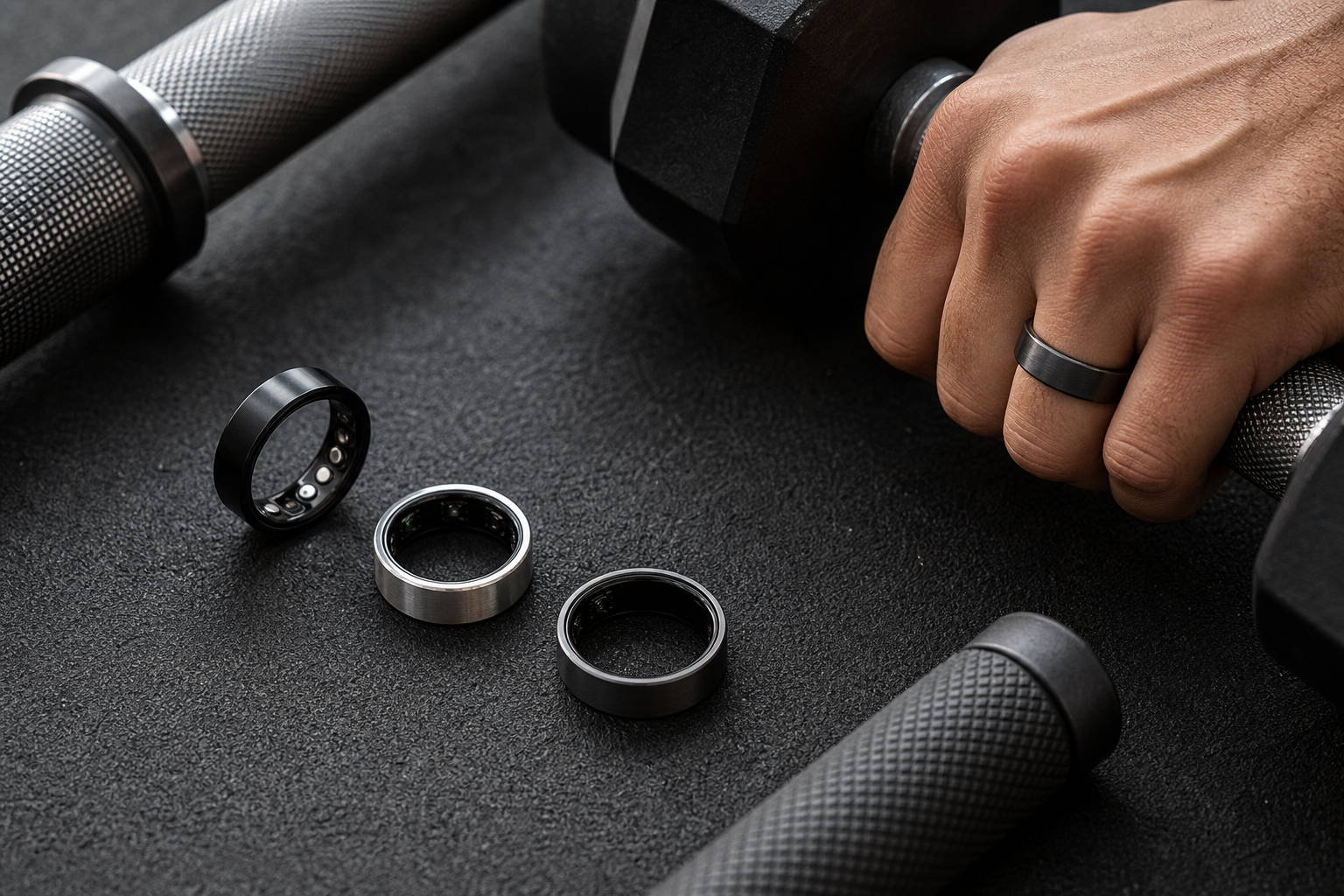
What Fitness Tracker Rings Actually Track Well (and Where They Fall Short for Workouts)
Before comparing specific models, it is essential to set realistic expectations about what a smart ring can and cannot do. The gap between ring capabilities and wrist-wearable capabilities is not narrowing as fast as marketing suggests.
Where Rings Excel
Sleep tracking is the undisputed strength of the category. Lab studies comparing Oura rings to clinical polysomnography have shown sleep stage accuracy in the 92-97% range, which is the best available from any consumer wearable. The reason is simple: rings are worn on the finger, which has a rich blood supply and produces a strong photoplethysmography (PPG) signal, and they are small enough that most users keep them on overnight without discomfort. Overnight wear compliance for rings is approximately 98%, compared to roughly 67% for smartwatches, according to data cited by Joint Corp.
Resting heart rate and HRV measurements are also strong on smart rings. Because the sensor sits on a finger rather than a wrist, motion artifacts during sleep are lower, and the readings tend to be more consistent night over night. Temperature tracking — useful for detecting early signs of illness or changes in recovery status — is now standard on all major ring models. Oura, RingConn, and Ultrahuman all use these metrics to generate daily readiness or recovery scores that tell you whether your body is prepared for a hard training session.
Where Rings Fall Short
Workout tracking is the category's biggest weakness, and it is not close. No smart ring currently offers reliable real-time heart rate monitoring during exercise. The finger-based PPG sensor is highly susceptible to motion artifacts from gripping, swinging, and impact — exactly the movements that define a home gym workout. Step counting accuracy for rings is estimated at 85-92%, compared to 95-98% for wrist devices. Rings also lack GPS entirely, meaning any outdoor activity requires a phone in your pocket for distance and pace data.
The table below summarizes the key accuracy and capability differences between smart rings and wrist-worn devices.
| Metric | Smart Ring | Smartwatch / Fitness Band | Notes |
|---|---|---|---|
| Sleep stage accuracy | 92-97% vs. clinical PSG | 80-90% vs. clinical PSG | Ring data from lab studies on Oura; may not generalize to all models |
| Step counting accuracy | 85-92% | 95-98% | Joint Corp benchmarks; manufacturer source |
| Real-time exercise HR | Poor — high motion artifact | Good — wrist-optimized algorithms | Rings cannot reliably track HR during weightlifting or HIIT |
| GPS | None | Built-in on most watches | Ring requires phone for outdoor tracking |
| Overnight wear compliance | ~98% | ~67% | Joint Corp data; rings are significantly more comfortable for sleep |
| SpO2 during sleep | ±1-2% | ±2-3% | Rings have slight edge due to finger placement |
| Calorie tracking | Low accuracy | Low accuracy | No consumer wearable exceeds ~95% accuracy for calorie estimation |
The practical takeaway is this: if your primary goal is understanding your recovery and sleep quality, a smart ring is arguably the best consumer device available. If your primary goal is tracking your workout performance in real time, a smart ring will leave you disappointed. The two use cases are not in conflict — many home fitness enthusiasts wear both a ring for recovery data and a watch for workout data — but you should not buy a ring expecting it to replace a wrist device for training.
Side-by-Side Spec Comparison: Top 5 Smart Rings for 2026
The following table provides a direct comparison of the five smart rings that dominate the 2026 market. Pricing is accurate as of June 2026, but smart rings frequently see discounts — verify current prices before purchasing.
| Model | Price | Subscription | Battery Life | Thickness | Weight | Key Sensors | Water Resistance | US Availability |
|---|---|---|---|---|---|---|---|---|
| Oura Ring 4 | $349 | $5.99/mo | 5-6 days | ~2.5mm | 4-6g | HR, HRV, SpO2, temp, accelerometer | 100m (swim-safe) | Yes |
| RingConn Gen 2 | $299 | None | 10-12 days | 2mm | 3-5g | HR, HRV, SpO2, temp, accelerometer | IP68 | Yes (after royalty agreement) |
| RingConn Gen 2 Air | $199 | None | Up to 10 days | ~2.2mm | ~3g | HR, HRV, SpO2, temp, accelerometer | IP68 | Yes |
| Samsung Galaxy Ring | $399 | None | 6-7 days | ~2.6mm | 2.3g | HR, HRV, SpO2, temp, accelerometer | 10 ATM (swim-safe) | Yes |
| Ultrahuman Ring AIR | $349 | None | 5-6 days | ~2.5mm | ~3.5g | HR, HRV, SpO2, temp, accelerometer | 100m (swim-safe) | No — unavailable due to Oura patent dispute |
A few observations stand out from this comparison. RingConn Gen 2 is the thinnest ring at 2mm and offers the longest battery life at 10-12 days, making it the strongest option for users who prioritize comfort and low maintenance. The Samsung Galaxy Ring is the lightest at 2.3 grams but requires a Samsung phone for full features, which is a significant ecosystem lock-in. The Ultrahuman Ring AIR is the only model in this group that is effectively unavailable in the US, which is a critical caveat for American buyers.
Subscription vs. No-Subscription: Total Cost of Ownership Over 2 Years
Subscription cost is one of the most important factors in smart ring ownership, and it is easy to underestimate. A $5.99 monthly fee does not sound like much, but over two years it adds $143.76 to the cost of an Oura Ring 4 — bringing the total to approximately $493, compared to $299 for a RingConn Gen 2 with no subscription. That is a $194 difference for the same two-year period.
| Model | Upfront Price | Monthly Fee | 2-Year Total | 3-Year Total |
|---|---|---|---|---|
| Oura Ring 4 | $349 | $5.99 | $492.76 | $564.64 |
| RingConn Gen 2 | $299 | $0 | $299 | $299 |
| RingConn Gen 2 Air | $199 | $0 | $199 | $199 |
| Samsung Galaxy Ring | $399 | $0 | $399 | $399 |
| Ultrahuman Ring AIR | $349 | $0 | $349 | $349 |
The subscription question is not purely financial — it is also about feature access. Oura's $5.99/month unlocks Readiness Scores, Sleep Scores, stress tracking, women's health features, and detailed trend data. Without the subscription, the Oura Ring 4 provides only basic activity and sleep data. RingConn, Samsung, and Ultrahuman offer all features without a subscription, but their app experiences are generally less polished. Wareable describes Oura's app as having the "most polished and well-presented" interface, while noting that RingConn's app is "caked with data requiring manual interpretation."
For readers who want a deeper analysis of subscription costs across all wearable types, our guide on the hidden costs of fitness trackers provides a broader view of data lock-in and long-term expenses. If you are specifically looking for subscription-free options beyond smart rings, our guide to screenless fitness trackers without a subscription covers bands and other form factors.
Model-by-Model Breakdown
Oura Ring 4: Best for Deep Health Insights
The Oura Ring 4 remains the gold standard for health data depth and app experience. It tracks heart rate, HRV, body temperature, blood oxygen, and activity, and it interprets that data through Readiness and Sleep scores that WIRED says "more closely reflected how I actually felt than any other tracker." Oura also offers VO2 max interpretation, Cardiovascular Age, and third-party integrations with Strava and Apple Health.
The trade-offs are real. The Oura Ring 4 is thicker than the RingConn Gen 2, has shorter battery life (5-6 days vs. 10-12 days), and costs roughly $200 more over two years when the $5.99/month subscription is factored in. The optional charging case costs an additional $99 and provides only 5 full recharges, compared to RingConn's included case that offers 15-20 full cycles.
- Best for: Users who want the most actionable health insights and are willing to pay a subscription for a polished app experience.
- Notable weakness: Subscription cost adds significantly to total ownership; thicker than competitors; shorter battery life.
- Caveat: Oura has filed patent lawsuits against multiple competitors, and the outcomes could affect the broader market.
RingConn Gen 2: Best for Comfort, Battery, and No Subscription
The RingConn Gen 2 is the thinnest smart ring on the market at 2mm, and its 10-12 day battery life is the best in class. Wareable rates it 9.8/10 and calls it the best smart ring overall, citing its combination of thinness, battery, and $299 price with no subscription. The included charging case provides up to 20 full recharges, making it practical for travel and extended use.
The main drawback is the app experience. Wareable notes that RingConn's app is "caked with data requiring manual interpretation" — it provides raw metrics but lacks the algorithmic insight that Oura's Readiness and Sleep scores deliver. Activity tracking is also more limited, syncing only with Apple Health and Google Fit rather than offering the third-party integrations Oura provides.
- Best for: Users who prioritize comfort, long battery life, and avoiding subscription fees over a polished app experience.
- Notable weakness: App requires manual data interpretation; limited third-party integrations; prone to scratches from knurled grips.
- Caveat: RingConn Gen 2 was subject to a US import ban in 2025 due to Oura's patent claims but is now available again after agreeing to royalty payments.
RingConn Gen 2 Air: Best Budget Entry
At $199 with no subscription, the RingConn Gen 2 Air is the most affordable smart ring that still delivers solid sleep and recovery tracking. WIRED names it the best subscription-free smart ring, noting it has "up to 10 days" battery and is "much more comfortable than previous models." PCMag tested it at 10.5 days of battery life and praised its detailed sleep tracking.
The compromises are in accuracy and workout tracking. PCMag reported "some inaccurate heart rate readings in testing" and noted "minimal exercise tracking." The Air is essentially a slightly thicker, slightly cheaper version of the Gen 2 with the same sensor suite but a less refined algorithm.
- Best for: Budget-conscious users who want solid sleep and recovery tracking without a subscription.
- Notable weakness: Some HR accuracy issues in testing; minimal workout tracking; less refined algorithm than Gen 2.
Samsung Galaxy Ring: Best for Samsung Users
The Samsung Galaxy Ring is the lightest smart ring at 2.3 grams and offers a polished design with 6-7 day battery life. It integrates deeply with Samsung Health and offers features like Energy Score, snore detection, and Double Pinch gestures for controlling phone functions.
The catch is significant: the Galaxy Ring requires a Samsung phone for full features. WIRED explicitly states that "Energy Score, snore detection, Double Pinch" are only available on Samsung phones, and that "AI-enabled suggestions are poor." PCMag also noted "some accuracy issues in testing" and "limitations with non-Samsung phones." For iPhone users, the Galaxy Ring is essentially a basic activity tracker.
- Best for: Samsung phone users who want deep ecosystem integration and a lightweight ring.
- Notable weakness: Requires Samsung phone for full features; some accuracy issues; poor AI suggestions; expensive at $399.
- Caveat: Oura filed a patent lawsuit against Samsung in late 2025 — the outcome could affect future Galaxy Ring availability or features.
Ultrahuman Ring AIR: Best Sleep Tracking — But US Availability Is a Problem
The Ultrahuman Ring AIR has consistently earned high marks for sleep tracking and personalized recovery suggestions. Garage Gym Reviews gave it 5/5 for sleep metrics and user experience, praising its "personalized suggestions" and lack of subscription. Wareable rates it 9.1/10.
However, the Ultrahuman Ring AIR is currently unavailable for purchase in the United States due to Oura's active patent dispute. Forbes and PCMag have both removed it from their winners lists as of early 2026. Wareable and WIRED still mention it with caveats, but American buyers cannot currently buy one. Ultrahuman has announced the Ring Pro ($479) as a potential replacement, available for pre-order, but it has not yet shipped.
- Best for: Users outside the US who want excellent sleep tracking with no subscription.
- Notable weakness: Unavailable in the US due to Oura patent dispute; battery issues reported by Forbes after several months of wear.
- Caveat: Ultrahuman Ring Pro ($479) is available for pre-order but has not yet shipped. The AIR's US availability may change if the legal situation resolves.
What to Consider: Durability, Sizing, and Real-World Use in a Home Gym
Home gym training introduces specific wear-and-tear concerns that generic smart ring reviews rarely address. If you are deadlifting, rowing, or doing pull-ups with knurled bars, your ring will come into contact with aggressive metal surfaces. Multiple testers have reported that the RingConn Gen 2 "gets scuffed up pretty easily" with scratches appearing in under a week of regular use. The Oura Ring 4 uses a titanium shell that is more scratch-resistant, but it is also thicker and may be more noticeable during gripping exercises.
- Durability: Titanium rings (Oura, Samsung) are more scratch-resistant than polymer or aluminum rings (RingConn). If you train with knurled bars regularly, expect cosmetic wear on any ring. Some users remove their ring during heavy lifting sessions to preserve the finish.
- Sizing: Fingers swell during and after workouts. A ring that fits perfectly in the morning may feel tight after a heavy deadlift session. Most manufacturers offer sizing kits, and it is worth ordering one before committing to a purchase. Consider sizing for your largest finger state (post-workout or in warm weather).
- Water resistance: All five rings in this comparison are swim-safe (IP68 or 100m rating), meaning sweat and hand washing are not concerns. However, salt water and chlorinated pools may accelerate wear on some finishes.
- Charging case: RingConn Gen 2's included charging case offers up to 20 full recharges, making it practical for travel and gym bag storage. Oura's optional case costs $99 and provides only 5 recharges. Samsung's case is included but offers fewer cycles.
- Sensor bumps: The inner surface of most smart rings has small sensor bumps that press against the finger. Some users find these uncomfortable during gripping exercises. The RingConn Gen 2's 2mm thickness minimizes this issue, while thicker rings like the Oura Ring 4 and Samsung Galaxy Ring are more noticeable.
Rings vs. Smartwatches: Which Should Home Fitness Readers Pick?
The decision between a smart ring and a smartwatch is not about which is better — it is about which use case matters more to you. The two devices are complementary, not competitive, and many home fitness enthusiasts wear both.
| Use Case | Smart Ring | Smartwatch | Recommendation |
|---|---|---|---|
| Sleep tracking | Excellent (92-97% accuracy, 98% wear compliance) | Good (80-90% accuracy, 67% wear compliance) | Ring wins for sleep data quality and consistency |
| Recovery / readiness scoring | Excellent — purpose-built for this | Good — improving but less consistent | Ring wins for recovery-focused users |
| Real-time workout HR | Poor — motion artifacts from gripping | Good — wrist-optimized algorithms | Watch wins for training intensity monitoring |
| GPS for outdoor runs/rides | None | Built-in on most models | Watch wins for outdoor athletes |
| 24/7 wear comfort | Excellent — lightweight, unobtrusive | Moderate — bulkier, can interfere with wrist movement | Ring wins for all-day and overnight wear |
| On-wrist stats during exercise | None — no screen | Excellent — pace, distance, HR, splits at a glance | Watch wins for real-time feedback |
| Battery life | 5-12 days depending on model | 1-3 days for full-featured watches | Ring wins for low-maintenance use |
| Price (2-year total) | $199-$493 | $200-$600+ | Comparable — depends on model and subscription |
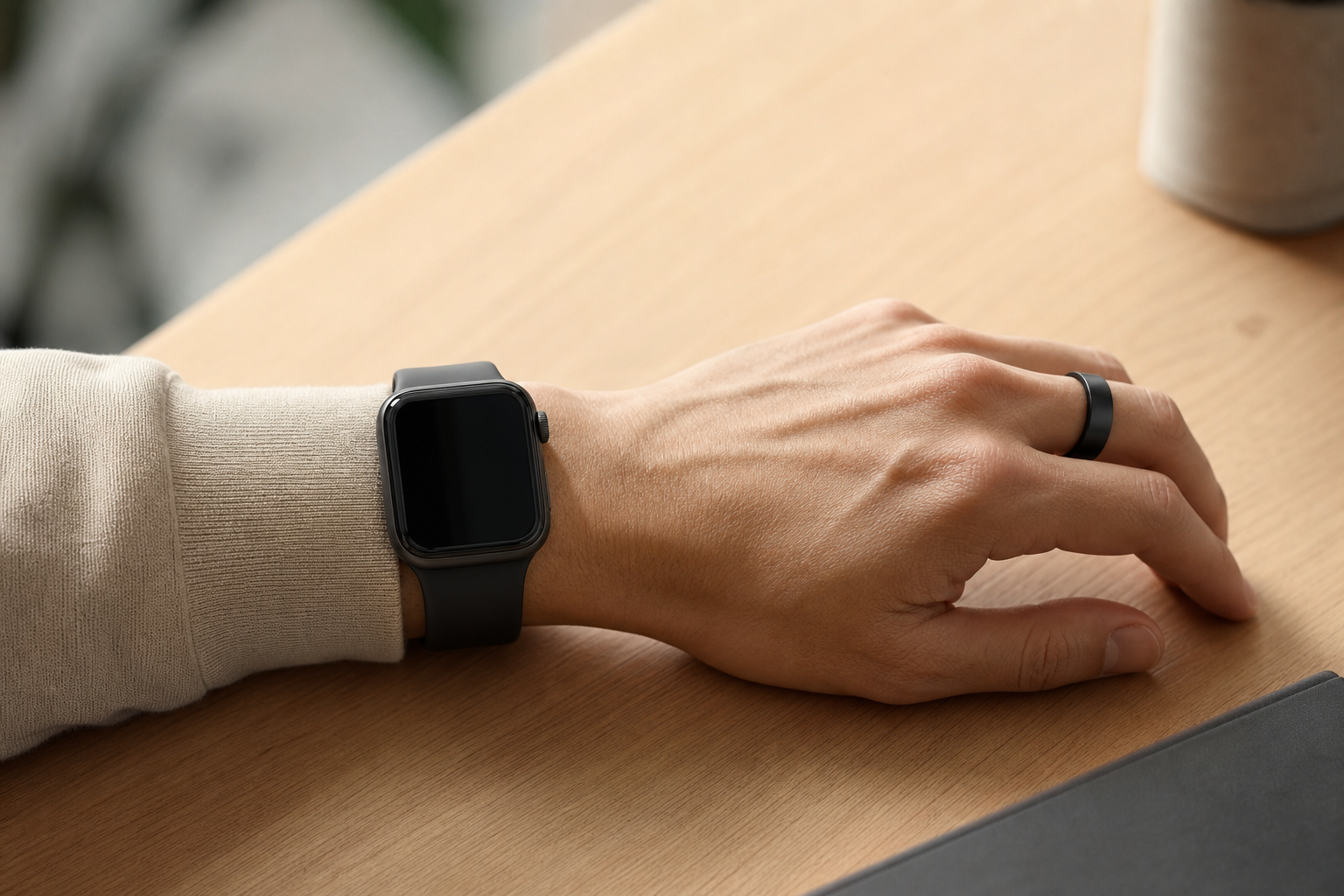
The hybrid setup — wearing a ring for recovery and sleep data and a watch for workout tracking — is increasingly common among serious home gym athletes. The ring provides the overnight and resting data that the watch cannot capture as accurately, while the watch provides the real-time metrics that the ring cannot deliver. If your budget allows for both, this is the optimal configuration.
For readers who want a deeper comparison of recovery tracking across form factors, our guide on which smart watch actually tracks recovery well covers the wrist-based alternatives. If you are still deciding between all form factors, our decision-matrix guide to the best fitness tracker 2026 provides a structured comparison across rings, watches, and bands.
Final Verdict: Which Fitness Tracker Ring Should You Buy in 2026?
The smart ring market in 2026 offers genuine choice, but the right pick depends on your priorities as a home fitness enthusiast. Here is the tiered recommendation.
- Best overall for data depth: Oura Ring 4 — If you want the most actionable health insights, the most polished app, and are willing to pay $5.99/month for it, Oura remains the benchmark. Just be prepared for the $200+ premium over RingConn over two years and the shorter battery life.
- Best overall for value and comfort: RingConn Gen 2 — At $299 with no subscription, 10-12 day battery, and 2mm thickness, this is the most practical smart ring for most home gym users. The app is less polished than Oura's, but the hardware is superior in every dimension that matters for daily wear.
- Best for Samsung users: Samsung Galaxy Ring — If you own a Samsung phone and want deep ecosystem integration, the Galaxy Ring is a solid choice. Just be aware that it loses most of its smart features on non-Samsung phones, and it is the most expensive option at $399.
- Best budget entry: RingConn Gen 2 Air — At $199 with no subscription, this is the lowest-cost way to get solid sleep and recovery tracking. Accept the trade-offs in HR accuracy and workout tracking, and you have a capable recovery tool at a fraction of the price of other models.
- Best for sleep tracking (outside the US): Ultrahuman Ring AIR — If you are outside the US and can buy one, the Ultrahuman Ring AIR offers excellent sleep tracking with no subscription. For US readers, the Ultrahuman Ring Pro ($479) may eventually fill this gap, but it has not shipped yet.
The overarching takeaway has not changed: fitness tracker rings in 2026 are recovery and sleep tools, not workout trackers. If you are a home fitness enthusiast who already trains consistently and wants deeper insight into your recovery, sleep quality, and readiness to train, a smart ring is an excellent investment. If you need real-time workout metrics, GPS, or on-wrist stats during training, a smartwatch remains the better choice — and wearing both is the optimal setup for those who can afford it.
For a deeper dive into how rings measure recovery metrics like HRV and readiness scores, see our dedicated guide on how fitness tracker rings measure recovery. And remember: the legal landscape around smart rings is still evolving. Oura's patent disputes could affect product availability and features in the coming months, so check current availability before making a purchase.
This result comes from one real apartment under the stated conditions — it is a strong signal, not a guarantee your space will measure identically.
Builds this evidence supports
No build currently links to this specific test. Browse all builds with a matching tag.
Spot something off?
If this result didn't match your own space, let us know — floor-damage and noise claims carry real deposit-risk consequences if we get them wrong.