
Wearable Tracker Accuracy: What the Science Says About Heart Rate, Sleep, and Step Count
Consumer fitness trackers are great at step counts and resting heart rate, but energy expenditure and sleep staging can be wildly inaccurate. This article breaks down the peer-reviewed error ranges for each metric, explains why manufacturers don't disclose these limits, and gives home fitness enthusiasts a practical checklist for what to trust and what to treat as directional.
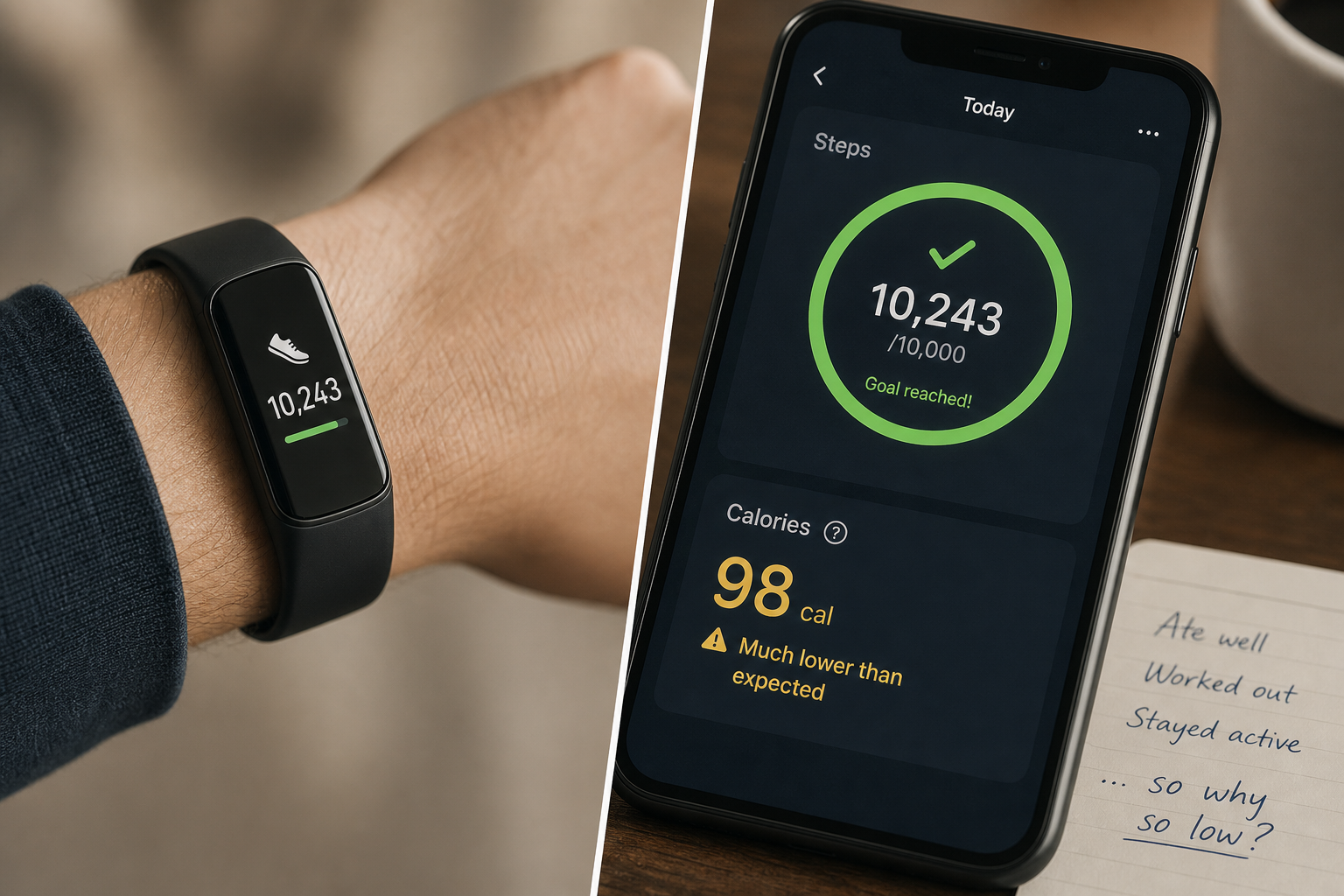
The Quantified-Self Promise vs. Measurement Reality
The quantified-self movement, popularized by Wired editor Gary Wolf in a 2010 TED talk, promised that self-tracking would unlock a new era of personal health optimization. Fifteen years later, more than a third of U.S. adults wear a fitness tracker or smartwatch. The global market hit $46.3 billion in 2023 and is projected to surpass $187 billion by 2032. These devices have become the default tool for millions of people managing their daily activity, sleep, and workouts.
But there is a gap between the marketing and the measurement. Manufacturers advertise precise calorie burn, detailed sleep staging, and real-time physiological insights. The peer-reviewed evidence tells a more complicated story: some metrics are genuinely reliable, while others carry error margins large enough to mislead anyone who takes them at face value. A 2024 umbrella review from University College Dublin, led by Dr. Cailbhe Doherty, found that less than 5% of consumer wearables ever released have been independently validated for the physiological signals they claim to measure. The rapid release cycle — most companies refresh hardware annually — means a device is often obsolete by the time a study is published.
This article breaks down what the science actually says about wearable tracker accuracy, metric by metric. The goal is not to dismiss these devices — they are genuinely useful tools — but to give home fitness enthusiasts a clear, evidence-based framework for knowing what to trust, what to treat as directional, and where the marketing claims outrun the data.
What Trackers Do Well: Step Count, Resting Heart Rate, and HRV
Not all wearable metrics are created equal. For three key measurements — step count, resting heart rate, and heart rate variability — consumer-grade devices perform well enough to be genuinely useful for tracking trends over time.
Step Count: The Most Reliable Metric
Step counting is the foundational feature of any fitness tracker, and it is also the most accurate. In Wirecutter's 2026 testing, the Fitbit Inspire 3 was off by just 0.32% over a two-day period compared to a known-precise pedometer — the best result of any device tested. In a one-mile distance test, it overestimated by only 0.03 miles. The broader picture from the UCD umbrella review shows that wearables generally underestimate step counts by about 9% across different devices and conditions, which is still a narrow enough margin for meaningful trend tracking.
Resting Heart Rate: Within ±3% Error
For steady-state conditions — sitting, walking, or light activity — optical heart rate sensors deliver reliable data. The UCD umbrella review reports a heart rate error rate of approximately ±3% across consumer wearables. Wirecutter's testing found the Fitbit Inspire 3's resting heart rate reading was off by just 1 beat per minute. CNET's lab testing, which compared devices against the Polar H10 chest strap during controlled runs, found the Apple Watch Series 11 had the lowest average heart rate error of 0.98%, or about 1.40 BPM.
These error ranges are small enough that resting heart rate trends — a key indicator of cardiovascular fitness and recovery — can be tracked with confidence.
Heart Rate Variability: Directionally Useful
HRV is a more complex metric than simple heart rate, but wearables have improved their measurement of it significantly. Devices like the Oura Ring 4 and Whoop band track HRV overnight and use it to categorize daytime stress levels as 'stressed,' 'engaged,' 'recovering,' or 'restored.' While individual readings can be noisy, the trend over several days or weeks is a reliable signal for recovery status and training readiness.
| Metric | Typical Error Range | Best-Case Performance | Source |
|---|---|---|---|
| Step count | 0.32% – 9% underestimation | Fitbit Inspire 3: 0.32% error over 2 days | Wirecutter, UCD umbrella review |
| Resting heart rate | ±3% | Apple Watch Series 11: 0.98% error (1.40 BPM) | CNET, UCD umbrella review |
| HRV (trends) | Directional only | Useful for recovery/stress classification | Forbes Vetted, Oura Ring 4 testing |
Where They Struggle: Energy Expenditure and Sleep Staging
Two of the most heavily marketed features — calorie burn tracking and sleep stage analysis — are also the least accurate. The gap between what manufacturers claim and what independent validation finds is wide enough to matter for anyone making decisions based on this data.
Energy Expenditure: The Least Reliable Metric
Calorie burn is the metric where wearables fail most consistently. The UCD umbrella review found that energy expenditure error margins ranged from −21.27% to +14.76% depending on the device and activity type. This means a tracker could report that you burned 500 calories during a workout when the true value is anywhere from roughly 394 to 574 calories — a swing large enough to undermine any attempt at precision nutrition or weight management.
The problem is fundamental to the technology. Optical sensors measure heart rate and movement, but calorie expenditure is a metabolic calculation that depends on individual factors — body composition, fitness level, metabolic efficiency — that a wrist-worn device cannot measure. The result is a number that looks precise but is, at best, a rough estimate.
Sleep Staging: 12% to 180% Error vs. Gold Standard
Sleep tracking is the other major area where marketing claims outpace the science. The UCD umbrella review reports that sleep staging errors — the classification of time spent in deep, light, and REM sleep — range from 12% to 180% compared to gold-standard polysomnography. Wearables consistently overestimate total sleep time and sleep efficiency by more than 10%.
Dr. Aric A. Prather, a professor of psychiatry at UCSF, told Wirecutter that most wearables 'can accurately estimate total sleep time and fragmentation,' but added that 'this is less true when it comes to sleep architecture, like minutes in deep sleep.' In other words, your tracker can tell you roughly how long you slept, but the breakdown of sleep stages it shows you is largely a guess.
| Metric | Marketing Claim | Validated Reality | Error Range |
|---|---|---|---|
| Calories burned | Precise energy expenditure tracking | Rough estimate based on HR + movement | −21.27% to +14.76% |
| Sleep stages (deep/light/REM) | Detailed sleep architecture analysis | Unreliable classification vs. polysomnography | 12% to 180% error |
| Total sleep time | Accurate sleep duration | Overestimates by >10% | >10% overestimation |
| Sleep efficiency | Precise efficiency score | Overestimates by >10% | >10% overestimation |
Why Accuracy Varies: Skin Tone, Exercise Intensity, and the Validation Gap
The accuracy of any wearable depends on more than just the device model. Several factors consistently affect how well optical sensors perform, and understanding them helps explain why the same tracker can be accurate for one person and unreliable for another.
- Skin tone and tattoos. Photoplethysmography (PPG) sensors work by shining light through the skin and measuring blood volume changes. Melanin absorbs light, which can reduce signal quality in darker skin tones. Wirecutter reports that studies into skin tone effects have had mixed findings — some show significant accuracy differences, others do not — but the variability itself is a concern. Tattoos, particularly dark ink patterns over the sensor area, can block the light signal entirely.
- Exercise intensity. Heart rate accuracy degrades during high-intensity interval training and weightlifting. The UCD umbrella review notes that error rates depend on activity type. Forbes Vetted's testing, using the Polar H10 chest strap as a control, found that the Fitbit Charge 6 tracked heart rate changes from 160 BPM during a set to 120 BPM during rest within 30–60 second windows — consistent with the chest strap. But this lag means that during rapid intensity changes, the wrist-based reading may trail the true value by 30 seconds or more.
- Wrist fit and position. A loose band allows ambient light to reach the sensor, degrading signal quality. Wearing the tracker too close to the hand bone (rather than higher up the wrist) can also affect readings. Wirecutter notes that fit is one of the most commonly overlooked variables in real-world accuracy.
- The validation gap. The most important factor may be the one you cannot control: less than 5% of consumer wearables ever released have been independently validated for the physiological signals they claim to measure, according to the UCD umbrella review. Manufacturers typically conduct internal testing, but the results are rarely published in peer-reviewed journals. The annual release cycle compounds the problem — by the time a study is designed, funded, and published, the device it tested is no longer the current model.
What the Home Fitness Buyer Should Do: A Practical Accuracy Checklist
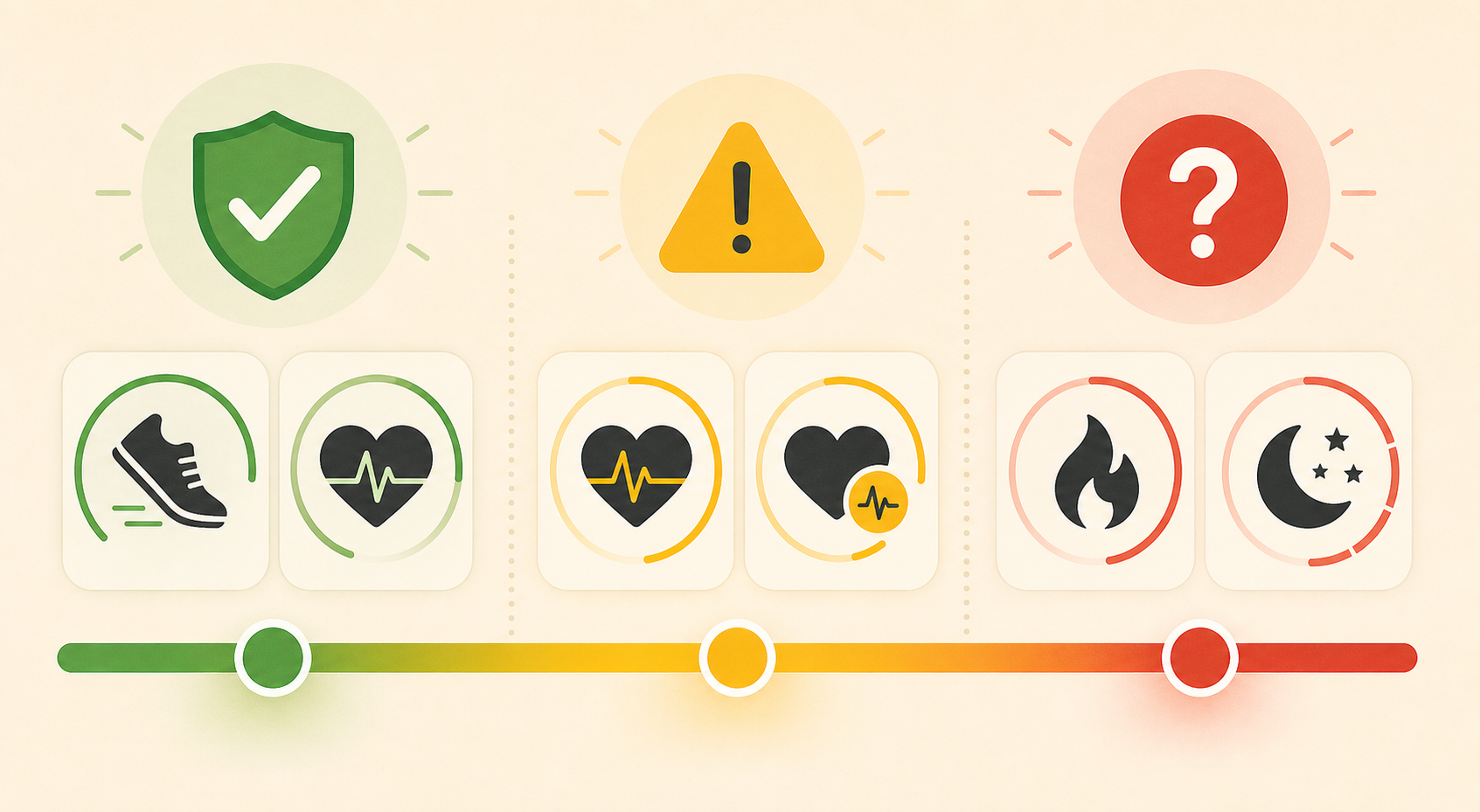
Knowing the limitations of wearable trackers does not mean you should stop using them. It means you should calibrate your expectations by metric. Here is a practical checklist for getting the most value from your device without being misled by the numbers.
- Trust step counts and resting heart rate. These are the two most reliable metrics on any modern tracker. Use them to track daily activity trends and long-term cardiovascular fitness changes. A 0.32% step-count error or a ±3% heart rate error is negligible for trend tracking.
- Treat calorie burn as directional only. Do not use your tracker's energy expenditure number to decide how much to eat. The −21% to +15% error range means the number on your wrist could be off by hundreds of calories per day. Use it to compare relative effort between workouts, not to calculate a calorie deficit.
- Use a chest strap for HIIT and interval training. If heart rate accuracy matters for your training — for zone-based cardio, interval work, or threshold testing — a chest strap like the Polar H10 remains the gold standard. Forbes Vetted and CNET both used the Polar H10 as their control in accuracy testing because electrical (ECG) sensors are not affected by motion artifacts or skin tone in the same way optical sensors are.
- Trust total sleep time, ignore sleep stages. Your tracker can tell you roughly how long you slept, and that is useful. The breakdown of deep, light, and REM sleep, however, is unreliable. Do not make decisions about sleep quality based on stage percentages.
- Watch for trends, not absolute numbers. The most valuable use of any wearable is tracking changes over time. A rising resting heart rate trend over several weeks may indicate overtraining or poor recovery. A declining HRV trend may signal accumulated stress. The absolute number matters less than the direction and rate of change.
| Metric | Trust Level | Best Use | When to Use an Alternative |
|---|---|---|---|
| Step count | High | Daily activity tracking, trend monitoring | Not needed |
| Resting heart rate | High | Cardiovascular fitness trends, recovery tracking | Not needed |
| HRV | Moderate | Recovery and stress trend tracking | Not needed for trends |
| Calorie burn | Low | Relative effort comparison only | Use for weight management decisions |
| Sleep stages | Very low | Ignore | Polysomnography for clinical sleep concerns |
| Exercise heart rate (steady-state) | High | Zone-based cardio, steady-state runs | Not needed |
| Exercise heart rate (HIIT/intervals) | Moderate | General intensity awareness | Chest strap (Polar H10) for precision |
The Bottom Line: Know What Your Tracker Can and Cannot Tell You
Consumer wearable trackers are excellent tools for motivation, trend tracking, and general health awareness. They are not clinical-grade instruments, and they are not marketed as such — but the marketing often implies a level of precision that the science does not support.
The evidence is clear: step counts and resting heart rate are reliable. Energy expenditure and sleep staging are not. HRV is useful as a trend but noisy as a single reading. Less than 5% of devices have been independently validated, and the annual release cycle means that gap is unlikely to close soon.
None of this means you should stop wearing your tracker. It means you should use it with informed skepticism — trust the metrics that are backed by data, treat the rest as rough estimates, and never let a number on your wrist override how you feel. The best fitness tool is still the one that helps you stay consistent, and for that, even an imperfect tracker is better than none at all.
This result comes from one real apartment under the stated conditions — it is a strong signal, not a guarantee your space will measure identically.
Builds this evidence supports
No build currently links to this specific test. Browse all builds with a matching tag.
Spot something off?
If this result didn't match your own space, let us know — floor-damage and noise claims carry real deposit-risk consequences if we get them wrong.