
The Women's Fitness Tracker Landscape: What's Real and What's Marketing
Walk into any electronics retailer or scroll through a wearable brand's website, and you'll find a dedicated section for 'women's fitness trackers.' These devices typically promise smaller bands, jewelry-inspired aesthetics, and built-in cycle tracking. The implication is clear: a standard unisex tracker won't serve women well. But is that actually true, or is it a convenient marketing frame that justifies a premium price tag?
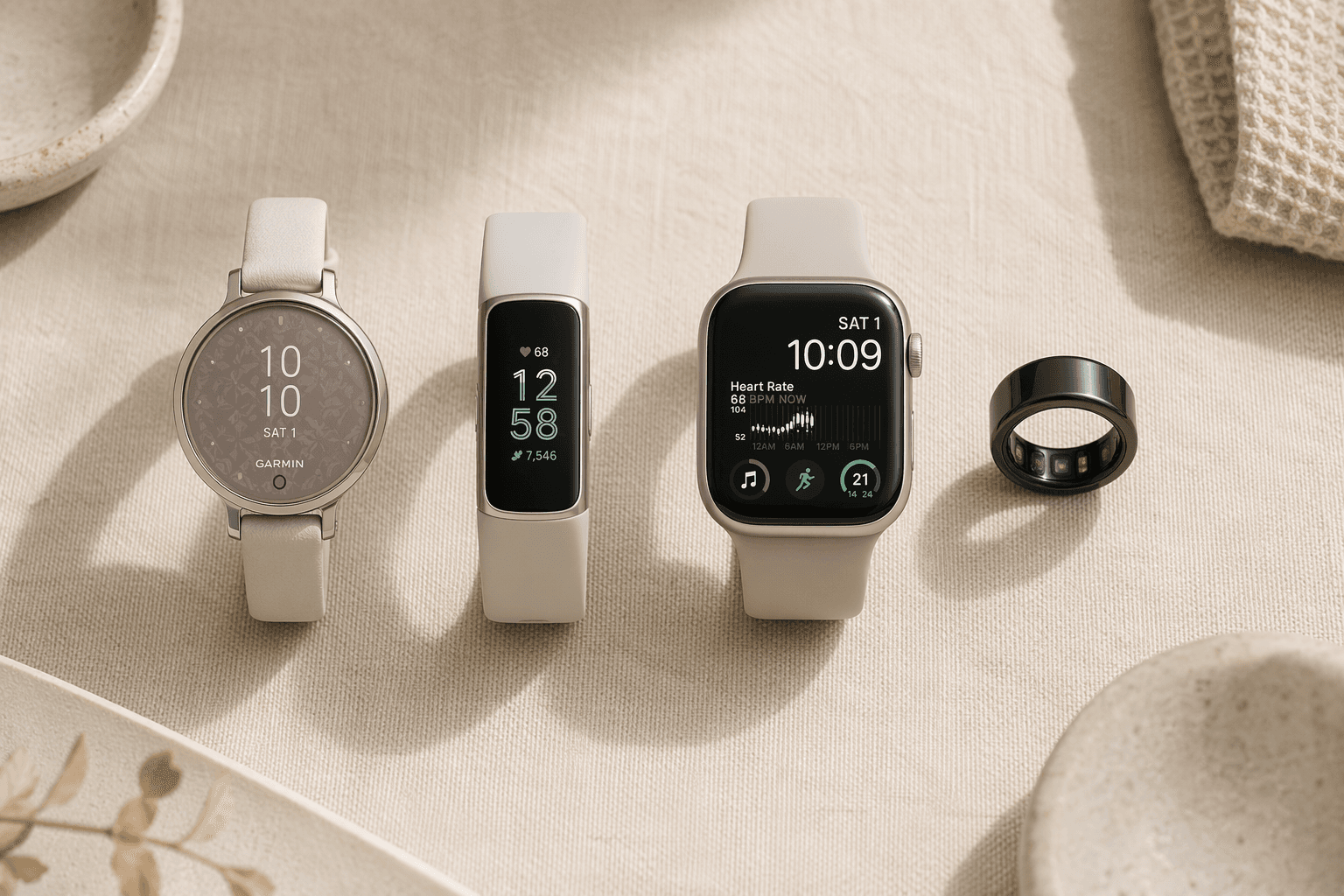
The answer, as with most things in wearables, is nuanced. The Garmin Lily 2 and the Oura Ring 4 represent two genuinely different approaches to solving problems that disproportionately affect women — namely, wrist fit and discreet wear. But the unisex Fitbit Charge 6 and Apple Watch Series 11 counter with superior accuracy, broader feature sets, and in some cases, lower total cost of ownership. This article pits these four devices against each other on the criteria that actually matter differently to women, to determine whether the 'women's' label delivers real value or is mostly a marketing distinction.
Where Women-Specific Design Actually Matters: Wrist Size and Physical Fit
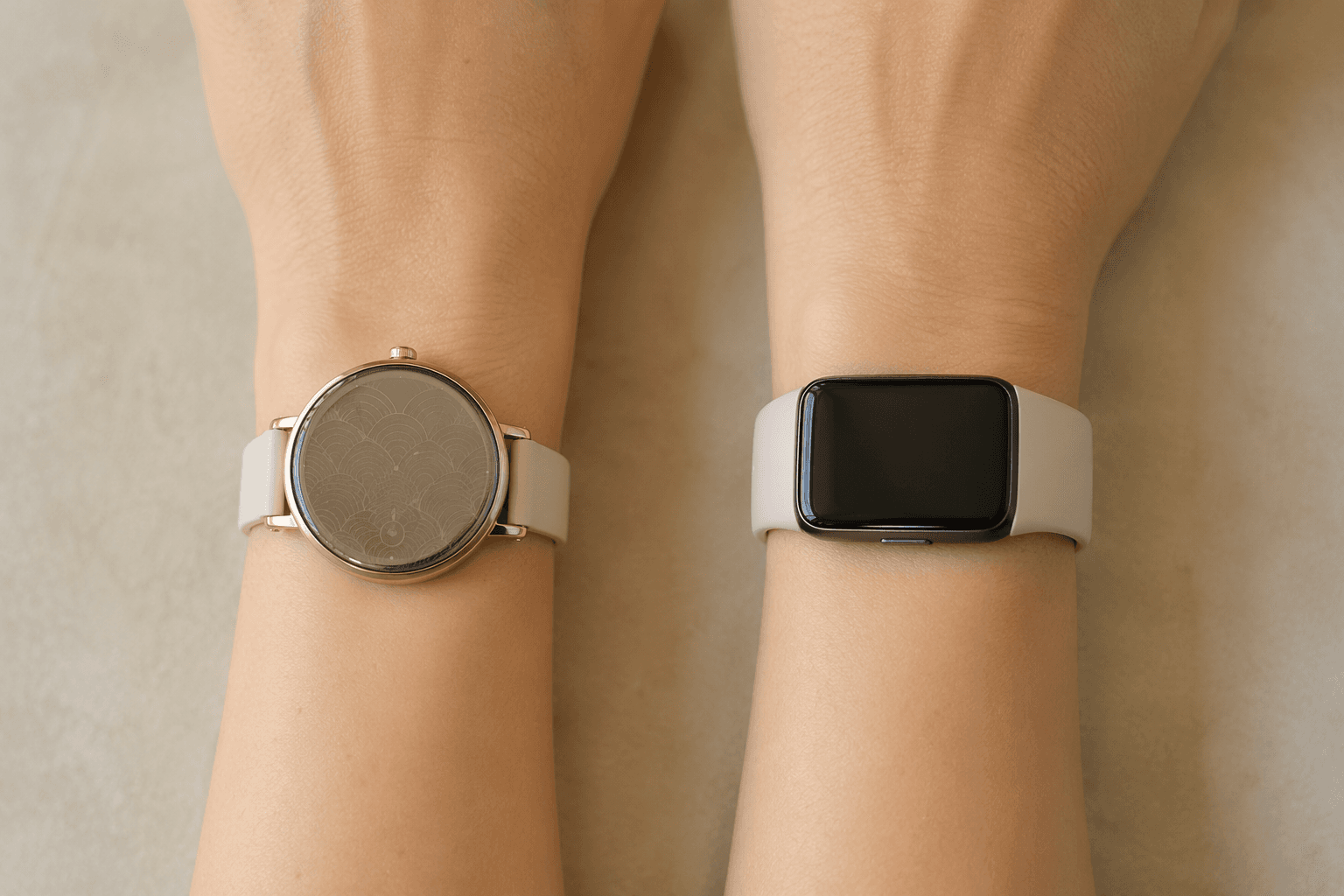
The most tangible, non-marketing problem that women-specific trackers solve is physical fit. The average adult female wrist circumference is 5.7 to 6.2 inches, compared to 6.5 to 7.2 inches for men. A tracker designed around a male-average wrist will simply not fit a significant portion of female wrists securely, which directly impacts optical heart rate sensor accuracy — a loose band lets in ambient light and produces noisier readings.
The Garmin Lily 2 is the standout in this category. Its 14mm band is much slimmer than most smartwatch straps, and it fits wrists as small as 4.3 inches (110mm). That accommodates the 1st percentile female wrist size — a genuinely inclusive design choice that no other mainstream tracker matches. The trade-off is significant: the Lily 2 lacks built-in GPS and uses a grayscale display, which limits its utility for outdoor runners and anyone who wants rich workout data on their wrist.
| Tracker | Minimum Wrist Fit | Band Width | Design Approach |
|---|---|---|---|
| Garmin Lily 2 | 4.3 inches (110mm) | 14mm | Jewelry-inspired, small form factor |
| Apple Watch Series 11 (41mm) | 5.1 inches | Variable (small band) | Standard smartwatch, scaled down |
| Fitbit Inspire 3 | 5.5 inches | Standard | Slim fitness band, unisex sizing |
| Fitbit Charge 6 | 5.5 inches+ | Standard | Fitness band, unisex sizing |
| Oura Ring 4 | Any finger size (sizing kit) | N/A (ring) | Finger-worn, no wrist constraint |
The Oura Ring 4 solves the wrist-fit problem by sidestepping it entirely. At 3.3 to 5.2 grams depending on size, it is worn on the finger and has no wrist circumference constraint. This makes it the only option for women with wrists below 5.1 inches who want GPS, color displays, or rich workout metrics — but it also means sacrificing the real-time workout feedback that a wrist-based tracker provides.
Women's Health Tracking Depth: Period Logging vs. Ovulation Sensing vs. Pregnancy Tracking
This is the dimension where the 'women's tracker' category makes its strongest claim to differentiation. But the depth of women's health features varies enormously across devices, and a unisex tracker like the Apple Watch Series 11 now offers capabilities that rival or exceed some women-specific models.
| Feature Tier | What It Does | Which Devices Offer It |
|---|---|---|
| Basic period logging | Manual entry of period start/end dates, symptom logging | Almost all trackers (Fitbit, Garmin, Apple, Oura) |
| Ovulation window estimates | Uses wrist temperature sensing to estimate fertile days and ovulation | Apple Watch Series 11 (wrist temp), Oura Ring 4 (skin temp) |
| Pregnancy tracking | Gestational age estimates, trimester-specific exercise/nutrition guidance, blood glucose logging | Garmin (Lily 2, Venu 3, and others) |
Garmin's pregnancy tracking is genuinely unique. It provides gestational age and size estimates, trimester-specific recommendations on prenatal nutrition and exercise, and the ability to enter blood glucose levels for management of gestational diabetes. No other brand — women-specific or unisex — offers this depth. For women who are pregnant or planning pregnancy, this alone can justify choosing a Garmin device over the alternatives.
The Apple Watch Series 11 uses its wrist temperature sensor to provide ovulation window estimates, which is a meaningful step beyond basic period logging. The Oura Ring 4 also offers cycle tracking with fertile window estimates, but a Women's Health review notes it is 'incredibly accurate so long as your cycle is regular' but 'if you have an irregular cycle, it sometimes guesses at an ovulation date that didn't actually happen.' That caveat matters: many women experience irregular cycles due to PCOS, menopause, breastfeeding, or stress, and a tracker that assumes regularity can produce misleading fertility information.
Accuracy Cross-Comparison: Do Women-Specific Trackers Measure Up?
Accuracy is a unisex concern, but it is a domain where women-specific trackers often fall short. The Garmin Lily 2 and Oura Ring 4 have not been tested to the same rigorous standards as the Apple Watch Series 11 or Fitbit Charge 6 in independent lab evaluations. That does not mean they are inaccurate — it means there is less public data to verify their claims.
| Tracker | Heart Rate Error | Step Count Error | Testing Source |
|---|---|---|---|
| Apple Watch Series 11 | 0.98% (≈1.40 BPM) | Not tested | CNET lab testing vs. Polar H10 chest strap |
| Fitbit Inspire 3 | Not tested | 0.32% (best of all tested) | Wirecutter two-day pedometer comparison |
| Fitbit Charge 6 | Matched Polar H10 during HIIT intervals | 1.3% | Forbes Vetted trainer testing; Wirecutter step test |
| Garmin Venu 3 | Most accurate overall (Forbes) | Not tested | Forbes Vetted trainer testing vs. Polar H10 |
| Garmin Lily 2 | No independent lab test data | No independent lab test data | N/A |
| Oura Ring 4 | No independent lab test data | N/A (ring) | N/A |
The Apple Watch Series 11 posted the lowest average heart rate error of any wrist-based tracker in CNET's lab testing at 0.98%, or about 1.40 beats per minute. That is exceptional accuracy that benefits every user, regardless of gender. The Fitbit Inspire 3, which costs under $100, had the best step count accuracy of any tracker Wirecutter has tested, with just 0.32% error over a two-day period.
For women who prioritize accuracy — whether for heart rate zone training, step counting, or sleep staging — the unisex trackers in this comparison outperform the women-specific ones on available data. The Garmin Lily 2's lack of built-in GPS also means that outdoor run distance and pace will be less accurate than on the Fitbit Charge 6 or Apple Watch Series 11, which have onboard GPS.
Hidden Costs: Subscriptions and Total Cost of Ownership
The upfront price of a tracker is only part of the story. Subscription costs can dramatically change the value proposition, especially for devices that require a paid plan to access their full feature set.
| Tracker | Upfront Price | Required Subscription | Annual Subscription Cost | 5-Year Total Cost |
|---|---|---|---|---|
| Garmin Lily 2 | $250 | No | $0 | $250 |
| Fitbit Charge 6 | $100–$160 | No (Premium optional) | $0 (or $80/yr for Premium) | $100–$160 |
| Apple Watch Series 11 | $399+ | No | $0 | $399+ |
| Oura Ring 4 | $349 | Yes (for full features) | $70/yr | $699 |
| Whoop 4.0 | $0 (hardware) | Yes | $199/yr | $995 |
The Oura Ring 4 is the most expensive device in this comparison over time. At $349 upfront plus $70 per year for the subscription required to access cycle tracking, HRV data, and readiness scores, the five-year total reaches $699. That is more than double the cost of the Garmin Lily 2, which requires no subscription and offers comparable sleep and recovery tracking.
The Fitbit Charge 6 sits at the other end of the spectrum. At $100 to $160 with no required subscription, it offers built-in GPS, 40 exercise modes, and ECG for a fraction of the cost of the Lily 2 or Oura Ring 4. Fitbit Premium ($80/year) adds deeper sleep analysis and wellness reports, but the core fitness tracking experience is fully functional without it.
Verdict: Pick by Your Primary Constraint, Not by the Label
The 'women's fitness tracker' category is not a monolith. It contains genuine innovations — the Garmin Lily 2's wrist fit for very small wrists, the Oura Ring 4's discreet form factor, Garmin's unique pregnancy tracking — alongside features that are now available on unisex trackers at lower prices and with better accuracy. The label alone is not a reliable signal of value.
- Choose the Garmin Lily 2 if wrist size is your binding constraint and you want pregnancy tracking. It is the only mainstream tracker that fits wrists below 5.1 inches, and its pregnancy features are unmatched. Accept the trade-offs: no built-in GPS and a grayscale display.
- Choose the Oura Ring 4 if you want discreet 24/7 wear for sleep and recovery tracking and are comfortable with the $70/year subscription. It solves the wrist-fit problem entirely but sacrifices real-time workout feedback and has limited accuracy validation.
- Choose the Apple Watch Series 11 if accuracy and ovulation sensing matter most. Its <1% heart rate error is the best of any wrist-based tracker, and its wrist temperature sensor provides ovulation window estimates. It is the most expensive option but requires no subscription.
- Choose the Fitbit Charge 6 if budget and general fitness tracking are your priorities. At $100–$160 with built-in GPS, 40 exercise modes, and ECG, it outperforms the Lily 2 on features and the Oura Ring 4 on cost. It fits wrists 5.5 inches and up, so check your wrist size first.
The bottom line: do not buy a 'women's fitness tracker' because it is marketed to women. Buy it because it solves a specific problem that a unisex tracker does not. For most women, the Fitbit Charge 6 or Apple Watch Series 11 will deliver better accuracy, more features, and lower total cost than a women-specific alternative. But if your wrist is below 5.1 inches, or if pregnancy tracking is a priority, the Garmin Lily 2 is genuinely the better tool — and that has nothing to do with marketing.
Comments
Join the discussion with an anonymous comment.