
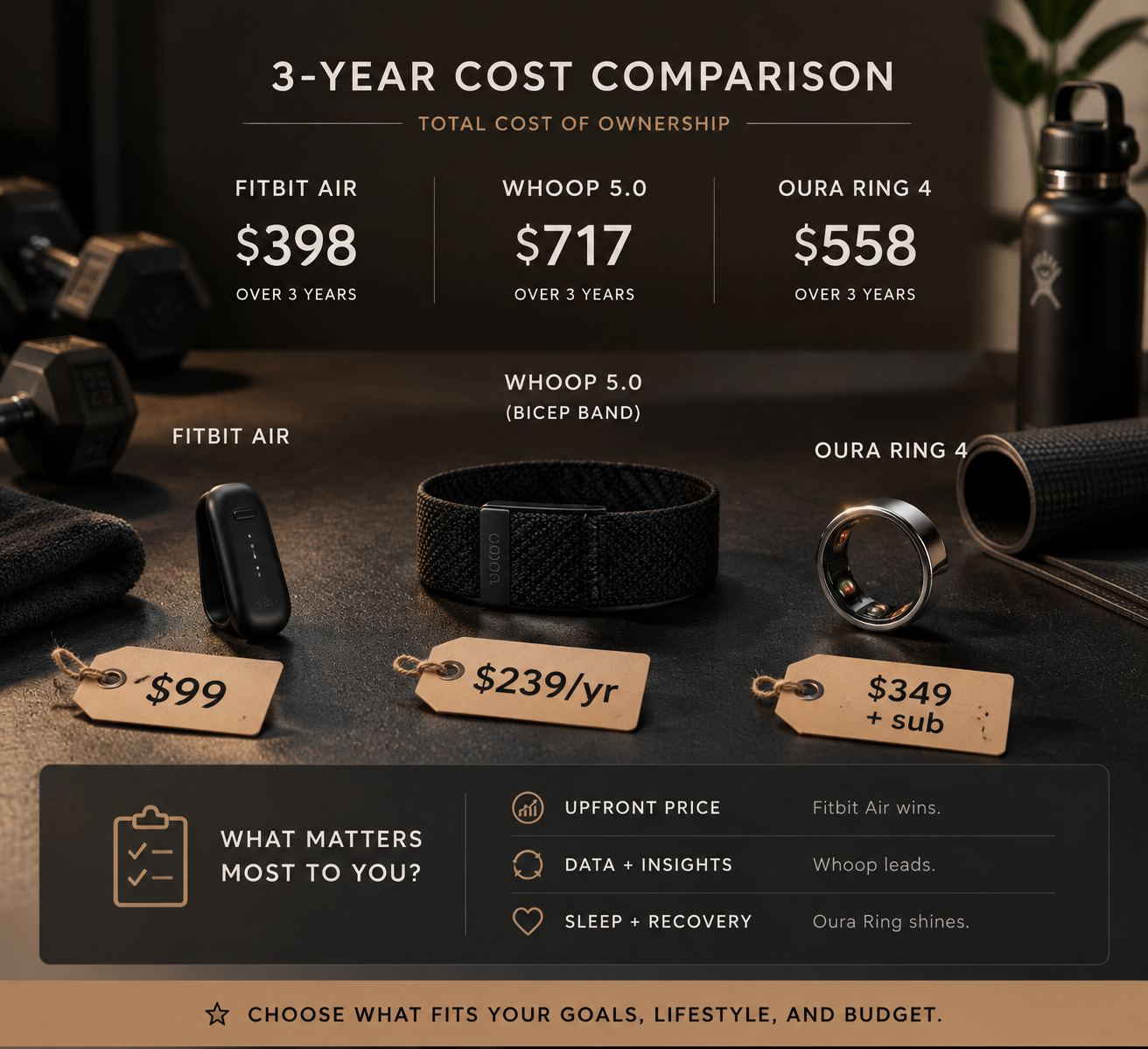
The hard part of buying a whoop fitness tracker in 2026 is not deciding whether recovery data is useful. It is deciding whether that usefulness is worth renting every year. Whoop 5.0 Peak is priced at $239 per year, while the newer Fitbit Air starts at $99 with no mandatory subscription and Oura Ring 4 remains a polished recovery-first alternative at $349 plus its own subscription model. Over three years, PCMag’s comparison puts Whoop Peak at $717, Oura Ring 4 at $558.97, and Fitbit Air with Premium at about $398.97.[1]
That changes the review. Whoop 5.0 is not a gadget you buy once and forget about. It is a coaching service attached to a screenless sensor. If the service changes how you train on a Tuesday morning when your recovery is poor, the subscription has a case. If it mostly gives you graphs to admire after the workout is already done, the math gets ugly quickly.
The Price Is the First Feature
Whoop now has three membership paths: Whoop One at $149 per year with refurbished 4.0 hardware, Whoop Peak at $239 per year with 5.0 hardware, and Whoop Life at $359 per year with MG hardware that adds ECG and blood pressure trends.[2] Peak is the one most home fitness athletes should judge, because it is the current Whoop 5.0 experience without pushing into the more clinical Life tier.
The annual charge matters because home training already has its quiet recurring costs: programming apps, adjustable dumbbells, replacement bands, treadmill maintenance, recovery tools that were definitely necessary at the time. A wearable subscription has to earn a place in that stack. For a deeper breakdown of how these costs compound, see the real cost of screenless fitness trackers and why upfront tracker prices mislead.
| Device or plan | Upfront or annual price | Three-year cost in cited comparison | Best fit |
|---|---|---|---|
| Whoop 5.0 Peak | $239/year | $717 | Athletes who will use recovery, strain, sleep, and training-load coaching to change behavior |
| Fitbit Air with Premium | $99 device plus optional Premium | ~$398.97 | Most people who want a cheaper screenless tracker with lighter coaching |
| Oura Ring 4 | $349 plus subscription | $558.97 | Recovery and sleep-focused users who prefer a ring and less training friction |
That table is not just accounting. It is the buying decision. Whoop costs more than the alternatives because it asks to become part of your training process: sleep target, recovery read, strain budget, workout plan, post-session load, and next-day adjustment. That is useful if you actually let it interrupt your habits. It is expensive if you want a passive health dashboard.
What Whoop Does Better Than a Cheaper Tracker
Whoop’s strongest idea is that recovery, strain, sleep, and training load should be read together. A rough night is not just a bad sleep score. It changes the way the app frames the day’s strain target. A hard interval session is not just elevated heart rate. It feeds the same system that will judge whether tomorrow is a good day to push or a day to keep the bar speed snappy and leave reps in reserve.
For home fitness, that integrated coaching layer is the reason to care. A garage-gym lifter does not need another device celebrating a random calorie estimate. They need help deciding whether today is heavy lower body, aerobic base work, mobility, or a deliberately boring recovery session. Whoop’s Recovery and Strain model gives that decision a structure. If you want the mechanics of the recovery score itself, read how the Whoop Recovery Score works.
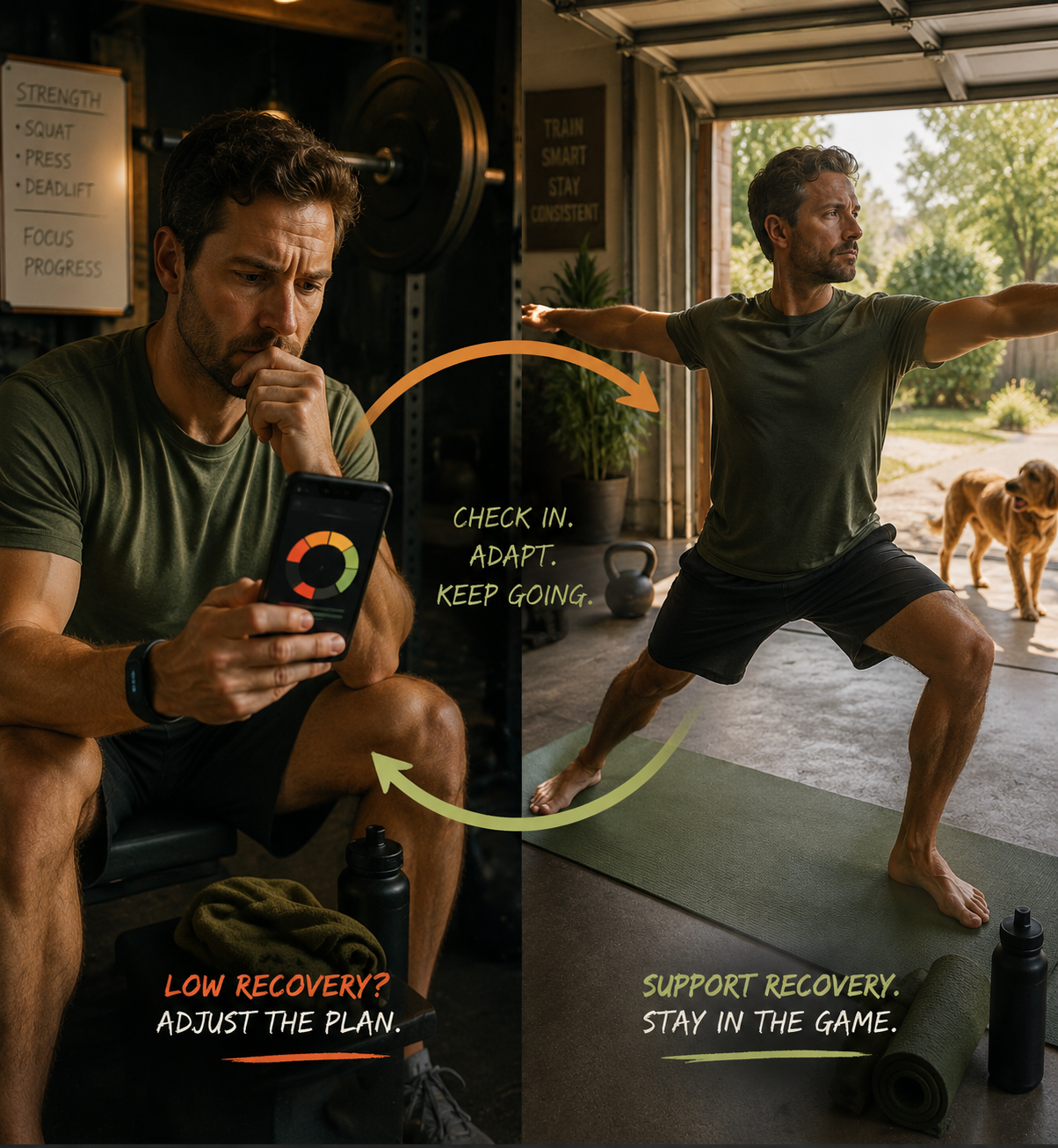
The useful version looks simple. You wake up, see poor recovery, and do not pretend the body is negotiable just because the program says five-by-five. You lower the day’s strain, swap heavy conditioning for zone work, or move the hard session twenty-four hours. Then, on a good recovery day, you stop sandbagging and train with intent. The value is not the score. The value is the change in the session.
Whoop also remains unusually serious about strength training for a mainstream wearable. Its Strength Trainer uses velocity-based training modeling, connected to Whoop’s 2021 acquisition of PUSH, to estimate muscular load separately from cardiovascular strain.[3][4] That matters because a heavy deadlift set may not look impressive to a heart-rate-only tracker, even though it creates real training stress.
The catch is that Strength Trainer is not magic background logging. You have to build the workout in the app and follow it. That means selecting movements, sets, and loads instead of casually lifting and hoping the device understands. For someone already running structured blocks, that friction may be acceptable. For someone doing loose circuits between emails, it may become the feature they praise during setup and abandon by week three.
Where AI Coach Fits
Whoop Coach adds a conversational layer over the data, and SELF reports that it can integrate with blood testing data to provide personalized recommendations.[5] This is potentially helpful when the question is narrow: why recovery is trending down, whether a certain sleep change appears to help, or how a training week compares with recent load. It is less useful if you expect it to replace judgment, programming, or a coach who actually watches you move.
The best use is boring and specific. Ask why recovery is down after two hard sessions and short sleep. Ask whether a deload week improved HRV and sleep consistency. Ask what changed during the weeks when you felt better under the bar. Those are coaching questions. Asking a wearable to turn discipline into autopilot is where the subscription starts to feel like theater.
Accuracy Depends on Where You Wear It
Whoop accuracy should not be discussed as one blanket verdict. Placement matters. The5krunner found a biceps-worn Whoop correlated at 0.98 with a chest strap across 19 workouts, while wrist wear degraded significantly during CrossFit and HYROX-style movement because of wrist-motion artifact.[6] That distinction is the difference between trusting the data during intervals and overreading a noisy wrist trace during burpees, carries, and kettlebell work.
For home training, the practical rule is straightforward: wear it on the biceps for sessions with gripping, swinging, crawling, cleans, burpees, or hard intervals where heart-rate accuracy matters. Wrist wear is more convenient for daily use and sleep, but convenience is not the same thing as reliable workout data. If you want the broader sensor context, see how accurate fitness tracker heart-rate sensors are.
This also keeps the recovery score in perspective. The5krunner reports an average nightly recovery score of 58% across all Whoop users, which is useful as context but not a commandment from the clouds.[6] The important signal is your trend: what happens after late meals, poor sleep, alcohol, hard conditioning, heavy lower-body work, or a week of too much ambition. A single score can be noisy. A pattern you repeatedly ignore is usually telling you something.
Battery Life Actually Supports the Whole Premise
Battery life is not a glamour feature here. PCMag tested Whoop 5.0 at 16.5 days of battery life, and the device can recharge while worn.[3] That matters because recovery tracking falls apart when the tracker is on the bathroom counter during sleep or charging through the session you meant to measure.
The screenless design helps too. There is no watch face, no notification surface, and no tiny display asking to become another place you check instead of train. For a home-gym athlete, that restraint is part of the appeal. The band disappears better than a smartwatch during sleep and does not compete with the phone, the timer, the rack, and the program.
The Fitbit Air Problem
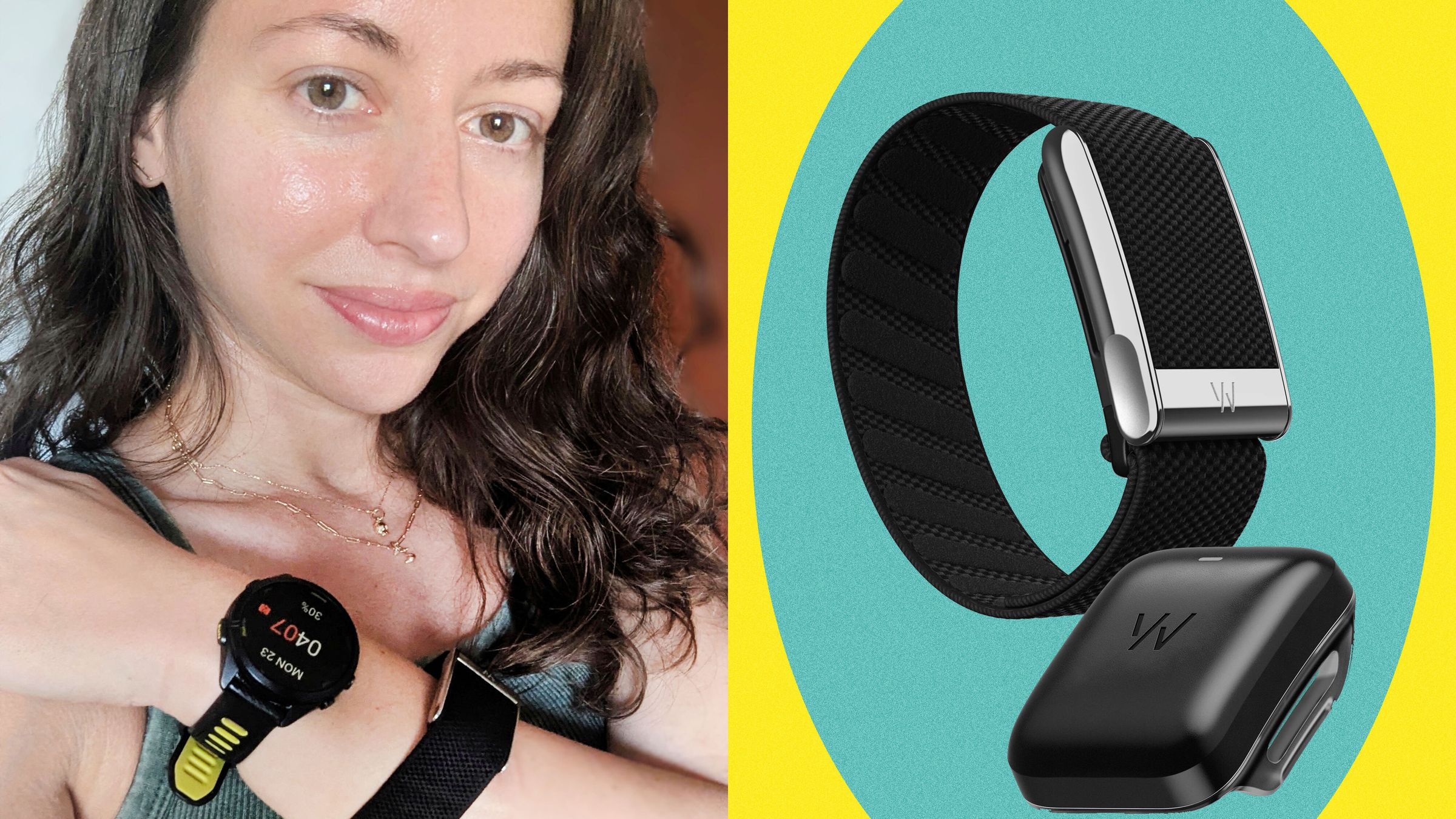
Fitbit Air is the pressure point in this review. DC Rainmaker called it “an easy-button recommendation for the vast majority of people who would have otherwise selected a Whoop,” and that line lands because the price gap is not subtle.[7] If someone wants a screenless tracker that covers sleep, heart rate, activity trends, and a lighter recovery experience without mandatory annual rent, Fitbit Air is difficult to dismiss.
The limits are just as important. DC Rainmaker notes that Fitbit Air’s automatic activity detection covers only about six activity types, compared with Whoop’s 45-plus.[7] That does not automatically make Whoop better for every buyer, but it does show the difference in ambition. Fitbit Air is the cleaner recommendation for many people. Whoop is the more demanding system for people who want training load, recovery, and behavior coaching to sit closer to the center of the day.
If the choice is narrowing to these two, read the full Fitbit Air vs Whoop 5.0 comparison. The short version is that Fitbit Air wins the lower-friction, lower-cost argument. Whoop wins only if its deeper coaching layer changes enough training decisions to justify the higher total cost.
Oura Ring 4 Is the Quieter Alternative
Oura Ring 4 is not trying to be a biceps-worn training companion. It is a polished recovery and sleep device that asks less of the user during workouts. That is exactly why some people will prefer it. If your main interest is sleep regularity, readiness-style trends, resting metrics, and a device that does not look like training gear, Oura may be the more livable choice.
The three-year comparison still puts Oura Ring 4 below Whoop Peak in total cost, assuming the ring lasts through that window without battery degradation becoming a practical issue.[1] That assumption should not be ignored, but neither should the broader point: Whoop is the more expensive commitment. It has to be meaningfully more useful, not just more athletic in tone.
For readers comparing recovery-first devices beyond this review, the broader best fitness tracker for recovery guide is the better exit.
Healthspan Features Are Interesting, Not the Core Reason to Subscribe
Whoop’s Healthspan layer adds features such as Whoop Age and Pace of Aging, and Advanced Labs blood testing is described as a $200 add-on with 65 biomarkers.[8] Wareable also highlights the broader Healthspan direction in Whoop 5.0.[4] For biohackers and highly engaged users, this can expand the platform from training tracker to lifestyle monitoring system.
For a typical home fitness buyer, it should not be the centerpiece. Most people deciding between a $99 Fitbit Air, an Oura Ring, and a $239-per-year Whoop are not primarily buying a band to estimate biological age or attach lab results to an app. They are trying to train hard without sleepwalking into under-recovery. Healthspan features may add value later, but they do not rescue the subscription if Recovery, Strain, Strength Trainer, and coaching prompts are not being used.
Who Should Buy Whoop 5.0 Peak
Whoop 5.0 Peak makes sense for the home fitness athlete who will do the follow-up work. That means wearing it consistently, using the biceps band when workout accuracy matters, building strength sessions in the app, reading recovery before choosing the day’s intensity, and letting sleep data change bedtime rather than simply explain tomorrow’s fatigue.
- Buy Whoop Peak if you train seriously enough that recovery mistakes cost you sessions, progress, or consistency.
- Buy it if you will adjust strength, HIIT, running, and recovery days based on Recovery and Strain instead of treating them as decorations.
- Buy it if Strength Trainer’s extra setup is acceptable because you already train from a plan.
- Skip it if you mainly want passive sleep, heart-rate, and activity trends at the lowest credible price.
- Skip it if a subscription will annoy you every time the app tells you something you already know but will not act on.
Readers deciding among the three Whoop plans should use the Whoop membership guide. Readers who already know they do not want a mandatory subscription should start with screenless fitness trackers without subscriptions.
Verdict
Whoop 5.0 is still the most complete recovery-and-strain coaching platform for serious home fitness athletes. The battery life supports continuous wear, the screenless design keeps it from becoming another distraction, Strength Trainer gives lifting more respect than heart-rate-only systems, and the coaching model is coherent enough to shape real training decisions.
The subscription is justified only when that system changes behavior. If Whoop helps you back off when recovery is poor, push when readiness is good, wear the sensor correctly for hard sessions, build strength workouts instead of merely logging them, and protect sleep because the next day’s training depends on it, Peak can earn its $239 per year. If you mainly want passive numbers, basic activity tracking, or the cheapest credible screenless wearable in 2026, Fitbit Air or another lower-cost option is the more rational buy.
References
- Fitbit Air vs. Whoop 5.0: Which Screenless Fitness Tracker Deserves a Spot on Your Wrist, PCMag
- WHOOP Membership, WHOOP
- Whoop 5.0 Review, PCMag, Feb. 2026
- Whoop 5.0 Review, Wareable
- Whoop 5 Review, SELF
- 2026 Whoop 5.0 MG Review, Discount, Accuracy, Strain & Recovery for Athletes, the5krunner
- Fitbit Air Review vs Whoop, DC Rainmaker
- The Whoop 5.0 Is a Massive Upgrade to Health Tracking I Wasn’t Ready For, Gizmodo
Comments
Join the discussion with an anonymous comment.