
What's the Ideal Sleep Temperature After a Home Workout?
A cool bedroom — roughly 65–68°F — supports the deep sleep that drives recovery after home workouts, but your ideal setpoint isn't one magic number. Here's the evidence-backed range and a simple self-test for finding your own.
- Citation source
- Sleep Foundation; Cleveland Clinic; thermoregulation reviews
- Evidence level
- Restrained inference from general sleep guidelines and thermoregulation research
The ideal sleep temperature for home workout recovery is best treated as a starting range, not a magic number: try a cool bedroom around 65–68°F first, while recognizing that the broader adult sleep-temperature zone across major sources sits roughly around 60–68°F. Cleveland Clinic gives 60–67°F for adults and says bedrooms above 70°F are usually too warm, while Sleep Foundation describes about 65°F as ideal and notes that many doctors recommend 65–68°F.[1][2]
That answer is useful, but it needs one honest caveat: there is no single trial proving that one bedroom setpoint is best specifically after home workouts. The case for a cool room comes from sleep-temperature research, thermoregulation physiology, and the fact that heat can interfere with sleep stages that matter for overnight recovery. For someone who trains at 9 p.m. in the same room where they sleep, that is still enough to act on tonight — just not enough to pretend everyone should force the same number.
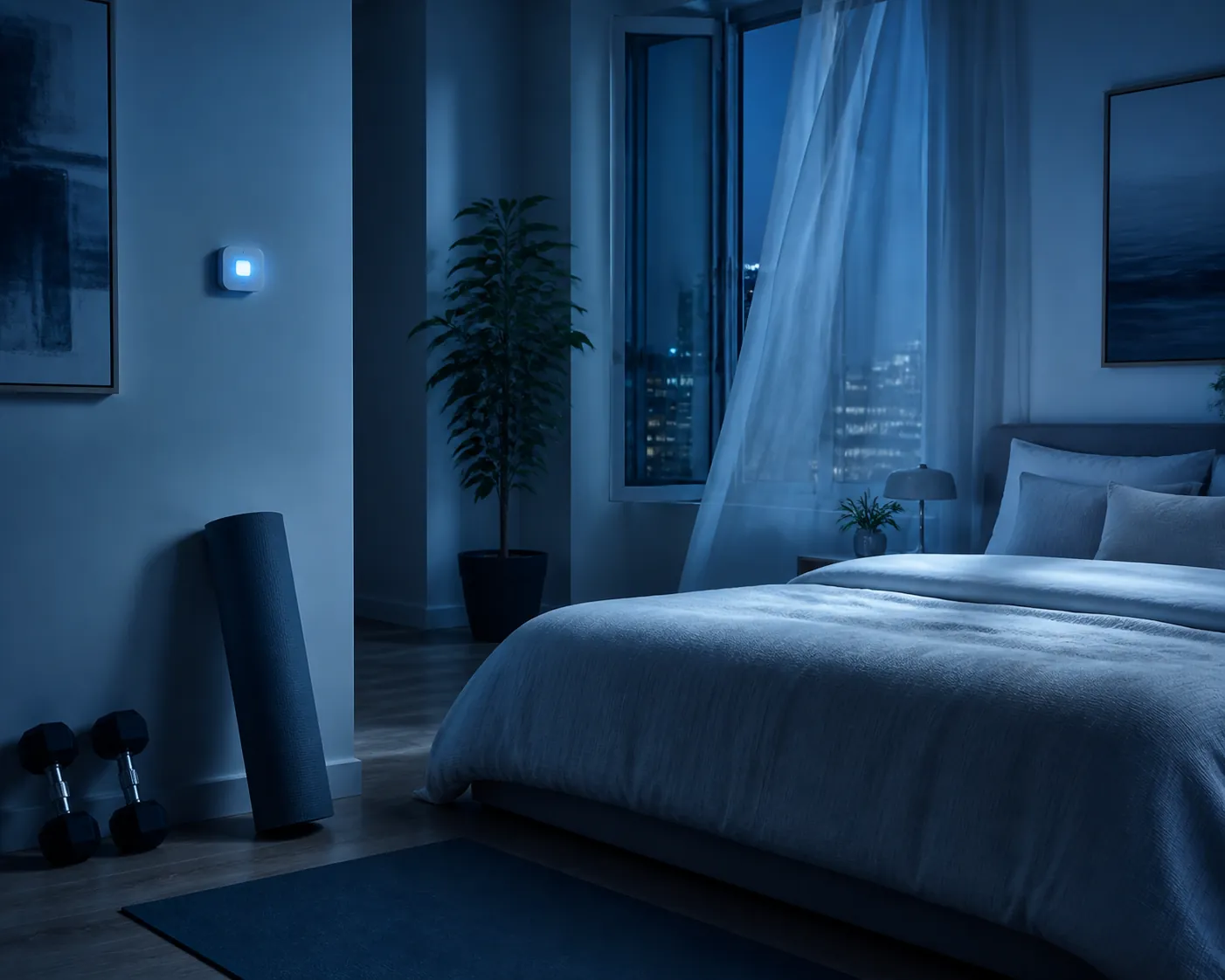
The range is real, but the sources do not say exactly the same thing
Most sleep-temperature advice clusters around a cool room. The disagreement is in the edges: one source is comfortable with low 60s, another parks the practical target closer to the mid-to-high 60s, and a thermoregulation review lands slightly warmer. Flattening those into “the perfect temperature is 65°F” makes the advice cleaner than the evidence.
| Source | Temperature guidance | How to use it |
|---|---|---|
| Cleveland Clinic | 60–67°F for adults; above 70°F described as too hot and below 60°F as too cold.[1] | Good boundary marker for avoiding an overheated bedroom after evening training. |
| Sleep Foundation | About 65°F as an ideal, with many doctors recommending 65–68°F.[2] | Best practical starting point if you want one thermostat experiment. |
| Healthline | 60–65°F.[3] | Another source in the same cool-room cluster, especially for people who sleep warm. |
| Thermoregulation review | Roughly 19–21°C, or 66–70°F, as an optimal ambient range.[4] | A reminder that the useful zone is not always as cold as common sleep tips imply. |
The overlap is the part worth trusting. If your apartment is at 74°F after a sweaty bodyweight session, the evidence gives you a good reason to cool the room. If you are already sleeping at 66°F and waking up chilled, the same evidence does not require you to keep lowering the thermostat because an article said colder was better.
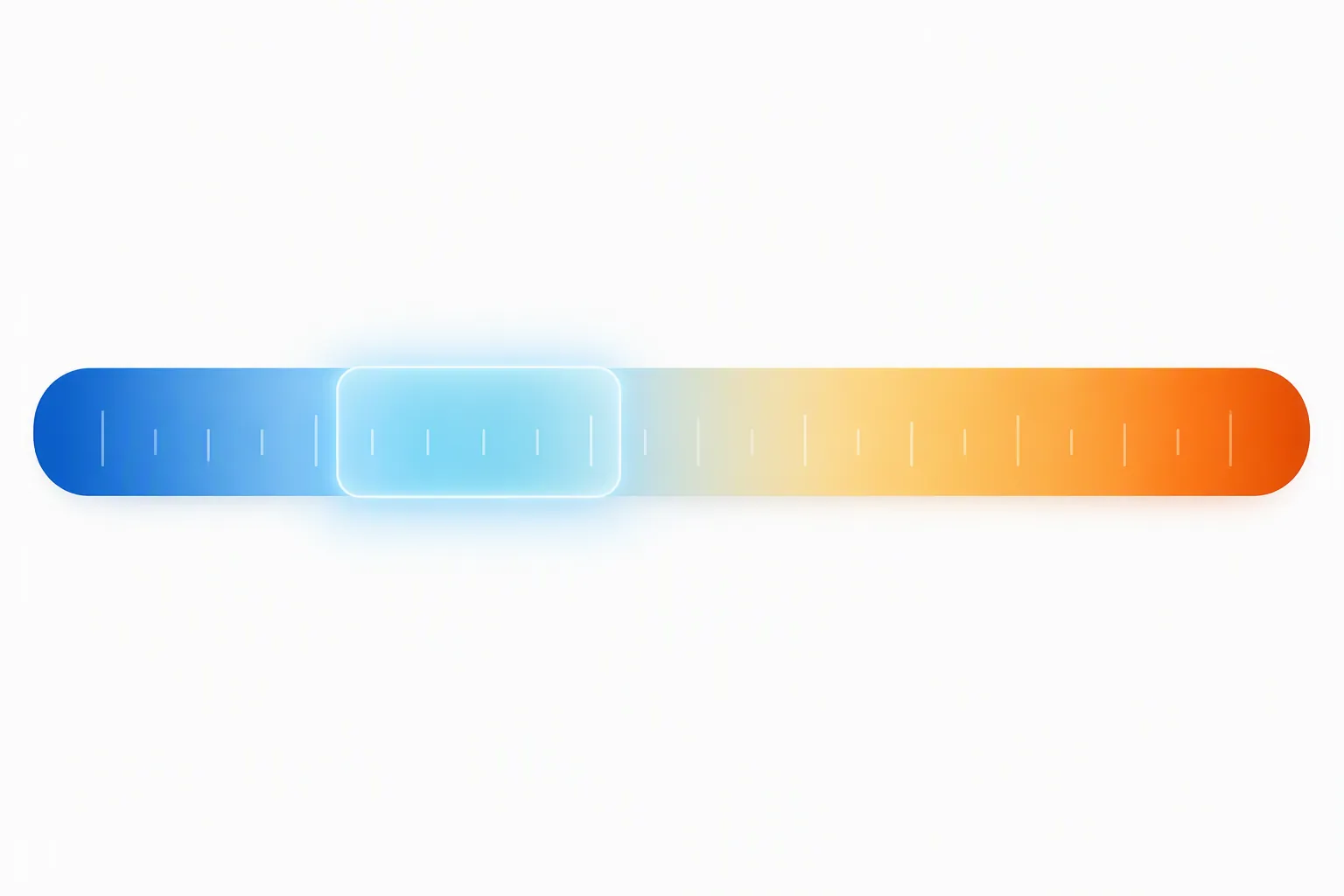
Why a cool room helps recovery sleep
Sleep is tied to a drop in core body temperature. Sleep Foundation describes core temperature falling by roughly 2°F across the night, beginning about two hours before sleep, and Harding, Franks, and Wisden describe that decrease as circadian-controlled, with NREM sleep coupled to body cooling.[2][5]
That is the simple physiology behind the thermostat advice. After a home workout, your muscles, skin, and room may all still be holding heat. If the bedroom stays warm, your body has to shed heat into an environment that is not helping much. A cooler room does not “recover” your legs by itself; it makes the sleep environment less hostile to the normal cooling process that supports sleep onset and stable sleep.
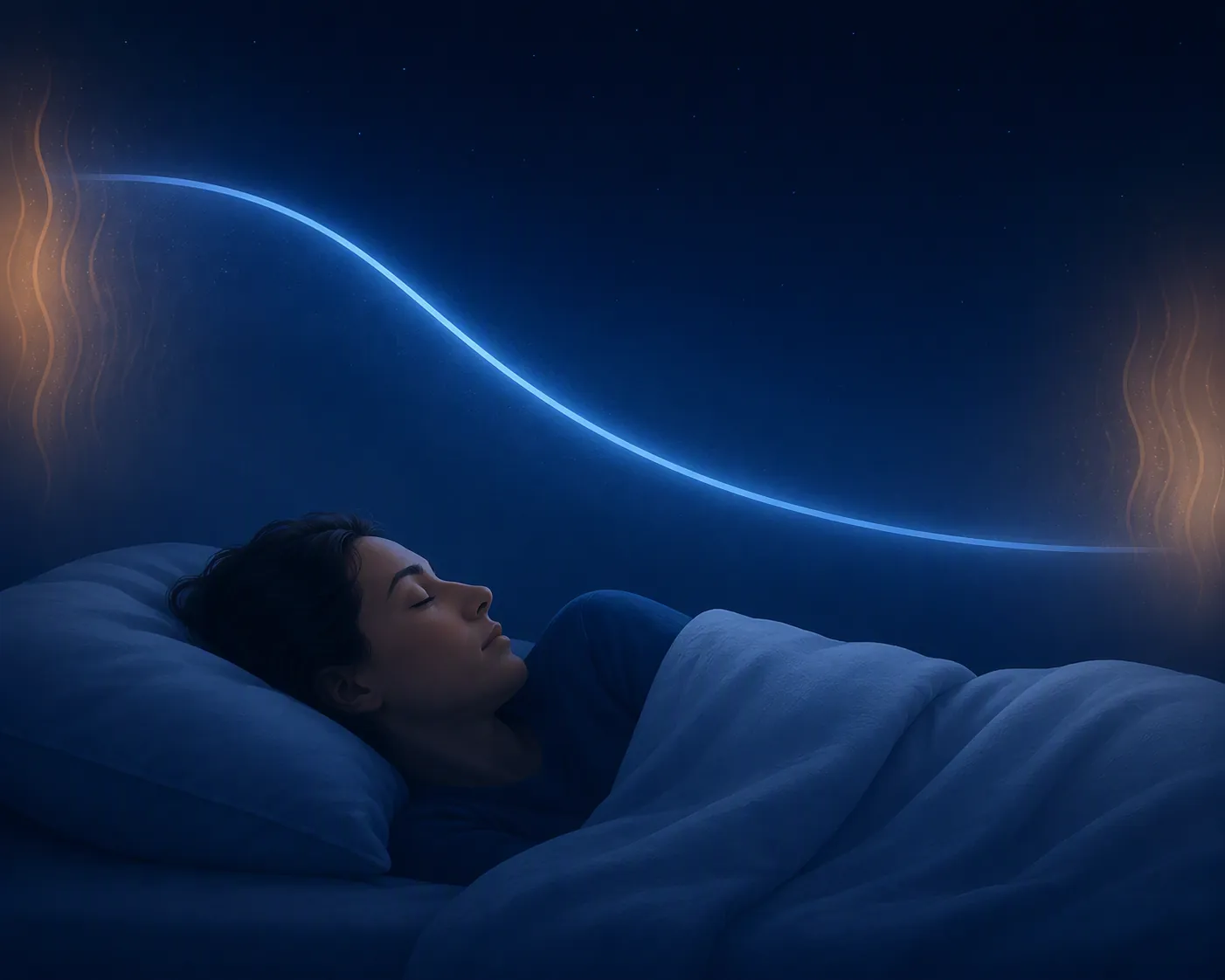
The recovery link is strongest when stated carefully. Slow-wave sleep and REM sleep are not decorative stages; they are part of the overnight period when the body and brain do much of the work that makes training tolerable the next day. Thermoregulation research connects ambient warmth with disrupted sleep physiology, including the cooling that accompanies NREM sleep.[5] So the practical move is not to chase cold for its own sake. It is to remove heat as a preventable reason your sleep becomes lighter, shorter, or more broken after training.
If you want the longer physiology version, keep it separate from the thermostat decision. FitAtHome’s guide to how heat disrupts sleep and workout recovery goes deeper into the heat side, while the broader at-home post-workout recovery routine puts sleep alongside food, hydration, mobility, and training load.
Why 68°F can be better than 60°F for some people
Cool is not the same as cold. A 2023 study of 10,903 person-nights from 50 adults age 65 and older found sleep was most efficient and restful at 20–25°C, or 68–77°F. In that older-adult sample, sleep efficiency dropped by 5–10% as temperature rose from 25°C to 30°C, relative humidity around 50% was associated with optimal sleep, and there was substantial variation between individuals.[6]
That study should not be turned into a rule that younger lifters should sleep at 77°F. The sample was older adults, and the finding sits warmer than the common adult recommendations from Cleveland Clinic, Sleep Foundation, and Healthline. Its value here is more modest and more useful: bodies differ, humidity changes how a room feels, and “ideal” can move depending on the person and the room.
This matters in small apartments. A bedroom at 66°F with heavy bedding and clammy air can feel worse than a room at 68°F with lighter bedding and steadier airflow. A loud AC cycling on and off can also wake you more than a slightly warmer but quieter setting. The number on the thermostat is only one part of the sleep environment you actually experience.
A simple 2°F self-test after evening workouts
Use 65–68°F as the first experiment, not the final verdict. The goal is to find the coolest comfortable setting that improves sleep without making you tense, chilled, dried out, or annoyed by the AC.
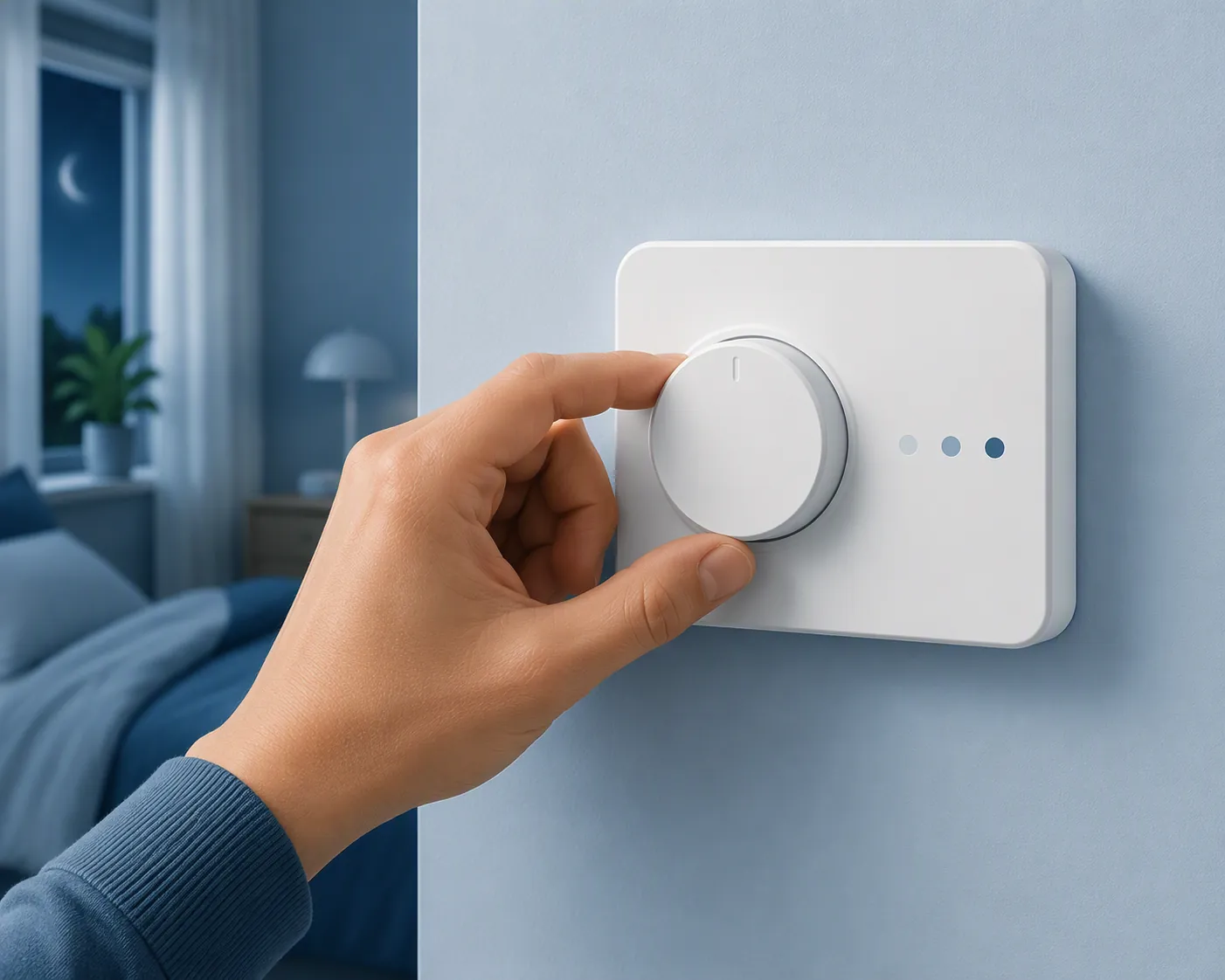
- Pick a starting setpoint. If you do not know where to begin, choose 66°F or 67°F. If you already know you sleep cold, start at 68°F.
- Hold the obvious variables steady for several nights: similar bedtime, similar bedding, similar sleepwear, similar fan or window setup, and roughly similar workout timing.
- Track what you can actually feel: how long it takes to fall asleep, whether you wake hot or cold, how many times you remember waking, morning grogginess, and whether your legs or shoulders feel unusually flat the next day.
- Move in 2°F steps. If you are sweaty, restless, or waking uncovered, lower the setpoint by about 2°F. If you wake chilled, tense, dry-throated, or irritated by the AC, raise it by about 2°F.
- Repeat before judging. One bad night after a hard workout does not prove the room is wrong. Look for a pattern across several nights.
The thermostat is easiest to test on nights when the workout itself is not changing wildly. If you alternate a gentle mobility day with a brutal lower-body circuit, do not overread the sleep difference as a temperature effect. For evening scheduling problems, the guide to when to do an indoor workout is the more relevant lever.
What to watch if you already use a sleep tracker
A tracker can make the self-test less fuzzy, but it should not turn this into a device project. If you already wear one, look for the same few signals while changing only the room temperature in small steps: total sleep duration, remembered awakenings, measured awakenings, body-temperature trend, resting heart-rate pattern, and whatever readiness or recovery score your device already gives you.
The useful question is not whether your tracker declares 66°F “optimal.” It is whether your nights become more stable when the room moves from warm to cool. If your tracker says sleep improved but you wake up cold and miserable, do not ignore the miserable part. If you feel better but the score barely changes, the score may not be sensitive to this particular adjustment.
For readers who already track recovery, the Oura-focused guide on using recovery data for smarter home workouts explains body-temperature and readiness signals. If you are comparing devices, the Garmin, Cirqa, and Whoop comparison for home workouts and the ring vs. smartwatch vs. band guide are better places for that decision. You do not need to buy anything to test a thermostat.
Do not let the temperature number hide the obvious sleep disruptors
Room temperature is worth testing because it is adjustable. It is not the only reason sleep gets messy after late training. A workout that ends too close to bed, a room that stays humid, heavy bedding, alcohol, cannabis, late caffeine, and bright screens can all muddy the result. Temperature deserves attention because it is a clean lever, not because it explains every rough morning.
Humidity is the quiet modifier. The older-adult temperature study found about 50% relative humidity to be optimal in that sample.[6] You do not need a laboratory setup, but if the room feels clammy at 67°F, lowering the thermostat may not fix the problem as well as improving airflow or dehumidifying. If the air feels painfully dry, the same setpoint can feel harsher than it should.
REM sleep deserves the same restrained treatment. Temperature is one environmental piece; substances and timing can also affect sleep stages. If cannabis is part of your night routine, FitAtHome’s guide to cannabis, REM sleep, and home workout recovery is the more direct place to think through that variable.
For most home exercisers, the best first move is boring and effective: start cool, not cold. Set the room around 65–68°F, treat 60–68°F as the practical adult range rather than a command, and adjust in small steps based on sleep onset, wake-ups, morning energy, and how the room actually feels. If your sleep worsens, the room feels clammy, or your tracker and your body disagree with the so-called ideal, change the setpoint instead of forcing the number.
References
- What's the Best Temperature for Sleep? — Cleveland Clinic
- The Best Temperature for Sleep — Sleep Foundation
- The Best Temperature for Sleep — Healthline
- The Temperature Dependence of Sleep — Frontiers in Neuroscience — 2019
- Sleep and thermoregulation — Current Opinion in Physiology — 2020
- Nighttime ambient temperature and sleep in community-dwelling older adults — Science of the Total Environment — 2023
This is general fitness education, not medical advice. For diagnosis or treatment of pain or injury, consult a qualified clinician.
Pick your next session
Browse all routines to find an appropriately-spaced next session.
Spot something off?
This content sits adjacent to health guidance — tell us if a citation or figure needs a correction.