
How a Pool Renovation Affects Your Workout Schedule (And What to Do)
Your pool is closing for weeks—this evidence-backed plan shows how to replace each swim session with home-based dryland and cardio work to maintain fitness, plus a safe return-to-pool ramp so you don't lose ground or get hurt.
- Citation source
- ACSM
- Evidence level
- general guideline
The awkward part of a pool closure is not philosophical. It is the Monday morning lane reservation that used to exist. If you normally swim two, three, four, or more times a week, the impact on your workout schedule starts as empty calendar space: 60 minutes blocked, bag packed by habit, no water available.
Do not leave those slots blank. In a classic reduced-training study, male collegiate swimmers who cut down to about three sessions per week at roughly 30% of their former volume for four weeks maintained VO2max and key stroke mechanics, while swimmers who dropped to one session per week or stopped training did not hold the same markers [1]. That does not mean a masters swimmer can perfectly copy the study, and it does not make dryland the same as swimming. It does give the week a useful rule: keep a maintenance dose in the schedule, even when the pool disappears.
A second finding is just as practical. In a reported four-week swimming break among age-group swimmers, 400-meter front crawl performance slowed by about 3.8%, and non-swimming physical activity explained about 40% of the variance in performance impairment [2]. The exact numbers come from younger competitive swimmers and a secondary summary, so they should not be treated as a prediction for every adult lap swimmer. The useful takeaway is narrower and stronger: replacing the session with real work matters.
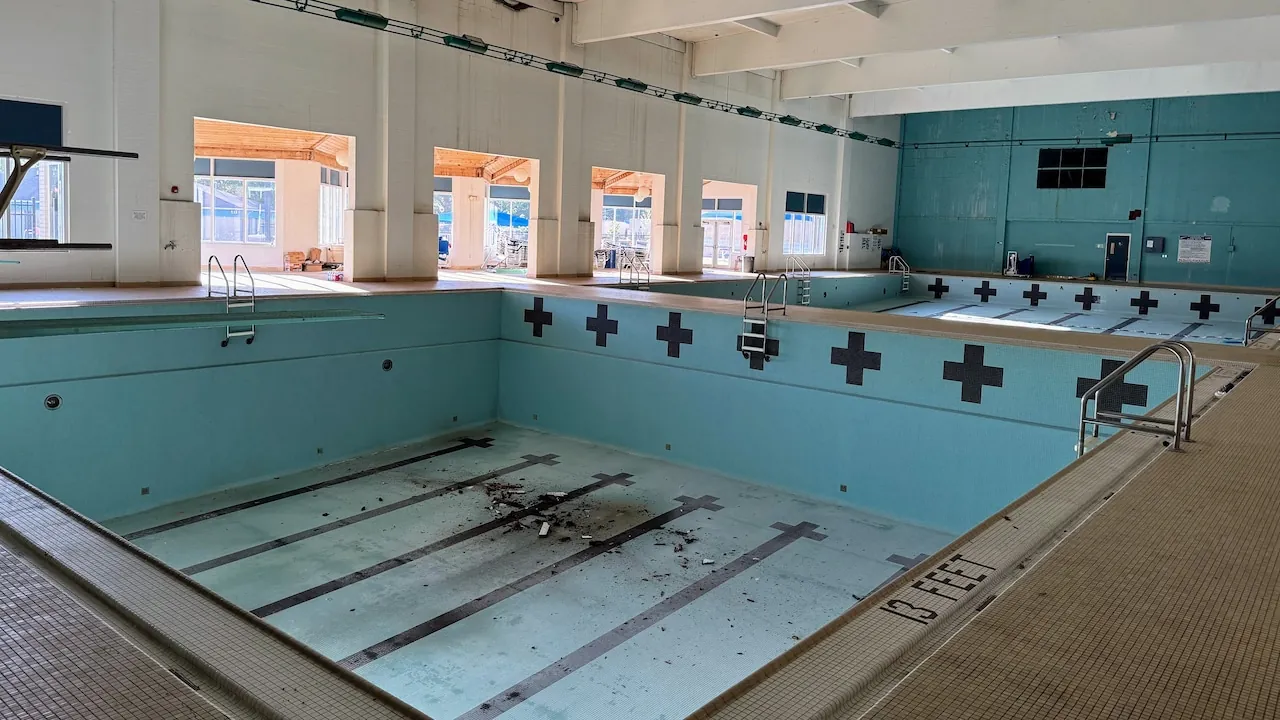
First, translate pool time into replacement slots
Do not start by shopping for a complicated program. Start with your actual swim calendar. Circle every swim that will be lost next week, then assign each one a substitute before the week begins. A replacement workout only counts if it fits the same slot closely enough that you will actually do it: before work, after school drop-off, during lunch, or in the same evening window you used for the pool.
A useful published template for triathletes losing a three-hour swim week is not a three-hour dryland grind. It adds about two 30-minute strength-and-flexibility sessions, 35 minutes of extra cycling with 7 minutes at zone 3 or higher, and 25 minutes of extra running with 5 minutes at zone 3 or higher [3]. That is the right spirit for most pool closures: preserve the habit, keep the aerobic system awake, and keep some swim-shaped pulling in the week without pretending a resistance cord is water.
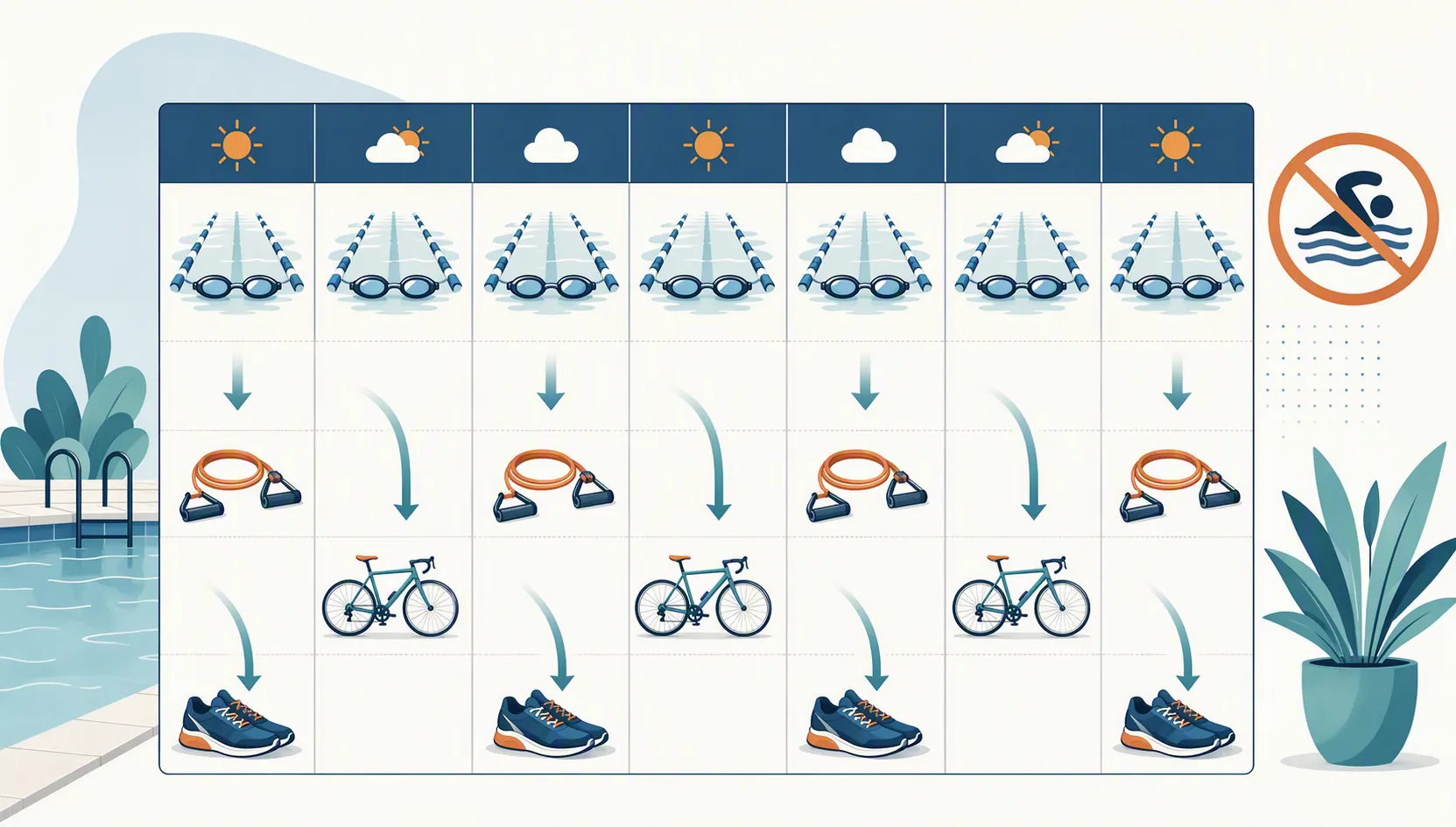
Here is the conversion I would use for a closure that is expected to last four to eight weeks.
| Your normal swim week | Replacement target while the pool is closed | How it usually fits a fixed schedule |
|---|---|---|
| 2 swims/week | 1 resistance-cord dryland session + 1 aerobic bike/run session | Keep both swim slots. Make one swim-specific and one aerobic. |
| 3 swims/week | 2 dryland sessions + 1 aerobic bike/run session | This preserves three deliberate training slots without needing a second facility. |
| 4 swims/week | 2 dryland sessions + 2 aerobic sessions | Alternate pull-focused days with zone-based cardio. |
| 5 swims/week | 2–3 dryland sessions + 2–3 aerobic sessions | Keep at least one day easy; do not turn every lost swim into intensity. |
| 6 swims/week | 3 dryland sessions + 3 aerobic sessions, or 3 dryland + 2 aerobic + 1 mobility/recovery slot | High-frequency swimmers need rhythm, but shoulders and calves still need limits. |
If the closure stretches past four weeks, bias the total replacement time toward strength and flexibility first, cycling second, and running third. Running is useful, but it is also the easiest way for a swimmer with a big aerobic engine and underprepared legs to buy a calf or foot problem. If you already run regularly, you can use more of it. If you do not, bike, brisk incline walking, or low-impact aerobic work should carry more of the load.
How long to plan for when the closure notice is vague
A neat resurfacing project and a full facility renovation are different problems. Contractor-facing timelines often describe resurfacing in the one-to-two-week range and broader residential or commercial renovations in the four-to-eight-week range, while public facilities can run longer when the work involves boilers, locker rooms, permitting, or broader capital projects [4][5]. Unplanned closures happen too: Portland Parks & Recreation announced an East Portland Community Center pool closure in July 2025 because of a boiler failure [6].
For scheduling, plan in two layers. Build a four-week plan you can repeat without drama, and have an eight-week version ready if the reopening date slides. The mistake is waiting for certainty. Pool projects are not famous for respecting a swimmer’s training block.
The 60-minute replacement session
For a lost one-hour swim, use one of these two formats. They are quiet enough for an apartment, require little space, and do not depend on a second pool.
Option A: swim-specific dryland
- 5–8 minutes: shoulder circles, thoracic rotations, easy band pull-aparts, hip hinges, ankle rocks.
- 10–30 minutes: resistance-cord swim circuit.
- 8–12 minutes: mobility, breathing, light core work, or an easy walk.
- Optional if time remains: 10–20 minutes of easy zone 2 cycling, walking, or jogging.
The compact resistance-cord circuit from 80/20 Endurance uses four exercises: bent-over two-arm pulls, prone or supine flutter kicks, and alternating single-arm pulls. The suggested range is 4 to 12 rounds, taking roughly 10 to 30 minutes depending on the athlete and the rest periods [3]. Keep the pull smooth. If you find yourself yanking the cord to make it feel hard, the anchor is too heavy, the cord is too stiff, or your ego is writing checks your shoulders will collect later.
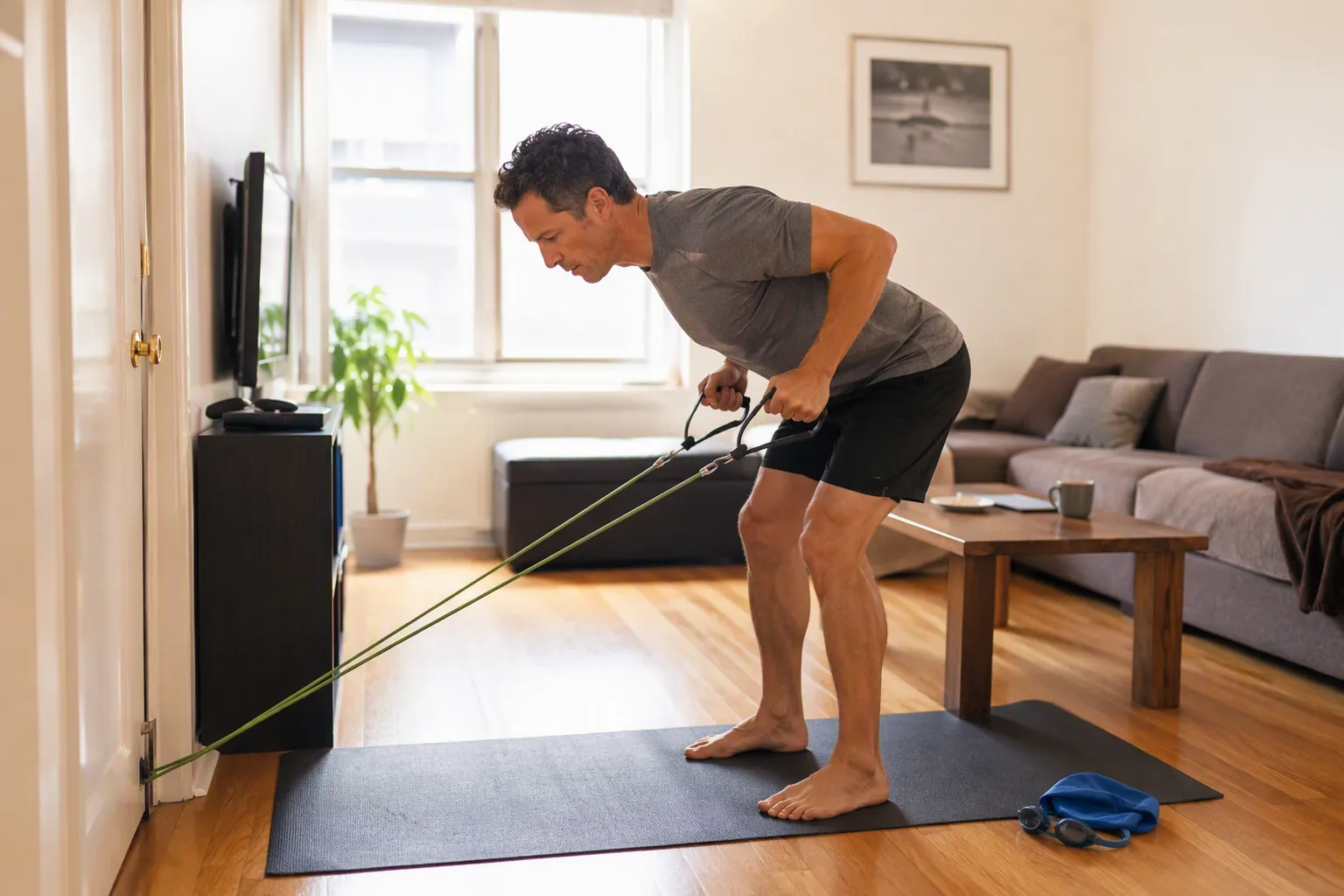
A simple version looks like this:
- Bent-over two-arm cord pull: hinge at the hips, arms forward, pull back as if finishing the underwater stroke. Use controlled tempo, not a snapping motion.
- Flutter kicks: lie prone or supine and kick from the hips. Keep the range small enough that your low back stays quiet.
- Alternating single-arm pull, right and left: let the shoulder blade move, keep the elbow path deliberate, and avoid shrugging.
- Easy reset: 20–40 seconds of breathing, shoulder rolls, or walking around the room before the next round.
For variety, fold in freestyle-pattern dryland exercises such as stretch-cord Ts, Ys, and Is, single- and double-arm pulls, lunges, mountain climbers, pushups, and cross-body planks. Dryland does not need to become a circus. Pick a handful of movements you can repeat cleanly and quietly.
Option B: aerobic maintenance from home
If the lost swim was mainly aerobic, replace it with a bike, run, brisk walk, elliptical, or trainer session. Use zones to keep yourself honest. Most of the work should feel like steady zone 2: conversational, controlled, and repeatable. Add short zone 3 portions only if you already tolerate that mode well.
| Former swim slot | Bike version | Run/walk version |
|---|---|---|
| 45 minutes easy aerobic swim | 40–50 minutes mostly zone 2 | 30–45 minutes easy run/walk or brisk walk |
| 60 minutes mixed aerobic swim | 50–60 minutes with 2–3 controlled zone 3 blocks | 35–50 minutes with short steady pickups if you already run |
| 75–90 minutes endurance swim | 60–90 minutes easy-to-steady cycling | Do not copy the duration unless your legs are already trained for it |
Triathletes have the easiest substitution on paper because the bike and run already exist. Lap swimmers may need to be more conservative. If you have not run for months, the pool closure is not the moment to replace every swim with pounding. A quiet indoor bike, outdoor walk, or low-impact cardio session is a better trade than a heroic run that ruins the next two weeks.
For more small-space substitution ideas in other sports, the same principle shows up in these living-room tennis footwork drills and quiet apartment football conditioning drills. The sports are different; the scheduling problem is familiar.
A three-swim week, converted
Suppose your normal week is three one-hour swims: Monday technique and aerobic, Wednesday intervals, Saturday longer steady work. The pool closes for renovation. Here is a clean replacement that keeps the same skeleton.
| Day | Old pool session | Closure replacement |
|---|---|---|
| Monday | 60-minute technique/aerobic swim | 45–60 minutes: cord circuit + mobility + easy zone 2 walk or bike |
| Wednesday | 60-minute interval swim | 45–55 minutes: bike or run with controlled zone 3 work; no all-out sprinting |
| Saturday | 60-minute steady swim | 50–75 minutes: easy cycling, brisk walk, or low-impact aerobic session |
| Two other days | Normal non-swim training or rest | Keep them mostly unchanged unless total fatigue climbs |
If you normally swim four times, add a second cord session. If you normally swim five or six times, add frequency before intensity: another short dryland session, another easy aerobic session, or a mobility-and-recovery slot. The more often you swam, the more you may miss the daily rhythm, but the answer is not six hard land workouts. Water supports you. Floors do not.
The best closure week is boring on purpose. It should be repeatable, quiet, and easy to set up. Resistance cord on a secure anchor. Shoes by the door. Bike ready if you have one. Mat space cleared. If you need a five-minute backup on a chaotic workday, use a short quiet circuit rather than deleting the slot entirely; these quiet workday home workouts are useful for that kind of minimum-dose day.
Weeks 1–4: protect rhythm, not perfection
The first week after a closure notice is when swimmers tend to overcorrect. They see four blank swim slots and try to replace every yard with fatigue. That is not maintenance; it is panic with a training log.
| Closure week | Main job | What to watch |
|---|---|---|
| Week 1 | Install the replacement schedule. Keep intensity modest while the new movements settle. | Shoulders after cord work; calves and feet after new running. |
| Week 2 | Repeat the same weekly structure. Add a round, a few minutes, or one controlled interval only if week 1 was easy. | Do not chase soreness. It is not a substitute for water feel. |
| Week 3 | Hold two swim-specific dryland sessions and enough aerobic work to preserve the habit. | If motivation drops, shorten sessions rather than skipping them. |
| Week 4 | Keep the plan steady. Begin thinking about the first two weeks back in the pool. | Avoid a final-week land-training binge before reopening. |
There is some support for dryland as more than busywork. A SwimSwam discussion of dryland training cites evidence that dryland can improve swim performance by roughly 2% to 2.5% compared with swim-only training, though that does not mean every home circuit produces that result [7]. The better claim for a renovation closure is modest: dryland can support strength, coordination, and training continuity while the pool is unavailable.
What it will not do is preserve water feel perfectly. Turns, catch timing, body position, breathing rhythm, and the strange little calibrations of pressure on the forearm are in-water skills. You can keep the engine running on land. You still have to reacquaint the chassis with the lane.
If the closure becomes an eight-week problem
When a renovation slides from four weeks toward eight, the plan needs more structure but not much more complexity. Keep two or three swim-specific dryland sessions each week. Keep aerobic work mostly easy. Use one controlled moderate session if you were already doing intensity before the closure. Keep one real recovery day.
For the longer closure, think in rough proportions rather than exact minutes: about half of your replacement work from strength and flexibility, about a third from cycling or other low-impact aerobic work, and the rest from running if your legs tolerate it. A swimmer who is also a runner may shift that balance. A swimmer who only runs when chased should not.
- Keep cord work submaximal. The goal is frequent clean pulling, not a one-rep-max version of freestyle.
- Use cycling, walking, or elliptical work when you need aerobic volume without impact.
- Progress running by feel and frequency before duration. If your lower legs complain, listen early.
- Leave one or two sessions intentionally easy every week.
If you are dealing with a separate limitation, such as a foot issue, the same maintain-what-you-can logic applies. The home-based approach in these foot injury recovery exercises is a useful reminder that training around a constraint is different from ignoring it.
When the pool reopens, earn the full swim week back
The risky moment is not always the closure. It is the first week back, when your lungs feel decent from cycling or running and your shoulders have not taken thousands of in-water strokes for a month. Fitness and tissue tolerance are not the same thing.
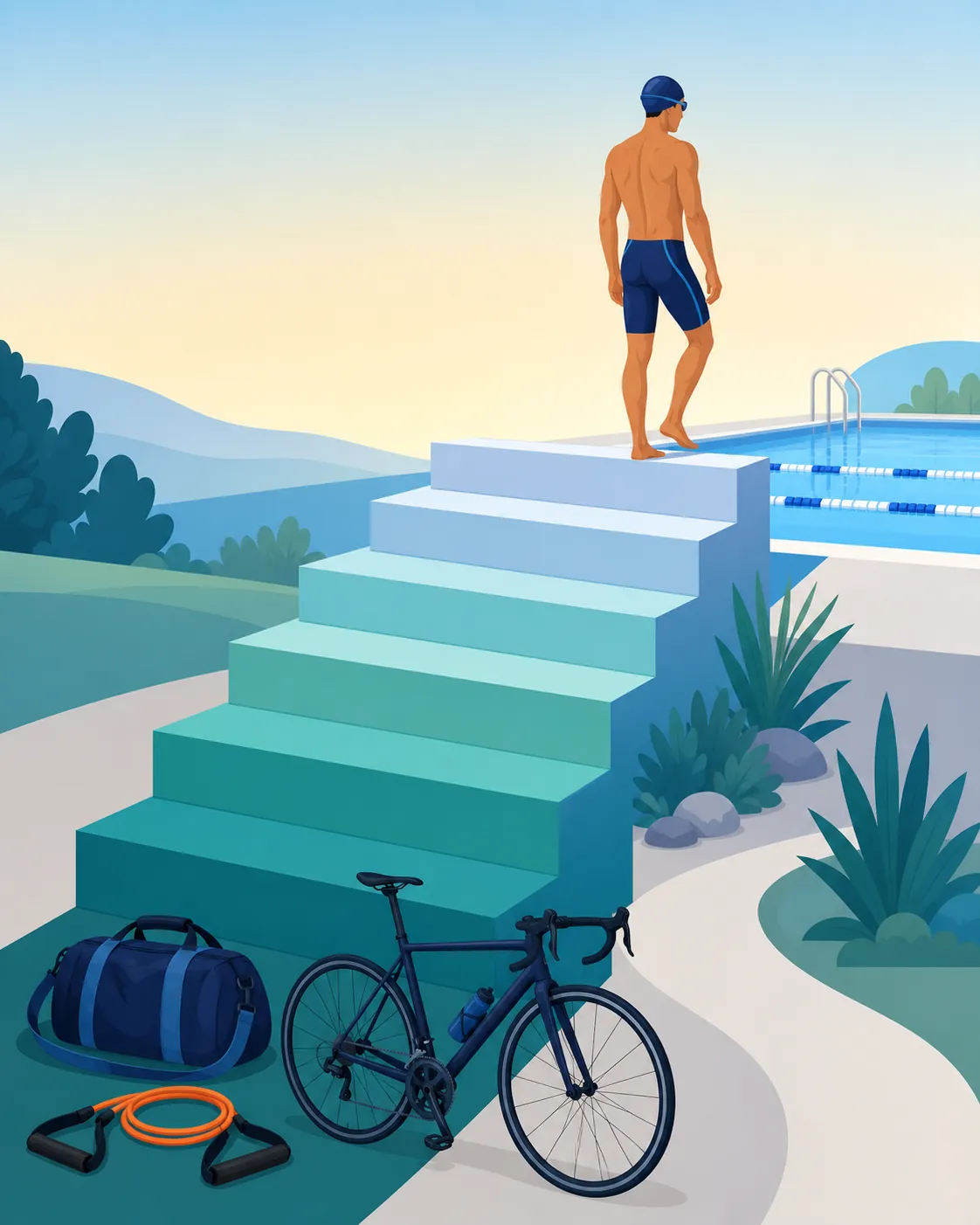
Guidance summarized by Swimming World emphasizes short, easy first sessions, a large early emphasis on drills, conservative volume progression, and gradual resumption of normal water and land work at low-to-medium intensity [2]. That is the part many disciplined swimmers skip because they feel fit. Do not skip it.
| Return phase | Pool work | Land work |
|---|---|---|
| First 2–3 swims | Short and easy. Stop while you still feel like you could do more. | Keep cords light or skip them if shoulders feel loaded. |
| Weeks 1–2 back | Use drills generously, up to about half of early sessions if technique feels dull. Keep most swimming easy. | Maintain easy aerobic work, but reduce land intensity while water volume returns. |
| Weeks 3–4 back | Add volume gradually. Reintroduce moderate sets before hard sprinting. | Keep one or two short strength/mobility sessions to support shoulders and posture. |
| After normal volume is restored | Return to your usual mix only if strokes feel coordinated and recovery is normal. | Use dryland as support, not punishment for the missed pool weeks. |
A practical first swim back might be 20 to 35 minutes of easy swimming with plenty of drill, long rests, and no test set. If you normally swim 3,000 yards before work, this will feel almost insulting. Good. The first session is not there to prove you survived the renovation. It is there to restore timing and check how your shoulders respond.
During the first two weeks, use drills that tell you something: catch-up, fingertip drag, single-arm freestyle, six-kick switch, scull variations, and easy bilateral breathing if you already use it. If a drill makes your shoulder pinch or your stroke fall apart, choose another one. The point is water feel, not moral virtue.
Keep the land work in the week, but turn it down. Light cords, mobility, and easy aerobic sessions help bridge the return. Heavy pulling on Tuesday followed by your first real threshold swim on Wednesday is a common way to turn a successful closure plan into a sore shoulder. If recovery is the limiter, the basics in this post-workout recovery routine at home fit the same conservative return mindset.
The workable plan
A pool renovation is disruptive, especially when your week has been built around lane reservations. It does not have to erase your training. Replace each swim slot before it disappears. Use resistance cords to keep some pulling rhythm. Use cycling, walking, running, or other zone-based cardio to hold the aerobic habit. Keep the plan quiet enough, short enough, and repeatable enough that it survives workdays.
Then, when the doors reopen, resist the urge to resume the old week by memory. The pool was closed. Your schedule adapted. Your first swims back should adapt too.
References
- Effect of reduced training on muscular strength and endurance in competitive swimmers — PubMed
- Why Detraining is at the Heart of the Swimming Playbook in COVID-19 Season 2020 — Swimming World
- Dryland Swim Workout — 80/20 Endurance
- Pool Resurfacing — Suncoast Custom Pools
- Pool Remodeling — California Pools
- East Portland Community Center pool closure notice — Portland.gov, July 2025
- Dryland Workouts For Swimmers — SwimSwam
This is general fitness education, not medical advice. For diagnosis or treatment of pain or injury, consult a qualified clinician.
Pick your next session
Browse all routines to find an appropriately-spaced next session.
Spot something off?
This content sits adjacent to health guidance — tell us if a citation or figure needs a correction.