Exercise after pneumonia recovery can start before you feel “back to normal,” but it should not start before ordinary life stops costing you the rest of the day. The first test is not a treadmill, a dumbbell, or your old workout app. It is whether you can climb the stairs, shower, prepare a meal, do light chores, and move around the house without needing a nap afterward. Houston Methodist describes this return to daily activities without a major energy crash as an early sign that the body may be ready for more structured movement.[1]
That test matters because pneumonia often improves faster than the lungs and energy system fully recover. Many people feel noticeably better within 2 to 4 weeks, but recovery can take 1 to 6 months, and full lung healing may continue well after the fever and worst cough are gone.[2][3] This is where people get tricked. They are bored, restless, and worried about losing fitness, so they treat “I’m not acutely sick anymore” as “I can train again.” Those are not the same checkpoint.
Before any phase below, stop and contact a doctor promptly if fever returns, chest pain appears, shortness of breath happens at rest, you cough up blood, you develop new phlegm, or you feel dizzy or faint.[2][3] Those are not training signals to push through. They are stop signs.
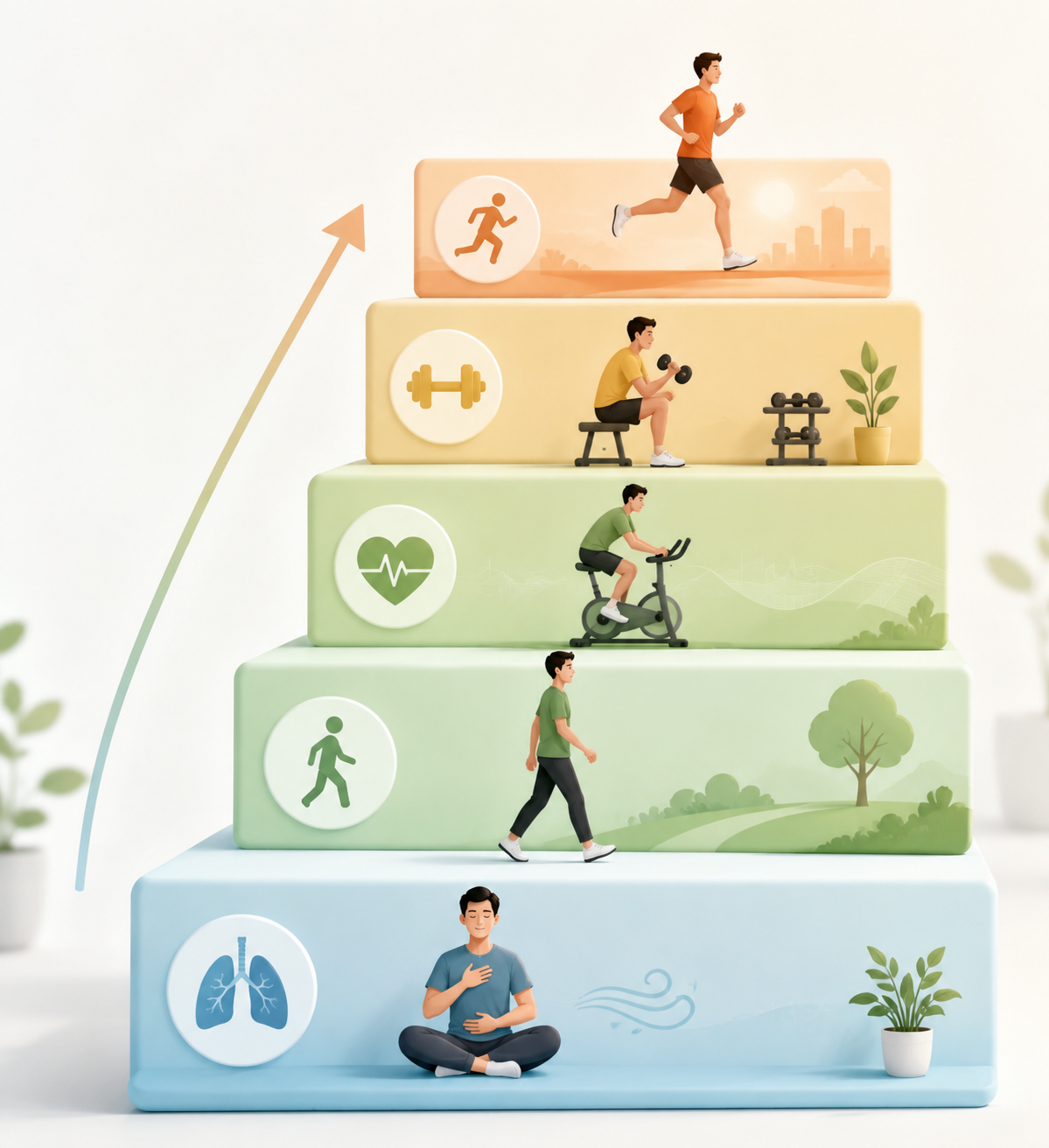
Use phases, but do not promote yourself automatically
A week-by-week plan is useful only if “week” means a minimum observation window. It is not a permission slip that renews every seven days. If walking still gives you a cough rebound, if light chores still drain you, or if you need to lie down two hours after a short session, you stay where you are or step back.
| Phase | What you do | Move on when |
|---|---|---|
| Phase 1 | Breathing exercises, gentle household activity, very short movement breaks | Daily activity does not create a recovery debt |
| Phase 2 | Flat walking, starting with 5 to 10 minutes twice daily | You can walk 30 minutes symptom-free for 1 to 2 weeks |
| Phase 3 | Low-intensity cardio at RPE 3 to 4, with pace ignored | You pass the 2-hour and next-day recovery checks |
| Phase 4 | Light resistance training at reduced load and higher reps | Strength work does not trigger cough, chest symptoms, or next-day fatigue |
| Phase 5 | Gradual return toward normal training, including running intervals if appropriate | You can repeat sessions without symptom rebound |
The practical ceiling is usually lower than people expect. Fit For New Mexico describes early recovery as a “battery-drain” period, where available daily energy may be roughly 50% to 60% of normal; exceeding that cap can produce post-exertional malaise and set recovery back.[4] That model is a helpful coaching tool rather than a medical diagnosis, but it matches what many people experience: one overconfident workout, then several days of heavy limbs, coughing, poor sleep, and no appetite for movement.
Phase 1: Breathing work and daily-life tolerance
Phase 1 begins when your fever is gone, symptoms are improving, and your clinician has not told you to avoid activity. It is not a workout phase. It is a capacity-checking phase. You are asking: Can I breathe comfortably while moving around my home, and can I recover within a few hours?
Start with breathing exercises and ordinary movement. Harvard Health describes breathing practices after respiratory illnesses such as pneumonia, including diaphragmatic breathing and pursed-lip breathing, as ways to help people breathe more efficiently while recovering.[5] Mobile Physiotherapist and Gwinnett Pulmonary & Sleep also describe huff coughing and active cycle breathing techniques for clearing secretions and improving breathing control after pneumonia.[6][7]
- Diaphragmatic breathing: Practice first lying down, then sitting, then standing. Let the belly rise gently on the inhale instead of lifting the shoulders.
- Pursed-lip breathing: Inhale for about 2 counts, then exhale through pursed lips for about 4 counts. Use it when walking around the house starts to feel breathy.
- Huff coughing: Use a controlled “ha” exhale rather than repeated hard coughing when you need to clear mucus.
- Active cycle breathing: Rotate relaxed breathing, deeper breaths, and huff coughing if mucus clearance is still part of your recovery.
Keep this simple. A few minutes at a time is enough to start. If a breathing drill makes you lightheaded, stop, sit down, and return to normal breathing. The goal is not to force huge breaths into irritated lungs. The goal is controlled breathing that carries over into walking to the bathroom, unloading a dishwasher, or climbing a short flight of stairs.
During this phase, chores count. Showering counts. Taking out the trash counts. If those activities leave you wiped out, formal exercise will probably do the same thing with better branding. Stay with brief movement breaks, breathing practice, and light household activity until daily life stops creating a debt you have to repay with sleep.
The 2-hour rule and the next-day check
Two checks decide whether you matched your current capacity: how you feel two hours later and how you feel the next day. Fit For New Mexico uses the 2-hour rule this way: if you feel energized or pleasantly tired two hours after activity, the dose was probably appropriate; if you feel flu-ish, need to lie down, or notice cough or fever returning, you did too much.[4] Runner’s World gives similar caution for runners returning after pneumonia, emphasizing that symptoms after activity mean backing off rather than pressing on.[8]
The next-day check catches the mistake that the two-hour check can miss. Some people feel fine right after a walk and then wake up with heavier breathing, a worse cough, unusual fatigue, or no tolerance for normal chores. That is not weakness. It is information. Repeat the same level only after you can recover from it within the same day and wake up able to do ordinary activity again.
Phase 2: Build the walking base before you chase fitness
Walking is the best early test because it is honest. It does not let you hide behind a machine setting, a playlist, or an old training number. Start with 5 to 10 minutes twice daily on flat ground, then increase duration by no more than about 10% per week.[4][6] If 5 minutes is enough, 5 minutes is the workout. Do not turn it into 15 because you “used to be fit.”
Keep the route boring at first: flat, close to home, easy to shorten. Hills are intensity. Heat and cold are intensity. Carrying groceries is intensity. Talking the whole time is intensity. Early walking after pneumonia should leave you feeling like you could have done a little more, not like you proved something.
| If your current walk is | A 10% increase is roughly | Practical next step |
|---|---|---|
| 5 minutes | 30 seconds | Stay near 5 to 6 minutes rather than jumping to 10 |
| 10 minutes | 1 minute | Try 11 minutes if the 2-hour and next-day checks pass |
| 20 minutes | 2 minutes | Add only a small amount or keep duration steady and improve comfort |
| 30 minutes | 3 minutes | Hold 30 minutes for 1 to 2 symptom-free weeks before progressing |
The 30-minute mark is not a finish line. It is a stability test. Stay at about 30 minutes of walking until you have 1 to 2 symptom-free weeks, then consider moving into low-intensity cardio.[4][6] Symptom-free means no return of fever, no chest pain, no unusual breathlessness, no cough flare that changes the rest of your day, and no next-day crash.
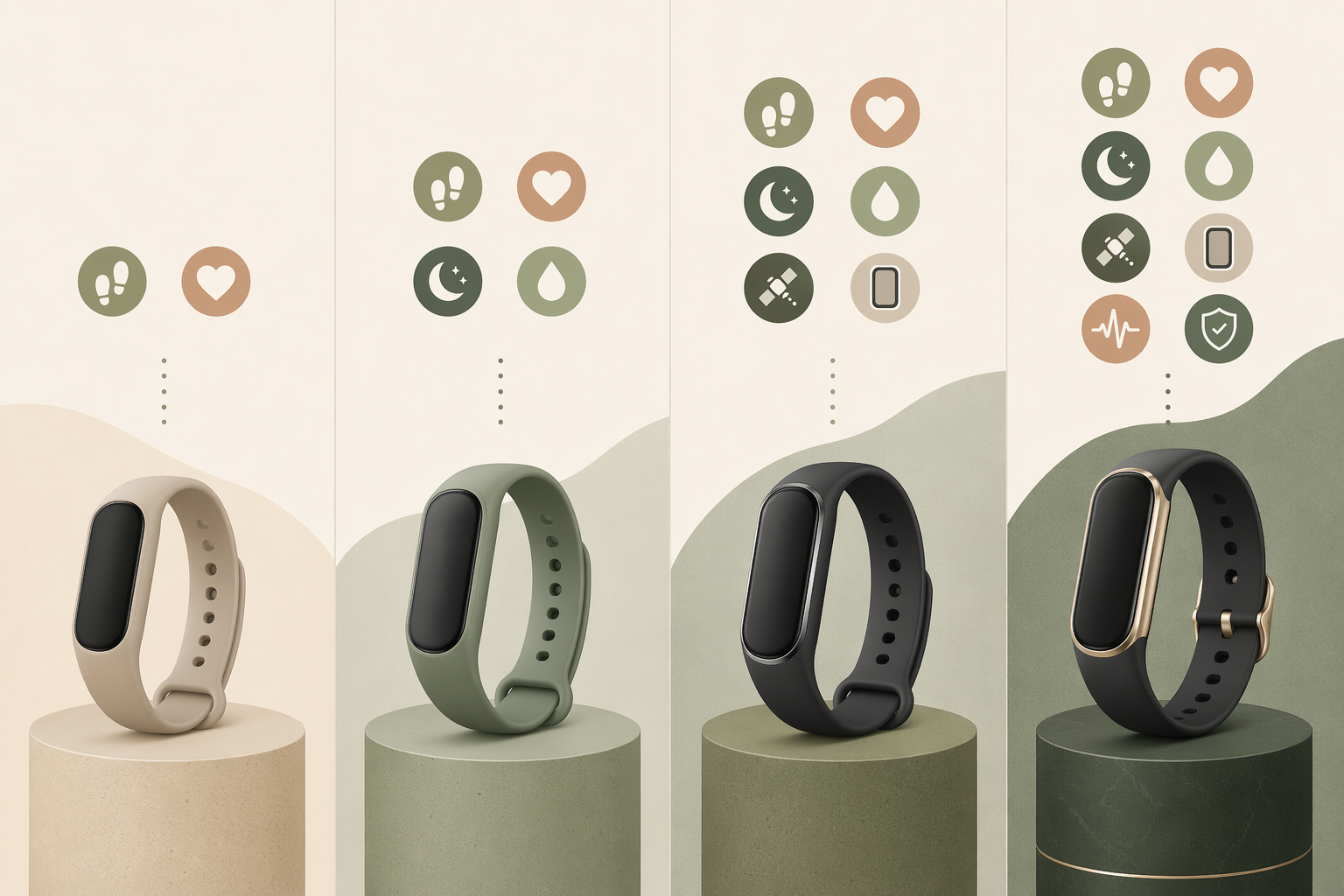
If you wear a fitness tracker, treat its recovery score as background noise during this phase, not a green light. Heart rate can sit higher than usual for the same effort in the first 4 to 6 weeks after pneumonia, so your normal pace may no longer represent your normal intensity.[4] A low readiness score might remind you to be careful, but a high one does not prove your lungs are ready for training.

Phase 3: Low-intensity cardio, with RPE as the ceiling
Move to Phase 3 only after walking feels repeatable. This is where many people overdo it because cardio equipment makes the session look controlled. A bike, elliptical, rowing machine, stepper, or treadmill can all be too much if the intensity drifts upward.
Use rating of perceived exertion, not pace, as the ceiling. Fit For New Mexico recommends keeping early cardio around RPE 3 to 4 on a 1-to-10 scale, or roughly Zone 1 to 2 if using heart rate, because heart rate may be elevated for the same workload during the first 4 to 6 weeks.[4] RPE 3 to 4 means you can breathe through your nose or speak in full sentences, and you are not bargaining with yourself to finish.
- Good first options: easy stationary cycling, flat treadmill walking, gentle elliptical work, or outdoor walking with slightly longer duration.
- Poor first options: intervals, hill repeats, hard rowing, stair climbers, hot yoga, bootcamp circuits, or any session built around breathlessness.
- Session target: stop while breathing is still controlled and before fatigue becomes dramatic.
- Progression rule: increase duration or volume by no more than about 10% per week if both recovery checks pass.
This is also where old numbers become a problem. Your pre-pneumonia treadmill pace, cycling wattage, or route time belongs to a different body state. You are not trying to prove that person still exists. You are testing what today’s lungs, sleep, appetite, and energy can repeat tomorrow.
Phase 4: Add strength after cardio is boring
Strength training can come back, but it should not be the first place you test your pride. Start around 50% to 60% of your pre-illness load, use sets of 12 to 15 reps, and increase load by no more than about 10% weekly.[6] If you do not know your old load, choose a weight that feels almost too easy for the first session.
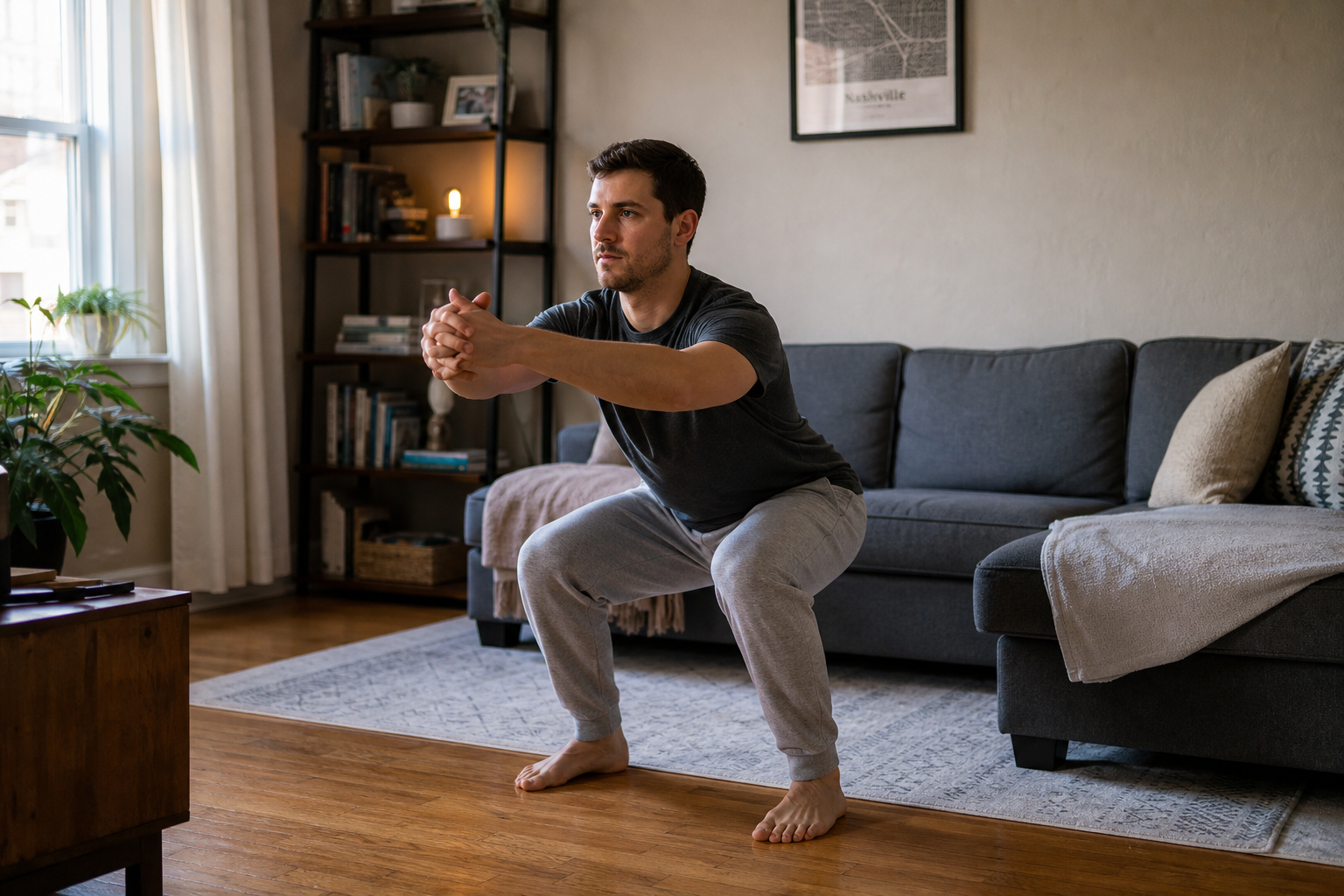
Keep the first sessions short and familiar. Bodyweight squats to a chair, wall push-ups, light rows, light deadlifts, step-ups on a low step, and easy carries are enough. Avoid breath-holding. Avoid grinding reps. Avoid dense circuits that turn strength work into disguised high-intensity cardio.
A reasonable first strength session might be two or three movements, one or two sets each, with long rests. That may feel almost silly if you trained hard before pneumonia. Good. The first goal is not muscular overload; it is proving that your breathing stays controlled, your cough does not flare, and your next day still looks normal.
If you run, treat running as a later cardio progression
Running deserves caution because it raises ventilation quickly. It is not just walking with a bounce. If you have passed the walking phase, tolerated low-intensity cardio, and recovered well for at least the next day, a walk/run format is safer than going out for an easy continuous run.
Runner’s World describes a cautious return using walk/run intervals, and one practical starting point is a 3:1 walk-to-run ratio for about 20 minutes total, progressing only when the 2-hour rule and 24-hour recovery check pass.[8] For many home exercisers, that could mean walking 3 minutes, jogging 1 minute, and repeating only while breathing remains calm.
Do not add speedwork, hills, tempo runs, or long runs at the same time. Choose one variable: a little more total time, a little more running within the walk/run mix, or one additional weekly session. If the cough returns or fatigue spills into the next day, return to walking or low-intensity cardio.
Athletes and hard trainers need a stricter boundary
If you are trying to return to full training intensity, the timeline is longer than the home-fitness version of “I want to move again.” Sports Medicine Today notes that significant pneumonia generally requires 6 to 8 weeks before full training intensity, and that premature return can cause an additional 2 to 4 months of setback.[9] That does not mean every recreational exerciser must wait 8 weeks to walk or do light activity. It means full-intensity work is a different category.
If your pneumonia was severe, you were hospitalized, you have asthma, COPD, heart disease, immune suppression, or another chronic condition, this phase-based home plan is not enough. Follow your clinician’s return-to-activity instructions, and ask whether supervised pulmonary rehabilitation is appropriate. The American Lung Association describes pulmonary rehabilitation as a program that may include exercise training, education, and support for people with lung disease.[10]
When to stop, step back, or get medical help
The most useful recovery plan is the one that tells you when not to advance. Hold the same phase, reduce the next session, or take an extra rest day if exercise causes a cough flare, unusual breathlessness, chest tightness, heavy fatigue two hours later, poor sleep, or a next-day drop in normal activity tolerance.
Stop and consult a doctor immediately if fever returns, chest pain develops, you are short of breath at rest, you cough up blood, you notice new phlegm, or you feel dizzy or faint.[2][3] These signs matter more than your streak, more than your step count, and more than whatever your watch thinks your recovery score says.
The right return to exercise after pneumonia is the one you can repeat without symptom rebound. Build from daily-life tolerance to walking, from walking to low-intensity cardio, from low-intensity cardio to light strength, and only then back toward normal training. Move slower whenever the 2-hour rule or the next morning says your body is not ready.
References
- How to Regain Strength After Pneumonia — Houston Methodist, 2021.
- Recovering from pneumonia — Asthma+Lung UK.
- Pneumonia — Recovery — NHLBI, NIH.
- The Long Road Back: Returning to Exercise After Pneumonia — Fit For New Mexico.
- Breathe better after a chest cold, flu, pneumonia, or COVID — Harvard Health.
- Recovering from Pneumonia: Exercises and Breathing Techniques — Mobile Physiotherapist.
- How Lung Exercises Can Speed Up Pneumonia Healing — Gwinnett Pulmonary & Sleep.
- It's Cold, and I'm Recovering from Pneumonia. Can I Run? — Runner's World.
- PNEUMONIA IN ATHLETES — Sports Medicine Today / AMSSM.
- Pneumonia Treatment and Recovery — American Lung Association.

Comments
Join the discussion with an anonymous comment.