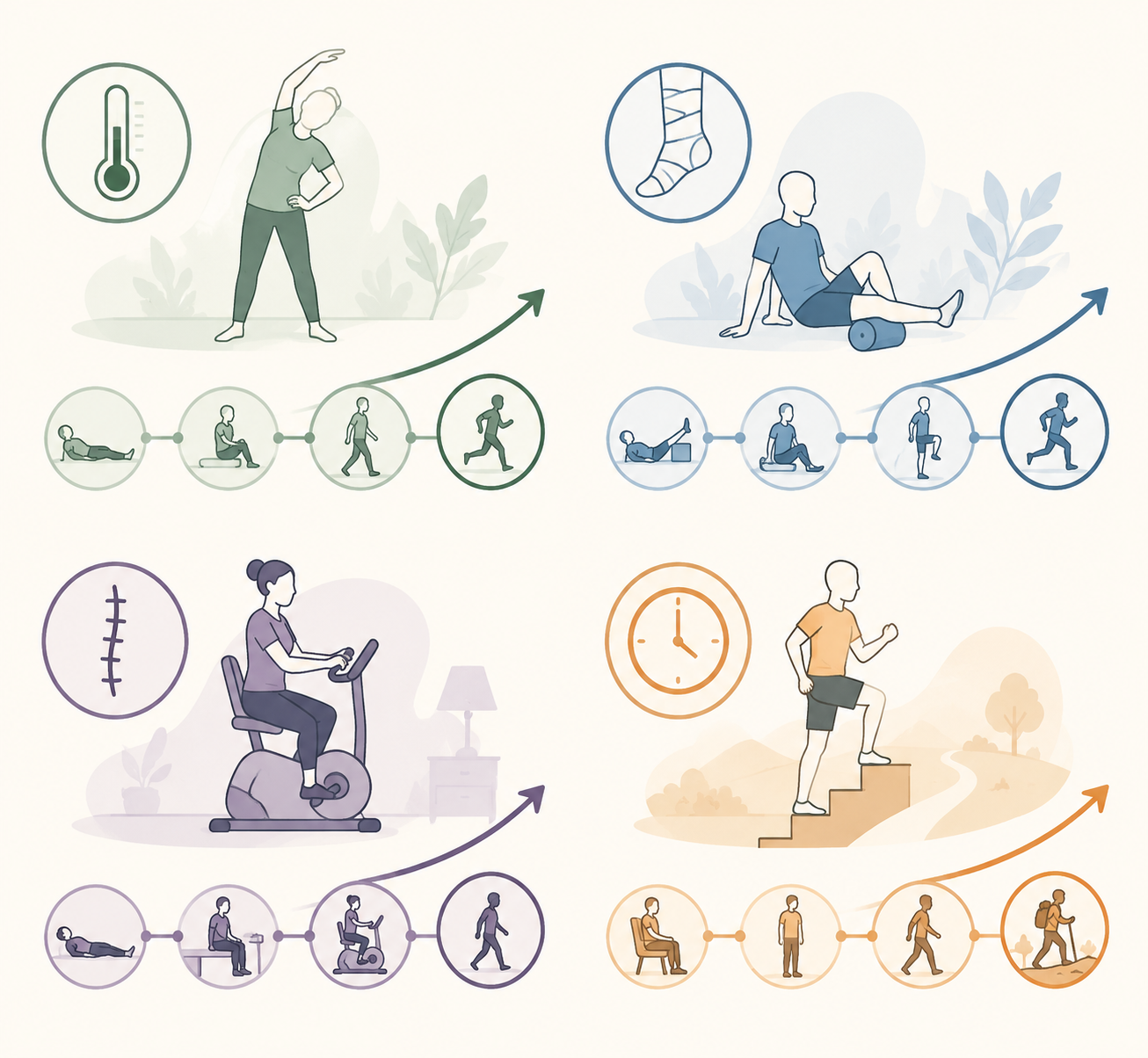
The first question in home fitness during health recovery is not “Which workout should I do?” It is “What kind of setback changed my current ceiling?” A mild cold, a repaired knee, abdominal surgery, and three inactive months do not ask the same thing from your body. They may all end with walking, bands, squats to a chair, or a stationary bike, but they should not start from the same place.
Use this as the first fork in the road:
| Recovery lane | Start only when | First ceiling at home | Progress when |
|---|---|---|---|
| Post-illness | Symptoms are improving, and you are fever-free for at least 24 hours; for COVID or flu, wait longer before harder training | Easy walking, mobility, light cycling, or very reduced bodyweight work | You can finish without symptom rebound during the session or later that day |
| Post-injury | Pain, swelling, range of motion, and function are moving in the right direction, or a clinician has cleared you | Unloaded movement and pain-free range before bands or weights | The area tolerates the current dose without worsening pain later |
| Post-surgery | Your surgeon or care team has cleared the activity | Gentle motion, walking, and medically allowed low-impact work | Restrictions change and daily movement is tolerated without warning signs |
| Post-deconditioning | You are not acutely ill or restricted, but fitness has dropped after inactivity | Short, easy sessions below your old baseline | You recover normally and can repeat the same level comfortably |
The safety floor before any return workout
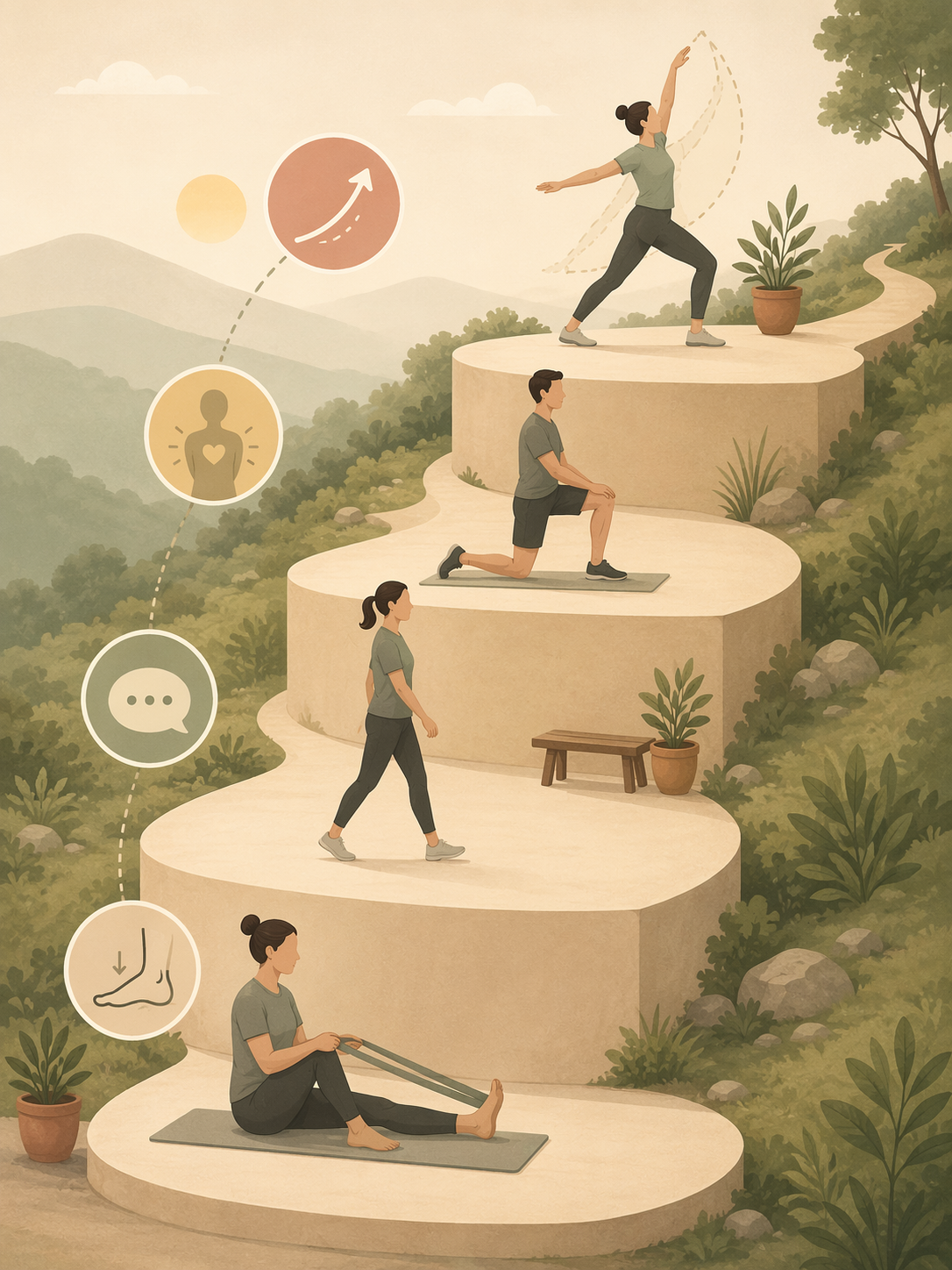
Whatever caused the pause, your first sessions should sit below your previous capacity. That means less time, less load, less range, fewer sets, or a slower pace than the routine you remember. The memory of being able to do something is useful for motivation, but it is not a current clearance test.
The simplest pacing check is the talk test. During easy return exercise, you should be able to speak in full sentences. Franciscan Health also advises keeping early return efforts below about 70% of maximum heart rate after illness, while NASM describes active recovery intensity as roughly 30% to 60% of maximum heart rate.[1][2] Those numbers are not a challenge to hit; they are reminders that “back to movement” is not the same as “back to conditioning.”
Stop the session and seek medical guidance if you have chest pain, unusual shortness of breath, dizziness, faintness, fever, symptoms that worsen with exertion, increasing surgical-site pain, new swelling, or pain that escalates instead of settling. Home fitness is appropriate only when the problem in front of you can reasonably be managed at home.
Post-illness: wait for the right window, then cut the first workout down
Illness recovery is where “listen to your body” becomes too vague to be safe. A stuffy nose and a mild sore throat are not the same as fever, body aches, chest congestion, flu, COVID, or an illness that leaves you unusually wiped out.
Houston Methodist uses the familiar above-the-neck distinction: mild symptoms such as nasal congestion or sneezing may allow light activity, while fever, chest congestion, body aches, vomiting, diarrhea, or significant fatigue call for rest. It also advises waiting until you have been fever-free for 24 hours without fever-reducing medication before exercising again.[3]
For flu, COVID, RSV, or other systemic respiratory illness, the return window should be more conservative than “I feel restless today.” CNN’s guidance for restarting after COVID, flu, or RSV describes waiting at least five to seven days after symptoms resolve before resuming exercise, then starting with light activity.[4] Medical News Today, discussing COVID specifically, notes guidance to avoid exercise for at least seven days after symptoms have resolved and to begin with low-intensity activity.[5] These are general wellness guideposts, not substitutes for medical advice if symptoms are severe, prolonged, or cardiac or respiratory signs appear.
Once you are in a reasonable return window, make the first session feel almost too easy. A practical 50% rule can help: reduce your usual workout by about half in time, volume, or intensity for the first return session. Nourish Move Love presents this as a post-illness return strategy and also suggests three to five days of rest after flu before exercising again.[6] Treat that 50% cut as a usable home heuristic, not as a clinical law.
If your normal home workout was 30 minutes with squats, push-ups, bands, and intervals, the post-illness version might be 10 to 15 minutes of walking, gentle mobility, and one easy set of a few familiar movements. No intervals. No “test set.” No attempt to sweat out what is left. The test is whether your body accepts the session and still feels stable later.
A cautious first week after illness
- Day 1 back: 10 to 20 minutes of easy walking, mobility, or very light cycling if it passes the talk test.
- Next session: repeat before adding; do not increase just because the first session felt easy while you were doing it.
- If fatigue, cough, feverishness, chest symptoms, or unusual breathlessness returns, stop and move back to rest or medical guidance.
- If two or more easy sessions are tolerated, add a small amount of time or one light strength set, not both at once.
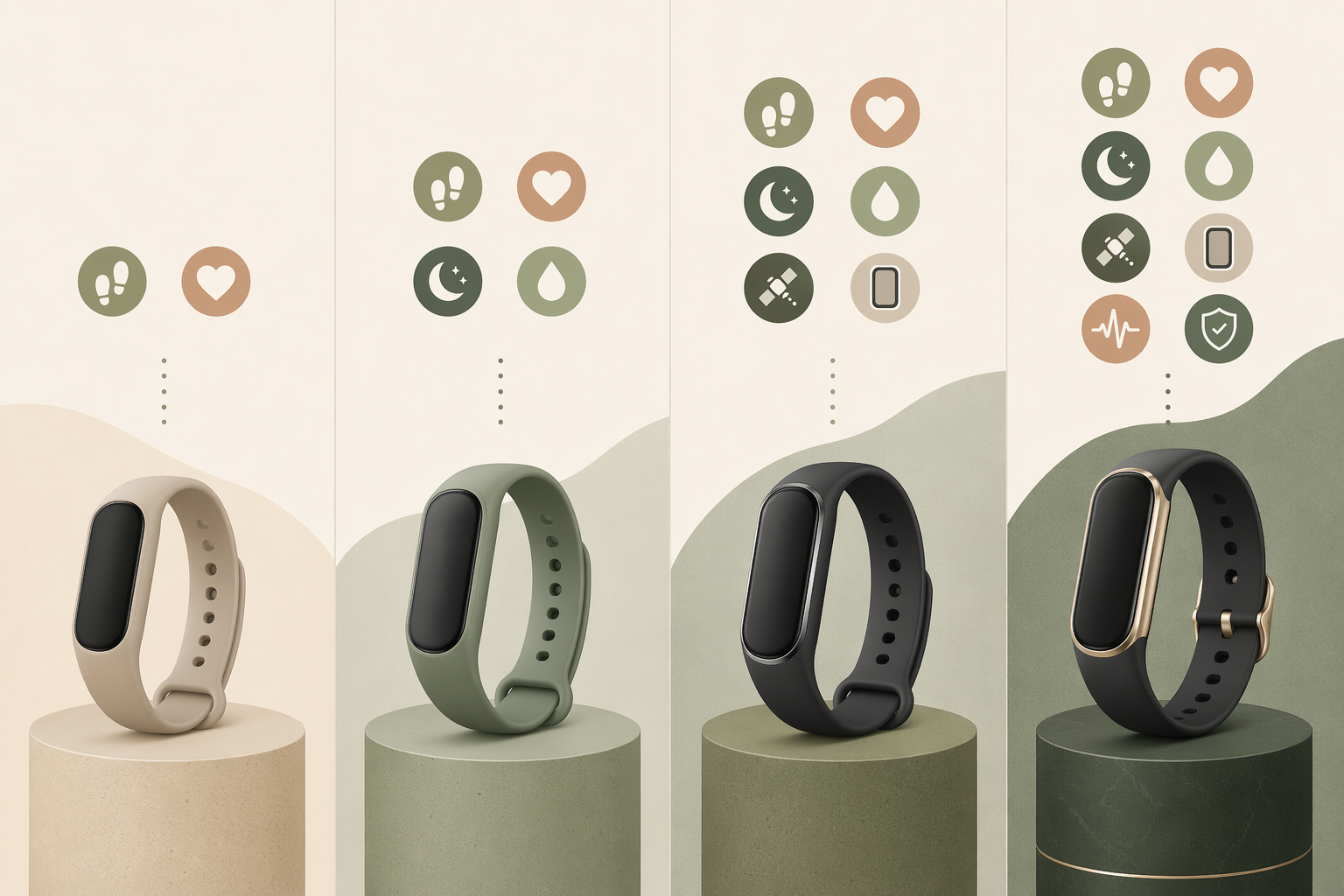
Wearable recovery scores can be useful here if they reflect what you already feel: poor sleep, elevated resting heart rate, or low readiness may argue for another easy day. They should not override symptoms. A green score is not clearance to turn a post-flu walk into a HIIT session.
Post-injury: rebuild the movement before rebuilding the workout
Injury recovery at home can go wrong quietly. You avoid the painful angle, shift weight to the other side, shorten the range, and call the set successful because you finished it. The problem is not laziness; it is that pain changes movement, and no one in the room is correcting the compensation.
Houston Methodist recommends a graduated return after injury and gives a useful time-off comparison: if you missed one week, expect about one week to work back; if you missed two weeks, expect about two weeks; if you missed a month, expect about a month.[7] That does not guarantee the exact schedule, but it does protect against the common mistake of treating the first pain-free day as the return-to-normal day.
The first home step is unloaded movement. For a knee, that may mean heel slides, easy sit-to-stands from a higher chair, or a short flat walk. For a shoulder, it may mean gentle range of motion without a band. For a back flare-up, it may mean short walking intervals and positions that calm symptoms. The point is to check whether the injured area can move cleanly before you ask it to resist load.
Pain is the ceiling, but not only pain during the set. Watch the next several hours and the next morning. If the area is more painful, more swollen, less mobile, or more guarded afterward, the dose was too high. That feedback matters more than finishing the planned reps.
| Stage | Home activity | What must be true before progressing |
|---|---|---|
| Movement | Gentle range of motion, short walks, supported sit-to-stands, easy floor or chair mobility | Movement does not increase pain or swelling during or after |
| Control | Slow bodyweight patterns, balance support near a chair or wall, partial range if needed | You can keep form consistent without guarding or shifting away from the injured side |
| Light resistance | Low-tension bands, very light dumbbells, or slightly deeper bodyweight range | The same area tolerates the added demand over repeated sessions |
| Training return | Longer sessions, more sets, or more familiar exercise variations | Only one variable increases at a time |
Bands are useful in this lane because tension can be scaled, but they can also hide poor setup. Start with low resistance, keep the band path controlled, and avoid anchoring a band in a way that could slip toward your face or pull a joint into a vulnerable angle. If you are using a door anchor, a dedicated band-anchor safety guide is worth reading before the exercise becomes the risky part of rehab.
Post-surgery: the home plan starts with the restriction list
After surgery, the safest home fitness plan is the one that respects the surgeon’s restrictions even when the rest of you feels ready. Pain can be muted by medication. Energy can come back before tissue tolerance does. A living room is not a loophole.
Baylor College of Medicine advises that, during the first four weeks after surgery, activity should focus on gentle movement and following the medical team’s directions; it also notes that a stationary bike may be an early option for some patients depending on the procedure and clearance.[8] That last clause matters. A bike is not automatically safe because it is low impact. It is safe only if the surgical area, medications, incision status, and restrictions allow it.
For many people, the first home “workout” after surgery is not a workout at all. It is several short walks, breathing work if prescribed, gentle joint motion away from the surgical site, or basic daily movement broken into tolerable pieces. Abdominal surgery, joint repair, cardiac procedures, and minor outpatient procedures create different limits, so this lane should be guided by discharge instructions rather than internet exercise templates.
- Do not lift, brace, stretch, or cycle against a restriction just because the movement feels easy.
- Call your healthcare provider for increasing pain, fever, drainage, dizziness, chest symptoms, unusual shortness of breath, or anything your discharge instructions list as urgent.
- When cleared to add more, increase walking time, range of motion, or light resistance separately rather than stacking changes.
- Keep early strength work supported: a chair, countertop, wall, or rail is not a downgrade; it is control.
Deconditioning: treat lost capacity as its own setback
Deconditioning can feel embarrassing because there may be no dramatic event to point to. You were busy, ill for a while, caring for someone, traveling, stressed, or simply inactive. Then the old warm-up feels like the workout. That is still a real change in capacity.
Allina Health describes cardiovascular deconditioning beginning after about two to three weeks of inactivity and offers a clinical rule of thumb that rebuilding may take roughly twice as long as the time you were inactive.[9] That is not a guaranteed formula, and it will vary by age, baseline fitness, illness, sleep, nutrition, and medical conditions. It is still a useful brake on the urge to compress months away into one heroic week.
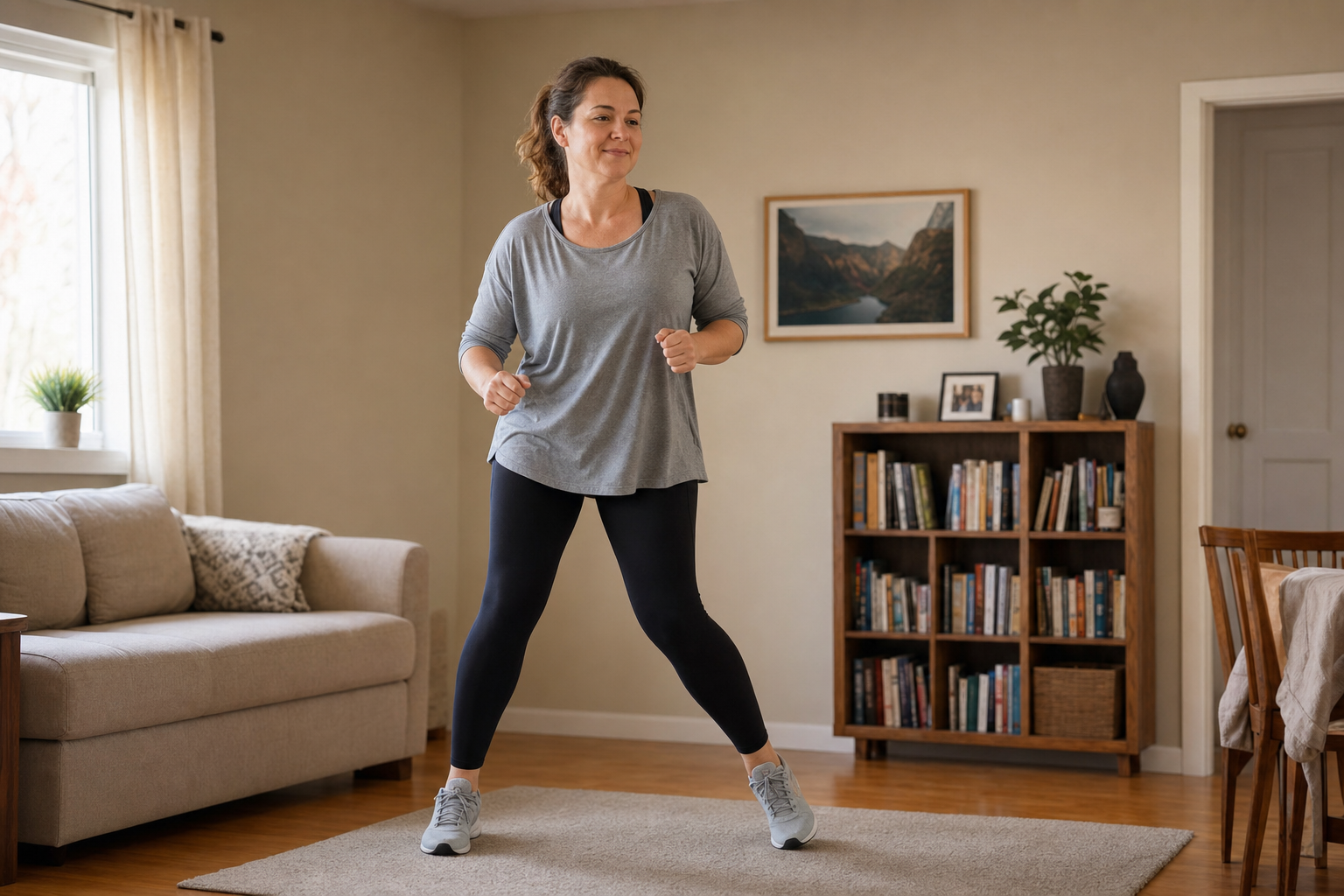
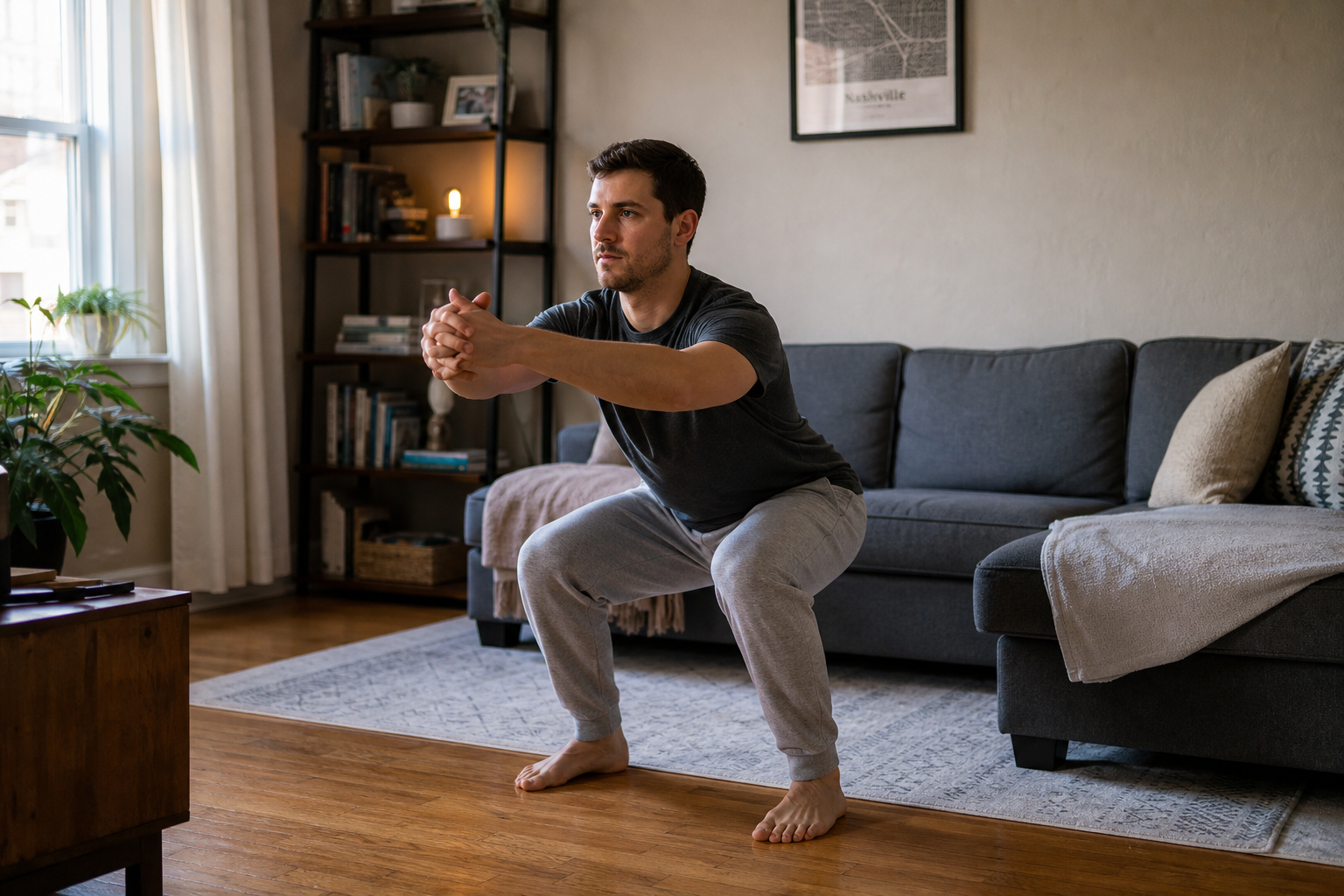
The deconditioning lane usually allows more freedom than surgery or acute illness, but it still needs progression. Start with short, repeatable sessions: walking indoors or outside, cycling easily, sit-to-stands, wall push-ups, step-ups to a low step, and gentle band rows. If you stopped training for a month, the first goal is not to recreate your old split. It is to find a level you can repeat without needing two days to recover from it.
| If you have been inactive | First home target | Progression idea |
|---|---|---|
| A couple of weeks | Short easy sessions at a conversational pace | Add a few minutes or one light set after several tolerated sessions |
| A month or more | Very modest total volume, often below what feels mentally satisfying | Build consistency first, then duration, then resistance |
| Several months | Movement snacks, supported bodyweight work, and easy walking or cycling | Expect rebuilding to be slower and use rest days deliberately |
The home equipment that earns its place
Recovery does not require a full gym. It does require equipment that lets you scale effort without cornering yourself. The most useful setup is plain: enough walking space, a stable chair, a wall or countertop for support, a light resistance band, and perhaps light dumbbells once load is tolerated. A stationary bike can help when low-impact cardiovascular work is appropriate, especially in some illness or surgery returns, but it should still pass the talk test and any medical restrictions.
The British Heart Foundation presents resistance-band exercises in a cardiac rehabilitation context, which is a more specific population than general home recovery, but the reason bands transfer well is practical: they are light, inexpensive, and adjustable.[10] Choose PT, from the American Physical Therapy Association, also includes bodyweight and band-based strengthening options in a home program format.[11] For a return plan, that makes bands and bodyweight work bridges, not badges of difficulty.

A simple progression rule
Change one variable at a time. If you add minutes, do not also add resistance. If you add a band, do not also increase range and sets. If you return to a harder variation, keep the session shorter. This is slow on purpose; it lets you identify which change your body did or did not tolerate.
- Duration: add a small amount of time to walking, cycling, or mobility.
- Frequency: add another easy day before making any single session harder.
- Range: move a little deeper only if the current range is clean and symptom-free.
- Resistance: add band tension or light weight only after unloaded movement is tolerated.
- Intensity: save intervals, heavy sets, and breathless circuits for the end of the return, not the beginning.
If you want more structure around rest days, cooldowns, and soreness management, a post-workout recovery routine at home can sit beside this plan. If you use HRV, readiness, or sleep data, a guide to what fitness tracker recovery scores actually measure can help keep the device in its proper role: useful context, not permission. For band setups, especially anchored movements, use a resistance band door-anchor safety guide before adding pull-aparts, rows, presses, or rotations.
When to move forward, hold, or step back
Progression is earned by tolerance, not by a calendar square. A session is tolerated when you can complete it at the intended easy effort, keep form controlled, recover normally, and avoid symptom flare later that day or the next morning. That standard applies differently across the four lanes, but the logic is the same.
| Body response | What it means | Next move |
|---|---|---|
| You finish easily, can talk throughout, and feel normal later | Current dose is likely acceptable | Repeat once or progress one small variable |
| You feel more tired than expected but symptoms do not worsen | Dose may be near your current ceiling | Repeat or reduce slightly before adding |
| Pain, swelling, cough, fatigue, dizziness, feverishness, or breathlessness increases | Dose exceeded the current ceiling or the issue needs review | Stop, step back, and seek medical guidance for red flags or unresolved symptoms |
| You compensate, limp, brace, or rush through reps | The movement is not controlled enough yet | Return to support, smaller range, or unloaded work |
The frustrating part is that the right first workout may not feel like training. It may feel like proving that walking across the room, pedaling lightly, or doing five careful sit-to-stands is safe today. That proof is not wasted. It is the step that keeps the next step honest.
A safe return to home fitness is not about finding the gentlest workout online. It is about matching the progression to the setback that changed your body’s current limits. Back to training is a sequence of tolerated steps, and getting medical guidance is not failure when symptoms, surgery restrictions, pain, or cardiac and respiratory warning signs sit outside a home protocol.
References
- Exercise Safely After Illness, Franciscan Health, https://www.franciscanhealth.org/community/blog/exercise-safely-after-illness
- Active Recovery, NASM, https://www.nasm.org/resource-center/blog/active-recovery
- Working Out While Sick: Should You Push Through or Rest?, Houston Methodist, 2025, https://www.houstonmethodist.org/blog/articles/2025/jan/working-out-while-sick-should-you-push-through-or-rest/
- How to restart your workout after Covid-19, RSV or the flu, CNN, 2024, https://www.cnn.com/2024/03/11/health/restart-exercise-after-covid-rsv-flu-wellness
- Exercising after being sick: What to know, Medical News Today, https://www.medicalnewstoday.com/articles/exercise-after-being-sick
- Exercise After Being Sick: How to Safely Return to Workouts, Nourish Move Love, https://www.nourishmovelove.com/exercise-after-being-sick/
- 5 Tips for Exercising Safely While Rehabbing an Injury, Houston Methodist, 2023, https://www.houstonmethodist.org/blog/articles/2023/apr/5-tips-for-exercising-safely-while-rehabbing-an-injury/
- Easing into exercise after surgery, Baylor College of Medicine, https://www.bcm.edu/news/easing-into-exercise-after-surgery
- How fast do you fall out of shape?, Allina Health, https://www.allinahealth.org/healthysetgo/move/how-fast-do-you-fall-out-of-shape
- Resistance bands, British Heart Foundation, https://www.bhf.org.uk/informationsupport/heart-matters-magazine/activity/resistance-bands
- 30-Minute Home Strengthening Program, Choose PT / American Physical Therapy Association, https://www.choosept.com/health-tips/30-minute-home-strengthening-program

Comments
Join the discussion with an anonymous comment.