
Can Gym Equipment Stay Outside? The Complete Weatherproofing and Maintenance Guide
A practical guide for home fitness enthusiasts who want to know if their gym equipment can live outdoors. Covers material science, component-by-component protection, maintenance protocols, climate-specific concerns, and cost-benefit analysis to help readers protect their investment.
- Budget tier
- $300–$1,000
- Space type
- backyard, balcony
Items included: —
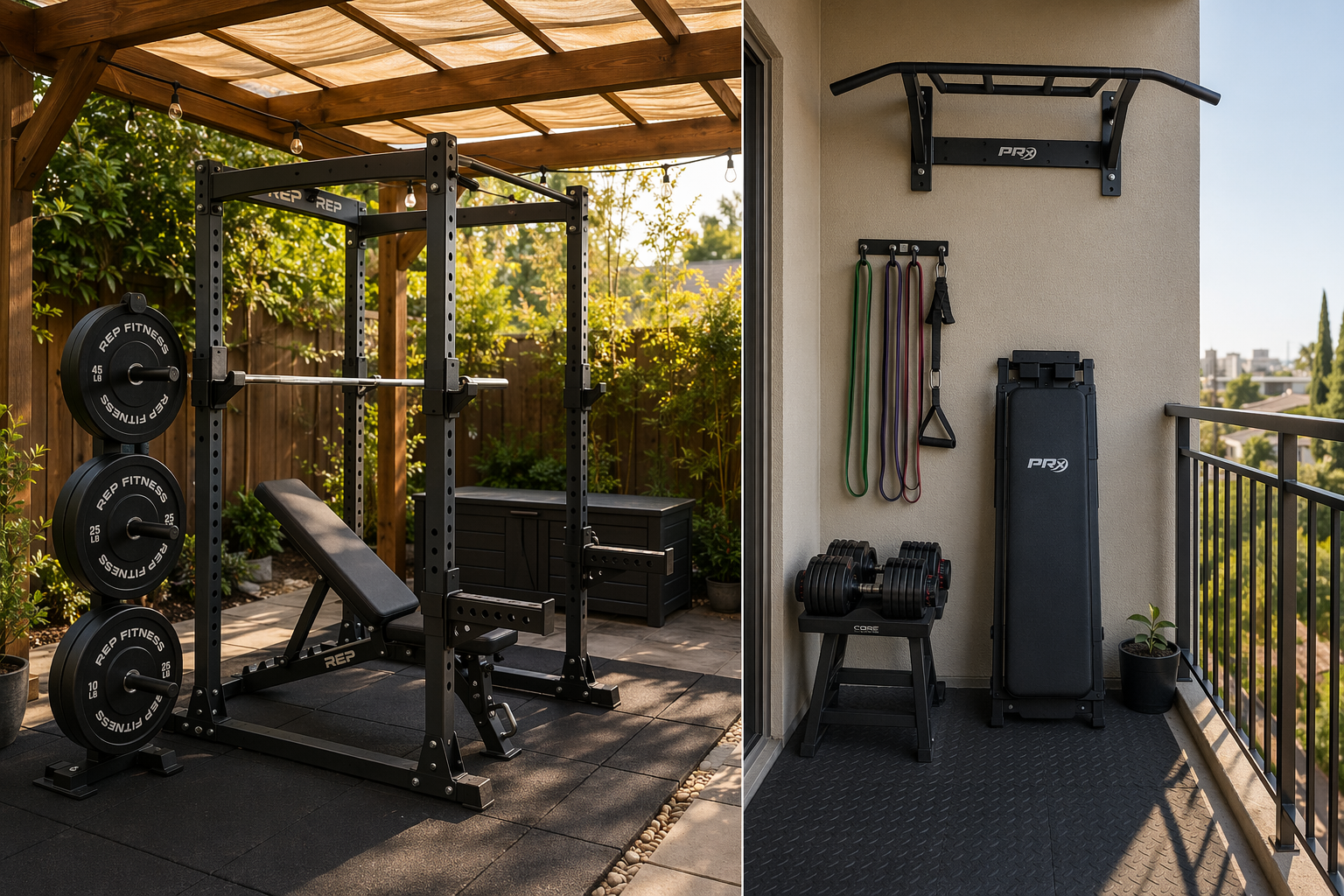
The Honest Answer: Indoor Equipment Won’t Survive Outdoors, but Outdoor-Rated Gear Can Thrive
Let’s start with a clear distinction: the treadmill you bought for your living room will not last a season on a covered patio. The electronics, unsealed bearings, and MDF-based decking are not designed for humidity, temperature swings, or dust. Conversely, a power rack with a powder-coated finish, a stainless steel barbell, and urethane-coated plates can live outside year-round with a straightforward maintenance routine.
The key is understanding which materials and construction methods are genuinely weather-resistant and which are merely marketed as "durable." Most strength training equipment — racks, benches, barbells, plates, kettlebells — can be placed outdoors if you select the right variants. Cardio machines with screens, motors, and circuit boards generally cannot, no matter how much you cover them.
A backyard gym setup can operate in as little as 100–200 square feet according to Marcy Pro, making it a viable option even for modest outdoor spaces. The critical factors are choosing a flat, stable location with partial shade to reduce direct UV exposure, and selecting equipment that matches the climate you live in.
Material Science Breakdown: What to Look for in Weather-Resistant Gear
Not all steel is created equal, and the difference between a barbell that rusts after one rainy week and one that stays pristine for years comes down to its finish and alloy composition. The same logic applies to rack frames, plate coatings, and bench upholstery.
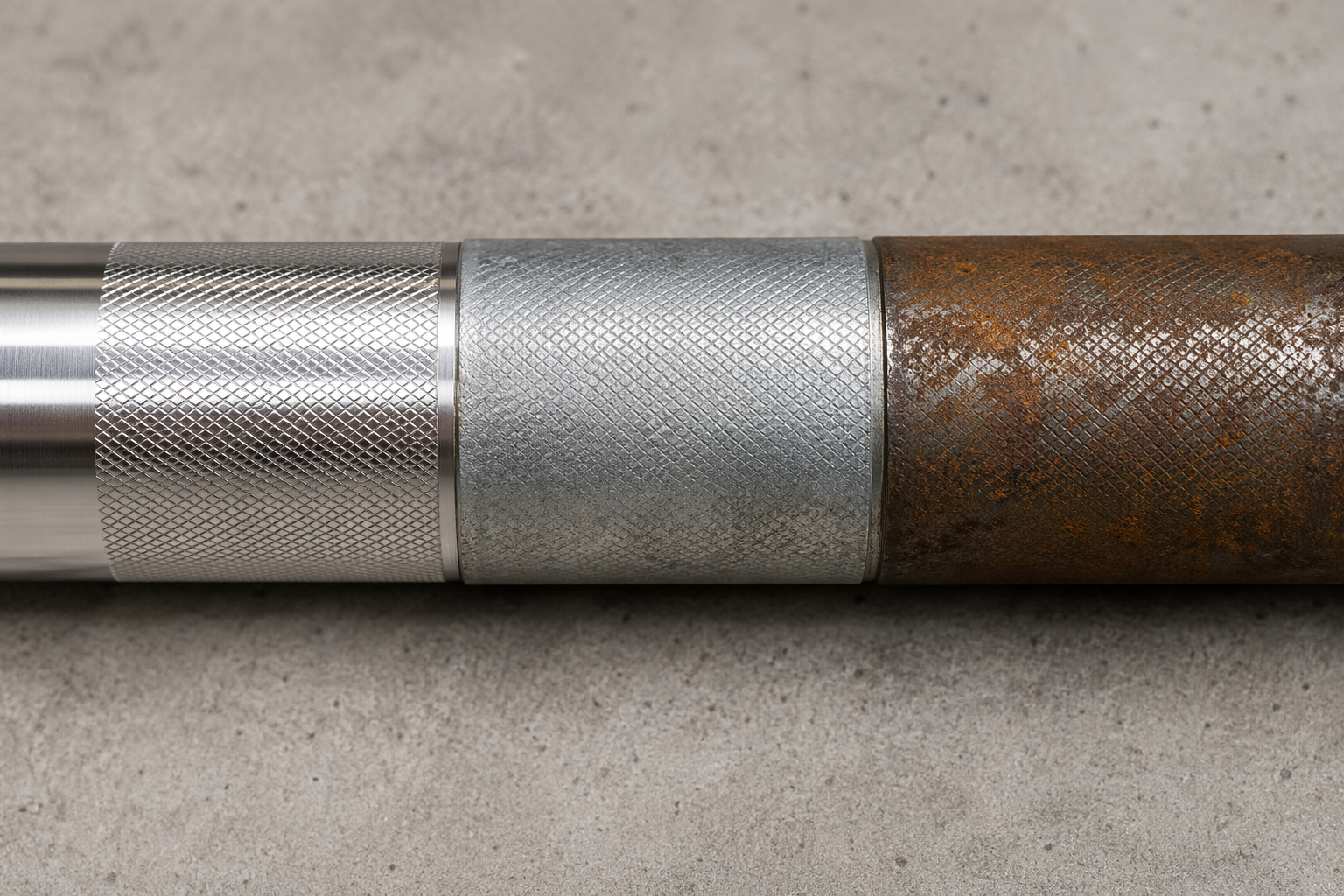
Barbell Finishes: Stainless Steel vs. Zinc vs. Black Oxide vs. Bare Steel
The barbell is the most handled piece of equipment in any gym, and it is also the most vulnerable to moisture because of its high-carbon steel core. Here is how the common finishes compare for outdoor use:
| Finish Type | Outdoor Suitability | Maintenance Required | Typical Lifespan Outdoors |
|---|---|---|---|
| Stainless Steel | Excellent — the shaft is inherently corrosion-resistant | None on the shaft; occasional oil on the sleeves | 10+ years with basic care |
| Zinc (bright or matte) | Moderate — provides a barrier but can wear through | Regular oiling and drying after use | 2–4 years before surface rust appears |
| Black Oxide | Poor — offers almost no corrosion protection | Frequent oiling; must be kept dry | 6–12 months in humid climates |
| Bare Steel | Not suitable — rusts on contact with moisture | Constant oiling and immediate drying | Weeks to months without aggressive maintenance |
According to Two Rep Cave, a stainless steel barbell performs best outdoors and does not require any maintenance on the shaft. This is because the chromium content in stainless steel forms a passive oxide layer that prevents rust from forming. The sleeves still need occasional lubrication, but the shaft — the part you grip and where the bar contacts plates — is effectively maintenance-free.
Power racks, squat stands, and weight benches are typically made from 11- or 14-gauge steel tubing. The difference between a rack that rusts from the inside out and one that stays solid for a decade is the coating system applied before the final paint layer.
Belson Outdoors, a commercial outdoor equipment supplier, states that top-of-the-line exercise equipment is finished with an e-coat primer and a super durable polyester top coat to eliminate rust, corrosion, or chipping. E-coating (electrophoretic deposition) uses an electrical current to deposit a uniform primer layer into every crevice and interior surface of the frame — including the inside of the tubing, which is where rust typically starts when moisture seeps in through bolt holes or open ends.
When shopping for outdoor-rated racks and benches, look for specifications that mention "e-coat primer" or "electrostatic powder coat with e-coat base." A standard powder coat applied only to the exterior surfaces will eventually fail if water enters the frame.
Plate Materials: Rubber vs. Urethane vs. Iron
Weight plates face a different set of outdoor challenges: they sit on the ground where moisture collects, they get dropped, and their center hubs are often made of bare or painted steel.
| Plate Type | Outdoor Suitability | Key Vulnerability |
|---|---|---|
| Urethane-Coated | Excellent — non-porous, UV-resistant, no odor | Expensive; hub still needs protection |
| Rubber-Coated (crumb or virgin) | Good — durable and impact-resistant | Can degrade under prolonged UV exposure; may develop odor in heat |
| Bumper Plates (virgin rubber) | Good — dense and weather-resistant | Center ring can rust if not stainless |
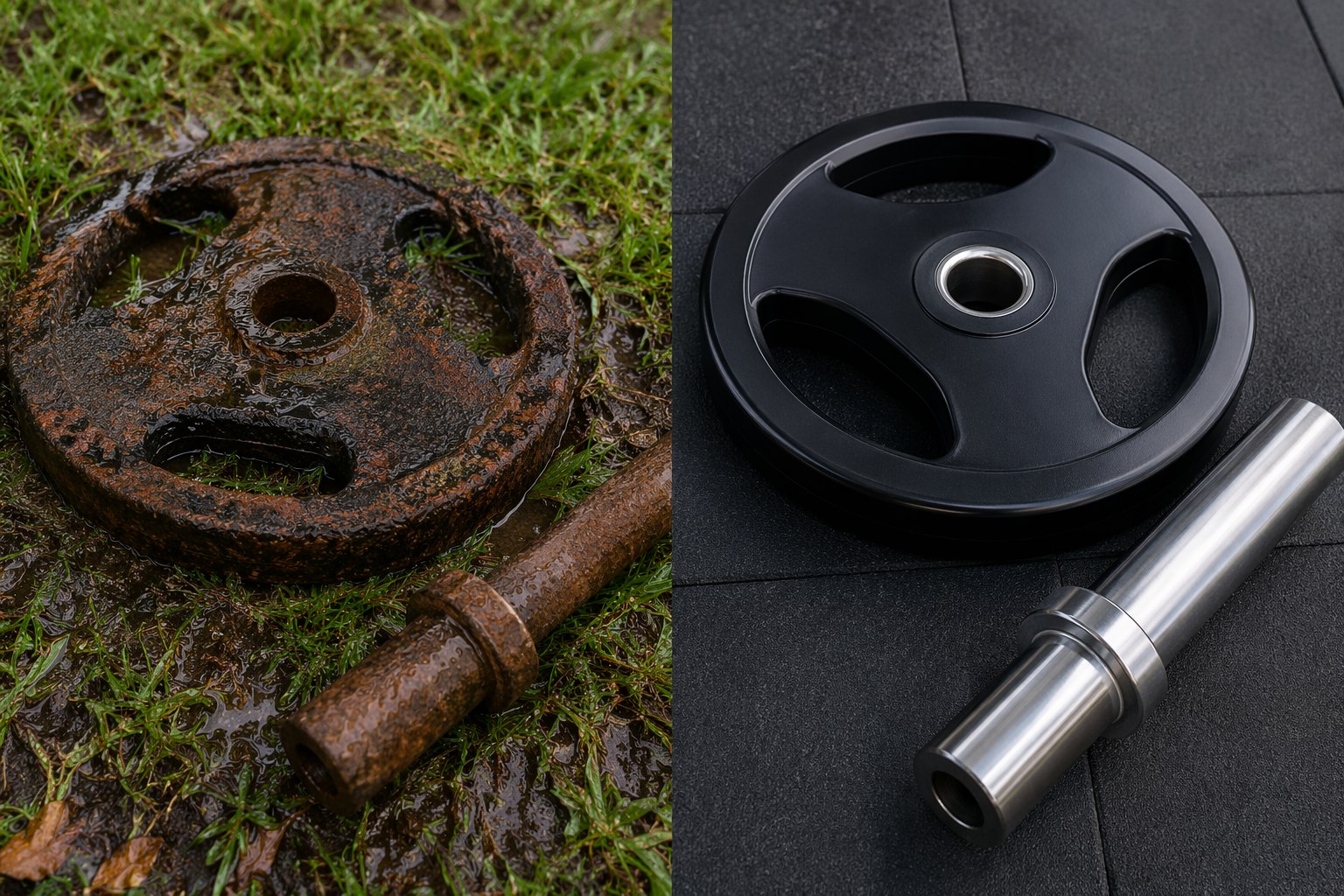
| Cast Iron with Enamel Paint | Poor — paint chips, bare iron rusts quickly | Chipped edges expose raw iron to moisture |
| Bare Cast Iron | Not suitable — rusts immediately | Requires constant oiling and dry storage |
If you already own rubber-coated plates, applying a UV protectant like 303 Aerospace Protectant every few months will significantly extend their life. For the steel hub, a light coat of corrosion-inhibiting oil after each use will prevent the rust ring that commonly forms around the center hole.
Component-by-Component Protection Guide
Even the best outdoor-rated equipment benefits from targeted protection. Here is a component-level breakdown of what to protect and how.
Barbell Sleeves and Shafts
The sleeves (the rotating ends where plates load) contain bearings or bushings that are vulnerable to moisture. After each workout, wipe the sleeves dry and apply a light machine oil (3-in-1 or a dedicated barbell oil) to the exposed sleeve surface. For stainless steel bars, the shaft needs no treatment. For zinc or coated bars, wipe the shaft dry and apply a thin layer of oil weekly.
Rack Uprights: Preventing Internal Rust
Water loves to collect inside hollow rack uprights. Rain runs down the J-hook slots, enters through the top cap (if not sealed), and pools at the bottom. Two Rep Cave recommends drilling small holes into the lowest part of the uprights so water can drain out. A 1/8-inch hole on each side, positioned at the very bottom of the tube, is enough to let trapped water escape.
After drilling, spray the interior of each upright with an interior frame coating like Eastwood Internal Frame Coating or a similar rust-inhibiting aerosol. This step is especially important if your rack does not have an e-coat primer on the interior surfaces.
Bench Upholstery and Padding
Vinyl upholstery on weight benches is surprisingly durable outdoors if you take one preventive step: seal the seams. The stitching creates tiny holes where moisture can wick into the foam padding underneath, leading to mold and delamination. Apply a thin bead of clear silicone seam sealer along all stitched edges.
For ongoing UV protection, Two Rep Cave recommends 303 Aerospace Protectant. It preserves vinyl upholstery, rubber components, and plastic surfaces without leaving a greasy residue. Apply it monthly during peak sun months and every other month during the rest of the year.
Plate Hubs and Weight Stack Pins
The steel hub of a bumper plate or the pin on a weight stack is often the first point of failure in outdoor equipment. These are typically bare or painted steel and see constant friction. Apply a thin coat of corrosion-inhibiting grease (not oil, which runs off) to the hub bore and the pin surface every month. Wipe away any excess to prevent dirt from sticking.
Maintenance Protocols: Weekly, Monthly, and Seasonal Routines
Consistency matters more than intensity when it comes to outdoor equipment maintenance. A five-minute weekly wipe-down is far more effective than a deep clean once a year. TriActive USA recommends a monthly routine that includes rinsing dust and salt, wiping grips, checking for chips or scratches, and touching up with compatible paint.
| Frequency | Tasks | Time Required |
|---|---|---|
| After each workout | Wipe down barbell shaft and sleeves with a dry cloth. Dry any wet surfaces. Cover equipment if rain is expected. | 2–3 minutes |
| Weekly | Rinse frames and plates with a garden hose to remove dust, pollen, and salt. Dry thoroughly with a microfiber cloth. Inspect for new chips or rust spots. | 10–15 minutes |
| Monthly | Oil barbell sleeves and plate hubs. Apply 303 Protectant to upholstery and rubber surfaces. Check bolt torque on all assembled equipment. | 20–30 minutes |
| Seasonal (spring/fall) | Torque check all bolts (metal expands and contracts with temperature). Touch up any chipped paint with matching rust-inhibitive paint. Inspect drain holes in rack uprights for blockages. | 30–45 minutes |
TriActive USA specifically advises scheduling torque checks in spring and fall because metal shrinks in cold and expands in heat, which can loosen bolts over time. A simple torque wrench set to the manufacturer's specifications will prevent rack instability and bench wobble.
Storage Solutions: Tarps, Canopies, Deck Boxes, and Covers
Even weather-resistant equipment benefits from overhead protection. The goal is to reduce direct UV exposure and keep rain and snow off the gear while allowing airflow to prevent moisture from being trapped against surfaces.
| Storage Option | Cost Range | Best For | Trade-Offs |
|---|---|---|---|
| Heavy-duty tarp (bungee-corded) | $20–$50 | Covering rack and bench between workouts | Traps moisture underneath if not vented; can flap in wind |
| Pop-up canopy (10x10 or 10x20) | $100–$300 | Shading a full rack and barbell setup | Needs anchoring in wind; fabric UV degrades over 2–3 years |
| Pergola with polycarbonate roof | $500–$2,000 | Permanent semi-covered space | Higher upfront cost; requires assembly or contractor |
| Deck box or weatherproof storage bin | $30–$100 | Storing smaller accessories (bands, straps, collars) | Limited capacity; not suitable for large equipment |
| Dedicated barbell sleeve cover | $15–$30 | Protecting barbell sleeves when not in use | Does not cover the full bar; easy to misplace |
If you use a tarp, avoid wrapping it tightly around equipment. Leave gaps at the bottom for air circulation. A tarp that is sealed tight will trap condensation underneath, creating a microclimate that accelerates rust. The same principle applies to canopies: open-sided structures allow wind to dry surfaces, while fully enclosed sheds can trap humidity.
For barbells specifically, storing the bar in a covered area — even just under an eave or inside a deck box — dramatically extends its life. The Two Rep Cave article emphasizes that the barbell is the most vulnerable piece of equipment and should be the first item you move to covered storage.
Climate-Specific Concerns: Coastal Salt Spray, Freeze-Thaw Cycles, and High UV
Your local climate determines how aggressive your maintenance routine needs to be. A backyard gym in Phoenix faces different threats than one in Seattle or Miami.
- Coastal/Salt Air: Salt accelerates corrosion dramatically. Rinse all equipment with fresh water after every workout, not just weekly. Pay special attention to bolt heads, J-hook slots, and barbell sleeves where salt accumulates. Consider upgrading to stainless steel hardware (bolts, washers, pins) for any equipment that will live within a mile of the coast.
- Freeze-Thaw Climates: Water that seeps into hollow frames or between plate layers will expand when it freezes, potentially cracking welds or splitting rubber coatings. Ensure drain holes are clear before winter. Store bumper plates indoors or in a sealed bin during freezing months if possible. Apply a silicone-based lubricant to moving parts before temperatures drop — water-based lubricants can freeze and gum up mechanisms.
- High UV / Desert Climates: UV radiation degrades vinyl upholstery, rubber coatings, and plastic components faster than any other environmental factor. Use a UV-stabilized protectant (303 Aerospace Protectant or a comparable product) and reapply every two to three weeks during peak summer. Consider a shade structure with UV-blocking fabric rather than a clear tarp, which can amplify UV exposure through a greenhouse effect.
- High Humidity / Rainy Climates: Mold and mildew become the primary concern alongside rust. Ensure air can circulate around and under all equipment. Do not place rubber mats directly on wet grass — use a gravel base or concrete pavers to create a dry foundation. Wipe down upholstery with a diluted vinegar solution monthly to prevent mold growth.
What to Never Leave Outside
Some equipment simply cannot live outdoors, regardless of how well you protect it. Knowing which items to keep inside will save you money and frustration.
- Cardio machines with electronics: Treadmills, exercise bikes with screens, rowers with consoles, and smart trainers all contain circuit boards, motors, and unsealed bearings that fail quickly when exposed to moisture, dust, and temperature extremes. Even under a covered patio, the humidity alone can corrode internal components within months.
- Bare iron plates: Uncoated cast iron rusts on contact with moisture. The rust flakes off and creates a gritty surface that damages barbell sleeves and makes plates difficult to load. If you must store iron plates outdoors, keep them in a sealed deck box with silica gel packets.
- Non-coated barbells: Bare steel, black oxide, and even some lower-quality zinc bars will develop surface rust within days of exposure. The rust pits the shaft surface, which then tears up your hands and damages plate bushings.
- Foam rollers and massage tools: Open-cell foam absorbs moisture and becomes a breeding ground for bacteria and mold. Closed-cell foam lasts longer but still degrades under UV. Store these indoors.
- Resistance bands and suspension trainers: Latex and rubber bands degrade rapidly under UV light. The Two Rep Cave article notes that UV exposure causes the material to become brittle and crack. Store bands in an opaque container or indoors.
- Any equipment with exposed bearings or unsealed bushings: Pulley systems, cable attachments, and adjustable dumbbells with moving internal parts will seize up when grit and moisture work their way into the mechanisms.
Cost-Benefit Analysis: Weatherproofing Investment vs. Replacing Rusted Gear
The most common objection to outdoor equipment maintenance is that it feels like an unnecessary expense. But the math works strongly in favor of prevention when you compare the cost of weatherproofing supplies against the cost of replacing rusted or UV-damaged gear.
| Item | Weatherproofing Cost | Replacement Cost | Savings Over 5 Years |
|---|---|---|---|
| Barbell (stainless vs. zinc replacement) | $15–$30 (oil, covers) | $200–$500 | $170–$470 |
| Power rack (coatings, drain holes, touch-up paint) | $30–$60 (paint, drill bit, frame coating) | $500–$1,500 | $440–$1,440 |
| Weight bench (seam sealer, UV protectant) | $20–$40 (303 Protectant, silicone) | $200–$600 | $160–$560 |
| Bumper plates (hub grease, UV protectant) | $15–$25 (grease, protectant) | $300–$800 (set of 4) | $275–$775 |
| Full outdoor setup (tarp + supplies) | $50–$200 | $1,200–$3,400 (total replacement) | $1,000–$3,200 |
The numbers above assume a single replacement event over five years. In practice, equipment that is left unprotected may need replacement more frequently — especially in coastal or high-humidity climates. A stainless steel barbell that costs $300–$400 upfront will outlast three zinc-coated bars that cost $150–$200 each, making the premium for weather-resistant materials a long-term savings rather than an expense.
For a broader perspective on equipment costs, our 5-Year Total Cost of Ownership Guide breaks down the hidden expenses of home gym ownership, including maintenance and replacement cycles. If you are planning a budget-conscious outdoor setup, our Compact Home Gym Budget Builds guide shows what a full indoor setup costs at different tiers — useful context for deciding whether to invest in outdoor-rated gear or build an indoor gym instead.
The bottom line is straightforward: spending $50–$200 on weatherproofing supplies and committing to a 10-minute weekly maintenance routine will protect a $1,000–$3,000 equipment investment for years. The alternative — replacing rusted gear every 2–3 years — costs significantly more in both money and frustration.
Some links on this page are affiliate links — they may earn us a commission at no extra cost to you. Our tier and tests are decided before we ever check which links pay; see our full affiliate disclosure.
Spot something off?
Noise and floor-damage claims carry real deposit-risk consequences if we get them wrong — tell us if your experience with this build didn't match what's above.