
8 Common Home Leg Workout Mistakes That Kill Your Progress — and How to Fix Each One
Are you doing leg workouts at home but not seeing the results you expect? This article breaks down 8 common mistakes home trainers make—from over-relying on bodyweight squats to poor warm-ups—and provides targeted fixes to help you build stronger, more defined legs.
You're Doing the Leg Work, So Why Aren't Your Legs Growing?
You show up, you squat, you lunge, you finish sweaty. But a month later your legs look the same, and the numbers on that bodyweight squat haven't budged. I have been there — standing in my living room thinking I must be missing some secret. The truth is simpler: home leg training has its own set of mistakes that gym-focused articles never mention. No spotter, no mirror, no heavy rack, and the temptation to skip the hard stuff all conspire against progress. Here are the fixes that actually work on a hardwood floor.
The Squat Trap
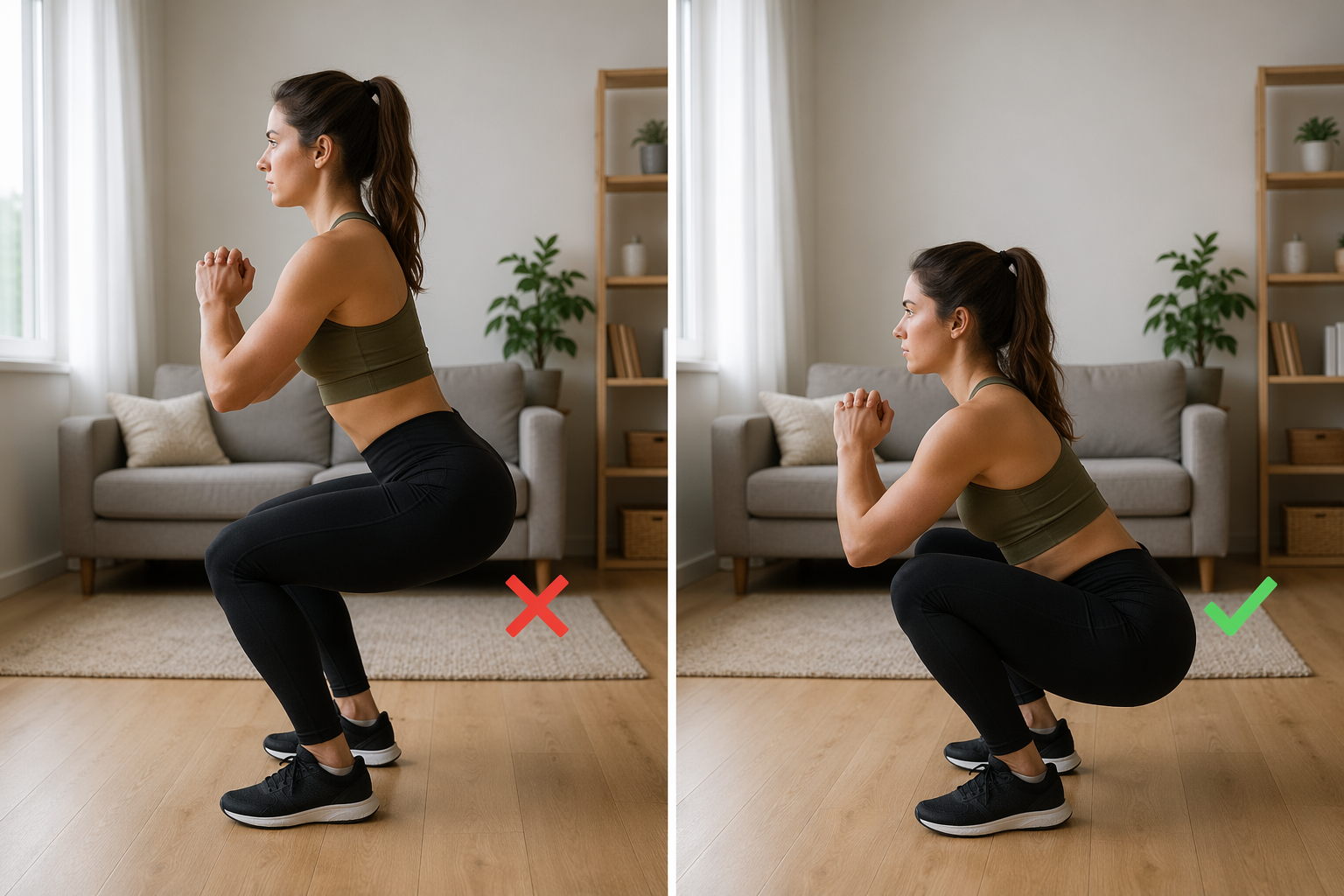
The most common trap: doing bodyweight squats past 20 reps. Once you can do 20 clean reps, the movement stops being a strength builder and turns into an endurance exercise. The 20‑rep threshold is real. Past that point you are not tearing muscle fibers; you are just getting better at recycling oxygen. Your legs stay the same size. And on top of that, if you are squatting only halfway down, you are missing even more muscle activation. Full‑depth squats activate more muscle and produce better hypertrophy than partials. Hips below knees – if you can't get there without rounding your back, use a heel elevation (a rolled‑up mat under your heels) or a wall squat.
The fix? Go unilateral. A Bulgarian split squat on a dining chair turns that easy endurance set into a real strength challenge. Research shows Bulgarian split squats produce quad and hamstring activation comparable to a barbell back squat. And if you add a 4‑second eccentric, 2‑second pause at the bottom, 1‑second concentric — the same movement that let you breeze through 20 reps will have you fighting for 8.
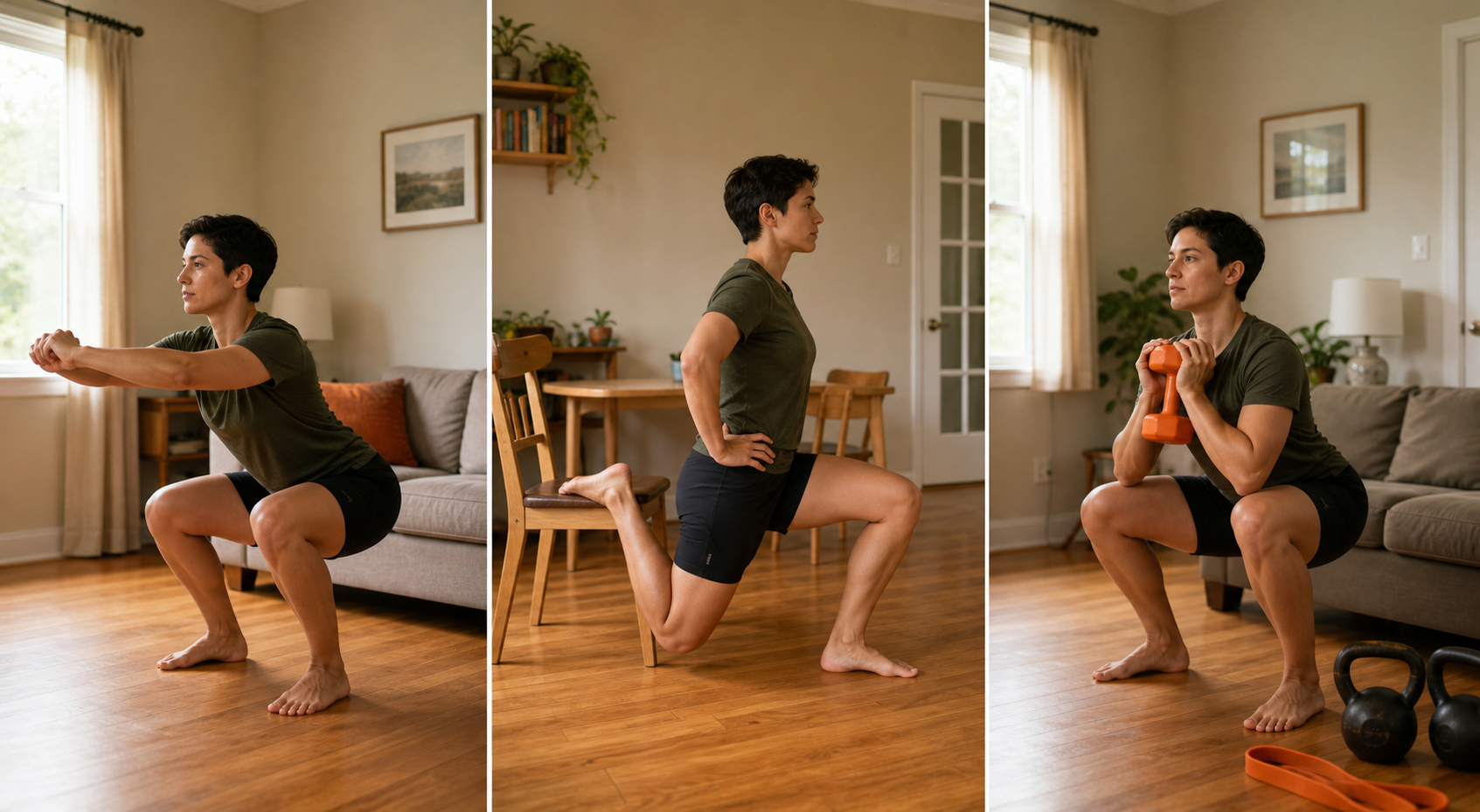
Progressive overload is the engine of growth, but you don't need heavier weights to get it. With that same Bulgarian split squat, a 4‑second lowering, 2‑second pause, and 1‑second push up will hit failure around 8 reps — even with bodyweight only. Another method: the 1.5‑rep — go all the way down, come up halfway, go back down, then stand up. That doubles time under tension. These techniques let you squeeze growth out of any weight level. For a structured progression, check out the 6-Week Progressive Home Leg Workout Plan.
The Missing Posterior Chain
Most home leg sessions are quad‑heavy: squats, lunges, step‑ups. The posterior chain stays on vacation. That imbalance slows overall leg growth and can lead to knee or lower back pain. You do not need a hamstring curl machine to fix it.
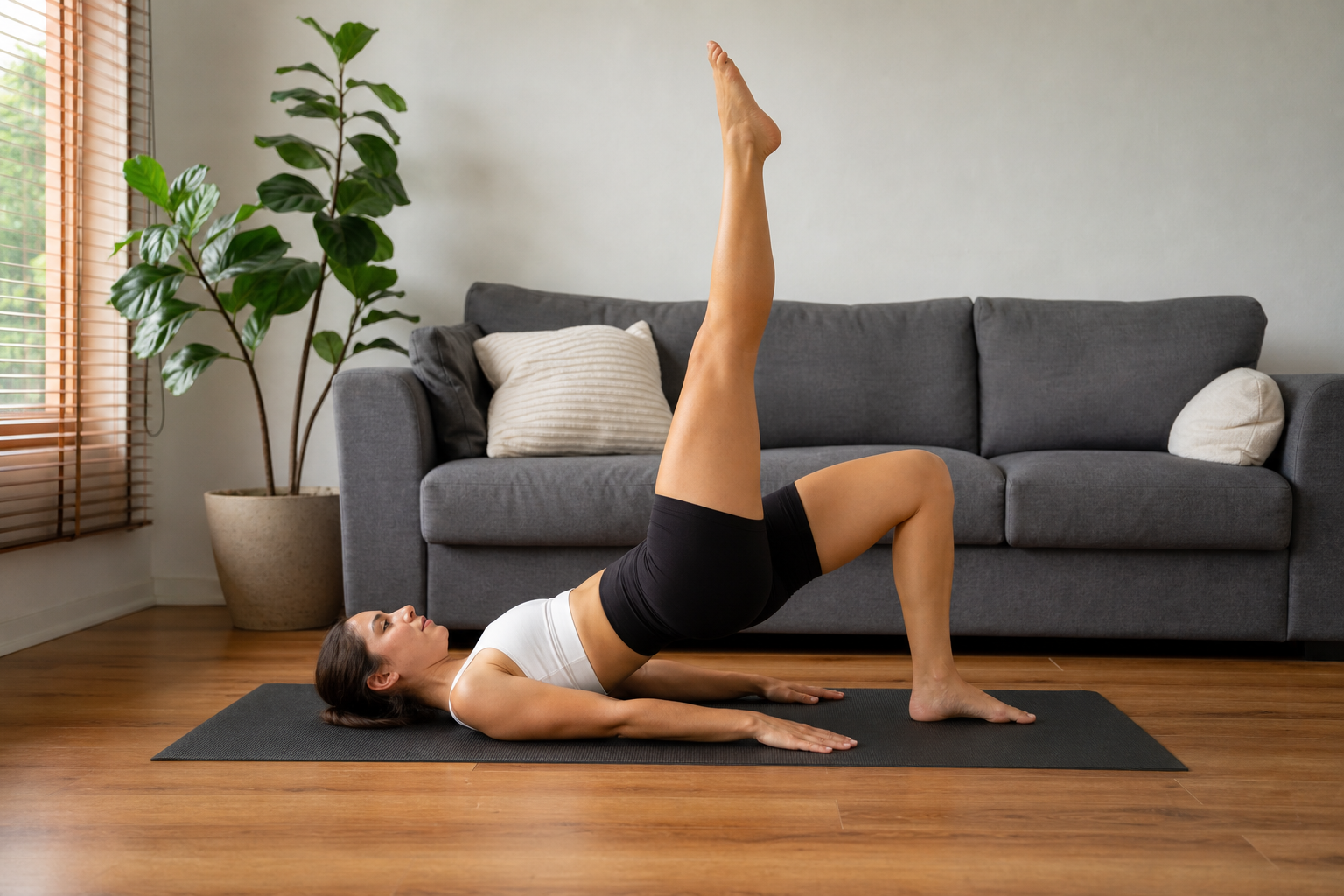
The single‑leg glute bridge produces glute activation similar to loaded hip thrusts at light to moderate loads. Lie on your back, one foot on the floor, the other leg extended straight up. Drive your hips up until your body forms a straight line from shoulders to knee. The key is the 3‑second lowering phase — that eccentric stretch is what builds muscle. Do 3 sets of 10–12 per side.
For the hamstrings specifically, a bodyweight single‑leg Romanian deadlift works. Stand on one leg, hinge at the hips, and reach toward the floor with the opposite hand while your free leg lifts behind you. Keep a micro‑bend in the standing knee. No dumbbell? Fine. The instability of one leg already makes it hard enough.
And don't forget the gluteus medius — the most commonly neglected lower body muscle. A weak one is linked to hip and lower back pain. The fix takes five minutes:
- Lateral leg raises: lie on your side, lift your top leg to about 45 degrees, lower slowly. 3 sets of 15 per side.
- Clamshells: same side‑lying position, knees bent at 90 degrees, keep feet together and lift the top knee without rolling your hips back. 3 sets of 15 per side.
- Side‑stepping with a band (or without): place a light resistance band just above your ankles (or skip it), keep a slight squat position, and take 10–15 steps to one side, then the other.
These might feel too easy at first. Stick with them for two weeks and note whether your hips feel more stable during squats and lunges.
Cold Starts and Noisy Neighbors
At a gym, the walk from the locker room, the weight selection, the setup — all of that acts as a gradual ramp. At home you finish a Zoom call and drop straight into a set of squats. Cold muscles, stiff joints, no nervous system priming. That is how you pull something or stall early.
I have skipped warm‑ups more times than I want to admit. The difference when I actually do them is that my first work set feels smooth instead of creaky. That alone justifies the five minutes.
Another home-specific problem: jump squats. They are loud, jarring on your joints, and likely to earn a note from your downstairs neighbor. The advice “land softly” barely helps on a wood floor over concrete. Better substitution: reverse lunges. They work the quads, glutes, and calves with zero impact. Or try sliding lunges: place a paper plate or folded towel under one foot and slide it back instead of lifting. Both are quiet and joint‑friendly. If you absolutely want a plyometric effect, do controlled tempo step‑ups on a sturdy chair — stepping up explosively, but lowering slowly.
How Often Should You Train Legs?
Legs are big muscles. They need stimulus, but also recovery. A 2022 systematic review found that 12–20 weekly sets per muscle group is an optimum range for hypertrophy in young, trained men. That translates to roughly 2 leg sessions per week, with 3–5 exercises per session and 6–10 hard sets per session for legs. But here's the caveat: that research was done on young men with at least a year of training. If you are a beginner or older, start on the lower end — maybe 8–12 weekly sets — and see how your body responds. Always wait at least 48 hours before hitting the same muscle group again.
For more detailed programming advice — including how to split volume across sessions and when to add weight — see How to Build a Home Leg Workout That Gives You Real Results: Volume, Frequency, Progression, and When to Add Weight.
Putting It All Together
Eight mistakes is a lot to digest. You don't need to fix all of them tonight. Pick the two that sting the most — likely the squat ceiling and missing posterior chain — and implement those corrections for two weeks. Then layer in the others one at a time.
- Swap bodyweight squats for Bulgarian split squats with tempo.
- Add single-leg glute bridges or SL‑RDLs to hit your hamstrings.
- Go full depth on every squat. Use heel elevation if needed.
- Warm up for five minutes before every session.
- Replace jump squats with reverse lunges or step‑ups.
- Aim for 2 leg sessions per week, 12–20 sets total, adjusted for your level.
The results will not show up overnight, but they will show up faster than spinning your wheels on the same routine. For a complete routine that builds on these principles, check out How to Build a Leg Day Routine at Home: The Progression Path from Bodyweight Beginner to Dumbbell Intermediate.
What a small equipment investment adds
We don't have a build tagged to this exact tier yet. Browse all builds.
How often should you repeat this?
See our recovery and rest reference for citation-anchored rest-interval guidance.
Spot something off?
Tell us if a movement, tier assumption, or duration didn't match your experience.