
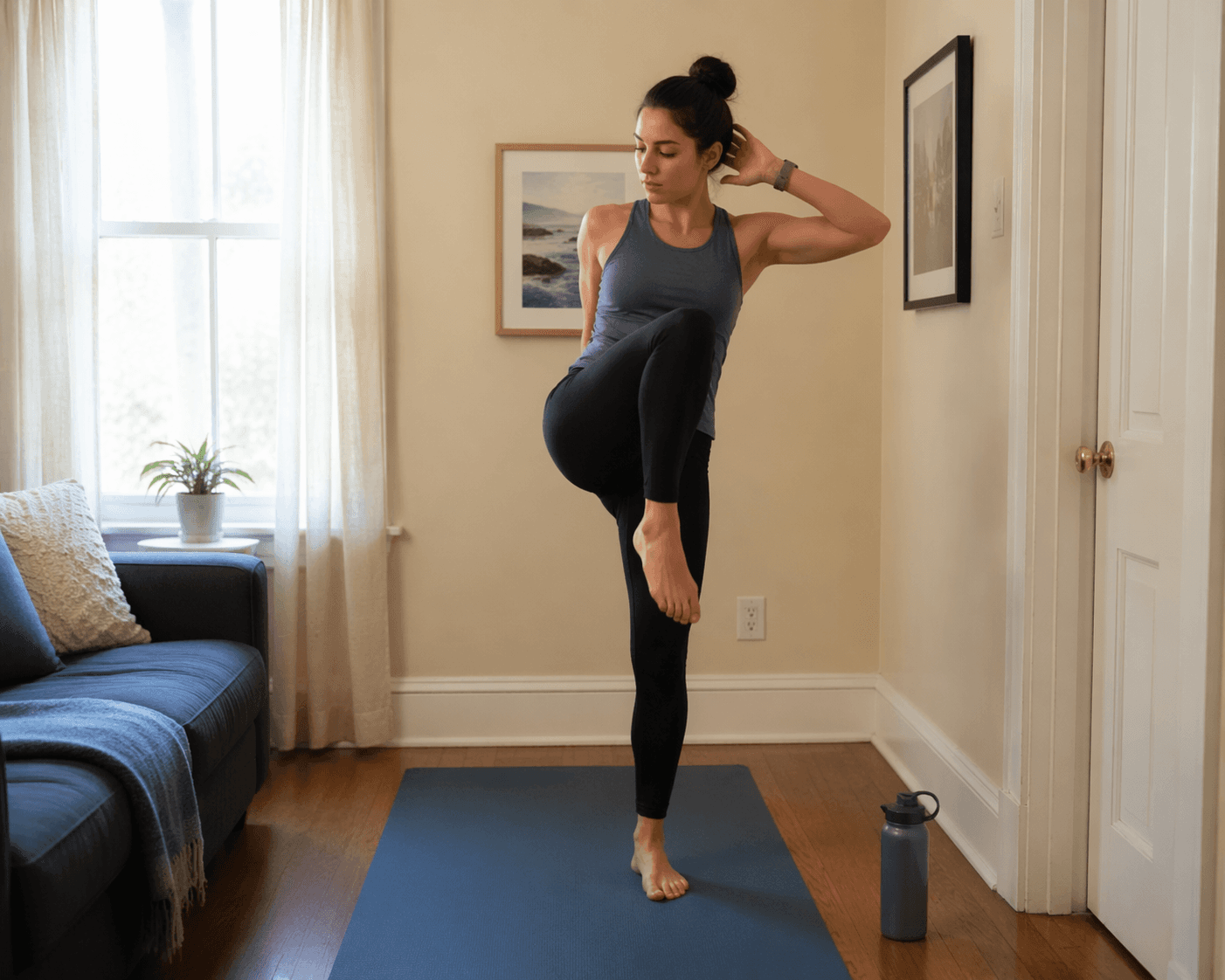
You probably think real cardio needs a treadmill, a spin bike, or at least a rowing machine. You are not alone. The equipment in a commercial gym looks serious. A bodyweight circuit on a living-room mat looks like a compromise. But the question isn't about looks. It's about whether the evidence shows that structured home-based cardio can deliver the same physiological improvements as supervised gym training. I've written about whether home cardio works elsewhere. Here I compare the two directly on the numbers.
One study with big numbers — and a catch
A 2019 study by Roberts et al., published in PMC, is the strongest single piece of evidence we have for home-based cardio. But there are two catches. First, the study used a NordicTrack Fusion CST machine — not bodyweight exercises. So the results may not apply directly to a mat-only routine. Second, the program included a 500‑calorie dietary deficit. The numbers below combine exercise and diet, so the exercise alone contributed less. Here are the results from 27 adults (mean age 33.8) over 12 weeks:
| Outcome | Change |
|---|---|
| Body weight | −6.2 kg |
| Fat mass | −6.8 kg |
| Visceral adipose tissue | −183 g |
| Diastolic blood pressure | −7.9 mmHg |
| Resting heart rate | −7 bpm |
| Relative VO₂max | +10.2 mL/kg/min |
| Exercise adherence (completers) | 94% |
I'd treat these numbers as the upper bound of what home cardio can achieve when diet is also controlled. Without the dietary deficit, you'd likely see smaller changes — especially in fat mass and weight.
Comments
Join the discussion with an anonymous comment.