
John Goodman's Weight Loss Diet and Home Workout Routine
John Goodman has credited his roughly 200-pound loss to daily walking, low-impact cardio, Mediterranean-style eating, and portion control — no secret workout. This guide rebuilds those documented habits into a joint-friendly weekly at-home diet and exercise plan, clearly flagging what is verified fact versus writer reconstruction.
- Equipment tier required
- none
- Duration
- 20-35 min
- Difficulty
- beginner
- Target area
- full body
- Space footprint needed
- small
- Noise level
- quiet-friendly
The useful answer to “John Goodman weight loss diet and home workout routine” starts with a correction: there is no official public John Goodman program to copy. What exists is better, in a way. Across interviews and trainer-reported details, the same plain pattern keeps showing up: he lost roughly 200 pounds over many years, after being reported near 392 pounds at his heaviest and describing himself elsewhere as “pushing 400” [1]. Public appearances through 2025 and 2026 kept the story visible rather than making it a one-season transformation headline [1][2].
The documented pieces are not exotic: walking, including dog walks; a trainer-reported target of 10,000 to 12,000 steps a day; low-impact cardio on machines such as an elliptical bicycle and treadmill; Mediterranean-style eating; portion control; cutting sugar and alcohol; and Goodman’s own emphasis on moving slowly and not sitting still [3][4][5]. That is not a movie-star secret. It is the kind of routine a normal person can actually repeat, if it is scaled to their joints, schedule, and starting point.
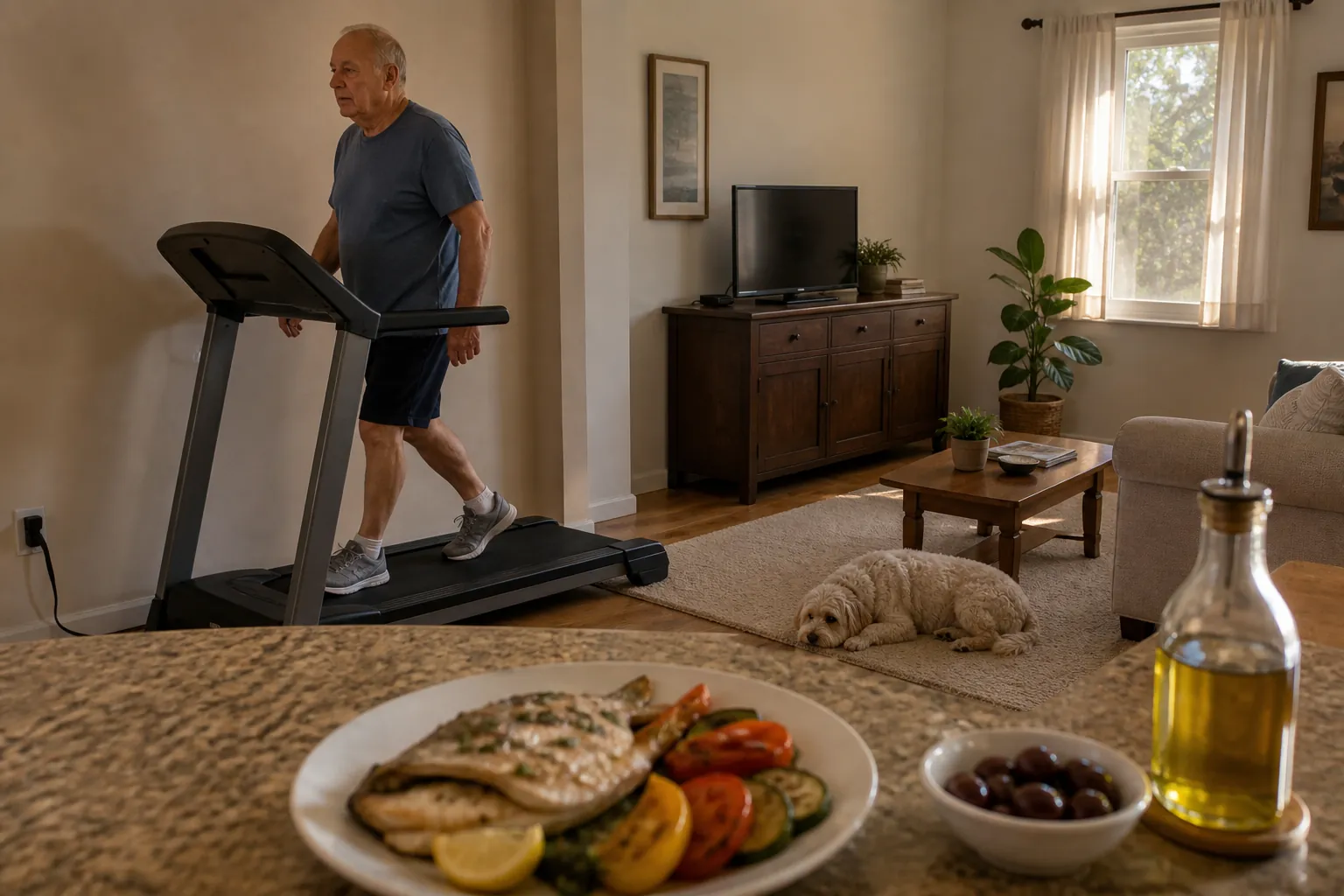
What is documented, and what this routine reconstructs
Goodman has not published a Monday-through-Sunday plan. His trainer Mackie Shilstone has described pieces of the protocol, Goodman has described his own motivation and walking, and entertainment outlets have tracked the visible result. The home plan below is a reconstruction from those public pieces, not an official Goodman routine.
| Item | What is supported | How to treat it at home |
|---|---|---|
| Scale of loss | Roughly 200 pounds lost over a long period; heaviest figures vary between a reported 392 pounds and Goodman’s own “pushing 400” wording [1][2]. | Do not turn it into a fixed timeline. The lesson is duration and maintenance, not a quick target. |
| Early weight-loss phase | By 2010, Goodman was reported to have lost about 100 pounds after cutting sugar and working with Shilstone six days a week [6]. | Most home users will not copy six trainer days. Copy the repeatable habits, not the celebrity support system. |
| Daily movement | Shilstone reported 10,000 to 12,000 daily steps; Goodman himself has talked in simpler terms about getting out and walking the dogs [3][4]. | Use the step range as a mature goal, not a day-one requirement. |
| Cardio machines | Reports describe treadmill work and an elliptical bicycle as part of the routine [4]. | Choose low-impact cardio you can tolerate: outdoor walking, treadmill walking, elliptical, recumbent bike, or under-desk pedals. |
| Diet pattern | Shilstone described a Mediterranean-style eating plan with foods such as fish, nuts, olive oil, vegetables, and fruit; reports also emphasize portion control and cutting sugar and alcohol [3][4][6]. | Build meals around the pattern, then use portions to keep the meal from quietly doubling. |
| Boxing | Goodman said he previously did an hour to an hour and a half of mitts, bags, and footwork, without sparring, and that it stopped around COVID [7]. | Treat boxing-style work as optional conditioning, not the magic ingredient. |
| Joint context | Goodman is 74 as of 2026, has referred to having “titanium knees,” and had a hip injury in March 2025 that paused filming [2][8][9]. | Keep the home version low impact and scalable. This is not medical advice or a rehab prescription. |
The home version starts with walking, not boxing
The 10,000-to-12,000-step detail gets attention because it sounds concrete. It should not be used as a pass-fail test. If someone has knee pain, extra body weight, a recent health scare, or years of sitting behind them, the first useful version may be two five-minute walks and one extra trip down the hallway.
A practical home target is to build a walking floor before building a walking ceiling. That means deciding the minimum walk you can do on a bad day without drama. For one person, that might be one loop around the block. For another, it might be five minutes on a treadmill while holding the rails lightly. The point is not to imitate a celebrity number on Tuesday; it is to create a movement habit that survives an ordinary week.
- If your current baseline is very low: walk 5 to 10 minutes after one meal, most days.
- If you already walk casually: add a second short walk or extend one walk by a few minutes.
- If 10,000 steps is realistic: use it as a consistency target, not permission to ignore food portions.
- If joints complain: reduce speed, flatten the route, split the walk, or switch one session to a bike or elliptical.
For readers who need structure more than motivation, a simple walking progression such as a walkathon training plan at home or a low-pressure accessible trail walking plan is closer to the Goodman lesson than a punishing fat-loss circuit.
Low-impact cardio: the machine is less important than the repeat
The reported cardio tools — treadmill and elliptical bicycle — matter because they fit the pattern: steady, repeatable, low-impact work [4]. They are not glamorous, and that is the advantage. A treadmill walk can be stopped at 12 minutes. An elliptical can remove some pounding. A recumbent bike can let a heavier or joint-conscious adult train without negotiating weather, traffic, or uneven sidewalks.
For a home routine, use low-impact cardio two to four days per week in addition to daily walking. The first version can be short:
- Easy day: 10 to 20 minutes at a pace where conversation is possible.
- Build day: 20 to 35 minutes, still controlled, with no need to chase breathless intervals.
- Joint-saving swap: bike or elliptical instead of another walk when feet, knees, or hips feel overused.
- Apartment option: quiet marching, step-free cardio, or an under-desk pedal setup if impact and noise are problems.
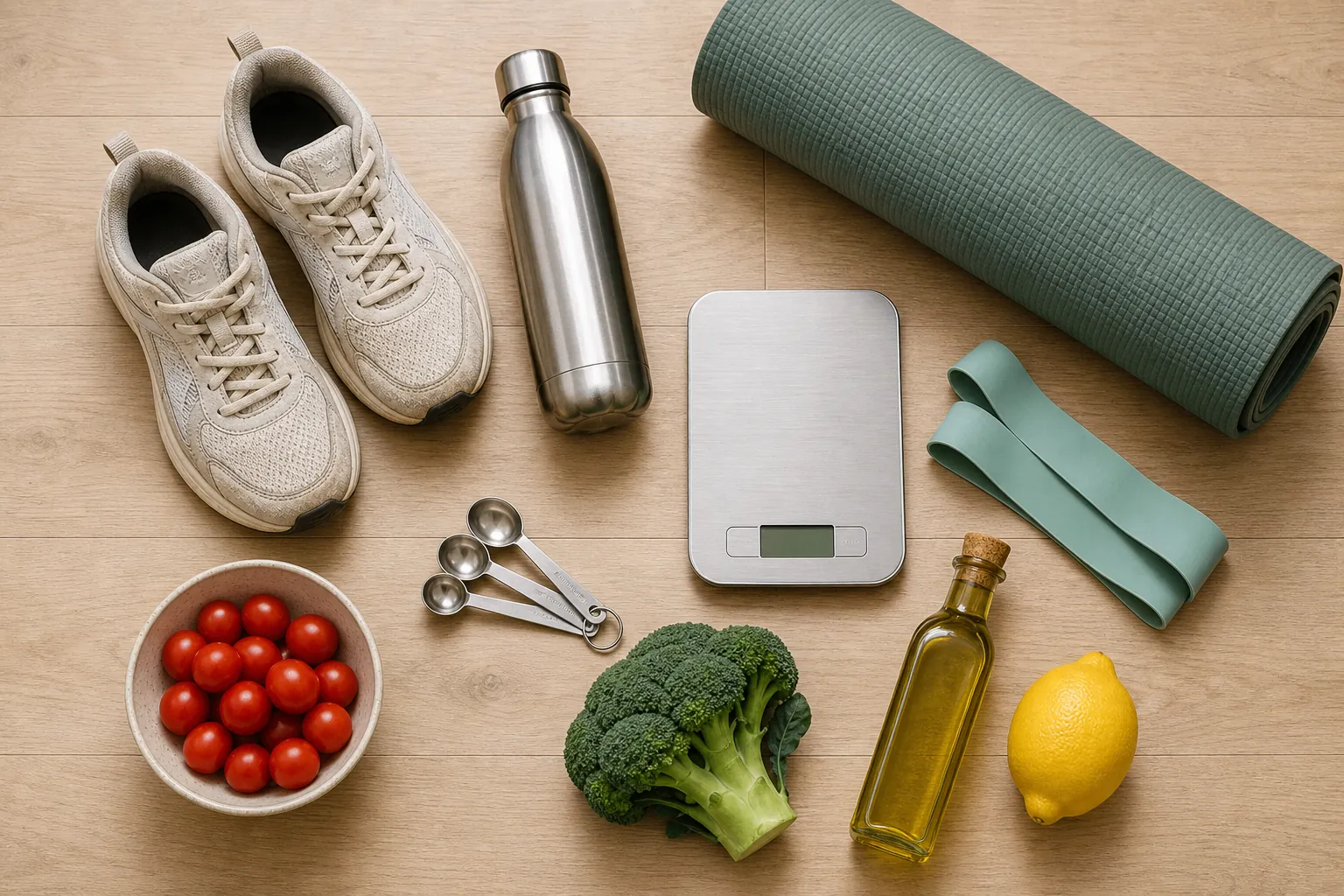
A $0–100 setup can cover walking shoes you already own, a basic mat, a resistance band, a water bottle, and a simple step-tracking habit. A $100–300 setup can add a small cardio tool if space and joints justify it. If you are trying to decide how much cardio equipment you actually need, a guide like how much home cardio is enough is more useful than buying the biggest machine first.
Boxing belongs in the margins
Boxing makes better headlines than dog walking, so it tends to get overpromoted. Goodman’s own description was specific: before COVID, he did an hour to an hour and a half of hitting mitts, hitting bags, and learning footwork, and he said he never sparred [7]. That is conditioning and skill practice, not a fight camp.
The home translation should stay gentle: shadow boxing, light bag taps, stance practice, or low-impact intervals with no jumping and no contact. If shoulders, wrists, balance, or hips object, skip it. Nothing in the public record suggests boxing was the single cause of the weight loss, and it is not the part most people need first.
If you already enjoy bag work, keep it controlled: three to six short rounds, easy footwork, long rests, and no sparring. Apartment users should also think about noise and mounting before buying equipment; a review like the FightCamp apartment workout review is the right kind of filter here.
The diet pattern: Mediterranean-style, with portions doing the quiet work
The reported food approach was Mediterranean-style eating: fish, nuts, olive oil, vegetables, fruit, and a broader shift away from sugar and alcohol [3][4][6]. That description is useful because it tells you the direction without pretending there was a magic menu. It also leaves room for the less glamorous part: portions.
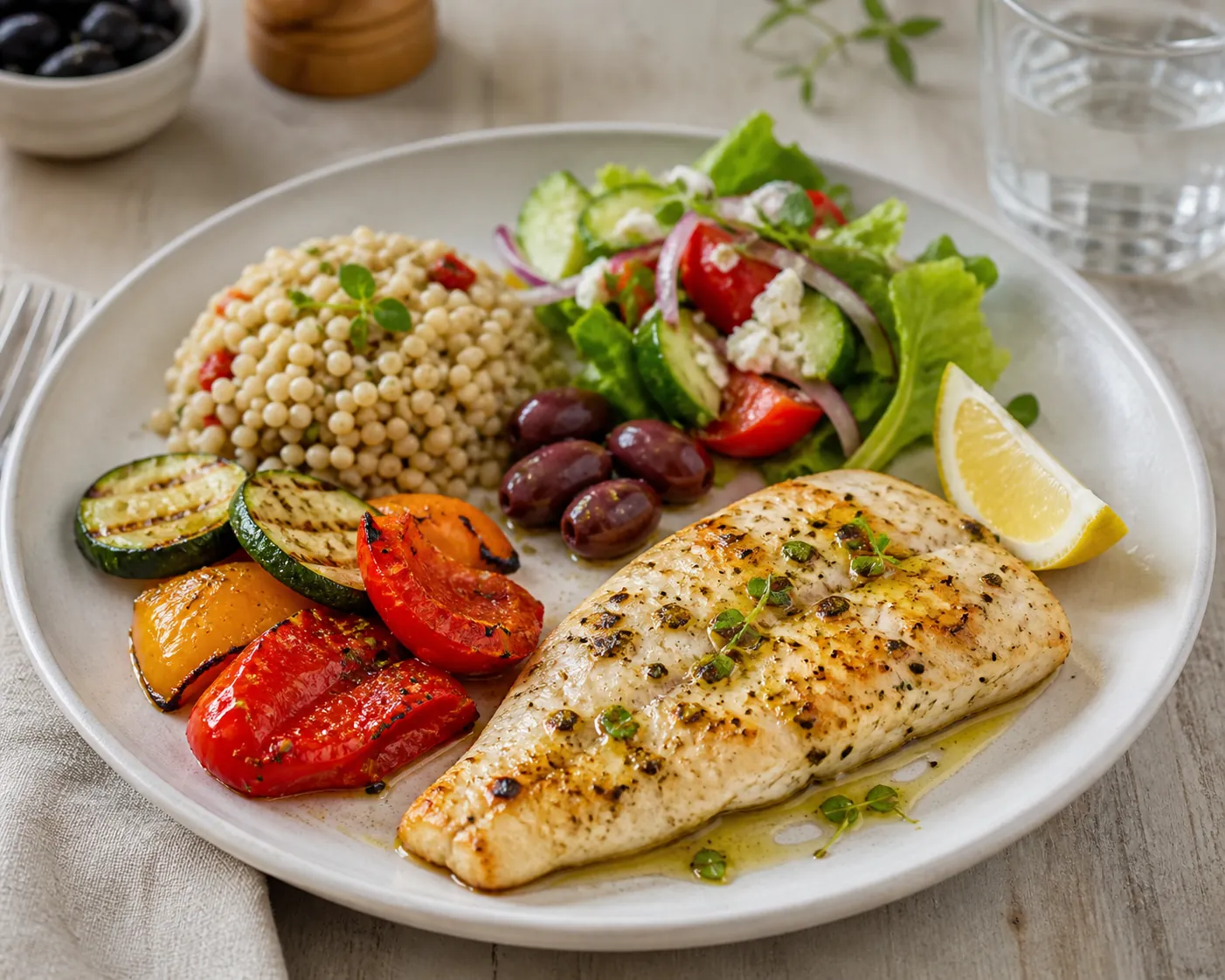
A Mediterranean-style plate can still become too large. Olive oil, nuts, grains, and restaurant portions can quietly add up. The home version should make the plate look generous but bounded: protein, vegetables, a measured starch or grain, a controlled amount of fat, and water or an unsweetened drink.
| Meal part | Home version | Portion-control cue |
|---|---|---|
| Protein | Fish, chicken, eggs, Greek yogurt, beans, lentils, or tofu | Put the protein on the plate first so the meal is not built around bread, pasta, or snacks. |
| Vegetables and fruit | Salad, roasted vegetables, tomatoes, peppers, greens, berries, citrus | Use these to add volume before adding more calorie-dense foods. |
| Fats | Olive oil, nuts, olives, avocado | Measure or pre-portion at first; “healthy” fats are still easy to overpour. |
| Carbohydrates | Beans, lentils, potatoes, whole grains, couscous, oats, whole-grain bread | Choose one main starch per meal instead of stacking several. |
| Sugar and alcohol | Reduce sweet drinks, desserts, candy, and routine drinking | Make the default boring: water, coffee, tea, or another unsweetened option. |
A reconstructed weekly home routine
This is the practical version of the documented habits. It is not Goodman’s official plan. It assumes an adult who wants meaningful weight loss, prefers home training, and needs low-impact options. If you have major joint pain, a recent surgery, dizziness, chest symptoms, or a medical restriction, this is a conversation for a clinician, not a reason to force through a celebrity-inspired plan.
| Day | Movement | Food focus |
|---|---|---|
| Monday | Walk 10–25 minutes. Add 10–20 minutes of easy treadmill, elliptical, or bike work if tolerated. | Mediterranean-style dinner: protein, vegetables, one starch, measured olive oil or nuts. |
| Tuesday | Walk in two short sessions. Optional 10 minutes of mobility or easy bodyweight movement: sit-to-stand, wall push-up, band row. | Cut the obvious sugar source first: sweet drink, dessert habit, or snack bowl. |
| Wednesday | Low-impact cardio 20–35 minutes, or split it into two shorter sessions. | Use a portion cue at lunch: plate the meal once instead of eating from containers. |
| Thursday | Walk only, at an easy pace. If steps are low, add one extra small walk after a meal. | Build the meal around fish, beans, lentils, chicken, or another protein before adding extras. |
| Friday | Optional gentle boxing-style conditioning: shadow boxing or light bag work in short rounds. No sparring, no jumping. | Keep alcohol out of the default routine, especially if it triggers snacking. |
| Saturday | Longer easy walk, flat route preferred. Stop before joints turn the session into a setback. | Prepare one simple repeat meal for the next few days. |
| Sunday | Recovery walk or full rest. Light stretching if it feels good. | Review portions, groceries, and the next week’s walking windows. |
The strength and mobility pieces in this table are writer reconstruction, not reported Goodman details. They are included because many adults in the 40-to-70 range do better when walking is supported by basic leg, hip, back, and upper-body capacity. Keep them easy. This routine is built around returning tomorrow, not proving anything today.
For joint-conscious readers, the closest related home-training lens is not a maximal workout; it is something like a heart-healthy home workout routine or, when appropriate, a cautious look at knee surgery recovery exercises at home. Goodman’s public history makes low-impact framing sensible, but it does not make any single exercise universally safe.
What the evidence says about these ordinary habits
The research does not prove that walking alone causes a 200-pound loss. It does make the walking emphasis feel plausible as part of a long-term health and weight-management system. A 2025 systematic review and dose-response meta-analysis in The Lancet Public Health found that higher daily step counts were associated with lower risk across several health outcomes, while also showing that benefits can appear below the famous 10,000-step mark [10].
That matters for the reader who sees 10,000 to 12,000 steps and immediately feels disqualified. Harvard Health’s discussion of a 2019 JAMA Internal Medicine study reported that among older women, about 4,400 steps per day was associated with 41% lower mortality than about 2,700 steps, with benefits leveling off near 7,500 steps in that study [11]. This is observational evidence, not a commandment, but it supports the idea that going from very little walking to more walking can be meaningful.
The Mediterranean-diet side also has support, with an important limit. A systematic review in The American Journal of Medicine found the Mediterranean diet produced greater weight loss than low-fat diets at 12 months or longer, but it was not superior to all comparison diets [12]. In plain terms: the pattern is a solid option, especially when it helps someone eat more whole foods and fewer sweets, but it still needs portion control and consistency.
The realistic takeaway from Goodman’s weight loss
Goodman’s own explanation has always sounded more durable than dramatic. In 2016, he said, “I wanted to do it slowly, move, exercise. I’m getting to the age where I can’t afford to sit still anymore” [5]. That line is more useful than any invented celebrity schedule.
The copyable version is a labeled system: walk daily at a level you can repeat, add low-impact cardio when it helps, treat boxing-style work as optional, eat Mediterranean-style meals, control portions, and reduce sugar and alcohol. The impressive part is not that these habits are unusual. It is that they were ordinary enough to keep coming back to for years.
References
- John Goodman shows off 200-pound weight loss at Smurfs premiere, NY Post, July 14, 2025
- John Goodman, 74, shocks fans with unrecognizable new look, Page Six, Aug. 7, 2026
- John Goodman says walking helped him lose 200 pounds, TODAY, 2025
- The secrets behind John Goodman’s 100-pound weight loss, NY Post, Nov. 10, 2015
- John Goodman Reveals Inspiration for Massive Weight Loss, ABC News, March 2016
- John Goodman weight loss, TODAY
- John Goodman Interview: The Righteous Gemstones, The Big Lebowski, SNL, Rolling Stone, June 2023
- John Goodman weight loss, AARP
- John Goodman Suffers Hip Injury on Set of Alejandro G. Iñárritu’s Tom Cruise Movie, Variety, 2025
- Daily steps and health outcomes in adults: a systematic review and dose-response meta-analysis, The Lancet Public Health, 2025
- 10,000 steps a day — or fewer?, Harvard Health Publishing
- Mediterranean Diet and Weight Loss: Meta-Analysis of Randomized Controlled Trials, The American Journal of Medicine
What a small equipment investment adds
We don't have a build tagged to this exact tier yet. Browse all builds.
How often should you repeat this?
See our recovery and rest reference for citation-anchored rest-interval guidance.
Spot something off?
Tell us if a movement, tier assumption, or duration didn't match your experience.