
The short answer
If your room is tight and you want one purchase that gets you lifting now, all in one home gym equipment is usually the smarter start. The compact example is the Bells of Steel All-in-One Home Gym at $1,299–$1,900, and it takes up 54.6"D x 59"W x 81"H while replacing both a squat rack and a functional trainer [1]. A separate build with a rack, functional trainer, bench, barbell, and plates lands around $2,500–$5,000+ and needs 50–80+ sq ft [2].
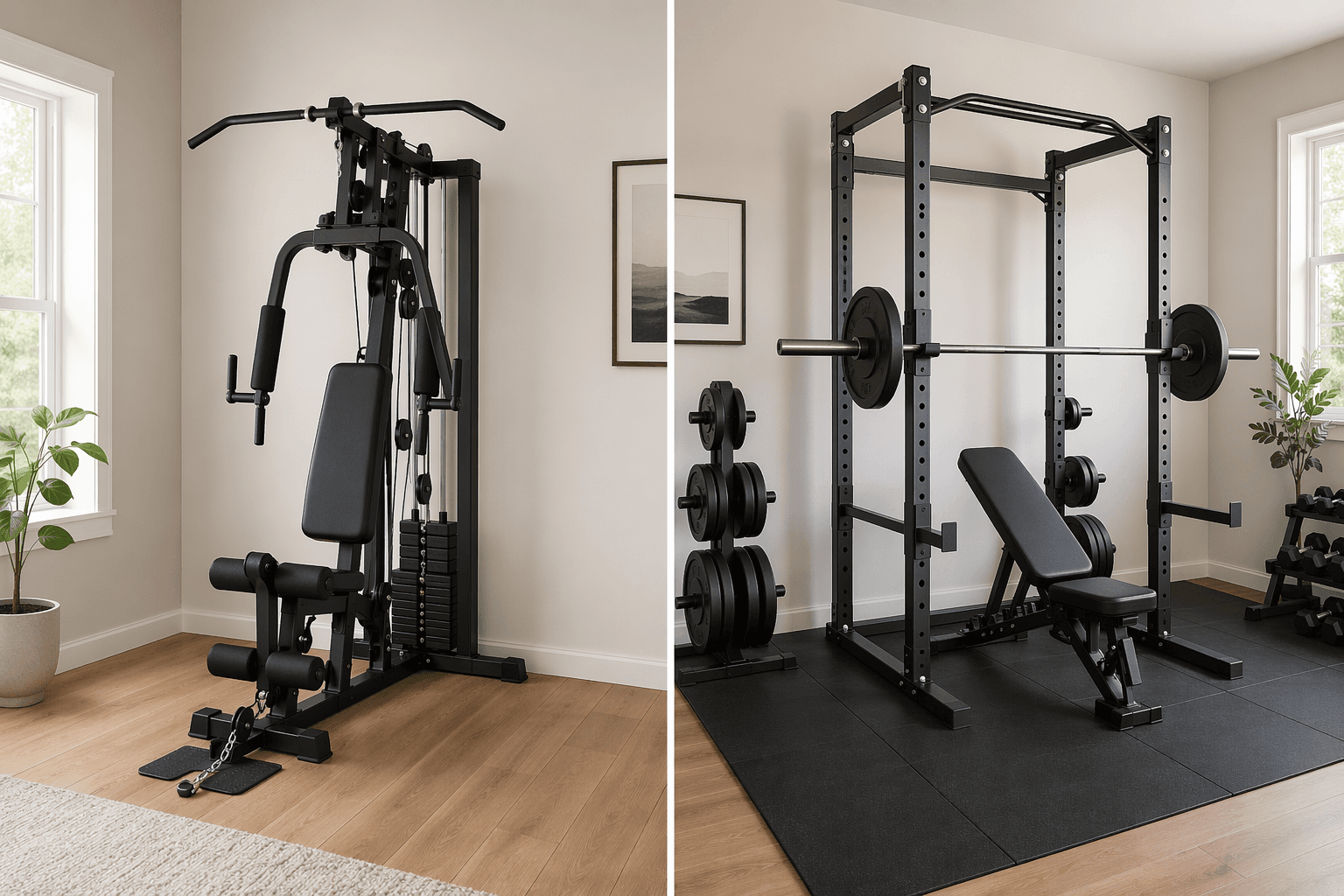
| What you’re comparing | All-in-one machine | Separate pieces |
|---|---|---|
| Typical starting cost | $1,299–$1,900 for the Bells of Steel example [1] | $2,500–$5,000+ for a comparable rack-and-attachments build [2] |
| Space used | 54.6"D x 59"W x 81"H [1] | About 50–80+ sq ft [2] |
| What it gives up | Some movement freedom, especially on Smith-style units [3] | More open barbell movement and easier part-by-part changes |
| What it protects | Floor space and upfront cash | Long-term flexibility and repairability |
Where the real trade-off shows up
The biggest performance difference is not whether the machine looks complete; it is whether the bar path is fixed. On all-in-ones with a Smith-machine attachment, the guided path can make the first few weeks feel safer and easier, which is exactly why beginners like them. But that same guide becomes the limitation later, because squats and presses stop feeling like free-barbell lifts. FitnessFactory’s 2026 roundup uses the Major Fitness B17 at $4,200 as an example of this kind of compromise [3].
That is why the question is not just whether the machine can do more exercises. It is whether it preserves the movement pattern you actually want to train. For barbell-focused squats and presses, a rack and bar still gives the more natural path. For cable work, single-user beginners, and rooms where every square foot matters, the compact machine can be the better answer even if it is not the purist answer.
The money comparison also changes once you stop looking only at the sticker price. Garage Gym Reviews puts the average commercial gym membership at roughly $65 per month, which is why a lower-to-mid priced all-in-one can reach rough break-even in about 2–3 years compared with paying for a commercial membership [2]. That said, the used market can narrow the gap for separate equipment quickly, so the math is least flattering to the all-in-one when you are willing to buy secondhand and wait.
Separate equipment also wins on the kind of maintenance nobody thinks about during the first month. When pieces age out, modular gear lets you replace one part at a time; a worn barbell is a very different problem from a larger integrated cable system that has to be serviced or replaced as a whole [4]. That is not a luxury feature. It is the difference between keeping the gym alive for years and eventually treating the whole setup like one expensive hallway object.
Who each setup fits
- Choose an all-in-one machine if you are building your first setup, training mostly by yourself, or trying to make a spare room or garage corner feel usable without turning it into a full equipment zone.
- Choose separate pieces if barbell squat and press feel like the core of your training, if more than one person will use the space seriously, or if you would rather upgrade one item at a time than replace a bigger machine later.
- If you are still sorting through machine categories, the all-in-one home gym types breakdown is the quickest way to separate a cable-first unit from a Smith-style system. If you want the budget side first, the home gym cost breakdown is the better companion read.
The cleanest way to decide is to ask which inconvenience you can live with: a tighter footprint and a more guided training feel, or a larger setup that stays modular, repairable, and closer to a free barbell. Compact all-in-one equipment wins on startup cost and footprint. Separate equipment wins on long-term flexibility and barbell authenticity.
References
- Bells of Steel: Which is Better: A Power Rack with a Cable System or a Standalone Cable Machine?
- Garage Gym Reviews: Best Home Gyms (2026) Personally Tested
- FitnessFactory.com: Best All-In-One Home Gym Systems for 2026
- RitFit Sports: Are There Reliable All-In-One Machines Worth the Investment?
Comments
Join the discussion with an anonymous comment.