
I've bought the wrong equipment twice. The first time was a treadmill that collected dust because I hate running indoors. The second was a set of adjustable dumbbells that topped out at 50 pounds — fine for general fitness, useless for progressive overload once I wanted to build real strength.
Both mistakes had the same root cause: I started with budget and space, not with what I actually wanted to achieve. Most roundups organize by price or footprint, which is how you end up with a decent machine that serves the wrong job. The Cleveland Clinic puts it plainly: 'First, reflect on your specific workout goals.' And Men's Health states what should be obvious: 'Different goals call for different equipment.' The equipment that makes you stronger will not make you fitter in the cardio sense, and vice versa.
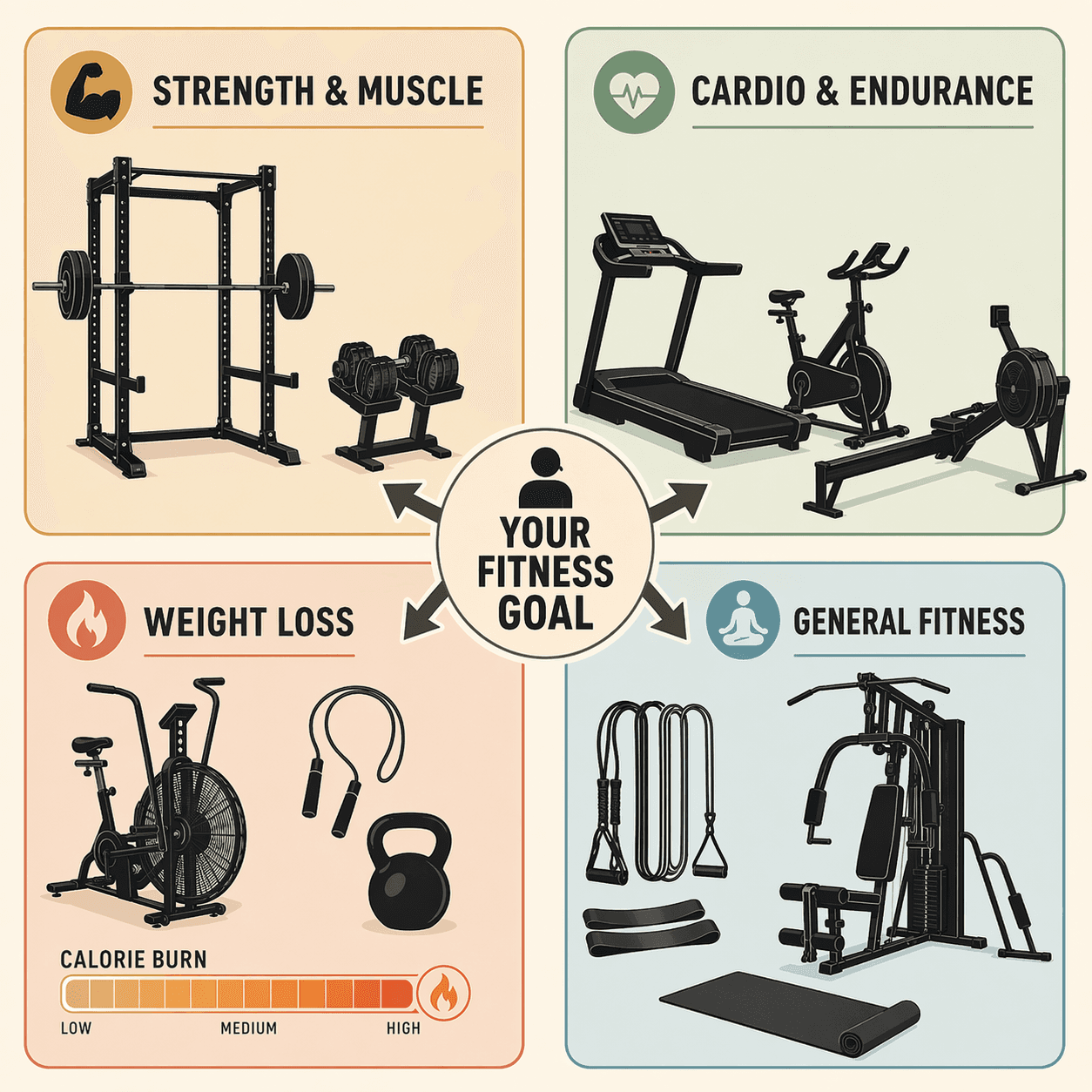
This guide throws out the budget-first template. I'll walk through each major fitness goal — strength, cardio, weight loss, general fitness — and show you the equipment that actually serves it. Budget and space still matter, but they come second.
Start Here: What Do You Actually Want?
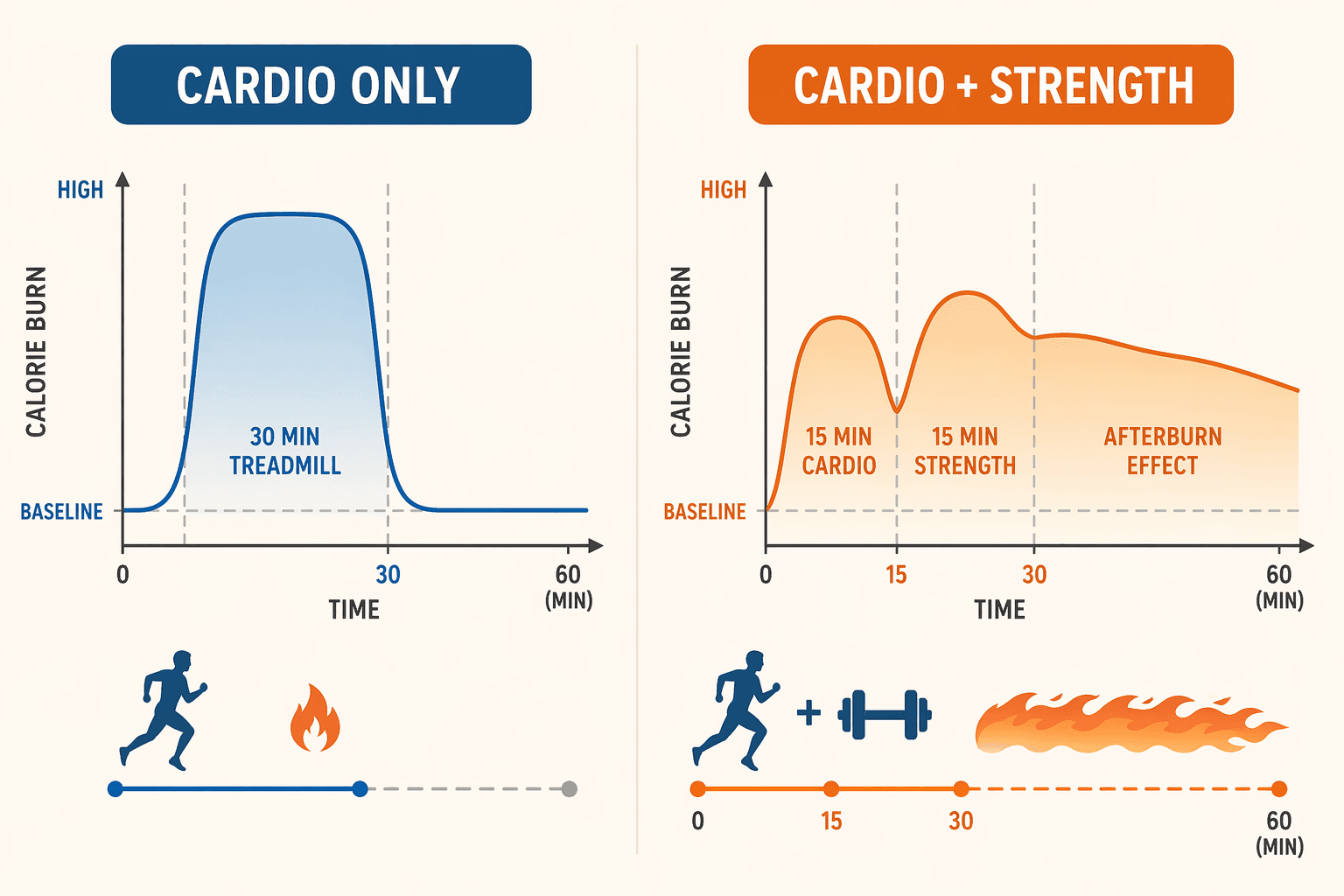
Here's the data that convinced me. Henry Ford Health reports that cardio burns about 10–12 calories per minute, while strength training burns 8–10. That gap is small enough that you could argue either works for calorie burn. But here's the catch: strength training raises your resting metabolic rate long after the workout ends (the afterburn effect). A power rack and barbell are about as useful for sustained aerobic work as a treadmill is for progressive overload. The two do not substitute.
I would not treat those calorie numbers as gospel — the source is a health system blog, not a peer-reviewed study. But they align with what anyone who has trained both knows: you pick the tool for the job. A strength-focused setup can support cardio through circuit training or HIIT, but it is not a primary cardio tool. A treadmill will not make you stronger once you can squat your bodyweight.
So before you look at a single price tag, ask yourself: What is my primary goal?
Strength & Muscle: Where Progressive Overload Demands Heavy Iron
If you want to build muscle or get stronger, you need equipment that allows progressive overload — the ability to add weight in small increments over time. That means a power rack, barbell, plates, and a sturdy bench are the core. Adjustable dumbbells can work for a while, but most top out at 50 or 100 pounds. The PowerBlock Pro 100 EXP goes from 5 to 100 pounds and costs $599 — a solid investment if you have the budget and the space. But even that will not match a barbell for squats and deadlifts.
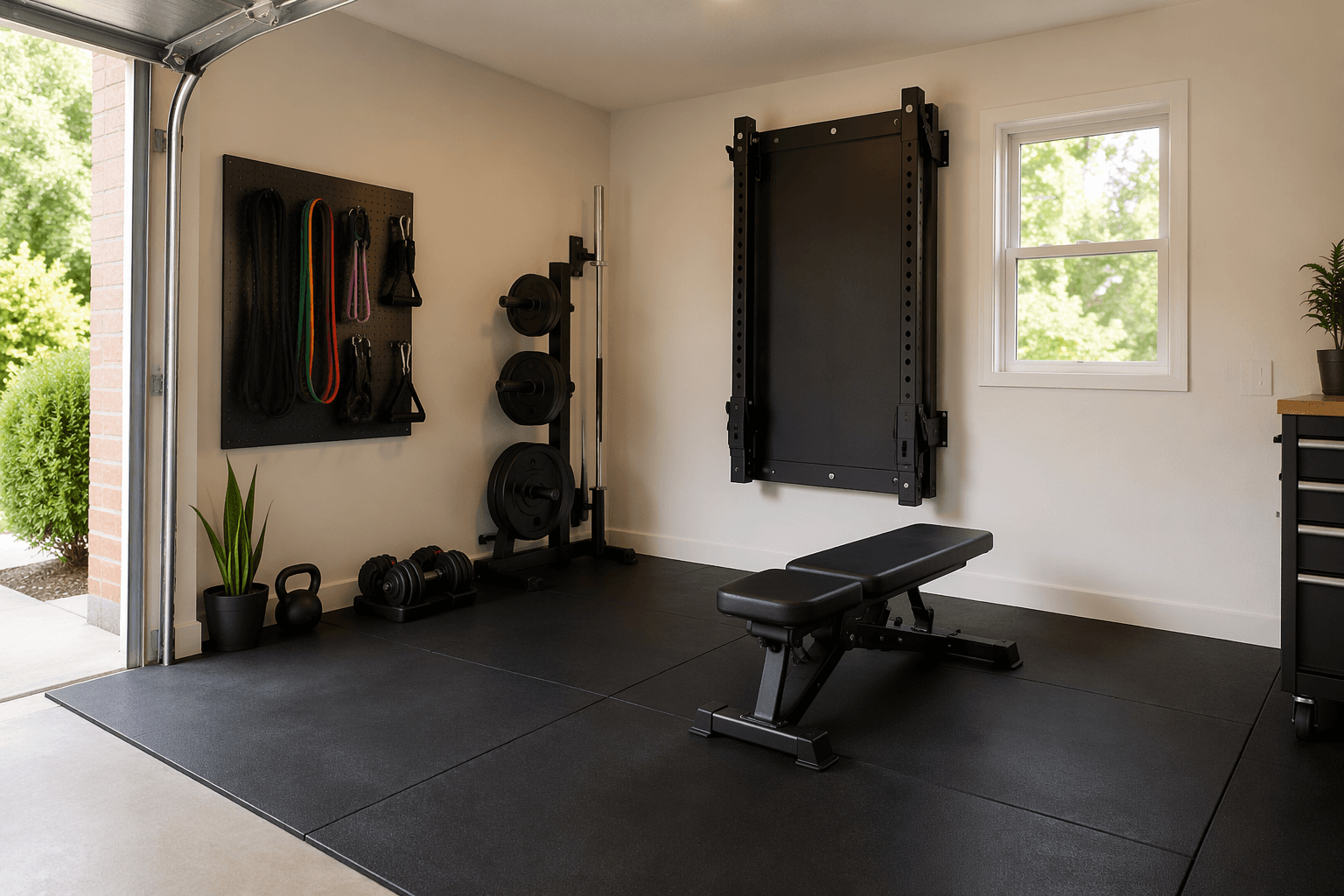
The REP AB-3000 bench ($350) handles 1,000 pounds — more than enough for anyone who does not compete. The Titan T-3 folding rack ($418, 1,100-pound capacity) folds to 5 inches from the wall — a space-saving option that does not sacrifice capacity. If you have a garage or spare room, a full rack is the long-term answer.
| Budget Tier | What You Can Get | Best For |
|---|---|---|
| Under $300 | Resistance bands, adjustable dumbbells (up to 50 lbs), pull-up bar | Foundational strength, maintenance |
| $300–$800 | Adjustable dumbbells (e.g., PowerBlock 50), bench, pull-up bar | Building strength, moderate progression |
| $800+ | Power rack, barbell, plates, bench | Full progressive overload, long-term growth |
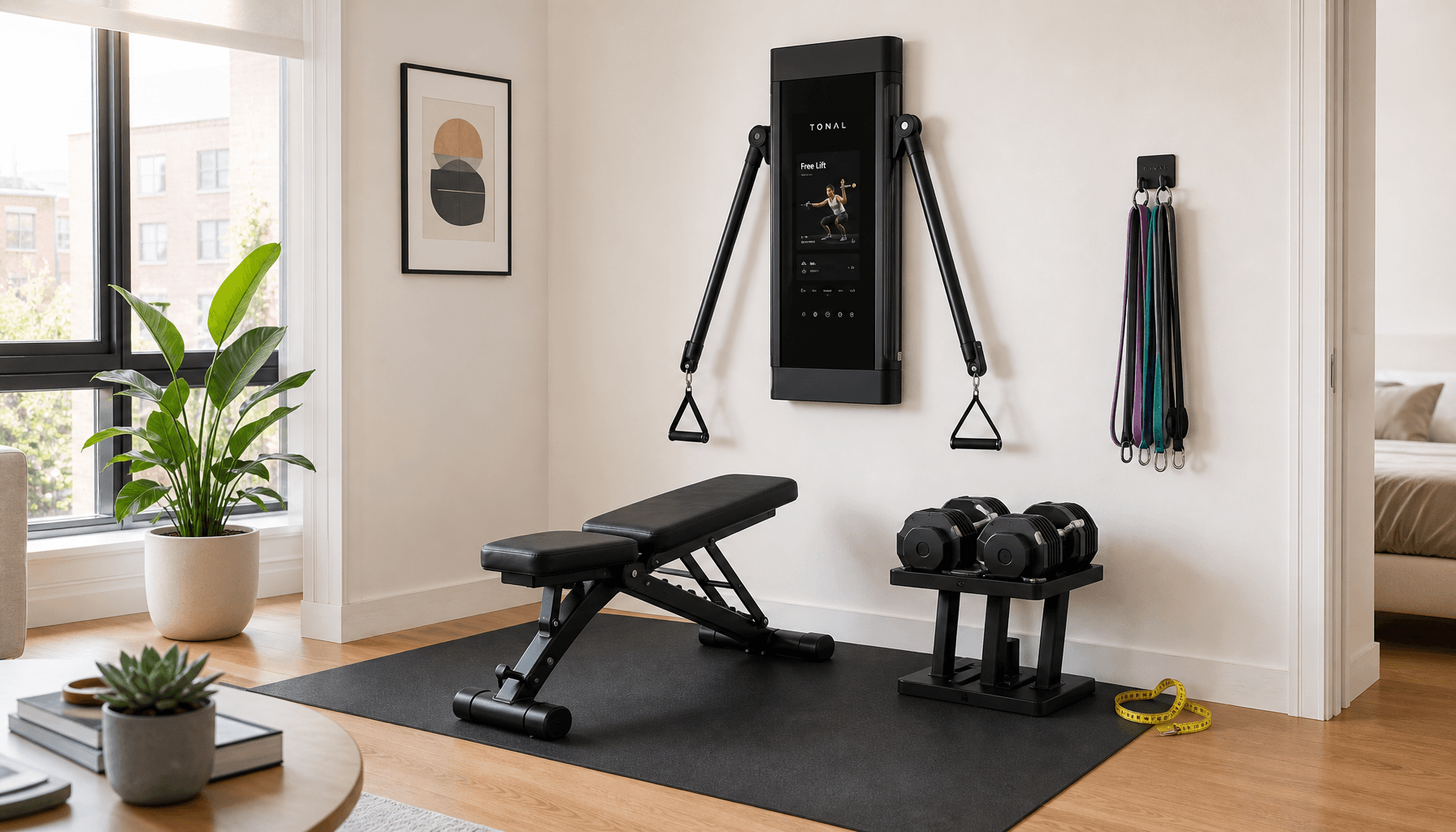
For small spaces, look for folding racks, quiet dumbbells (rubber hex or urethane), and stall mats that protect floors and dampen noise. The PRx Profile PRO ($1,099) folds to 9 inches from the wall and holds 1,000 pounds. It is expensive, but it solves the space problem without compromising capacity.
Cardio & Endurance: Match the Machine to Your Movement Preference
Cardio equipment has one job: elevate your heart rate and keep it there. Mayo Clinic provides calorie burn estimates for a 160-pound person (numbers shift with your weight):
- Running at 5 mph: 606 cal/hr
- Elliptical (moderate): 365 cal/hr
- Cycling under 10 mph: 292 cal/hr
- Rowing (moderate): 423 cal/hr
- Walking at 3.5 mph: 314 cal/hr
But the numbers only matter if you actually use the machine. I would rather have a rower I enjoy than a treadmill I hate. The Concept2 RowErg ($990, 500-pound capacity) is the gold standard — low-maintenance, air resistance, and it compresses into two pieces for storage. A 185-pound person burns about 377 calories rowing fast for 30 minutes, per Harvard research cited by Men's Health.
For small spaces, an air bike like the Bells of Steel Blitz Air Bike 2.0 ($964) takes up about 4 feet by 2 feet and does not need power. A folding treadmill like the NordicTrack Commercial 1750 ($2,499) adds incline/decline but comes with a subscription for its content library.
| Budget Tier | Cardio Options | Space Note |
|---|---|---|
| Under $300 | Jump rope, running shoes, used bike | None |
| $300–$1,000 | Air bike, basic rower (magnetic), walking pad | Air bike ~8 sq ft, rower ~8 sq ft |
| $1,000+ | Quality treadmill, smart rower (Hydrow Wave $1,995) | Folding treadmills ~15 sq ft, need ceiling clearance |
Weight Loss: The Case for Both Burn and Afterburn
The biggest mistake people make when buying equipment for weight loss is assuming cardio alone will do the job. It will not — at least not efficiently. The Henry Ford Health comparison shows cardio at 10–12 cal/min versus strength at 8–10, but strength keeps your metabolism elevated for hours. Plus, strength training prevents the metabolic slowdown that happens when you lose weight.
The best weight loss setup combines a high-calorie-burn cardio machine with basic strength tools. And you do not need to spend much. A jump rope can burn over 600 calories per hour at a vigorous pace. A kettlebell (say, a 35-lb for women, 53-lb for men) delivers both strength and cardio in one movement. Throw in resistance bands for rows and presses, and you have a full-body fat-loss toolkit for under $100.
A 2019 meta-analysis cited by RitFit found that training with elastic bands can produce similar strength gains to conventional weights. That does not mean bands are as good for maximal strength, but for weight loss purposes? They work.
| Budget Tier | Recommended Kit | Why |
|---|---|---|
| Under $100 | Jump rope, resistance bands, yoga mat | High calorie burn, full-body strength, no space needed |
| $100–$300 | Kettlebell, adjustable dumbbells (up to 50 lbs), pull-up bar | Strength + cardio combo, progressive overload possible |
| $300–$800 | Air bike + kettlebell, or rower + bands | Dedicated cardio plus strength for afterburn |
| $800+ | Quality treadmill + power rack or all-in-one | Serious calorie burn and long-term strength gains |
Mayo Clinic recommends a calorie deficit of 500–750 per day for weight loss of 1–1.5 pounds per week. Equipment that makes you enjoy exercise increases the chance you actually hit that deficit. A cheap setup you use beats an expensive machine you ignore.
General Fitness: When Versatility Is the Goal
If you want a bit of everything — some strength, some cardio, some mobility — a hybrid setup makes sense. All-in-one machines like the Major Fitness B17 ($4,200) or the Bells of Steel All-in-One (starting $1,300) combine a squat rack, cable crossover, and sometimes a pull-up bar in one footprint. They sacrifice weight capacity for versatility — the Bells of Steel has a 300-pound cable limit, enough for most home users but not for someone chasing heavy rows.
Personally, I lean toward a modular approach: a rack, adjustable dumbbells, a bench, and a rower or air bike. That costs around $1,500–$2,000 and covers all bases with no subscription. Garage Gym Reviews estimates that a $1,000–$2,000 setup breaks even against a $65/month gym membership in 1.5–2.5 years. That is a reasonable timeline, but only if you actually use it.
| Goal | Under $300 | $300–$800 | $800+ |
|---|---|---|---|
| Strength | Bands + pull-up bar | Dumbbells + bench + bar | Power rack + barbell + plates |
| Cardio | Jump rope, running shoes | Air bike, basic rower | Quality treadmill, smart rower |
| Weight Loss | Jump rope + bands + mat | Kettlebell + air bike | Rower + power rack combo |
| General Fitness | Bands + mat + suspension trainer | Adjustable dumbbells + bench + air bike | All-in-one or rack + dumbbells + rower |
| Goal | Apartment/small space | Spare room (50–100 sq ft) | Garage/large space (100+ sq ft) |
|---|---|---|---|
| Strength | Folding rack + adjustable dumbbells | Semi-full rack + barbell + plates | Full power rack + cable machine |
| Cardio | Air bike, walking pad | Rower, folding treadmill | Full-size treadmill, spin bike |
| Weight Loss | Jump rope + bands + kettlebell | Rower + kettlebell | Rower + rack + barbell |
| General Fitness | All-in-one compact machine | Modular: rack + dumbbells + air bike | Separate zones for each modality |
Your First Purchase: A Goal-Driven Checklist
Here is the decision process I wish I had followed:
- Write down your primary fitness goal. One goal. Not 'a mix of everything.' Pick the one that matters most to you right now.
- Pick the essential piece of equipment that directly serves that goal. For strength, that is a way to do progressive overload — a rack and barbell, or heavy adjustable dumbbells. For cardio, it is a machine you enjoy using. For weight loss, it is a combination of a high-burn cardio tool plus strength bands or a kettlebell.
- Then fit that piece into your budget and space. The Goal × Budget and Goal × Space tables above help you see which options exist at your price point and floor plan.
- Start small. You can always add more later. A jump rope and resistance bands cost under $50 and will tell you whether you actually enjoy working out at home before you invest thousands.
For a deeper look at cost breakdowns, see our Home Gym Cost Breakdown. For detailed small-space configurations, check out the Compact Home Gym by Space Tier guide.
The point is not to buy the most gear. It is to buy the right gear for what you actually want to achieve. Start with your goal; the equipment will follow.
Comments
Join the discussion with an anonymous comment.