

What $500 Actually Costs You
You see a listicle promising a complete home gym for $500. You add a set of adjustable dumbbells, a jump rope, a mat, some bands, and you believe you are done. The total lands around $455: CAP Cast Iron Hex Dumbbells at roughly $1.10 per pound (~$330 for a 300-lb pair), a WOD Nation Speed Jump Rope for $18.99, a decent exercise mat ($30), and a set of resistance bands ($25). That is under $500. What is not included: the inevitable weight upgrade when you outgrow 40-lb dumbbells, the flooring upgrade when you realize mats do not protect against dropped weights, and the new barbell you will buy when you finally want a compound lift. I have watched this pattern repeat. Most people who start here spend another $300–$500 within a year — making the effective cost closer to $800–$1,000.
The breakeven calculations you see elsewhere (2 years for a $1,500 gym vs. a $65/month membership) assume no equipment wear, no replacement plates, no flooring upgrade. That is best-case. Realistic breakeven, with 10-15% annual maintenance cost, looks more like 3–4 years even for a $1,500 setup. I am not saying the $500 setup is a scam. It is a starting point. But if you plan to train seriously, plan to spend more.
The $1,000 Sweet Spot: Barbell Training Within Reach
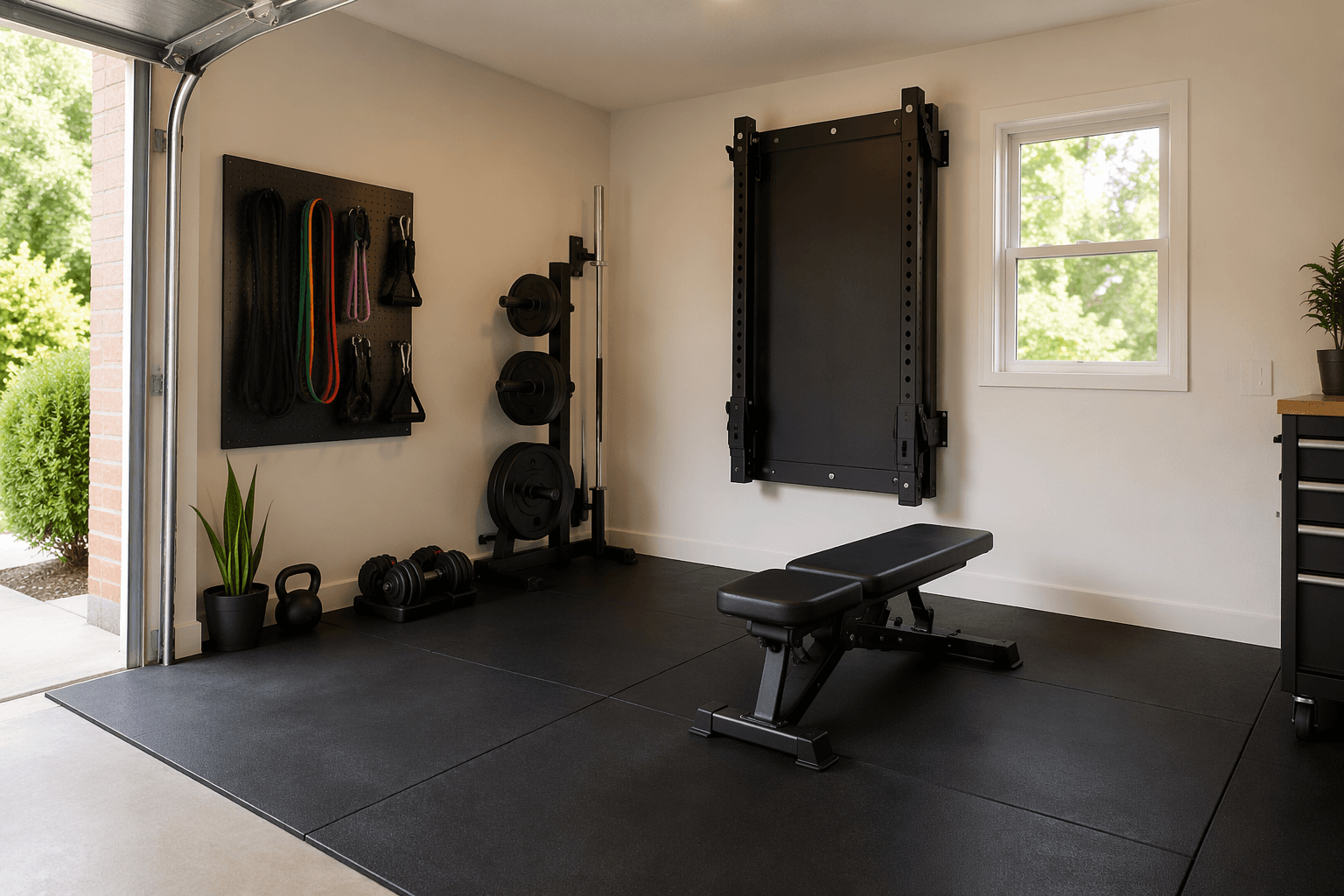
A functional barbell-and-rack setup is the foundation. The numbers: REP PR-1100 power rack at $380, Synergee Games Cerakote bar at $179.95, a Fringe Sport 260-lb bumper set at around $350, and a Major Fitness adjustable bench at $219.99. That lands at $1,129.95 — slightly over the round $1,000 tier. But here is a cost-saving trick: buy a set of lighter plates (say, 160 lbs) from Facebook Marketplace at $0.50 per pound instead of the full bumper set, and add the remaining plates later. That brings you under $1,000. This setup has no subscription fees. The rack has a 700-lb capacity with a lifetime warranty. The bar is a solid all-rounder. The bench goes from -12 to 90 degrees. You can squat, bench, deadlift, row, press — the core movements. And if you ever want to sell, used racks from REP and Rogue retain 90+% of their value. This is the real sweet spot.
One warning: the minimum viable space for a barbell setup is 8 feet by 8 feet. Measure your room before you buy.
The $2,000 Serious Setup: Spend on Rack and Bar, Save on Plates
At $2,000 you can build a gym that lasts a decade. The principle: allocate the largest chunk to the rack and barbell, economize on plates and accessories. Example build: REP PR-4000 rack (~$950), REP Colorado bar ($300), REP FB-5000 competition flat bench ($245), Fringe Sport bumper plates (260-lb set ~$465, $1.79/lb), and a weight storage tree (~$150). Total: ~$2,110. Swap the Colorado bar for the Synergee ($180) saves $120, putting you under $2,000. Why spend on the rack and bar? Safety and longevity. The PR-4000 has a 1,000-lb capacity and a 10-year warranty. The Colorado bar is a lifetime purchase. Plates, on the other hand, are just weight. Used plates from Facebook Marketplace average $0.50/lb — that is 70% less than new bumper plates. You can save hundreds by going used. But be careful: check for rust, mismatched sets, and signs of overloading. A quick checklist: run a magnet over the plate to check for iron (if it sticks, it is iron — fine for most uses); avoid plates with deep gouges or cracks; if you are buying iron, weigh them on a bathroom scale to verify.
This tier also supports a functional trainer if you swap priorities. The Bells of Steel Cable Tower with weight stack starts at $435 and covers hundreds of exercises in a 2.5 sq ft footprint. But if you do that, you give up the barbell. Choose based on your goal: pure strength training → rack and bar; variety and hypertrophy → cable tower.
The $4,000+ Premium Build: The Smart-Gym Subscription Trap Exposed
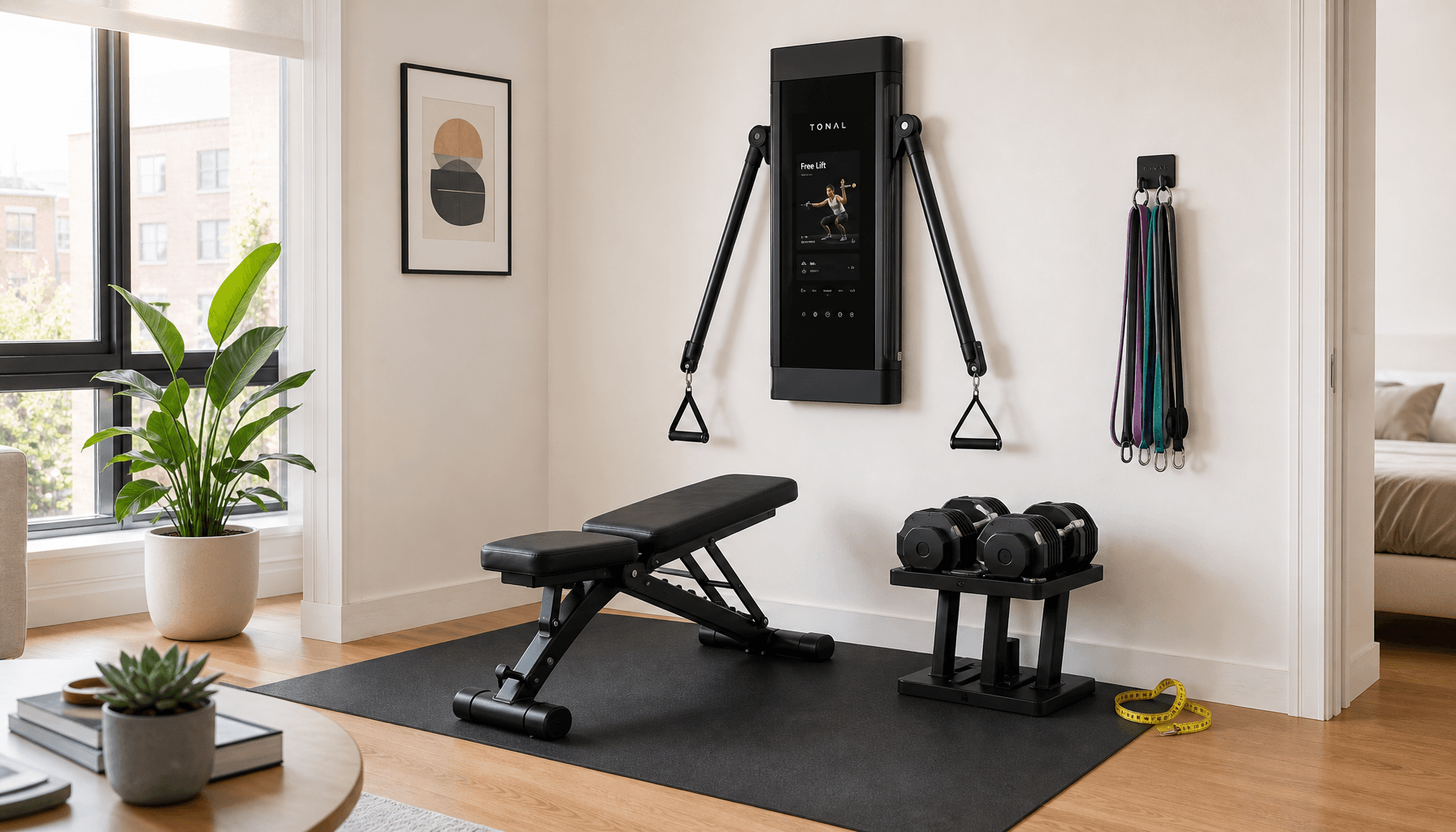
This is where the article earns its keep. You might think a $4,000+ budget buys you a smart gym like Tonal 2. It does. But the cost does not stop at $4,295. Tonal 2 requires a $59.95/month membership. Year one total: $4,295 + $720 = $5,015. Year two and beyond: $720/year. Over five years, a Tonal 2 costs roughly $7,892.
Compare that to a premium traditional build: a Rogue-based home gym (rack, bench, bar, 500-lb bumpers, plate tree, flooring) costs $3,243 delivered. Add a functional trainer like the Bells of Steel Cable Tower ($435) and you are at about $3,678. Even with 10-15% annual maintenance ($400–$550/year), the five-year total is around $5,500–$6,000 — still less than the smart gym. And after five years, your traditional equipment still has resale value (Rogue retains 90%). The smart gym is a 250-lb digital resistance machine that cannot be resold for much.
Now, the convenience of a smart gym is real. Tonal's guided programs, digital resistance, and small footprint are appealing. But if you train more than twice a week, the math does not favor it. A traditional setup's zero ongoing fees and high resale value make it cheaper per workout for any consistent user. For the $4,000+ tier, I recommend a traditional build with a premium rack (Rogue, REP PR-4000), a top-tier barbell, a flat bench, a set of bumper plates, a cable attachment (like the Bells of Steel tower), rubber flooring (stall mats from Tractor Supply at about $50 each), and a cardio machine. That combination delivers more versatility and lower lifetime cost than any smart gym.
The Real Breakeven: Adding Maintenance and Replacements
The classic breakeven claim — 2 years for a $1,500 home gym vs. $65/month gym membership — ignores wear. I would not use that formula. A realistic scenario: budget 10-15% of equipment value annually for mat replacement, plate upgrades, barbell refinishing, or a new cable machine part in 10 years. For a $1,500 gym, that is $150–$225/year.
| Cost horizon | Home gym ($1,500) | Gym membership ($65/month) |
|---|---|---|
| Year 1 | $1,500 + $150 maintenance = $1,650 | $780 |
| Year 3 | $1,500 + $450 = $1,950 | $2,340 |
| Year 5 | $1,500 + $750 = $2,250 | $3,900 |
| Year 10 | $1,500 + $1,500 = $3,000 | $7,800 |

Comments
Join the discussion with an anonymous comment.