
Most searches for best home gym equipment start with the wrong shape of answer. A treadmill, a connected mirror, a squat rack, and adjustable dumbbells can all be good purchases, but they should not be handed to the same imaginary buyer. The useful question is smaller and more practical: what can you afford, where will it live, and what kind of training will it actually support?
That matters because home gym mistakes are usually not subtle. The equipment blocks a closet door. The bike needs a subscription the buyer did not budget for. The bargain bench is too flimsy for the lifting it was supposed to support. The rack technically fits, but there is no room to load plates. None of those problems are solved by another ranked list.
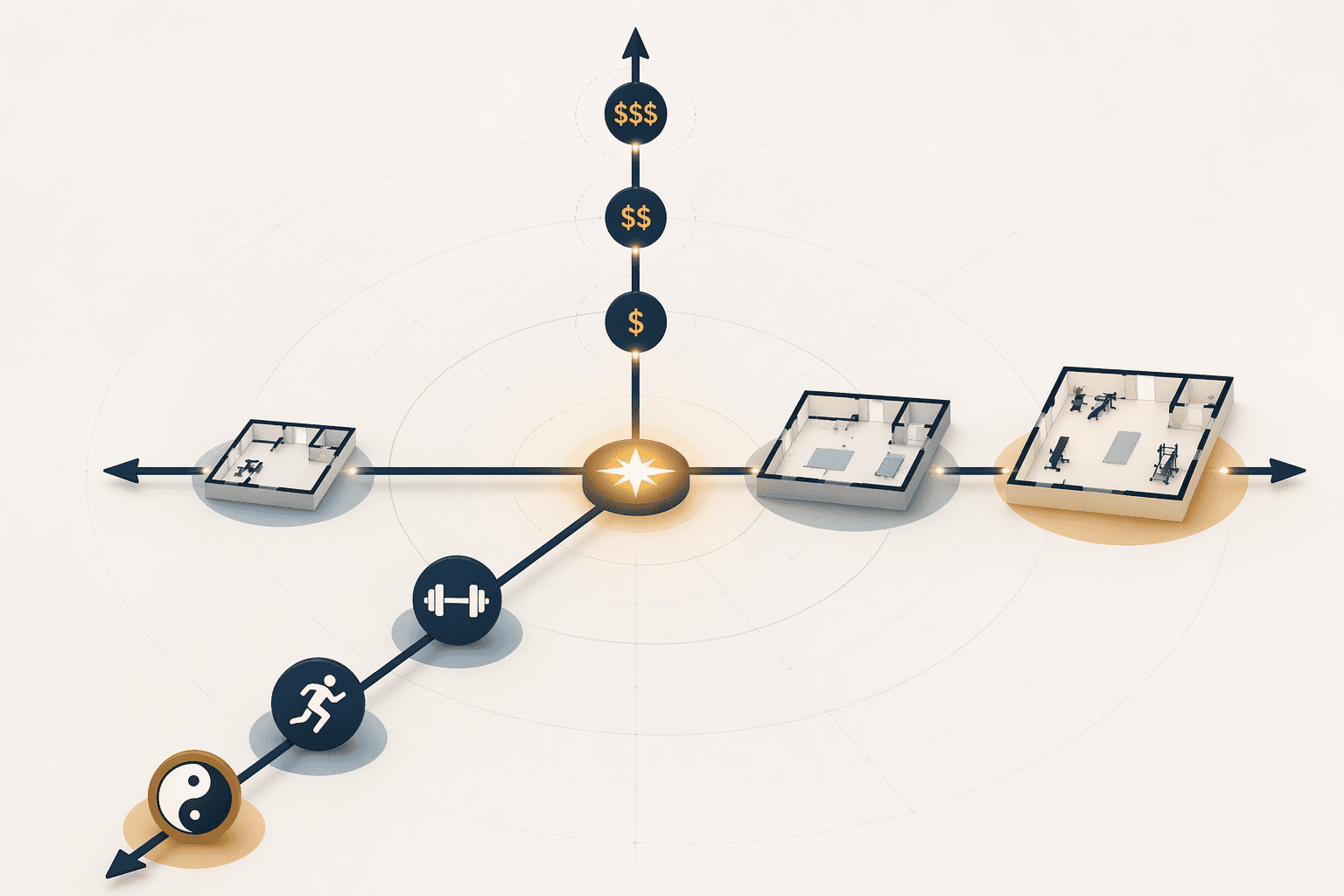
Start With the Three Constraints
Before looking at brands or model names, place yourself on three axes: budget, footprint, and training style. The combinations below are not product recommendations. They are guardrails for avoiding equipment that looks impressive online and becomes awkward at home.
| Constraint | Low range | Middle range | High range |
|---|---|---|---|
| Budget | Under $500 | $500-$2,500 | $2,500+ |
| Usable floor space | Under 50 sq ft | 50-100 sq ft | Dedicated room |
| Training style | Strength-first | Hybrid strength and cardio | Cardio-primary |
The budget axis deserves to be first because many buyers are not shopping for a complete gym. Garage Gym Reviews reported that 38.6% of buyers spend under $500 on a single piece of home gym equipment, while the average complete home gym setup is about $2,837.[1] Those are very different buying moments. Under $500 usually means choosing the first useful tool. Around the average full-setup cost, the buyer is deciding what the room is for. Above that, the main danger is no longer lack of options; it is paying for features, screens, storage demands, and subscriptions that do not match the training plan.
Space is just as decisive. A functional home gym can operate in as little as 50 square feet, and an 8-by-10-foot space can hold a power rack, barbell, and one cardio machine if the layout is planned tightly.[2] That does not mean every 50-square-foot corner should get a rack. It means the footprint has to include the equipment, the path around it, the movement pattern, storage, and the annoyance cost of living with it every day.
Training style is the filter that keeps the first two axes honest. A strength-first buyer should not spend most of the budget on a cardio screen. A cardio-primary buyer with joint concerns should not be guilted into a barbell setup they will not use. A hybrid buyer has the hardest job because every purchase competes for both money and floor space.
The Decision Grid
Use this grid to locate the kind of setup that is likely to make sense before comparing individual products.
| Your situation | Best first direction | What to be careful about |
|---|---|---|
| Under $500, under 50 sq ft, strength-first | Adjustable dumbbells, resistance bands, a stable folding bench, or a simple free-weight setup | Buying too many small accessories instead of one loadable, progressive option |
| Under $500, under 50 sq ft, cardio-primary | A compact bike, walking pad, jump rope if appropriate, or bodyweight-plus-cardio plan | Choosing a machine you cannot leave out or move easily |
| $500-$2,500, 50-100 sq ft, strength-first | Rack or half-rack, barbell, plates, bench, and storage | Underestimating clearance for lifting, plate changes, and bench movement |
| $500-$2,500, 50-100 sq ft, hybrid | Strength foundation plus one compact cardio tool | Splitting the budget so thinly that neither side works well |
| $2,500+, dedicated room, strength-first or hybrid | Higher-quality rack, adjustable bench, cable option, flooring, storage, and selected cardio | Adding equipment before the layout and training plan are settled |
| $2,500+, cardio-primary | Premium treadmill, bike, rower, elliptical, or connected system if the programming is part of the value | Subscription lock-in and a footprint that crowds out stretching, mobility, or strength work |
The grid also explains why two people can receive opposite advice and both be right. A folding bench and adjustable dumbbells can be the best home gym equipment for someone lifting in a bedroom corner. The same purchase can be underpowered for someone with a garage bay, a barbell habit, and enough ceiling height for a rack. A connected treadmill can be excessive for a lifter who only wants warmups, but completely reasonable for a runner who wants structured indoor training through winter.
What Budget Really Changes
Under $500: Buy the First Useful Piece, Not a Miniature Gym
At this tier, the best purchase is usually the one that unlocks repeatable training without creating clutter. For strength-first buyers, that often means adjustable dumbbells, a reliable bench if the exercises require it, resistance bands, or a compact free-weight setup. The key is progression: the equipment should let you make the same movement harder over time.
The common mistake is buying a little of everything: light dumbbells, an ab wheel, ankle weights, a door anchor, a cheap step, a mat, and a balance tool. That pile looks like a home gym receipt, but it may not support a coherent plan. One sturdy, frequently used tool is better than six pieces that each solve five minutes of a workout.
Cardio-primary buyers in this range have to be stricter about storage. A walking pad that can slide away may fit a small apartment better than a budget treadmill that dominates the room. A compact bike can work if it is quiet, stable, and easy enough to use without rearranging furniture. If setup takes ten minutes, usage will usually fall before the equipment wears out.
$500-$2,500: Choose the Center of Gravity
This is the range where a home gym starts to become a system. For a strength-first buyer, the money can go toward a rack or compact rack, barbell, plates, bench, flooring, and storage. That setup is not glamorous, but it covers a lot of training and can be upgraded gradually. It also tends to be less dependent on a company continuing to support an app.
There is a reason strength gear stays prominent in the conversation. Grand View Research identifies strength training equipment as the fastest-growing home fitness category at a 5.97% CAGR, with racks and benches leading sub-category growth at 6.58% CAGR.[3] That growth number is not proof that every buyer needs a rack. It does help explain why racks, benches, and free-weight systems keep showing up in serious home gym discussions: they solve many training problems with relatively durable equipment.
Hybrid buyers in this tier should decide which side gets priority. A solid strength base plus a compact rower, bike, or walking option can work well in 50-100 square feet. What usually fails is trying to buy a full strength setup and a full cardio setup at once, then compromising on every major piece.
$2,500+: Premium Only Helps When It Replaces Friction
Above $2,500, the purchase decision gets less forgiving. More money can buy better build quality, smoother adjustment, quieter operation, cleaner storage, and more immersive programming. It can also buy a very expensive object that decorates the room more than it changes the training.
Smart and connected equipment is the clearest example. Fortune Business Insights reports that smart equipment accounts for 54% of new home equipment purchases.[4] That is adoption, not proof of long-term use. A separate Bloomberg-attributed industry analysis reports that 40% of connected-equipment owners cancel their content subscription within 12 months, though the available citation is through aggregated industry statistics rather than a directly verified Bloomberg primary source.[5] The practical conclusion is narrow but important: do not treat the screen as free value. If the coaching, classes, metrics, or programming are the reason the product works, the subscription belongs in the purchase price.
A premium connected bike can be a good buy for someone who loves instructor-led rides and will keep paying for them. The same bike is a poor match for someone who wants a silent, low-maintenance cardio tool with no recurring bill. A high-end cable trainer can be excellent in a dedicated room if it replaces several stations and supports the buyer's actual program. It is wasteful if it leaves no room for the bench, mat work, or loading area the buyer uses more often.
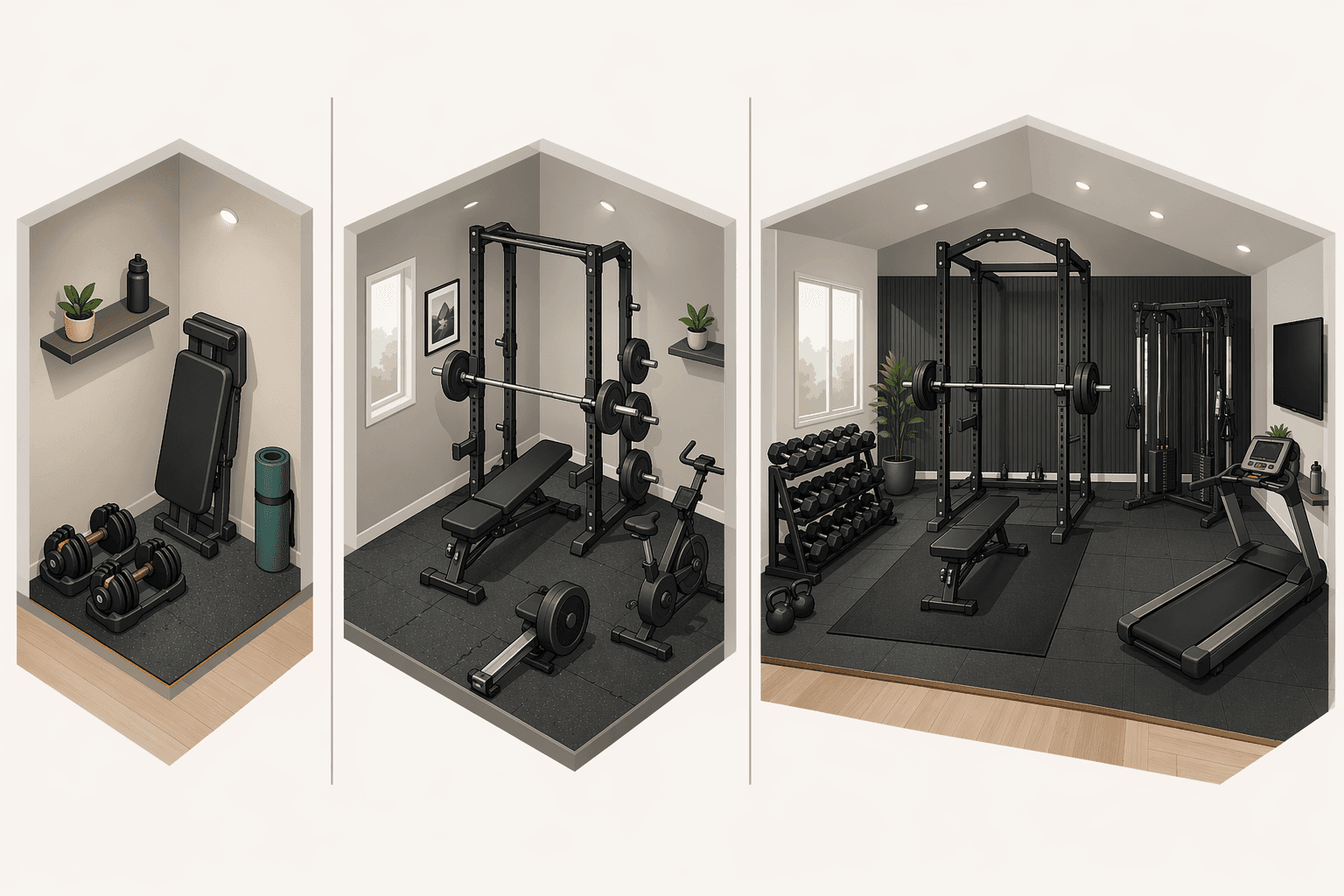
What Space Allows, and What It Punishes
Under 50 Square Feet
Under 50 square feet is a real home gym, but it is not a forgiving one. The equipment needs to store cleanly, move quickly, and avoid turning normal living space into an obstacle course. This is where adjustable dumbbells, bands, a folding bench, a mat, a compact bike, or a walking pad can make sense.
The hard rule is to count working space, not just equipment dimensions. A bench needs room for the person using it. Dumbbells need clearance at the sides. A walking pad needs a safe mount and dismount area. A foldable machine still needs somewhere to go when folded.
50-100 Square Feet
This is the range where strength-plus-cardio becomes plausible. A compact rack, bench, barbell, plates, and one cardio machine can fit if the room is arranged around movement rather than display. The CTX Home Gyms example of an 8-by-10-foot space fitting a rack, barbell, and one cardio machine is useful because it treats layout as a constraint, not an afterthought.[2]
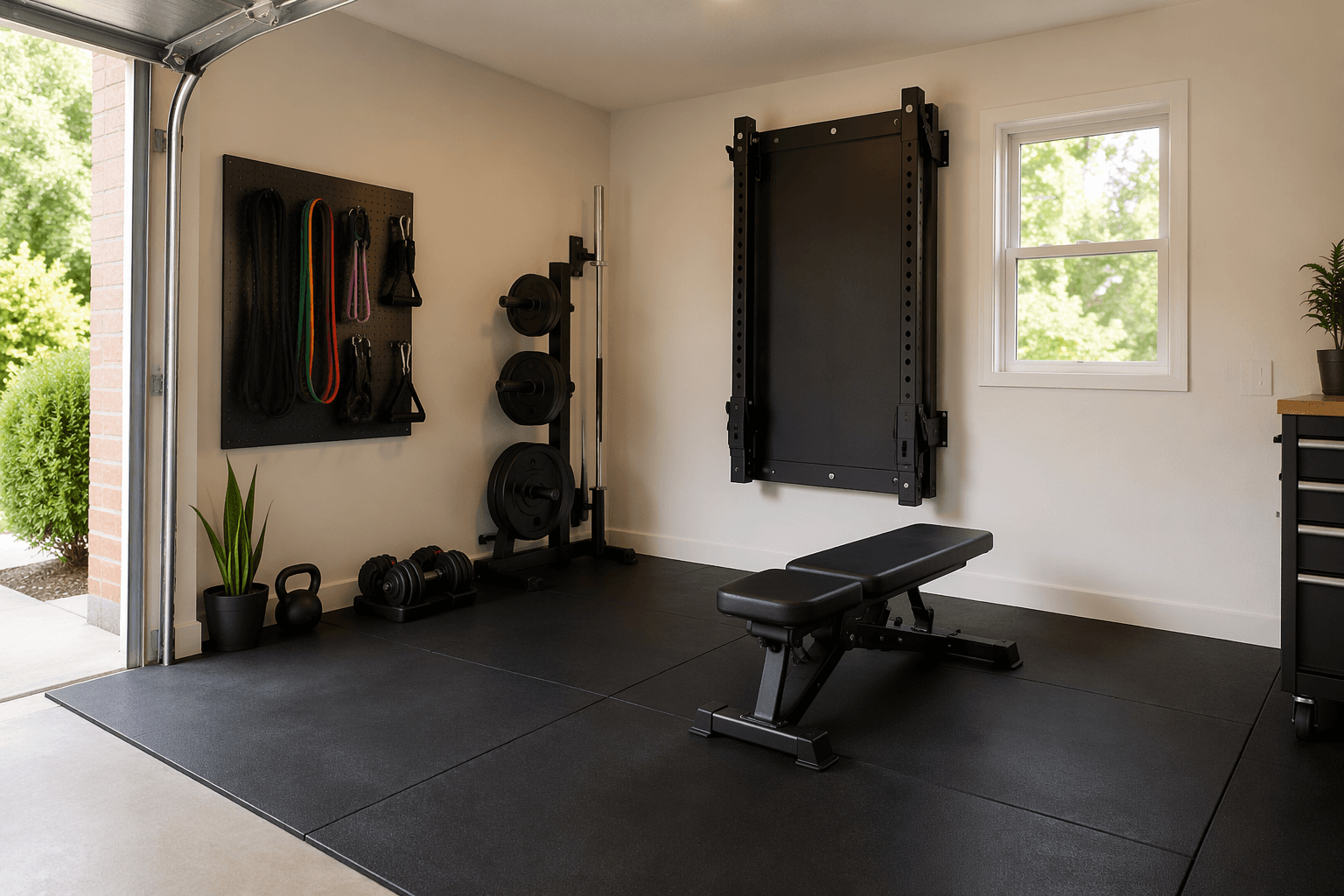
In this footprint, storage becomes part of the equipment. Wall-mounted plate storage, vertical dumbbell storage, a bench that stands upright, and a rack depth that matches the room can matter more than a long feature list. A buyer who skips storage planning often pays for the mistake in daily irritation.
Dedicated Room
A dedicated room removes some constraints and adds others. The question is no longer whether equipment can fit. It is whether the layout supports training without wasted zones, repeated rearranging, or expensive overlap. A treadmill, rack, cable station, dumbbell area, and mobility space can all be reasonable, but only if each one has a job.
Dedicated rooms also make total cost easier to underestimate. Flooring, mirrors, storage, ventilation, delivery, assembly, electrical needs, and subscriptions can become meaningful parts of the project. The best home gym equipment for this buyer is not simply the biggest collection. It is the set that turns the room into a place where training starts quickly and flows without constant negotiation.
Match the Equipment to the Training You Will Actually Do
Strength-first buyers should usually start with load, stability, and progression. That can mean adjustable dumbbells and a bench in a small space, or a rack, barbell, plates, and flooring in a garage or spare room. Cable systems, specialty bars, and machines come later if they solve a real programming need.
Hybrid buyers need fewer duplicates. A rack plus a rower may serve better than a rack, a bike, a treadmill, and a cable station squeezed into a room that cannot absorb them. For many hybrid setups, one serious strength anchor and one cardio tool is enough to begin. The next purchase should respond to a repeated limitation in training, not a sale.
Cardio-primary buyers should choose the machine around impact, noise, ceiling height, stride or ride comfort, and programming. A treadmill is not automatically better than a bike or rower because it is familiar. A low-impact machine may be the right choice if it lets the buyer train consistently. For this group, strength gear can stay minimal at first: bands, dumbbells, a bench, or a compact cable option may be enough to support general strength without taking over the room.
For a more detailed first-purchase sequence, a constraint-based guide such as Which Home Gym Equipment Should You Buy First? A Decision Framework is the right companion to this decision. The main principle is the same: the first purchase should remove the biggest barrier to the training you already intend to do.
Where Smart Equipment Fits
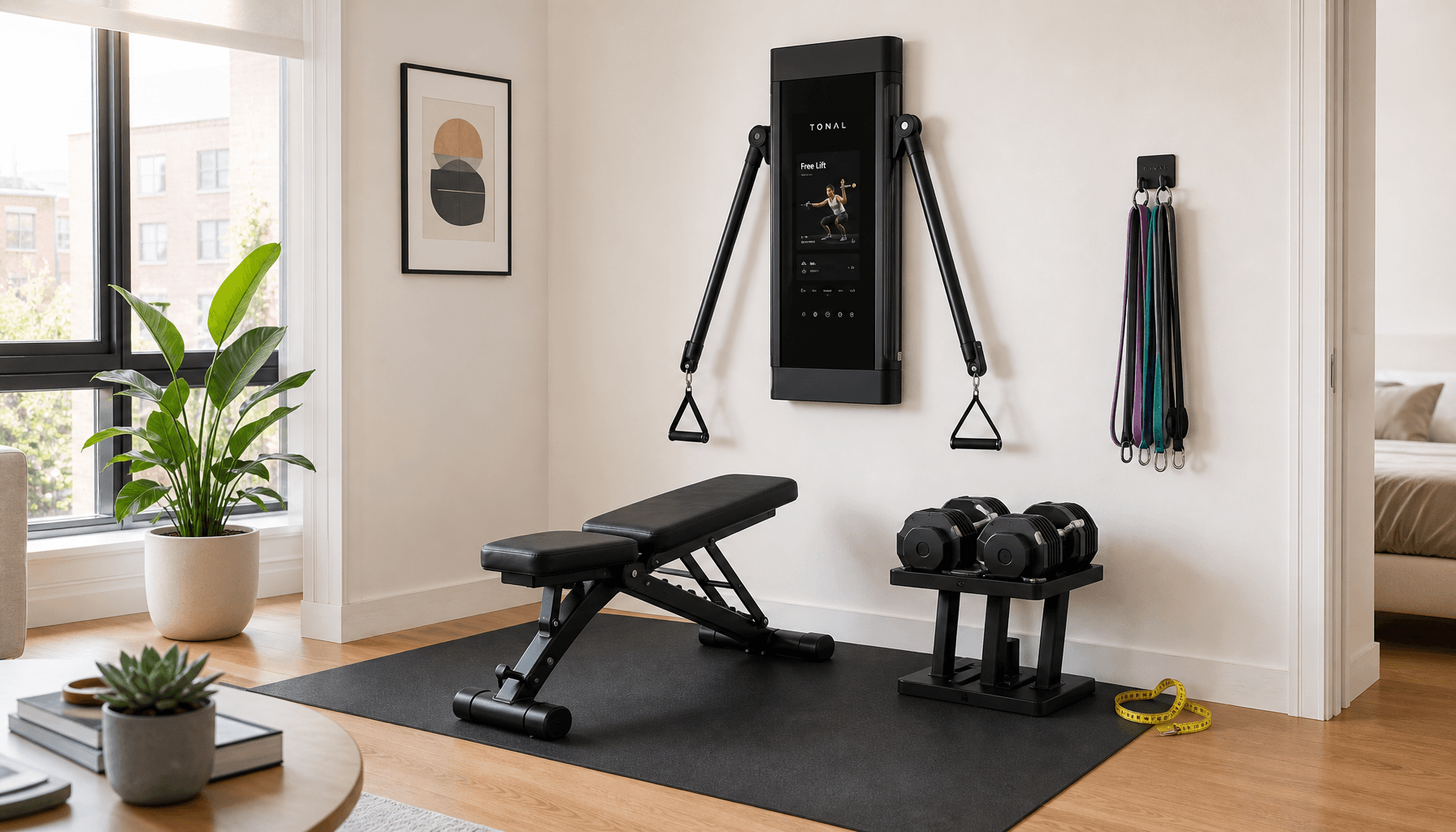
Connected equipment is not a category to reject on principle. It can be excellent when the software is the training experience: coached rides, progressive strength programming, form feedback, performance tracking, or live classes that the buyer genuinely follows. In that case, the subscription is not an add-on. It is part of the product.
The weak purchase is the one where the buyer likes the hardware but only tolerates the subscription. That is where churn matters. If a large share of connected-equipment owners cancel within a year, even with the caveat around the underlying source trail, the buyer should ask what remains after cancellation.[5] Does the machine still work well? Are key metrics, resistance modes, or workouts locked away? Is resale harder because the next owner also inherits the subscription decision?
A simple test helps: price the connected product as if you will keep the subscription for the full period you expect to own it. If that number still feels acceptable and the programming is central to your consistency, it may be a good fit. If the subscription already feels like a bill you hope to cancel, choose simpler hardware.
The Cost Test Comes Last
Cost comparisons are useful only after the likely setup is visible. A $400 dumbbell-and-bench corner, a $2,800 rack-based garage gym, and a $4,500 connected cardio setup do not break even on the same timeline. They also do not replace the same outside spending.
One 2026 total-cost analysis estimates that a home gym breaks even against an average $69-per-month gym membership in roughly 41 months and can save $5,000-$9,000 over 10 years.[6] That is a useful reference point, not a universal promise. The $69 membership figure comes from IHRSA's 2024 reporting and may not reflect every local gym price in early 2026.[6] The calculation also changes if the buyer keeps both the gym membership and the home setup, adds a monthly equipment subscription, moves frequently, or buys equipment that goes unused.
A better personal calculation has four lines: upfront equipment cost, recurring subscription cost, space or installation costs, and the outside fitness spending it will actually replace. If the equipment does not replace a gym membership, class package, commute, or missed-training friction, the return is not financial. It may still be worth buying, but the justification should be honesty, not spreadsheet theater.
A Practical Purchase Logic
Choose the smallest set of equipment that fits your space, supports your dominant training style, and survives the full budget test. Under $500, that usually means one or two useful tools rather than a scattered collection. From $500 to $2,500, it means deciding whether strength, cardio, or hybrid training gets the center of the room. Above $2,500, it means being stricter, not looser, because subscriptions, delivery, layout, and unused features can turn a premium purchase into an expensive mismatch.
The best home gym equipment is not the item that appears on the most lists. It is the equipment you can leave accessible, use repeatedly, progress with, afford completely, and still want in your home after the novelty fades.
References
- Garage Gym Reviews home gym spending and setup cost data, Garage Gym Reviews, 2026
- CTX Home Gyms home gym space planning data, CTX Home Gyms, 2026
- Home Fitness Equipment Market Size, Share & Trends Analysis Report, Grand View Research, 2026
- Home Fitness Equipment Market Size, Share & Industry Analysis, Fortune Business Insights, 2026
- Connected fitness subscription churn industry analysis, Bloomberg / industry analysis
- Home gym total cost of ownership analysis, chestpressmachine.com, 2026
Comments
Join the discussion with an anonymous comment.