
A compact home gym is only compact relative to the room around it. One machine can rest in a few inches of wall depth and still ask for a full workout zone, while another can look modest on paper and still claim more than many apartment corners. The useful question is not which compact gym is “best,” but which space tier your floor plan can actually support.
That distinction matters because the category stretches from a band-based system with a 10" × 19" footprint to an all-in-one machine that occupies roughly 37 sq ft, and those two products do not solve the same problem at all [1][2].
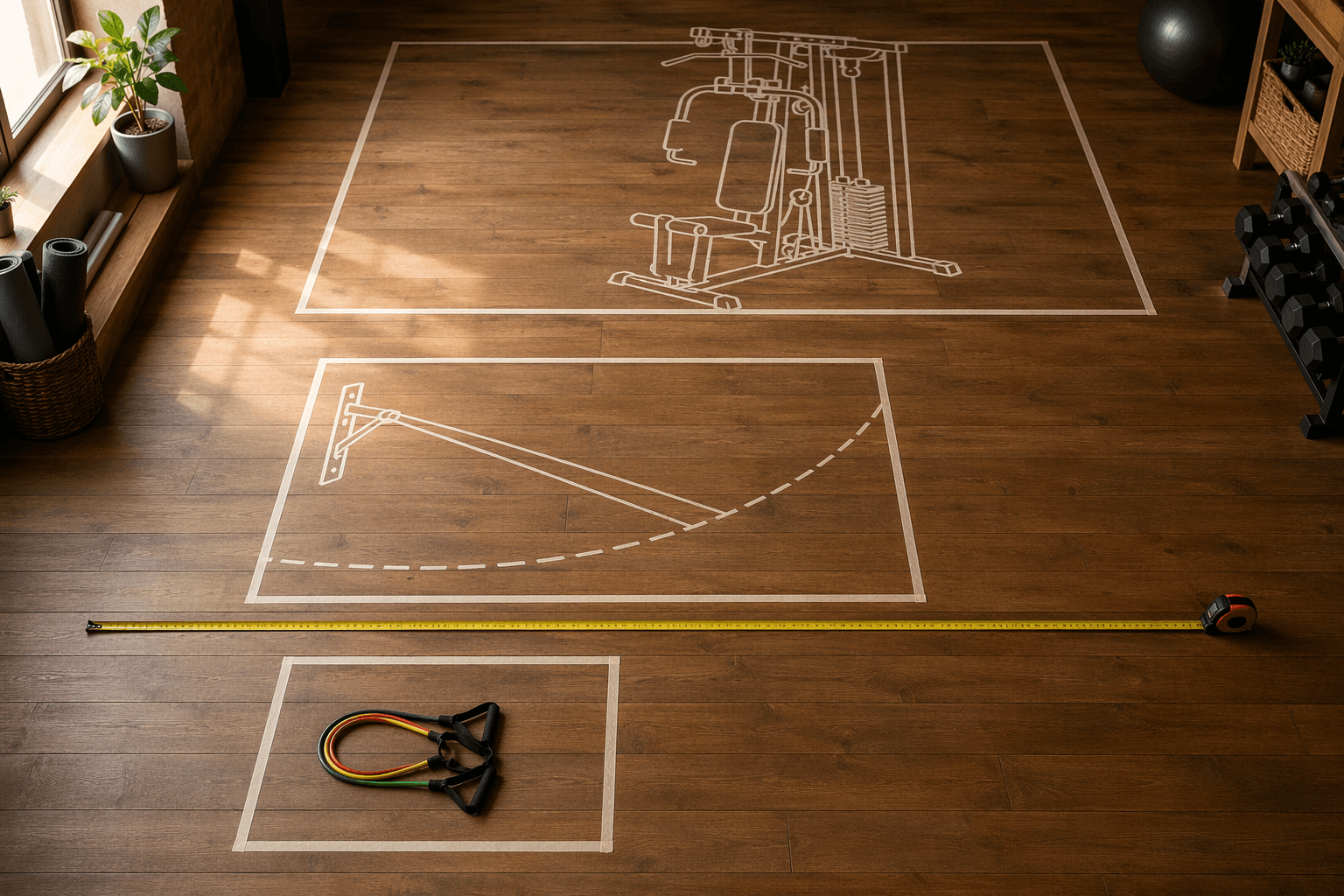
The cleanest way to compare compact gyms
The first spec to check is resting footprint, but it is never the last one. A machine can fold, hang, or roll away and still demand a larger clear area when it is actually in use. For a real-room decision, the useful checklist is simple: storage footprint, in-use clearance, whether the unit can be moved or folded, and whether it needs a permanently reserved zone.
| Space tier | What it tends to include | What you should notice first |
|---|---|---|
| Under 5 sq ft | X3 Bar at 10" × 19"; Speediance Gym Monster folds to 15" × 28" and can be wheeled away [1][3] | Best for rooms that must keep serving another purpose. Check whether the machine needs installation, can be stored between sessions, and whether it can disappear into a closet or corner. |
| 5–15 sq ft | Tonal 2 hangs 5.25 inches from the wall but needs a 7 × 7 ft clear zone; PRx folds to 4 inches off the wall [1][2] | This is the tricky zone where the wall looks clear but the workout envelope is not. Measure the cable or lifting space, not just the depth against the wall. |
| 15+ sq ft | Bells of Steel All-in-One at 54.6" × 59"; Major Fitness B17 at 68" × 78" [2] | This is a dedicated training footprint. The question is no longer whether it fits in a corner, but whether you are willing to commit a permanent area to it. |
Under 5 sq ft: the systems that can genuinely vanish
This tier is where the apartment logic is easiest to understand and the marketing language is easiest to distrust. The X3 Bar is the clearest low-footprint example: it takes up only 10" × 19" and uses resistance bands rather than permanent installation, with resistance that can reach up to 300 lbs [1]. That does not make it a universal answer, but it does make it one of the few compact systems that can coexist with a room that still needs to be a room.
Speediance sits in a different part of the same tier. Its Gym Monster unfolds to 49" × 28", folds down to 15" × 28", and can be wheeled into a closet, which is rare among machines that advertise themselves as compact [3]. That mobility is the real story. A system that can be stored away changes the room between sessions instead of occupying it all day.
For renters, small apartments, and multipurpose rooms, that difference matters more than most feature lists do. If the machine has to share space with a bed, a desk, a stroller, or a hallway path, a reclaimable footprint is more useful than an impressive spec sheet.
5–15 sq ft: where the footprint starts telling half the truth
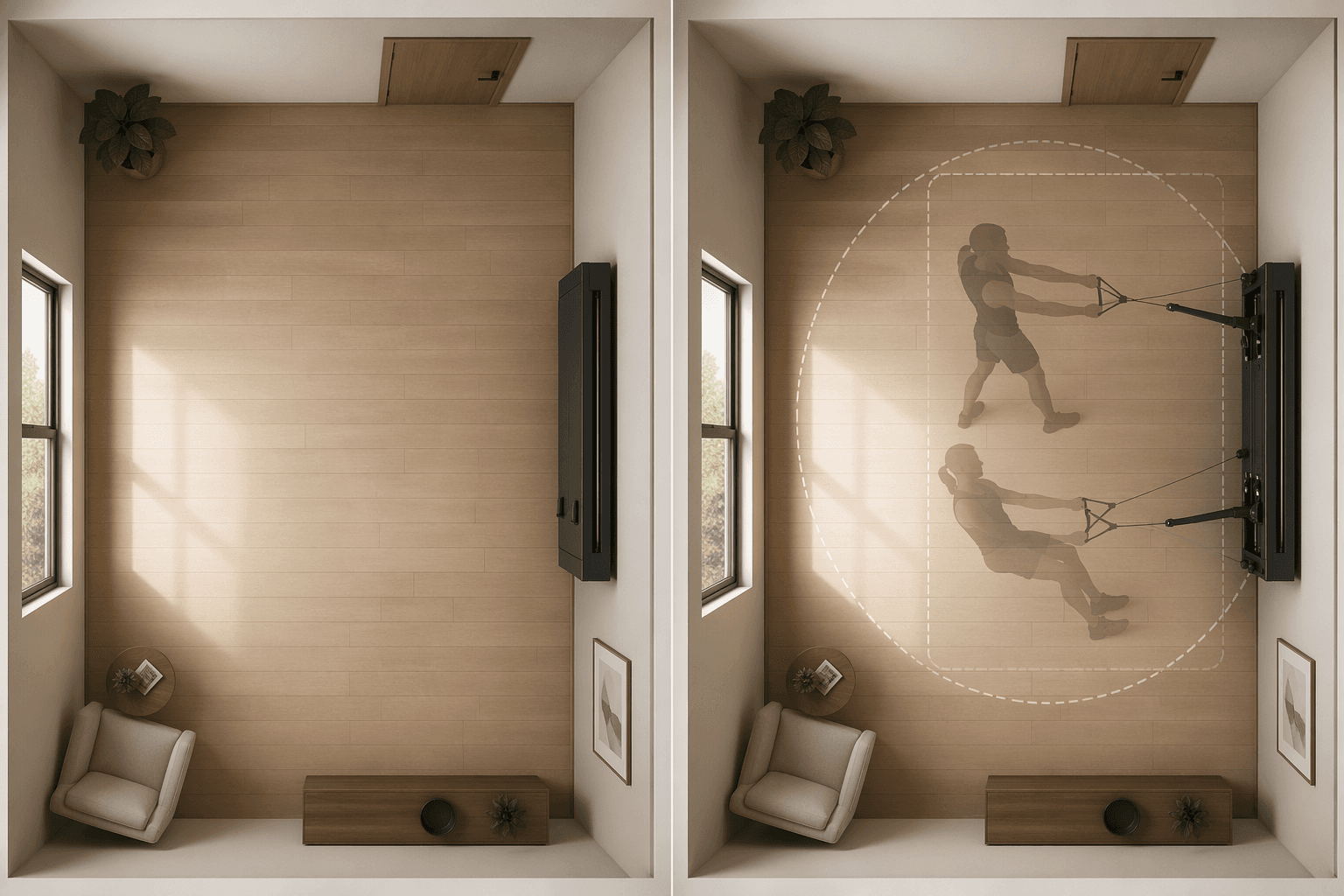
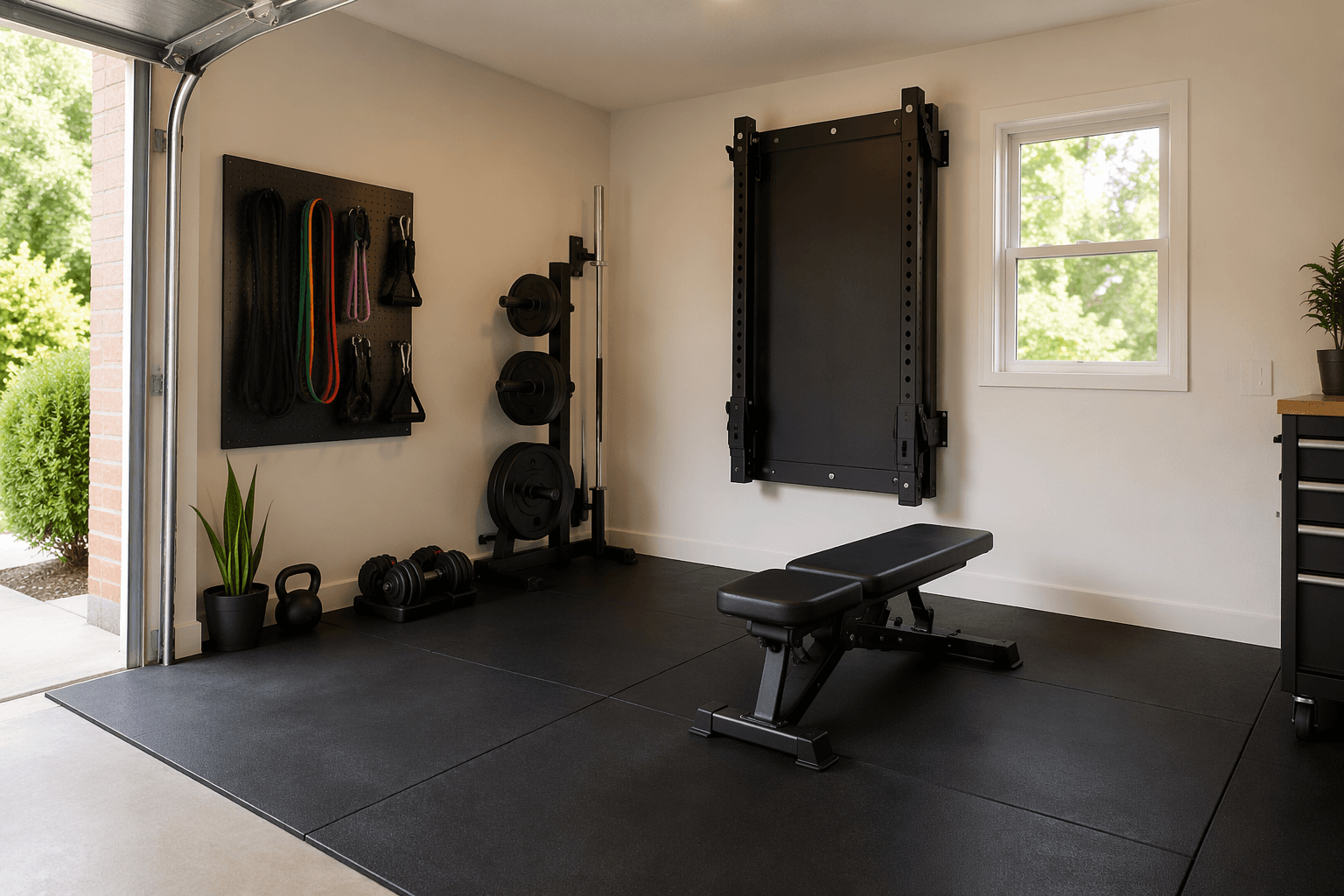
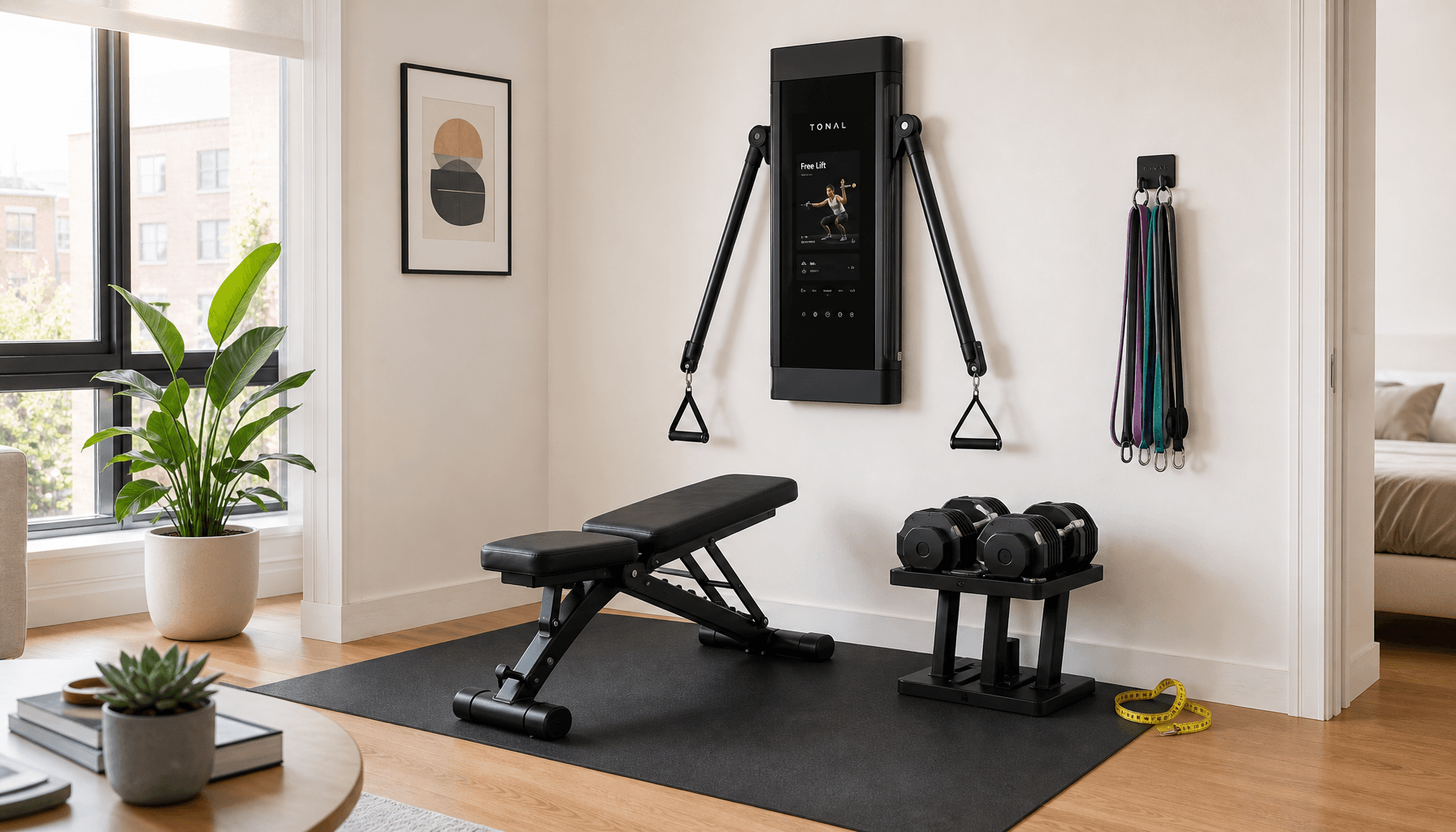
This is the most misleading zone in the category because wall-mounted and foldable systems look almost decorative when they are parked. Tonal 2 hangs just 5.25 inches from the wall, which is easy to read as “small enough for any room,” but the machine still needs a 7 × 7 ft clear zone for safe cable work [2]. PRx creates a similar illusion from a different angle: it folds to just 4 inches off the wall, but the usable lifting area still has to exist when the rack is open [1].
That is why this tier is less about the wall and more about the session. A wall-mounted unit can leave a room visually open between workouts, yet still be a poor fit if a closet door swings into the same area, if a dining table sits too close, or if the user needs to move around the machine to load, pull, or press. The resting footprint is comforting; the workout envelope is what decides whether it works.
15+ sq ft: compact on the internet, dedicated in the room
Once a machine crosses into this tier, the conversation changes. Bells of Steel’s All-in-One Home Gym comes in a plate-loaded version starting at $1,300 and a weight-stack version at $1,900, with a footprint of 54.6" × 59" — about 37 sq ft of floor space [2]. Major Fitness’s B17 is even larger at 68" × 78", and GGR describes it as the largest in the compact category it tested [2].
These are not bad choices because they are large. They are the right choices for buyers who have a permanent training zone and want a more traditional all-in-one experience. The mistake is treating them as if they belong in the same decision bucket as a band system or a foldaway rack. They do not. They demand a room that can stay assigned to lifting.
That is also where price starts to behave like context instead of the main event. A machine in this tier can be easier to justify if the space is permanent and the training plan is serious, but the first question is still whether the floor can carry the commitment.
Why the room matters more than the category label
The phrase “compact home gym” covers too much ground to be useful on its own. Smart gyms, foldable racks, band systems, cable machines, and all-in-one stations can all claim the same umbrella while asking for very different kinds of space. Some need no permanent installation. Some disappear between sessions. Some only look tiny until you step back far enough to train around them.
That is why space tier is the most practical first filter. If the machine must vanish, start under 5 sq ft. If it can live against a wall but still needs a real workout envelope, the 5–15 sq ft tier is the one to study closely. If you have a permanent zone and want a more traditional strength setup, 15+ sq ft is where the larger all-in-one systems make sense.
Once the floor plan is settled, the next decision is much easier. Only then does it make sense to compare smart versus traditional, modular versus all-in-one, or budget versus premium. The expensive mistake is buying something that technically fits but cannot actually be used without rearranging the room every time.
References
- Expert-Tested: The Best Compact Exercise Equipment (2026) — Garage Gym Reviews — https://garagegymreviews.com/best-compact-exercise-equipment
- Best Home Gyms (2026) Personally Tested — Garage Gym Reviews — https://garagegymreviews.com/best-home-gyms
- Best Smart Home Gyms of 2026 — BarBend — https://barbend.com/best-smart-home-gyms/
Comments
Join the discussion with an anonymous comment.