
Nearly every treadmill buyer's guide starts the same way: “Are you a walker, a jogger, or a runner?” Then it hands you a model name. One axis, clear buckets, done. That filter is comfortable until you add a second constraint.
Take two real numbers. The Sole F80 measures 53.8 decibels during walking — quieter than a fridge. The NordicTrack Commercial 1750 warranty is voided if stored in a garage. A runner in an apartment wants the quiet machine but also wants the decline training the 1750 offers. The single-axis filter says “you’re a runner, here’s a runner’s treadmill” and never asks about the room. The filter fails because it never asked about the room.
Four Axes That Actually Matter
Instead of one filter, you need four. Each one changes the recommendation, and the right treadmill emerges only when you rank them and accept the trade-offs. Here they are.

Axis 1: Where Does It Live?
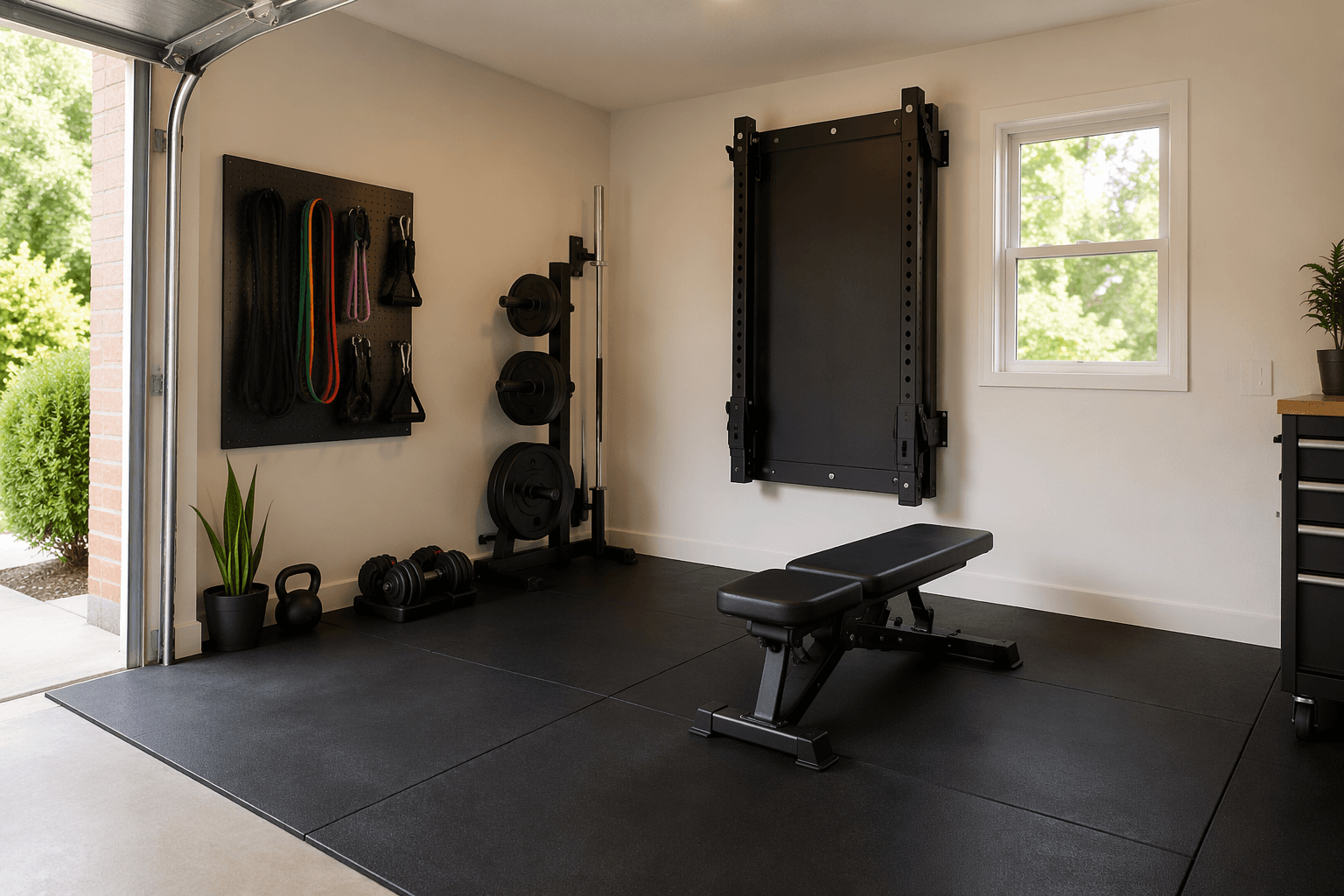
Space isn’t just the footprint on the floor. It’s storage orientation, ceiling clearance, noise transmission, and — for some models — temperature and warranty restrictions. I’ve set up treadmills in apartments, bedrooms, and garages. The garage one is where this axis bites hardest.
A compact folding model like the Echelon Stride-6 folds completely flat to 10 inches tall — you can slide it under a bed. The Horizon T101 uses a one-step hydraulic fold and stands upright, but you still need wall space. The NordicTrack 1750 and Sole F63 also fold upright, but the 1750’s warranty says no garages. Runner's World states that warranty is voided if stored in a garage. If your only available space is a garage, the 1750 is off the table no matter how much you want its decline training.
Ceiling clearance matters, too. Runner’s World recommends at least 15 inches above the tallest user’s height plus deck height. For a 6-foot user on a treadmill with a 6-inch deck, that’s 7 feet 9 inches minimum. Many basements and finished attics miss that mark.

Noise is a space-quality issue, not a feature. The Sole F80’s 53.8 dB is often quoted, but the caveat is important: that reading came from TreadmillReviews.net at a specific walking speed. Other testers use different methodology. The Horizon 7.0 AT measured over 70 dB at running speed — comparable to a washing machine. Noise varies by speed and flooring; a mat deadens transmitted noise. The honest scale is a range with source notes, not a single number.
| Model | Noise (walking) | Noise (running) | Source note |
|---|---|---|---|
| Sole F80 | ~53.8 dB | Not measured | TreadmillReviews.net, single tester, walking pace |
| Horizon 7.0 AT | ~55 dB (est.) | ~70 dB | Garage Gym Reviews, running speed |
| NordicTrack 1750 | ~60 dB (est.) | ~65-70 dB | Multiple sources, range from user reviews |
| Echelon Stride-6 | ~57 dB (est.) | ~65 dB | BarBend, compact motor noise |
For more depth on footprint and neighbor-friendly models, see our treadmill for small apartments guide.
Axis 2: How Hard Are You Going to Use It?
Use intensity isn’t just speed. It’s motor load, cushioning, deck length, and whether the machine will be shared. The CHP guideline is clean: 2.5 CHP for walkers and light joggers, 3.0+ for runners. Frequent incline running pushes the need to 3.5-4.0 CHP. But that rule assumes one user. I’ve seen families buy a 3.0 CHP model for a household with a walker and a runner. The runner’s daily incline intervals bog down the motor after a year. The compromise is shorter motor life or higher upfront cost. The NordicTrack 1750’s 4.25 CHP motor handles both profiles easily, but at a higher price and with a subscription requirement. That trade-off is never exposed by the jogger-runner filter.
Cushioning matters for joints. The Sole F80’s Cushion Flex deck reduces impact by 40% compared to asphalt — a real number for anyone with knee concerns. Deck length: 55–60 inches is standard for running; compact models may have only 55 inches or less, forcing a shorter stride. The Horizon T101 has a 20x55-inch deck — fine for walking, but a 6-foot runner’s stride will feel cramped.
If you’re purely a walker, our dedicated walking treadmill guide goes deeper. For dedicated runners, the runner’s framework covers decline training and max speed.
Axis 3: Can You Stomach a Monthly Fee?
Subscription tolerance is not binary. The real question: what do you lose if you don’t pay? Peloton’s All-Access membership is $50 per month. iFIT (NordicTrack, ProForm) is $39 per month. Without a subscription, Peloton, NordicTrack, and ProForm treadmills provide basic features only. You can still adjust speed and incline manually, but the curated classes, automatic adjustments, and landscape content disappear. I’ve used a Peloton in offline mode — it works, but it’s a stripped-down experience. The motivation hit is real for many people.
Other models give you full function without a fee. The Sole F80 includes built-in Netflix, YouTube, Hulu, and Disney+ at no extra cost. The Horizon 7.0 AT and Bowflex T6 offer full manual control with optional app connectivity.
For a full breakdown of which models give you the most without a subscription, see our comparison of subscription-free vs. connected treadmills — but note that article focuses on cost, not the four-axis framework presented here.
Axis 4: The Real Cost of Ownership
Upfront price tells only part of the story. A $649 Horizon T101 may last five years of walking; a $2,499 NordicTrack 1750 may last a decade of running. Warranty terms reveal the manufacturer’s confidence: Sole F80 has a lifetime frame and motor warranty; Horizon 7.0 AT offers a lifetime frame plus 3-year parts and labor. Industry standard is 10 years on frame and motor — anything less than 5 years on the frame is below average. I’ve seen people buy a sub-$1,000 treadmill and replace it twice in a decade. The cheaper model cost more in the long run.
| Budget tier | Examples | Upfront price | Motor | Warranty (frame/motor) |
|---|---|---|---|---|
| Under $700 | Horizon T101 | $649 | 2.5 CHP | Lifetime frame, 1 yr parts/labor |
| $700–$1,500 | Sole F63, Horizon 7.0 AT, Bowflex T6 | $1,099–$1,199 | 3.0 CHP | Lifetime (Sole, Horizon), lifetime (Bowflex frame) |
| $1,500–$2,500 | NordicTrack 1750, Sole F80 | $1,799–$2,499 | 3.5–4.25 CHP | Lifetime (Sole), 10 yr frame (NordicTrack) |
| $2,500+ | Peloton Tread, NordicTrack X24 | $3,295–$4,299 | 3.0+ CHP (Peloton), 4.0+ (X24) | 10 yr frame, 1-3 yr parts/labor |
Subscription costs can double the total cost over three years. A Peloton Tread at $3,295 plus 36 months of $50/month totals $5,095 — more than double its upfront price. For someone who uses the subscription daily, that may still be good value. The point is not to avoid subscriptions but to know their weight before comparing sticker prices.
When Axes Collide: The Hard Trade-Offs
This is where the framework earns its keep. A single-axis guide would never surface these conflicts.
Scenario 1: Small-apartment runner, no subscription tolerance, budget ~$1,200. The Sole F63 (3.0 CHP, upright fold, no subscription) is the closest match. But it requires floor space when in use — you cannot fold it flat under a bed. The trade-off is between storage convenience and running capability. If storage is absolutely tight, the Echelon Stride-6 folds flat but has a weaker motor unsuitable for heavy running. The runner must deprioritize either use intensity or storage.
Scenario 2: Garage runner who wants warranty protection. The NordicTrack 1750 is out because the garage voids the warranty. The Sole F80 (3.5 CHP, lifetime warranty, no subscription, $1,799) fits, but it lacks decline training and costs $700 more than the 1750. I’ve talked to runners in exactly this situation. Most end up choosing the Sole because warranty is non-negotiable — decline training is nice, but a voided warranty is a gamble I wouldn’t take.
Scenario 3: Household with a walker and a runner, no subscription, budget $1,500. The Horizon 7.0 AT (3.0 CHP, 60-inch deck, $1,099) is the strongest candidate. Its motor is adequate for light running, but the runner may find the 3.0 CHP limits incline intervals. The Sole F63 is a backup but has a shorter deck (55 inches). The trade-off is motor longevity versus budget. I’d lean toward the Horizon — you get a longer deck and the frame warranty, and if the motor struggles, you at least have parts coverage for three years.
These are not hypothetical. They are the real decisions that a walker-jogger-runner filter skips.
Your Decision Workflow: Rank, Narrow, Accept
You now have the framework. Here is how I apply it when I recommend a treadmill to someone.
- List your four constraints in priority order. For example: space > use intensity > budget > subscription tolerance.
- Identify your acceptable range for each. Maximum floor footprint? Minimum CHP? Maximum monthly subscription? Upfront budget cap?
- Find models that satisfy your top two priorities. Use the tables above or the detailed comparison guides for each axis.
- Check if the remaining constraints are within tolerance. If the model that fits space and use intensity requires a subscription you hate, go back to step 2 and adjust your priority order.
- Accept the compromise. No treadmill is perfect. The best one is the one whose trade-offs you can live with for the next five years.
For a deeper look at deck size and stride length, see our compact treadmill deck size guide. And for the original single-axis decision tree (if you really only care about movement profile), the earlier framework still works — just know that it answers a narrower question.

Comments
Join the discussion with an anonymous comment.