
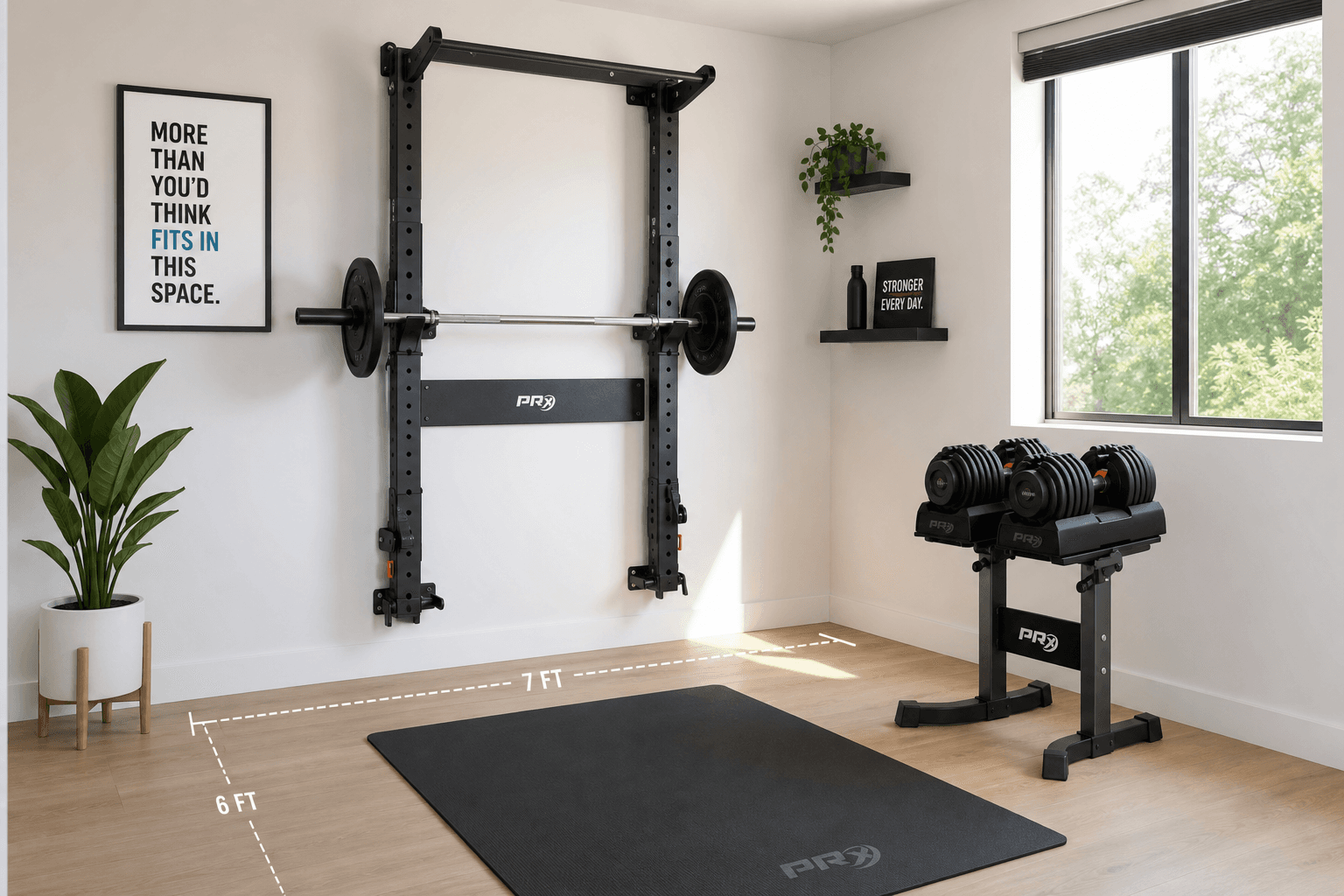
The Four-Category Retail Landscape for Home Gym Equipment
If you search for "exercise equipment for sale" in 2026, you will land on a wall of retailer landing pages — Amazon, DICK'S Sporting Goods, Costco, Johnson Fitness — each shouting about deals but offering almost nothing in the way of comparative decision support. The assumption baked into those pages is that all retail channels are roughly equivalent: you pick a product, you pick a store, and the transaction is the same. That assumption costs buyers real money.
The home gym equipment market in the U.S. is not a single market. It is four distinct channels, each with its own pricing logic, warranty structure, delivery timeline, and risk profile. Understanding which channel you are buying from — and which channel matches your priorities — is often more important than the specific brand of barbell you choose.
The four channels are:
- Big-box retailers (DICK'S, Costco, Target, Walmart) — national chains that carry a curated selection of equipment from major brands. You can touch the product, buy it immediately, and return it to a physical store. You pay a premium for that convenience.
- Specialty online brands (REP Fitness, Bells of Steel, RitFit, Titan Fitness, Fringe Sport) — direct-to-consumer manufacturers that cut out distribution middlemen. They typically offer better specs per dollar but require patience for shipping and a willingness to assemble equipment yourself.
- Marketplaces (Amazon, Walmart.com) — aggregators that host thousands of sellers under one search interface. Selection is enormous, but quality, warranty, and seller reliability vary wildly.
- The used market (Facebook Marketplace, Craigslist, Play It Again Sports) — the cheapest option by a wide margin, but with zero warranty and significant risk on anything with moving parts or electronics.
This guide maps each channel with specific pricing data, trade-off analysis, and a decision framework so you can match your equipment purchase to the right retail path — not just the first one that appears in search results.
Big-Box Retailers: Convenience and Immediate Gratification at a Premium
Walking into a DICK'S or Costco and walking out with a squat rack the same afternoon is a real advantage — especially for someone who wants to start training this weekend, not next month. Big-box retailers offer immediate availability, the ability to see and touch equipment before buying, and straightforward return policies that do not require boxing up a 150-pound power rack and paying return shipping.
The trade-off is price. Big-box retailers operate on a wholesale-to-retail model that adds distribution and floor-space costs to every item. The data bears this out clearly. According to testing by Garage Gym Reviews, the average squat rack sold through traditional retail channels costs $708. Compare that to the REP PR-1100 Power Rack, a direct-from-specialty-brand model that costs $380, has a 700-lb weight capacity, 14-gauge steel construction, a multi-grip pull-up bar, and a limited lifetime warranty on the frame. That is a 46% discount for comparable — in some respects superior — specifications.
| Channel | Example Product | Price | Key Specs | Warranty |
|---|---|---|---|---|
| Big-box (avg.) | Squat rack (average) | $708 | Varies by brand | Varies |
| Specialty online | REP PR-1100 Power Rack | $380 | 700-lb capacity, 14-ga steel, multi-grip pull-up bar | Limited lifetime (frame) |
| Specialty online | Bells of Steel All-in-One Home Gym | $1,299.99 | Plate-loaded, functional trainer + squat rack combo, aluminum pulleys | Limited lifetime |
| Big-box (avg.) | Home gym machine (average) | $1,855 | Varies by brand | Varies |
Big-box stores also carry a narrower selection of space-saving and specialty equipment. If you need a folding rack for an apartment, a compact cable tower, or a specific weight increment for progressive overload, you are far more likely to find it from a specialty brand than on a retail showroom floor.
Specialty Online Brands: The Value-Per-Dollar Advantage
Specialty online fitness brands — REP Fitness, Bells of Steel, RitFit, Titan Fitness, Fringe Sport — operate on a direct-to-consumer model that bypasses distributors, retail floor space, and sales commissions. The savings get passed to the buyer in the form of better materials, higher weight capacities, and longer warranties at lower prices.
The value gap is not marginal. Consider the Bells of Steel Cable Tower, a plate-loaded cable machine with a 31" x 28.5" footprint, 33 handle height positions, and smooth aluminum pulleys. It starts at $434.99 and carries a limited lifetime warranty. A comparable cable machine from a big-box brand with dual weight stacks — the Titan Fitness Functional Trainer at $2,999.99 — costs nearly seven times as much and comes with only a 1-year warranty. The Bells of Steel All-in-One Home Gym, which combines a functional trainer with a squat rack, starts at $1,299.99, well below the $1,855 average for home gym machines tested by Garage Gym Reviews.
The same pattern holds for smaller items. Fringe Sport Black Bumper Plates cost approximately $2.20 per pound, have a +/-1% weight tolerance, are made from virgin rubber, and come with a lifetime warranty. The average bumper plate price per pound across all channels is $2.49. That 12% savings per pound adds up fast when you are buying 200+ pounds of plates.
| Product | Channel | Price | Per-Lb. Cost | Warranty |
|---|---|---|---|---|
| Fringe Sport Black Bumper Plates | Specialty online | ~$2.20/lb | $2.20 | Lifetime |
| Average bumper plates | All channels | ~$2.49/lb | $2.49 | Varies |
| CAP Cast Iron Hex Dumbbells | Marketplace / big-box | ~$1.00/lb | $1.00 | Limited |
| Synergee Games Cerakote Barbell | Specialty online | $179.95 | N/A (single item) | Lifetime |
Comments
Join the discussion with an anonymous comment.