
The smartest home gym is not the one with the largest screen, the slickest class library, or the most confident product video. The useful question is narrower: what does the machine do while you are lifting? In 2026, most smart home gyms fall into three practical AI tiers: screen-only systems that deliver workouts, data-tracking systems that log and adjust training variables, and full form-correction systems that watch your movement and respond in real time.
That distinction matters because the word “smart” gets stretched until it covers almost everything with a display. A workout screen can be useful. Rep counting can be useful. Auto-selected resistance can be useful. None of those automatically equals coaching. If the system cannot change what happens during the set — by flagging form, detecting imbalance, or adjusting progression based on your actual performance — it should not be priced as though it can.
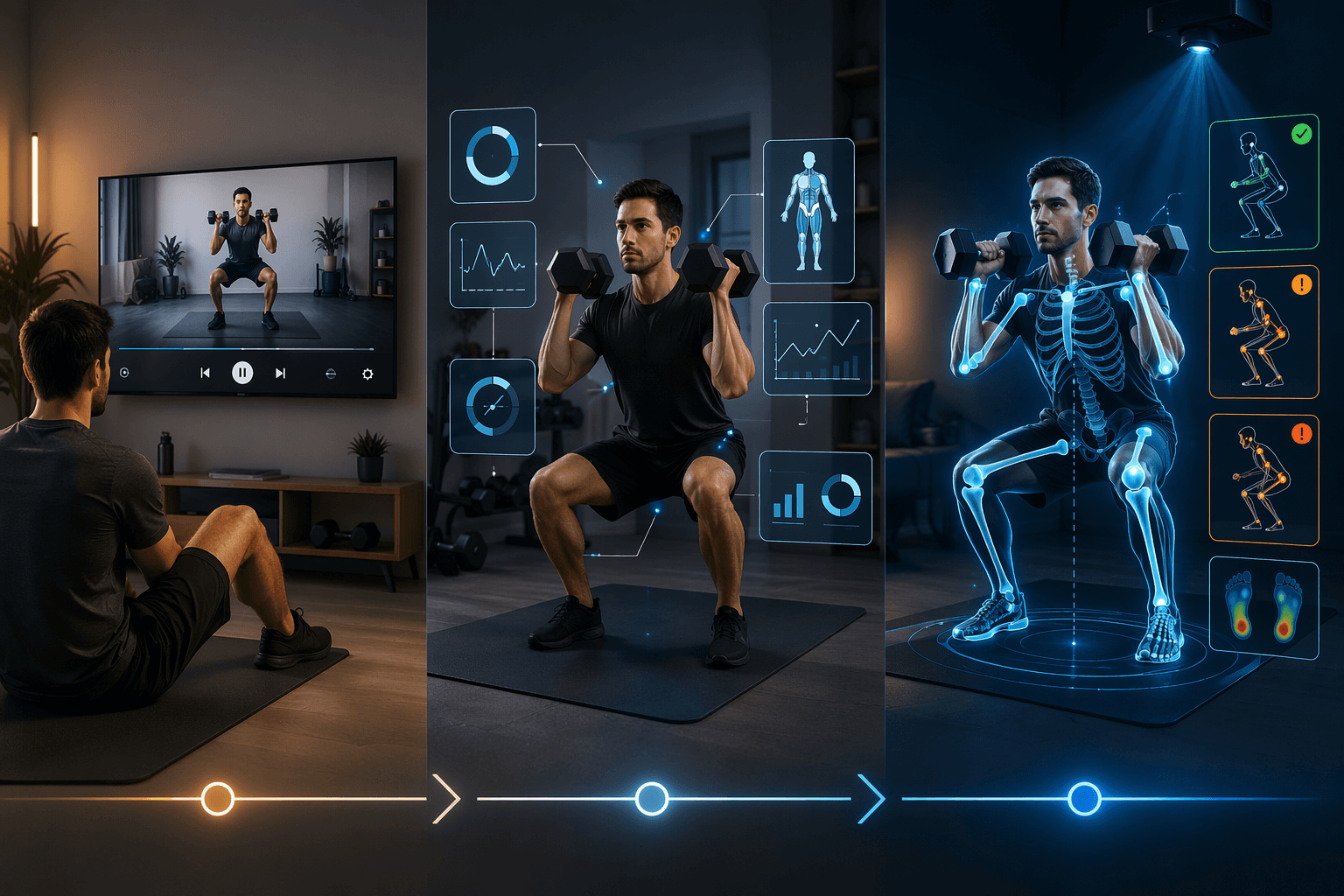
The three AI tiers that actually separate smart home gyms
| AI tier | What the system does | What it does not prove | Best fit |
|---|---|---|---|
| Tier 1: Screen-only | Streams classes, displays workouts, and guides you through programmed sessions. | That the machine is observing your reps, load, or form. | Beginners who mainly need structure and consistency. |
| Tier 2: Data-tracking | Logs training data such as reps, sets, resistance, and performance history; some systems auto-select or adjust weight. | That it can see your body position or correct technique in real time. | Lifters who want convenience, progression tracking, and less manual setup. |
| Tier 3: Full form-correction AI | Uses camera or skeletal-tracking tools to evaluate movement, detect form issues, and support adaptive coaching. | That it replaces judgment, effort, or learning how lifts should feel. | Intermediate-to-advanced lifters who can act on feedback and use progression data intelligently. |
Dr. Susie Reiner, an exercise scientist specializing in sport technology, describes smart systems as tools that can “integrate machine learning algorithms that track how long you've been lifting, how quickly you move, and whether you've completed target sets,” while also cautioning that “you remain the most important variable in the training equation.”[1] That is the right kind of restraint. The software can notice things; it cannot make the trainee care, brace, recover, or choose a sensible load.
The strongest Tier 3 example is Tonal 2
Tonal 2 is the clearest current example of a full AI coaching system because its intelligence is built around more than a class screen or a rep log. Garage Gym Reviews reports that Tonal 2 uses 13 sensors plus an integrated Smart View camera, supports eccentric, concentric, and chain modes, and offers up to 250 pounds of digital resistance; the same review rates it 5 out of 5 for smart features.[2]
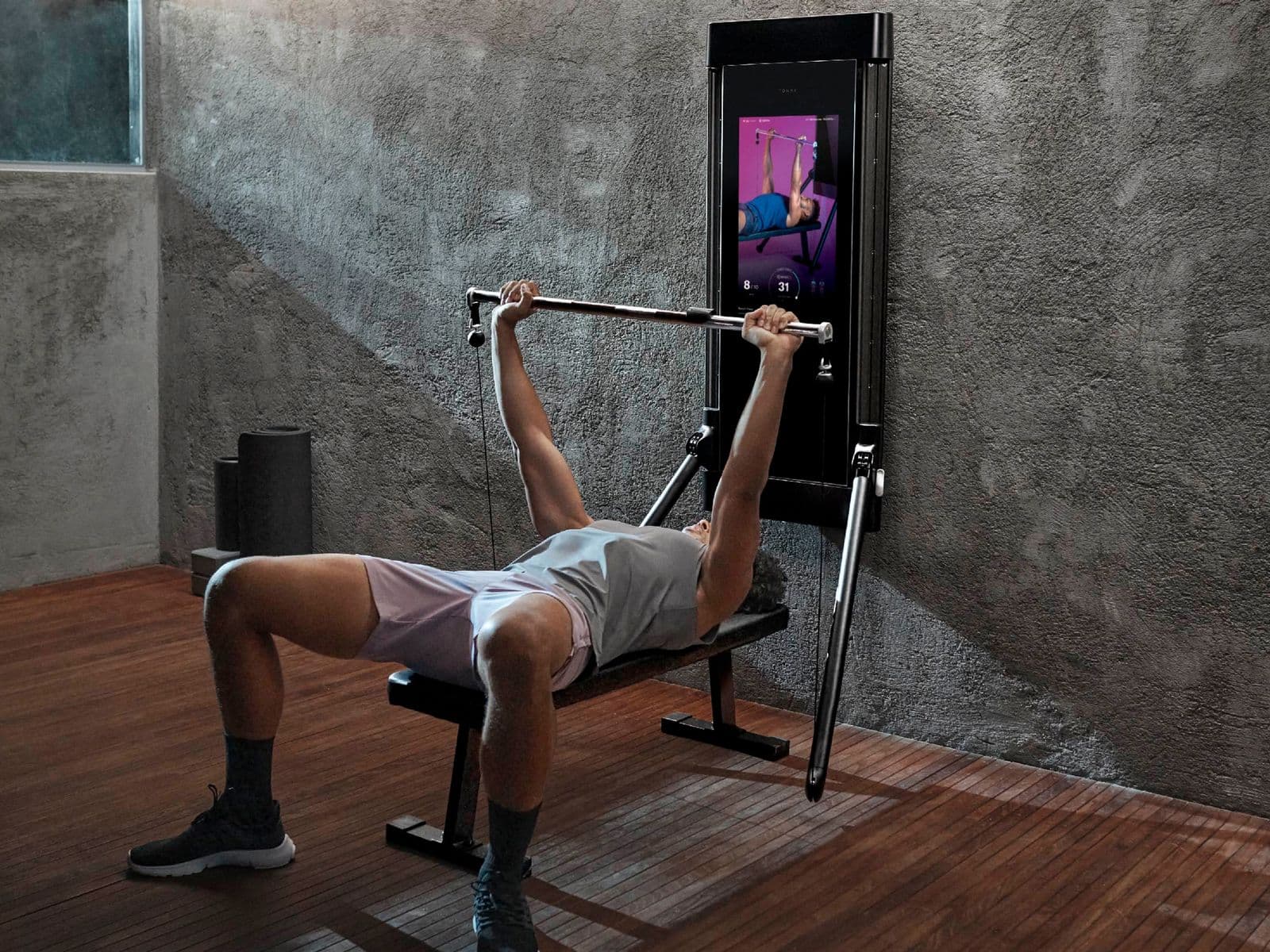
The important part is not simply that Tonal 2 has a camera. It is that the camera and sensors support a coaching layer: form feedback, adaptive progression, and resistance modes that change the training stimulus inside a set. That is where a smart home gym starts to become something more than a guided cable machine with a tablet bolted on.
This is also where the premium begins to make sense for the right person. An intermediate lifter who already knows the difference between a hard set and a sloppy set can use real-time feedback to clean up repeated faults. An advanced recreational lifter can use adaptive loading and eccentric or chain-style resistance to make home training more precise. A beginner may simply see more prompts, more numbers, and a higher bill.
Subscription cost is part of the intelligence tier
A smart gym comparison that ignores subscriptions is doing buyers a favor only on paper. The machine may be bought once, but the coaching layer is often rented month after month. Current pricing data places Speediance’s core membership at $0 per month, Speediance AI at $24.90 per month, Tempo Move at $39 per month, Tonal 2 at $59.95 per month, and Alter Screen at $66 per month.[2]
| System or plan | Approximate monthly subscription | AI tier implication |
|---|---|---|
| Speediance core | $0/month | A lower ongoing-cost route for data-driven training, though not full camera-based form correction. |
| Speediance AI | $24.90/month | Adds more intelligence around programming and automation, but still sits below full skeletal-tracking coaching. |
| Tempo Move | $39/month | Lower-cost Tier 3 entry using iPhone-based 3D Tempo Vision form correction. |
| Tonal 2 | $59.95/month | Premium Tier 3 system with integrated sensors, camera, adaptive resistance, and advanced training modes. |
| Alter Screen | $66/month | High ongoing subscription cost; not the central proof case for form-correction strength training here. |
The monthly fee does not automatically make one system better than another. It does make the buyer’s standard stricter. If a subscription mainly unlocks classes and tracking, it belongs in a different mental bucket than a subscription that supports live form analysis and progression decisions.
Speediance is the boundary case buyers should study carefully
Speediance Gym Monster is exactly the kind of system that makes the market confusing. It performs a strength assessment and auto-selects weights, which is meaningfully smarter than a screen-only setup. Garage Gym Reviews rates Speediance 4 out of 5 for smart features.[2] That rating makes sense for a system with useful automation, but it should not be mistaken for the same coaching category as a camera-based form-correction platform.
Auto-selected resistance can remove friction. It can also help prevent the common home-gym problem where every workout begins with fiddling, guessing, and compromising. But auto-selection is still mainly deciding load. It is not the same as watching your knees cave, your hips shift, or your left side lag behind your right.
That puts Speediance in Tier 2 with Tier 3 adjacency. It is smarter than basic content delivery and may be enough for many people who want efficient guided strength training at home. The line it does not cross is camera-based form feedback. For buyers, that line is not cosmetic; it changes what the machine can be trusted to notice.
Tempo Move shows that Tier 3 does not have to mean the highest hardware price
Tempo Move is the counterweight to the idea that full AI coaching only belongs to the most expensive wall-mounted systems. It uses free weights with 3D Tempo Vision AI form correction through an iPhone camera, and Garage Gym Reviews lists it as starting at $504.[2] That makes it the most affordable Tier 3 entry in this comparison.
The tradeoff is obvious enough: Tempo Move is not trying to be the same hardware experience as Tonal 2. It relies on free weights and a phone-based camera setup rather than integrated digital resistance arms. For some lifters, that is a limitation. For others, it is the whole appeal: keep the resistance familiar, add form correction, and avoid paying for a wall-mounted digital-resistance ecosystem.
One caveat is worth making explicit because old smart-gym references linger online: Tempo Studio should not be treated as the current buying reference in 2026. The relevant product here is Tempo Move, not the discontinued Studio system.
Where screen-only systems still make sense
Tier 1 is the easiest category to dismiss and the easiest to underrate. A screen-only system is not advanced AI coaching, but a beginner may not need advanced AI coaching. They may need a plan, demonstrations, reminders, and a reason to train three days this week instead of zero.
The problem starts when screen-only products are priced or described as though content delivery is machine intelligence. A library of workouts can be valuable. It can also be replaced, in many cases, by a less expensive app, a basic adjustable bench and dumbbells, or a simpler setup chosen through a broader home exercise equipment decision matrix. If the system does not observe or adapt to your lifting, its “smart” value is mostly interface and instruction.
What changes when you move from Tier 2 to Tier 3
The jump from Tier 1 to Tier 2 is mostly about convenience and accountability. The jump from Tier 2 to Tier 3 is about coaching relevance. In Tier 2, the system can know what you were supposed to lift and what you completed. In Tier 3, the system can also evaluate how you moved.
That difference matters most after the beginner stage. Early on, almost any consistent training plan can produce progress if loads are reasonable and technique is not reckless. Later, the missed details become more expensive: uneven pressing, shortened range of motion, shifting under fatigue, and repeating the same compensation pattern because no one is there to point it out.
This is why full form correction is not just a luxury feature for people who like metrics. It is potentially useful for lifters who already generate enough training stress that small movement problems accumulate. The buyer who benefits most is not the person dazzled by a skeletal overlay; it is the person who can interpret the cue, adjust the next rep, and use the feedback across weeks of training.
So which smart home gym has the most advanced AI?
Among the systems covered here, Tonal 2 is the strongest answer if the question is most advanced AI coaching in a premium strength-training machine. Its combination of sensors, integrated camera, adaptive resistance modes, and top smart-feature rating makes it the clearest Tier 3 proof case.[2]
Tempo Move is the value-minded Tier 3 answer: less hardware drama, lower starting price, and genuine camera-based form correction through an iPhone setup.[2] Speediance is the strongest reminder not to confuse smart automation with full coaching. It can assess strength and select weights, but without camera-based form feedback it remains a Tier 2 system with some advanced behavior.[2]
The cleanest buying rule is this: pay Tier 3 prices only if you will use Tier 3 feedback. Intermediate-to-advanced lifters are the best candidates because they can benefit from real-time form correction, left-right awareness, adaptive progression, and more precise resistance modes. Beginners are usually better served by lower-cost structure first — a screen-only or data-tracking setup, a simpler smart gym category, or even a non-smart strength setup — before renting a coaching layer they may not yet know how to use.
The smartest home gym, in other words, is not always the smartest purchase. Match the intelligence tier to the work you are actually ready to do.
References
- The 7 Best Smart Home Gyms of 2026, BarBend, last updated January 2025.
- Best Smart Home Gym Equipment 2026, Garage Gym Reviews.
Comments
Join the discussion with an anonymous comment.