
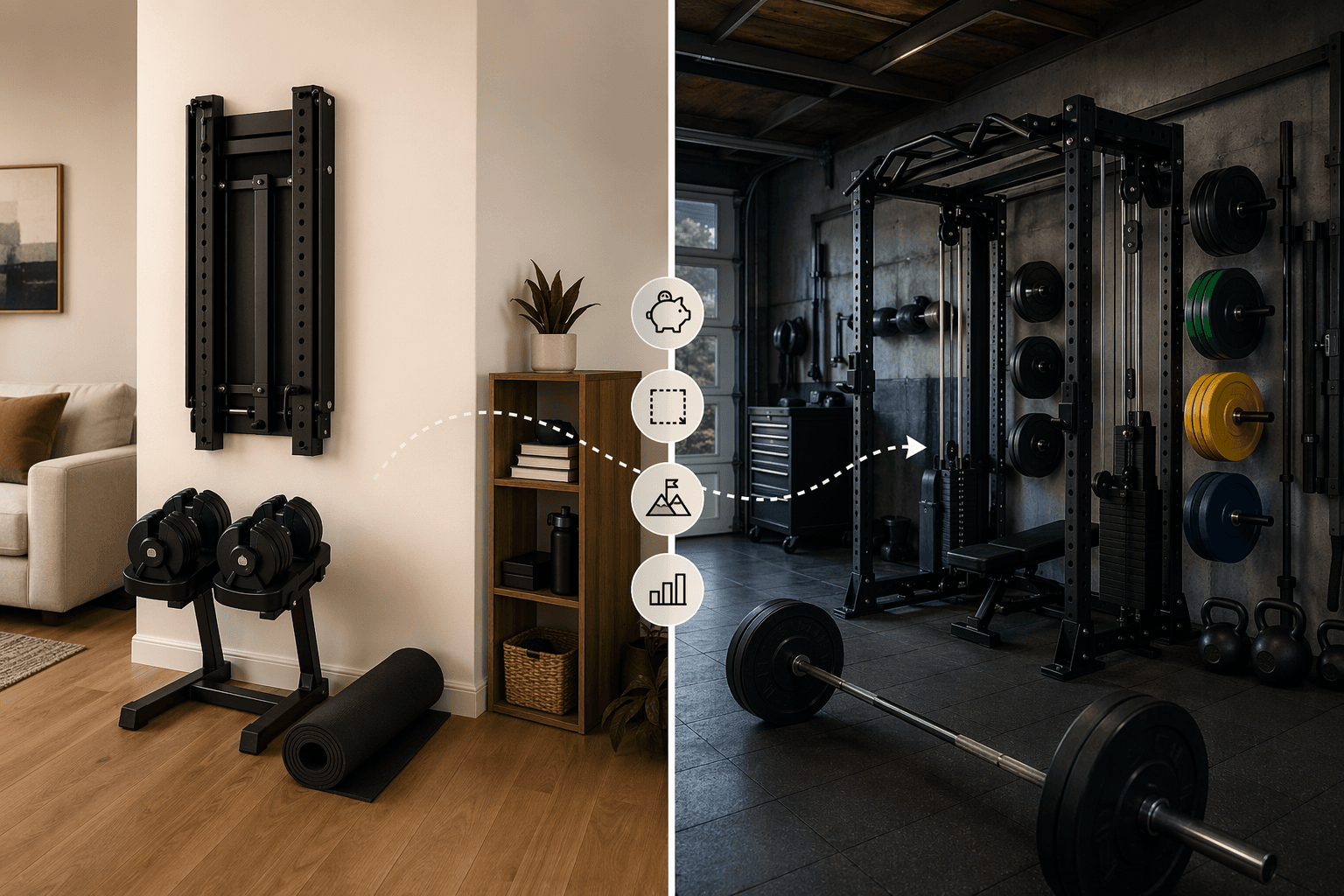
You measure your apartment corner. Six feet by five feet. Thirty square feet. Then you look up buyer guides for home gym equipment and they all talk about weight capacity and total cost of ownership. Useful things — until you realize the binding constraint is not what the rack can hold, but whether it fits at all.
The home fitness market is projected at $13.57 billion in 2026, growing at 6.81% CAGR (Fortune Business Insights). That number does not tell you whether the gear fits. A multi-station machine like the Body-Solid EXM2500 needs 70 square feet. That is your entire living room.
Start with Two Numbers: Footprint and Noise
The default order is: find the most versatile machine, check the price, buy. For a small space, that order is wrong. You start with floor area when the equipment is in use and the noise it makes. Only then do you look at weight capacity or exercise library.
A foldable power rack can support 1,000 lbs, but if your ceiling is 8 feet and the barbell is 7 feet long, you need a hallway to unrack. That is a geometry problem, not a rack problem. The equipment's folded depth tells you storage. The working envelope tells you usable space. They are not the same.
This guide covers four categories that fit under 20 square feet of working floor space: foldable racks, smart all-in-one units, digital resistance trainers, and minimalist essentials. Each section gives a measured footprint, a noise consideration, and the trade-off that matters most for apartment dwellers.
Foldable Racks: The PRx Profile PRO
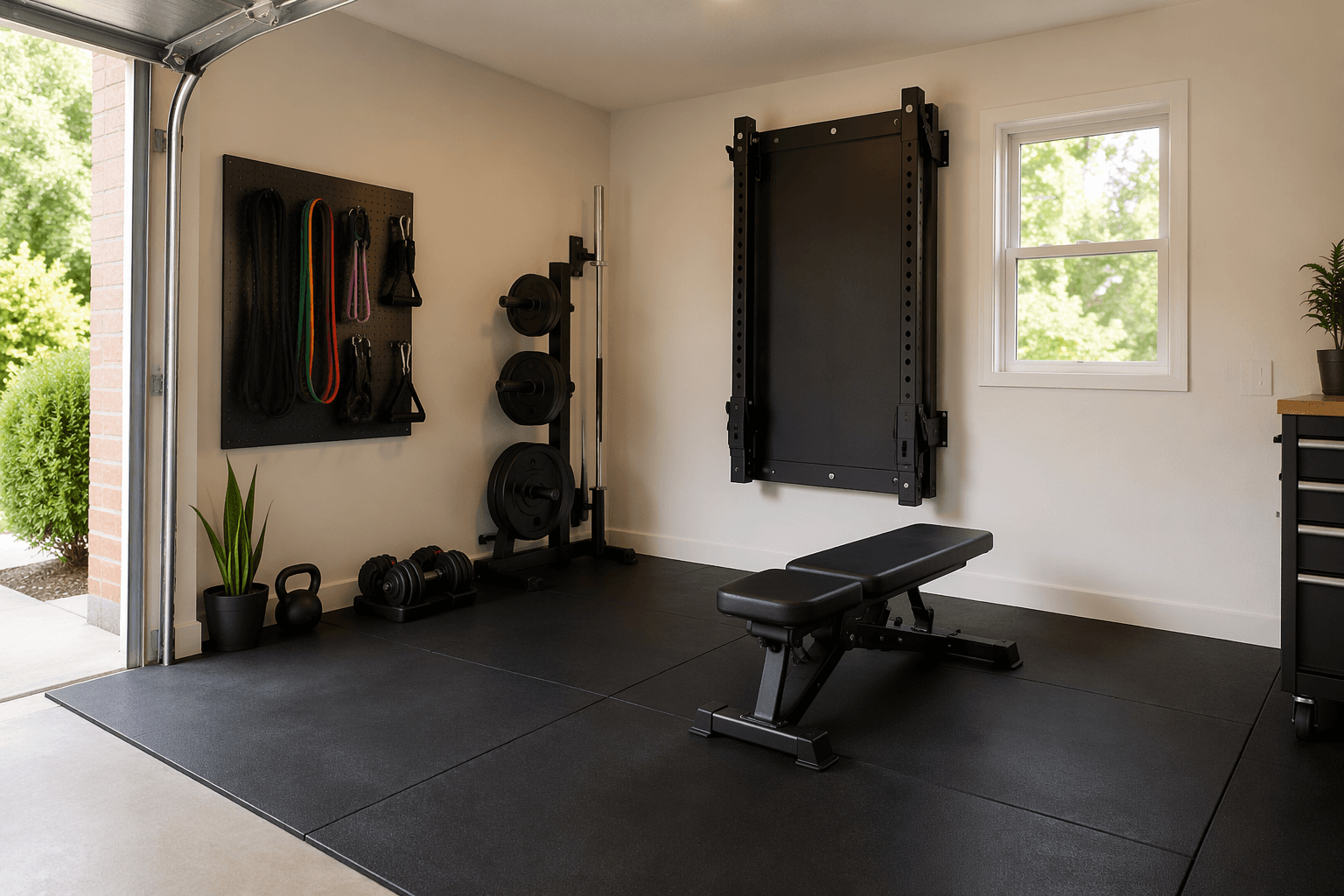
A foldable wall-mounted rack is the closest you get to a full barbell setup without a dedicated room. The PRx Profile PRO folds to 4 inches from the wall. That is the headline: a rack that becomes a slim line on your wall. It holds 1,000 lbs and costs $1,099.99 with a 10-year warranty.
But the folded depth is only half the story. To use the rack, you need to unfold the uprights, set the J-hooks, load a barbell. A standard 7-foot barbell requires about 7 feet of clear width to lift. If your corner is 6 feet wide, the barbell hits the wall. Measure before you buy.
| Dimension | PRx Profile PRO |
|---|---|
| Price | $1,099.99 |
| Weight capacity | 1,000 lbs |
| Folded depth | 4 inches |
| Working width (approximate) | 7 ft (for 7 ft barbell) |
| Resistance type | Plate-loaded |
| Warranty | 10 years |
If you have the ceiling height and a clear 7-foot stretch, this rack is the most space-efficient way to do real barbell work at home. The 10-year warranty is among the best in the category. But measure first. Do not assume folded depth solves everything.
The alternative for deadlifts without a rack is the X3 Bar — 10 by 19 by 1 inches, stores under a bed, provides up to 300 lbs of band-based resistance for $549. No barbell, no clearance issues, but no squats above 300 lbs. The trade-off is clear.
Smart All-in-One: Speediance Gym Monster
The Speediance Gym Monster claims to be a whole gym in one box. It measures 49.21 by 28.34 inches unfolded — roughly a twin mattress — and folds to 14.96 inches deep. Costs $3,199. No subscription required for its workout library.
The 'no subscription' claim is rare. Most smart gyms lock guided workouts behind a fee. Speediance does not. But I have questions. Can you use the built-in library without pairing a phone or tablet? Marketing says yes, but many similar devices quietly require a screen. Will future features stay free? Marketing terms can change. I would confirm post-purchase expectations with the seller before committing.
On noise: the Gym Monster uses a motorized resistance system, quieter than a clanking weight stack but not silent. No decibel rating published. I would call it 'moderate noise' — you hear the motor and cable, but unlikely to disturb a neighbor through a floor if on a mat. Without measurement, consider it an unknown.
Digital Resistance: Voltra I
Digital resistance is the newest category — and one that none of the existing small-space articles on this site cover. The Beyond Power Voltra I weighs 12.8 lbs and measures 12.71 by 5.49 by 3.94 inches. Provides up to 200 lbs of electromagnetic resistance. Genuinely portable: size of a thick laptop.
| Spec | Beyond Power Voltra I |
|---|---|
| Price | $2,199 |
| Resistance | Up to 200 lbs digital (magnetic) |
| Weight | 12.8 lbs |
| Dimensions | 12.71 x 5.49 x 3.94 inches |
| Warranty | 1 year |
| Resistance type | Magnetic (quietest available) |
| Noise level | Very quiet (magnetic — no clanking, no motor hum) |
The price is $2,199. The warranty is one year. That is a red flag. For a device that costs as much as a used car, a one-year warranty suggests the manufacturer is not confident in long-term durability. Compare with the PRx rack's 10-year warranty at half the price. Digital resistance is still young; motors and electronics have more failure points than a steel rack. I would not buy the Voltra I without an extended warranty or a solid return policy.
For portability and silence, nothing beats it. Magnetic resistance is whisper-quiet. If you live in a thin-walled apartment and need a full-body workout that fits in a drawer, the Voltra I is the best option. But the short warranty makes it a risk. The X3 Bar at $549 offers 300 lbs of resistance with no electronics — steel and bands. Loud in its own way (band snaps, foot stomps) but infinitely repairable.
Minimalist: Under $700, Under 10 sq ft
You do not need a rack or a smart machine. Adjustable dumbbells, a folding bench, a pull-up bar — that covers upper and lower body. Here is a build under $700 that occupies under 10 square feet:
- REP Fitness QuickDraw adjustable dumbbells (40-lb pair): $416 — replaces up to 12 pairs.
- Major Fitness Adjustable Bench: $219.99 — 1,300 lbs capacity, folds for storage.
- Titan Fitness 3-Position Wall-Mounted Pull-Up Bar: under $50.
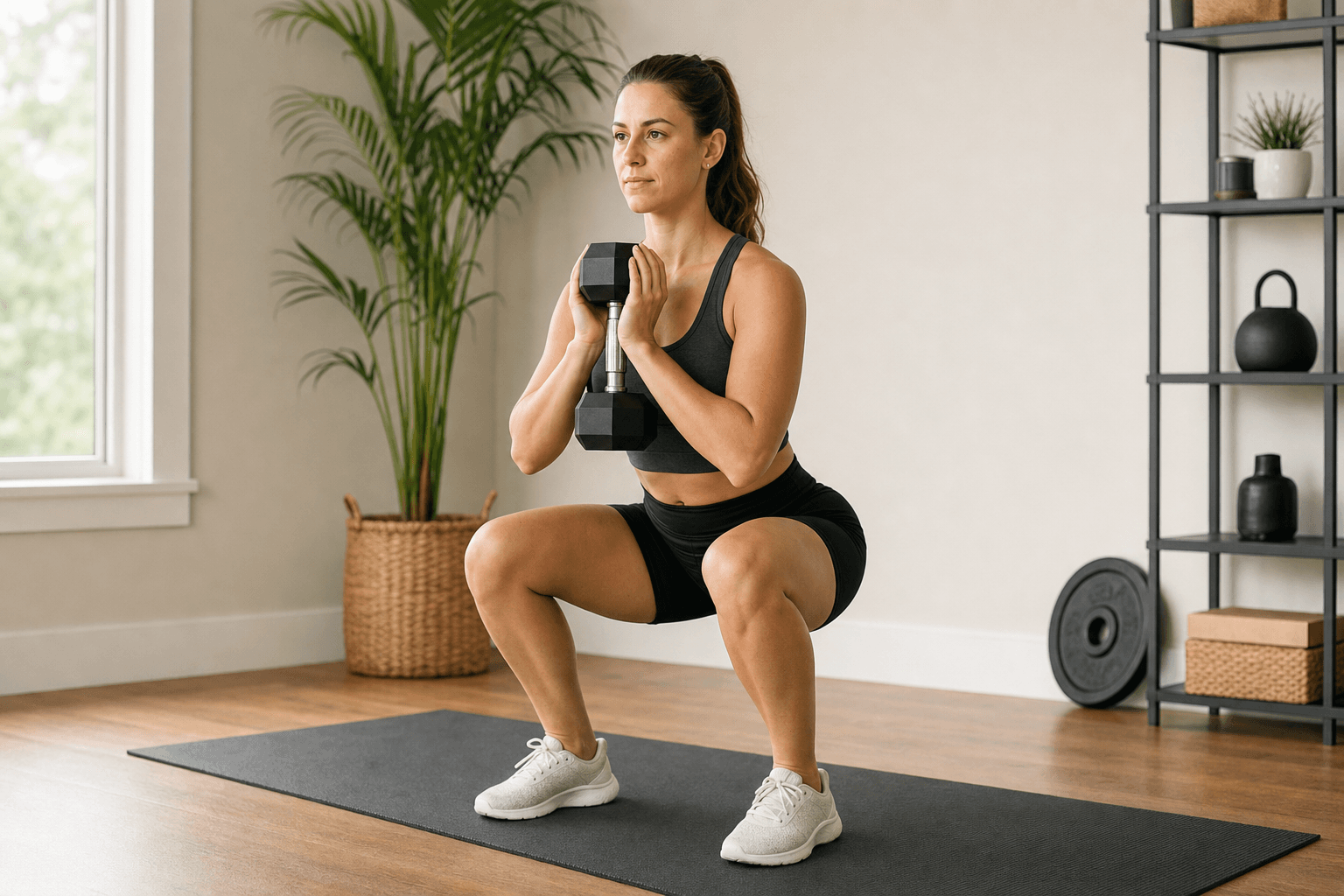
Total ~$686. The dumbbells go up to 40 lbs per hand (some models reach 50 lbs). That is enough for presses, rows, curls, lunges. For legs, Bulgarian split squats and goblet squats at 40-50 lbs. But if you are an intermediate lifter who needs heavier leg work, 50 lbs maxes out quickly. The trade-off: beginner-friendly and space-optimized, not for heavy deadlifts.
Noise: The Dimension Most Guides Skip
Noise can make your equipment unusable. In a small apartment, the difference between magnetic resistance and plate-loaded iron is the difference between a quiet evening and a noise complaint.
| Resistance type | Noise profile | Example products in this guide |
|---|---|---|
| Magnetic | Very quiet — no clanking, no motor hum | Beyond Power Voltra I |
| Motorized cable / weight stack | Moderate — motor sound and cable movement | Speediance Gym Monster |
| Plate-loaded (iron plates) | Loudest — plates clang against each other and barbell collars | PRx Profile PRO (with iron plates) |
| Plate-loaded (bumper plates) | Moderate — dull thud on floor, less clanking | PRx Profile PRO (with bumpers) |
| Band-based | Moderate — band snaps, foot stomps during deadlifts | X3 Bar |
Published decibel levels are almost nonexistent in this industry. Until brands start measuring, buyers must rely on category knowledge. Magnetic is quietest. Weight stacks are moderate. Plate-loaded is loudest, but bumper plates reduce clanking.
If you share walls, prioritize magnetic resistance or use floor mats and vibration pads. Our guide on apartment dweller compact home gym setup and noise control covers specific strategies.
How to Choose
- Need a barbell and have at least 7 feet clear width plus ceiling height? → PRx Profile PRO. Verify clearance first. Or consider X3 Bar for band-based deadlifts at smaller footprint.
- Want a self-contained machine with no subscription and small folded footprint? → Speediance Gym Monster (28" x 49" unfolded, moderate noise, $3,199). Confirm built-in library works without phone.
- Value portability and near-silent operation above all? → Beyond Power Voltra I ($2,199, 12.8 lbs, magnetic). Accept the 1-year warranty as a risk.
- Want most workout for least money, don't need heavy loads? → Minimalist setup ~$686, under 10 sq ft. Accept 50-lb cap on leg exercises.
Cost-per-square-foot is more useful than total cost here. Minimalist setup: ~$68 per square foot of workout area. Speediance Gym Monster: $333 per square foot. PRx rack, if you dedicate 28 sq ft: ~$39 per square foot including barbell and plates. Not apples to apples, but it highlights the real constraint: space is expensive.
For a deeper breakdown of long-term costs, see our total cost of ownership comparison for compact home gyms.
The Bottom Line
A 200-lb digital resistance unit does not replace a barbell for a serious lifter, but it fits in a closet. A foldable rack can handle a 1,000-lb squat, but it needs a 7-foot stretch of wall. The decision is not about which machine is better on paper. It is about which one works in your specific room.
Measure your working space. Check your ceiling height. Ask whether you can tolerate the noise. Then choose the category that matches those constraints. If you still have questions, our compact home gym space tier guide shows what you can build in 10, 30, 50, or 100 square feet.
Comments
Join the discussion with an anonymous comment.