
Smart Home Gym vs. Traditional Home Gym: Which Setup Actually Saves You Money? A 5-Year Cost Analysis
This article provides a personalized 5-year cost analysis comparing smart home gym systems (both subscription-based and subscription-free) against traditional iron setups and commercial gym memberships. It helps budget-conscious buyers calculate their real breakeven point based on usage frequency and subscription costs.
The Real Cost Question: When Does a Smart Home Gym Actually Pay Off?
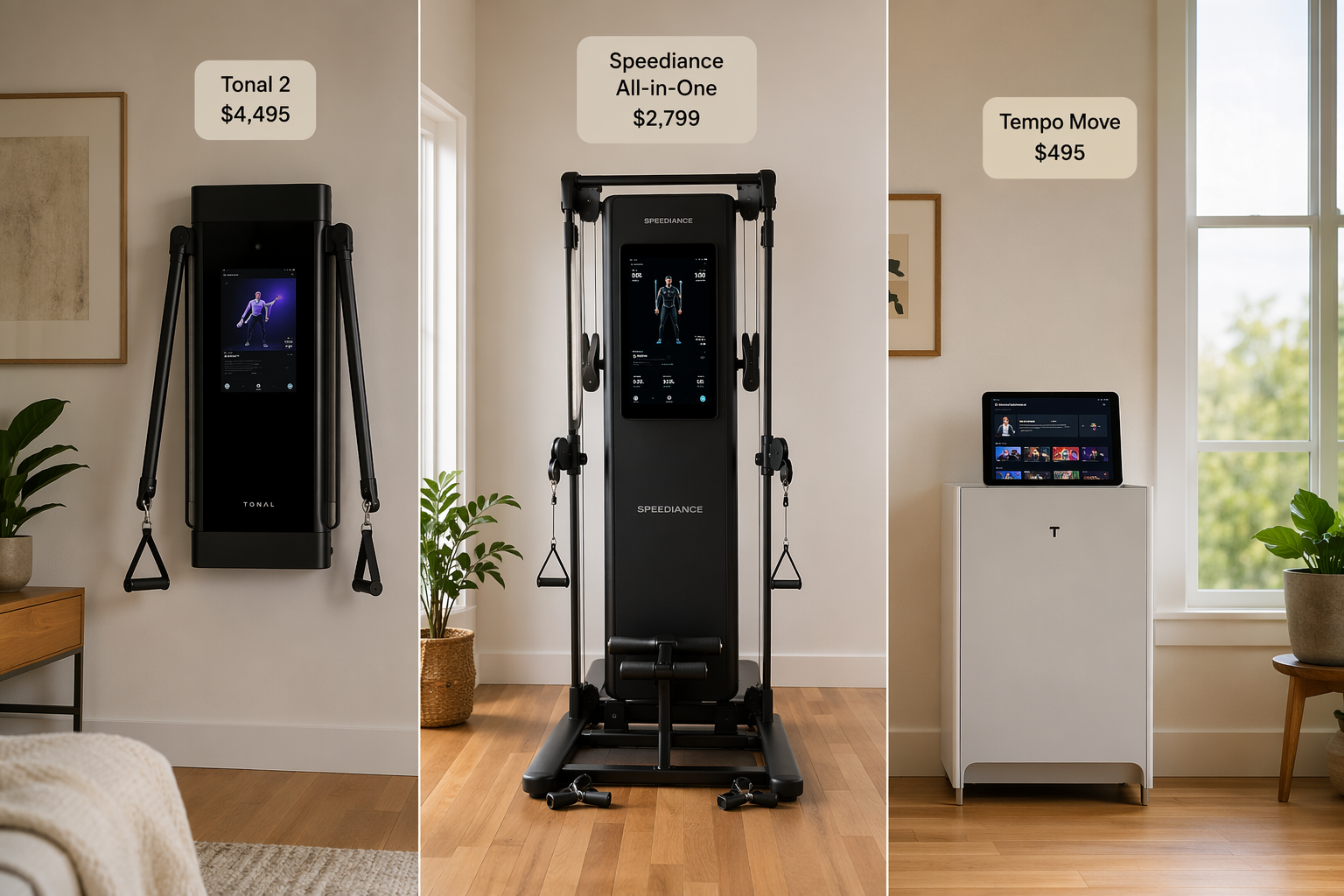
If you are staring at a $4,295 Tonal 2 or a $3,199 Speediance Gym Monster and wondering whether the investment makes sense, you are asking the right question — but you are probably asking it the wrong way. The decision is not simply "Is this machine worth the price?" The real question is: "Given how I actually train, when does this setup start saving me money compared to the alternatives?"
The answer depends on three variables that most buyer guides ignore: your usage consistency, your tolerance for subscription costs, and the path you choose through a market that now offers four distinct options — subscription-based smart gyms, subscription-free smart gyms, traditional iron setups, and commercial gym memberships. Each path has a different upfront cost, a different monthly obligation, and a different breakeven timeline.
The global home fitness equipment market is valued at $12.88 billion in 2025 and is projected to reach $22.99 billion by 2034, growing at a 6.81% CAGR. Smart equipment now represents 54% of all new equipment purchases. But that growth comes with a catch: smart equipment carries a 30-50% price premium over non-connected equivalents, and 40% of connected equipment owners cancel their content subscription within 12 months. If you are among that 40%, the value equation flips entirely.
This article breaks down the real five-year cost of each path, shows you how to calculate your personal breakeven point, and helps you match the right setup to your actual training habits — not your aspirational ones.
Four Paths to a Home Gym: Upfront Costs and Monthly Obligations
Before we run the five-year numbers, let's establish what each path actually costs to get started. The hardware prices below are based on current market data as of mid-2026, and the subscription figures reflect the most common pricing structures.
Path 1: Subscription-Based Smart Gym (e.g., Tonal 2)
The Tonal 2 is priced at $4,295 with a $59.95/month subscription and offers 250 lbs of max resistance. The subscription covers guided workouts, AI-powered coaching, and progressive overload tracking. You will also need accessories: a mat, a heart rate monitor, and possibly wall-mounting hardware. Budget $200–$500 for these extras. Installation can range from $0 (self-install) to $500 (professional mounting on stud walls).
Path 2: Subscription-Free Smart Gym (e.g., Speediance Gym Monster)
The Speediance Gym Monster costs $3,199 with a $29/month subscription — but crucially, the machine's core strength training functions work without an active subscription. You lose access to guided classes and programming if you cancel, but the digital resistance and manual mode remain usable. This makes it a fundamentally different value proposition from a fully subscription-locked system like Tonal. Max resistance is 220 lbs. Accessories and installation costs are similar to Path 1.
Path 3: Traditional Iron Setup (Rack, Barbell, Plates, Bench)
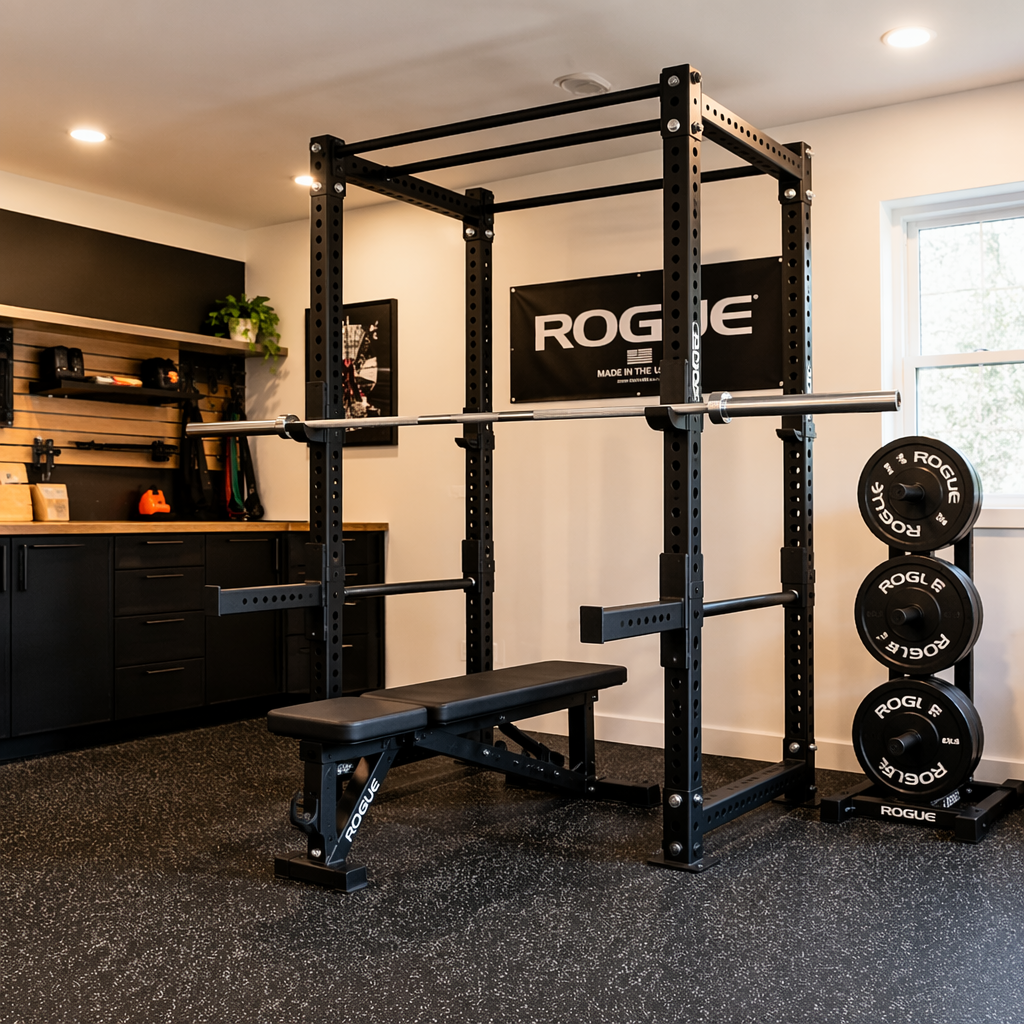
A quality traditional home gym — power rack, Olympic barbell, 255–300 lbs of iron or bumper plates, and an adjustable bench — costs $1,500–$3,000 upfront. A typical setup requires 80–150 sq ft of floor space. Ongoing costs are near zero: no subscription, no software updates, no connectivity fees. You will need a mat or rubber flooring ($50–$200) and possibly a barbell rack or plate tree ($50–$150).
Path 4: Commercial Gym Membership
The average US gym membership costs approximately $65/month, or $3,900 over five years. Most gyms also charge annual fees of $100–$300, adding $500–$1,500 over the same period. Commuting costs — gas, parking, time — are real but harder to quantify. There is no hardware purchase, but you also have no equipment at home for off-hours or bad-weather training.
| Path | Hardware Cost | Monthly Subscription | Accessories & Installation | 5-Year Subscription Total |
|---|---|---|---|---|
| Subscription Smart Gym (Tonal 2) | $4,295 | $59.95 | $200–$500 | $3,597 |
| Subscription-Free Smart Gym (Speediance) | $3,199 | $29 (optional) | $200–$500 | $0–$1,740 |
| Traditional Iron Setup | $1,500–$3,000 | $0 | $100–$350 | $0 |
| Commercial Gym Membership | $0 | $65 (average) | $0 (plus commuting) | $3,900 |
5-Year Total Cost of Ownership Comparison
Now let's add everything up. The table below shows the estimated five-year total cost for each path, including hardware, subscriptions, accessories, and installation. These figures assume you keep the subscription active for the full five years — which, as we will see in the next section, is not what most people actually do.
| Path | 5-Year Hardware | 5-Year Subscription | Accessories & Install | Total 5-Year Cost |
|---|---|---|---|---|
| Subscription Smart Gym (Tonal 2) | $4,295 | $3,597 | $350 (midpoint) | $8,242 |
| Subscription-Free Smart Gym (Speediance) | $3,199 | $0 (manual mode) | $350 (midpoint) | $3,549 |
| Traditional Iron Setup | $2,250 (midpoint) | $0 | $225 (midpoint) | $2,475 |
| Commercial Gym Membership | $0 | $3,900 + $1,000 annual fees | $0 | $4,900 |
The numbers tell a clear story. A subscription-based smart gym like Tonal 2 costs roughly $8,242 over five years — more than three times the cost of a traditional iron setup and nearly $3,400 more than a commercial gym membership. A subscription-free smart gym like Speediance, used in manual mode, costs about $3,549 — significantly less than a gym membership and only about $1,000 more than a traditional iron setup.
Your Personal Breakeven Calculator: How Usage Frequency Changes Everything
The static five-year totals above assume you use the equipment consistently for the entire period. But the behavioral data tells a different story. According to industry research, 40% of connected equipment owners cancel their content subscription within 12 months. That means two out of every five smart gym buyers stop paying for guided programming within the first year.
This changes the math dramatically. If you cancel your subscription after 12 months, your Tonal 2 costs drop from $8,242 to approximately $5,354 over five years ($4,295 hardware + $719 for 12 months of subscription + $350 accessories). That is still more than a traditional iron setup, but it is competitive with a gym membership — and you have the convenience of training at home.
Here is how to calculate your personal breakeven point:
- Estimate your weekly usage. Be honest. If you currently go to the gym 1–2 times per week, do not assume a smart gym will magically make you train 5 times per week. Use your actual historical average.
- Calculate your per-session cost. Divide the total five-year cost of each path by the number of sessions you will realistically complete. For a traditional iron setup at $2,475 over five years with 3 sessions per week (780 sessions), each session costs about $3.17. For a subscription smart gym at $8,242 with the same usage, each session costs about $10.57.
- Factor in the cancellation risk. If you are unsure about your long-term commitment, a subscription-free smart gym or traditional iron setup eliminates the risk of paying for a service you stop using.
- Compare to your gym membership baseline. A commercial gym membership at $65/month costs $3,900 over five years. If your smart gym setup costs more than that, you need to use it consistently for 2–4 years to break even — and you need to actually enjoy the guided programming enough to keep paying for it.
Hidden Costs That Change the Math
Beyond hardware and subscriptions, several hidden costs can shift the five-year total by hundreds or even thousands of dollars. Here is what to watch for:
- Installation fees. Wall-mounted smart gyms like Tonal 2 may require professional installation, especially if your walls are not standard stud construction. Costs range from $0 (self-install) to $500. Some companies include installation in the purchase price; others charge extra.
- Required accessories. Most smart gyms do not ship with a mat, heart rate monitor, or additional handles. Budget $200–$500 for these essentials. Traditional iron setups also need a mat and possibly a plate tree, but the total is usually lower ($100–$350).
- Replacement parts. Smart gyms have electronic components that can fail. Cables, pulleys, and digital resistance mechanisms may need replacement over time. Traditional iron — barbells, plates, racks — is mechanically simple and rarely needs repairs beyond occasional rust removal or bolt tightening.
- The smart premium. Smart equipment carries a 30-50% price premium over non-connected equivalents. A digital resistance system that costs $4,295 might have a functionally equivalent cable machine or selectorized stack that costs $2,000–$3,000. You are paying for the software, the screen, and the ecosystem — not just the resistance.
Resale Value: What Your Equipment Is Worth When You Sell
Resale value is an often-overlooked component of total cost of ownership. The equipment you buy today will be worth something on the used market tomorrow — and the differences between paths are substantial.
| Path | Resale Value (% of Retail) | Notes |
|---|---|---|
| Traditional Iron Setup | 50–70% | Barbells, plates, and racks hold value well. A $2,250 setup could sell for $1,125–$1,575 after 5 years. |
| Subscription Smart Gym (Tonal 2) | Moderate, platform-dependent | Resale depends on whether the new owner can transfer the subscription. Wall-mounted units are harder to sell than freestanding ones. |
| Subscription-Free Smart Gym (Speediance) | Moderate | Freestanding design and no subscription lock-in make resale easier, but electronics depreciation is faster than iron. |
| Commercial Gym Membership | 0% | You cannot sell a membership. Every dollar spent is gone. |
Traditional iron's 50-70% resale value is a major financial advantage. A $2,250 iron setup that sells for $1,350 after five years has an effective cost of just $900 — less than $0.12 per session at 3 sessions per week. Smart gyms, by contrast, have moderate and platform-dependent resale. A wall-mounted unit like Tonal requires the buyer to have compatible wall space and a willingness to take over the subscription, which limits the buyer pool.
When Each Option Wins: Matching the Setup to Your Situation
There is no single "best" path — only the path that fits your training habits, budget, and preferences. Here is how to match the setup to your situation.
Choose a Subscription-Based Smart Gym (Tonal 2) if:
- You have a history of training 3+ times per week and are confident you will maintain that habit.
- You value guided programming, AI-powered coaching, and progressive overload tracking enough to pay $60/month for it.
- You have the wall space and budget for a $4,295+ investment.
- You are willing to accept the 40% cancellation risk — or you are confident you will not be in that group.
Choose a Subscription-Free Smart Gym (Speediance) if:
- You want digital resistance and a compact footprint but do not want to be locked into a subscription.
- You are unsure about your long-term commitment and want the option to cancel without losing core functionality.
- You have $3,000–$3,500 to spend and want a setup that costs less than a gym membership over five years.
Choose a Traditional Iron Setup if:
- You want the lowest total cost of ownership and the highest resale value.
- You prefer independent training and do not need guided programming.
- You have 80–150 sq ft of floor space available.
- You are comfortable with the learning curve of free-weight exercises and proper form.
Choose a Commercial Gym Membership if:
- You value access to a wide variety of equipment, classes, and social environment.
- You are not ready to commit to a home gym investment.
- Your living situation (apartment, shared space, frequent moves) makes home equipment impractical.
- You train infrequently (1–2 times per week) and want the lowest per-session cost.
Your Decision Checklist: 5 Questions to Answer Before You Buy
Before you make a purchase, work through these five questions. Your answers will tell you which path is right for you.
- How many times per week will you actually use it? Look at your current training history, not your aspirational goals. If you have been going to the gym 1–2 times per week for the past year, do not assume a smart gym will change that. Use your real average.
- What is your total budget including 5 years of subscriptions? A $4,295 machine with a $60/month subscription costs $7,895 over five years. Can you afford that? If not, a subscription-free smart gym or traditional iron setup may be a better fit.
- Do you prefer guided workouts or independent training? If you love following a coach on a screen and having your reps counted, a subscription-based smart gym may be worth the premium. If you prefer to design your own workouts or follow a written program, you are paying for features you will not use.
- How much space do you have? Smart gyms need 10–50 sq ft. Traditional iron setups need 80–150 sq ft. Measure your available space before you decide. If you are in an apartment or shared space, a compact smart gym may be the only practical option.
- How important is resale value? If you think you might sell the equipment in 3–5 years, traditional iron holds 50-70% of its retail value. Smart gyms have moderate, platform-dependent resale. If resale matters, factor that into your decision.
This result comes from one real apartment under the stated conditions — it is a strong signal, not a guarantee your space will measure identically.
Builds this evidence supports
Small Treadmill Buying Guide: 7 Critical Specs to Check Before You Buy
A cross-category spec primer for apartment and small-space dwellers comparing walking pads, ultra-compact folding treadmills, and full-size folding treadmills. Learn the concrete thresholds for motor HP, deck length, noise, warranty, and subscription lock-in so you can compare apples to apples.
Where to Spend vs. Save on Affordable Home Gym Equipment: A Quality Tradeoff Guide
A practical guide for budget-conscious buyers (under $1,000) that reveals which equipment categories demand a higher investment for safety and durability, and where cutting costs is a smart move.
Spot something off?
If this result didn't match your own space, let us know — floor-damage and noise claims carry real deposit-risk consequences if we get them wrong.