
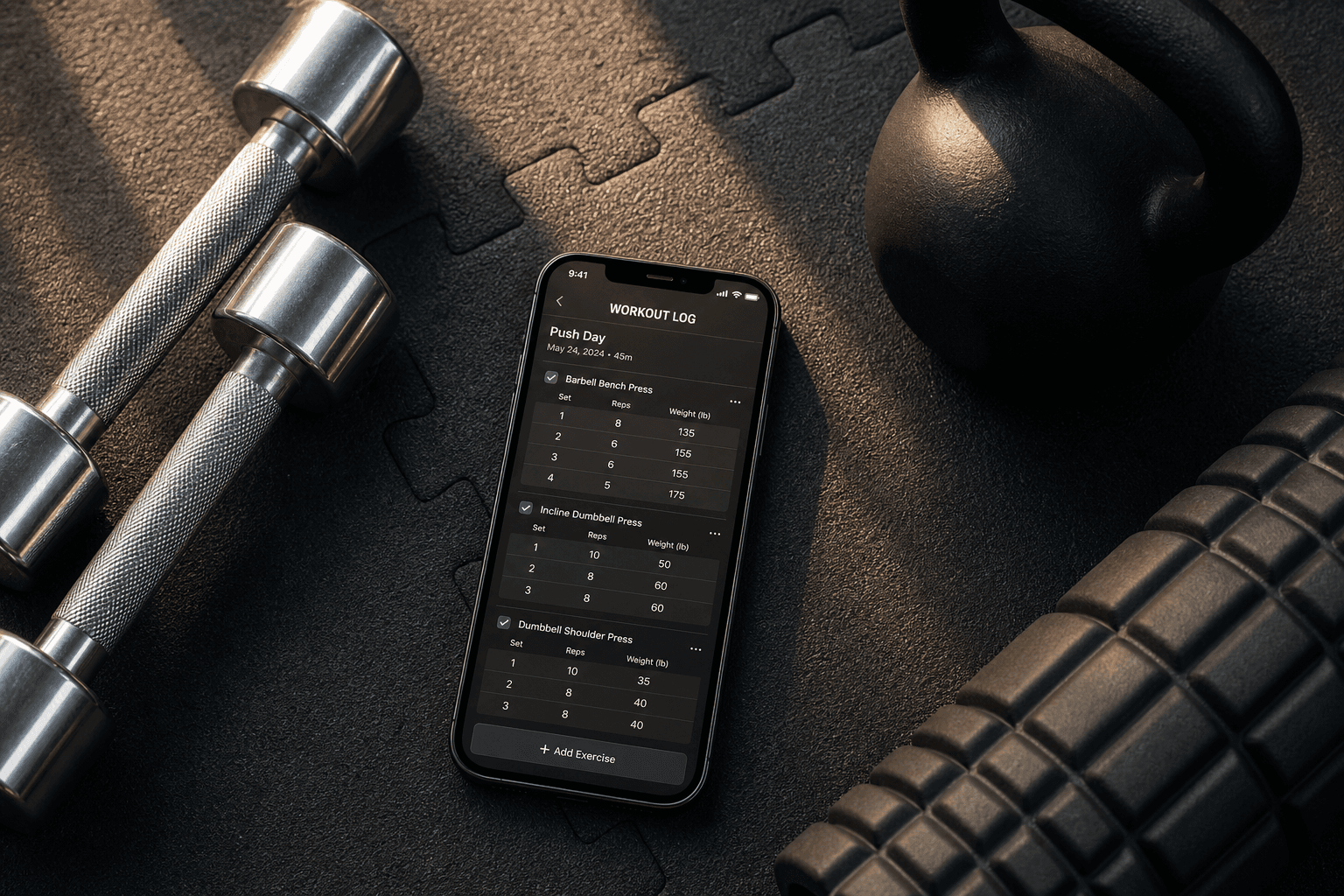
I fell into this trap myself. I downloaded a popular tracker, logged my lifts for three months, and waited for the gains to roll in. They didn’t. The app did exactly what it promised: it recorded numbers. It never told me when to add weight, when to drop volume, or how to structure a cycle. That’s not progressive overload. That’s a digital notebook.
Most roundups of strength training apps start with features, then UI, then price. They might toss in a line about progressive overload — as if it were a bonus feature, like dark mode. The problem is that progressive overload isn’t a feature. It’s the whole point. If an app doesn’t help you get stronger over time, it doesn’t matter how clean the interface is or how many exercises it lists.
The Two Philosophies
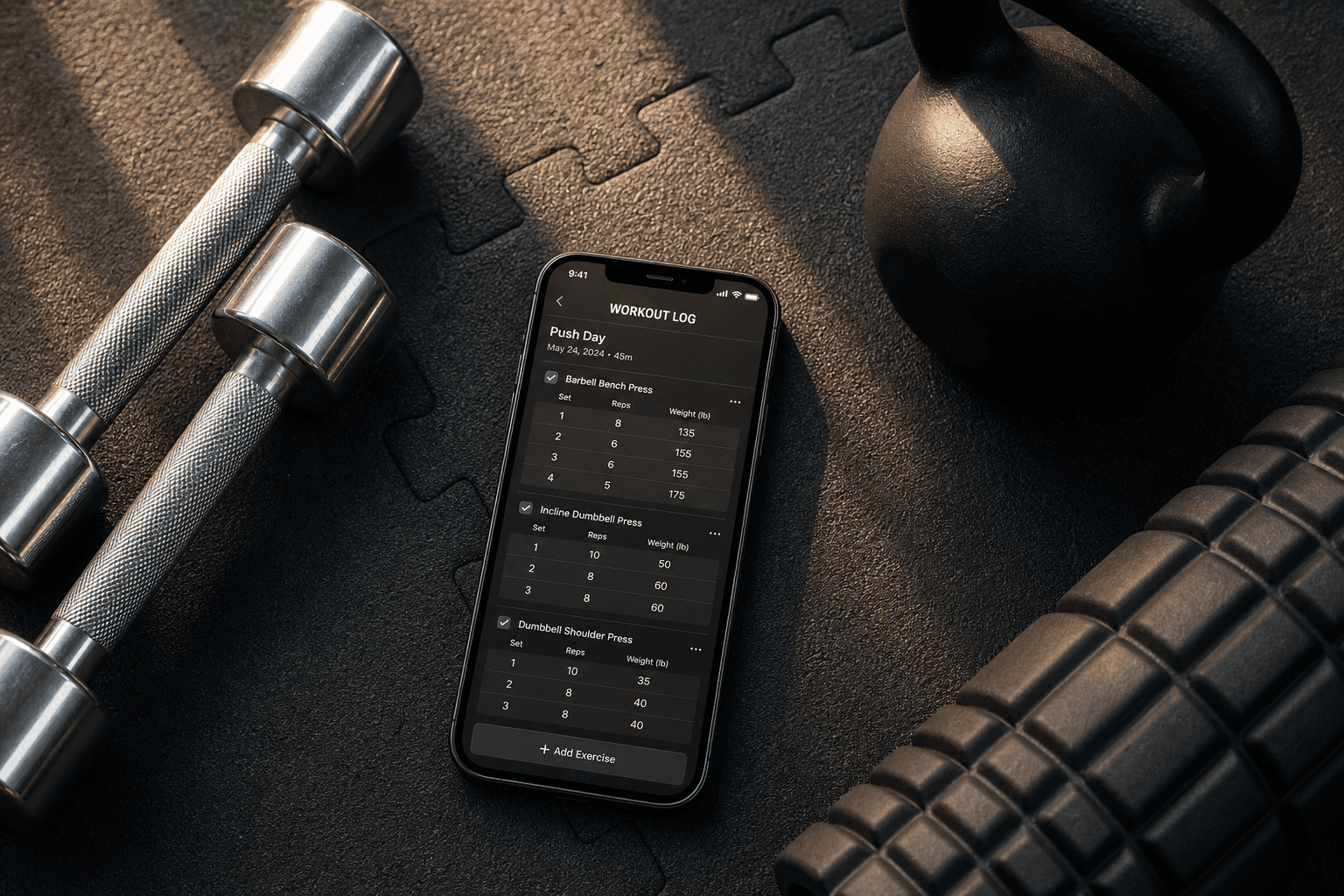
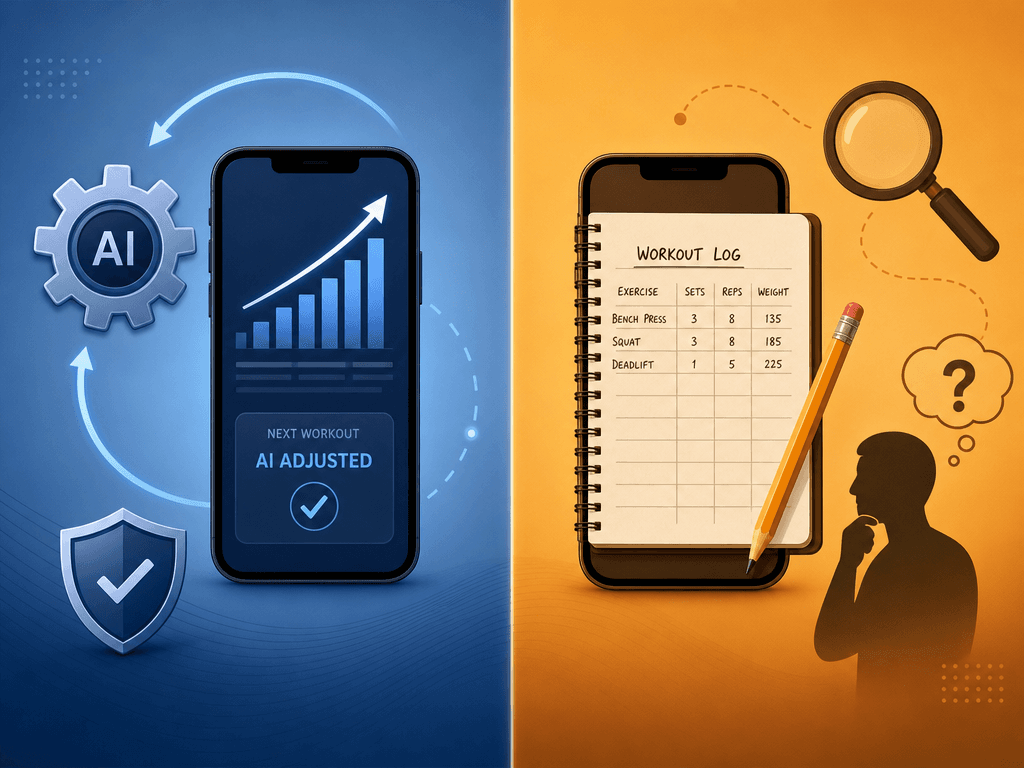
Once you accept that progressive overload is the test, the landscape splits cleanly. The automated overload apps — Mesostrength, RP Hypertrophy, Alpha Progression, JuggernautAI, Fitbod — decide when and how to increase weight or reps. You show up and follow the program. The manual tracking apps — Hevy, Strong — are digital logbooks. They record what you did and leave every programming decision to you.
How the Apps Actually Handle Progression
Garage Gym Reviews tested six apps on progressive overload and gave concrete scores. The numbers are useful, but only if you understand what earned them. A 5/5 doesn’t mean the app is best for you; it means it has a genuine progression mechanism. Let’s look at each.
| App | GGR Score | Progression Mechanism | Price/month |
|---|---|---|---|
| JuggernautAI | 5/5 | Feedback-driven AI adjusts loads based on daily readiness scores | $35 |
| Caliber | 5/5 | Coach-prescribes weekly weight and rep targets | Free / $19 / $200 |
| Boostcamp | 5/5 | Heat-map volume tracking across muscle groups | Free / $14.99 |
| SHRED | 4/5 | AI adjusts based on performance ratings | $9.99 |
| Fitbod | 3/5 | AI-driven but lacks structured mesocycle progression | $12.99 |
| Hevy | 1/5 | Pure tracker — zero built-in progression logic | Free / $2.99 |
JuggernautAI’s 5/5 is earned through a genuine feedback loop: you report how you felt (readiness score), and the model adjusts the next session’s loads accordingly. That’s periodization in real time, not a generic linear progression. It costs $35/month with a 14-day trial, and it expects you to have a barbell, rack, and plates. If you’re building a home gym to run this program, our equipment buying guide can help.
Caliber also hit 5/5, but through a different mechanism: human-designed weekly targets that ramp weight and reps methodically. The free tier is generous, the Pro tier at $19/month adds more analysis, and the $200/month Premium includes a remote coach. That last tier is expensive, but the free version alone handles progressive overload better than most paid apps.
Boostcamp’s 5/5 comes from volume heat-mapping: you log your sets, and the app tracks how much work each muscle group has done across the week, then suggests adjustments. It also offers community-created programs, which blurs the line between automated and manual. If you follow a program by a known coach, you’re getting automated progression; if you build your own, you’re back to manual.
SHRED scored 4/5. Its AI adjusts based on your performance ratings after each set — you tell it how hard the set was, and it tweaks the next week. The mechanism is sound, but the scoring suggests it doesn’t have the same depth of periodization as the top three.
Fitbod’s 3/5 is the one that needs unpacking. The app generates varied workouts and claims AI-driven progression, but it doesn’t build structured mesocycles. You might get a heavy squat day, then a light deadlift day, then a moderate bench day — but the relationships between those sessions aren’t part of a planned cycle. For an intermediate lifter who needs accumulation and intensification phases, that gap is real. The price is $12.99/month, which is mid-range, but you’re paying for variety, not for structured progression.
Hevy’s 1/5 is not a sign of a bad app. It’s a sign of a pure tracker. You log sets, reps, and weights. The app shows you past numbers so you can manually decide to increase. That’s fine — if you already know how to program. The free version is generous, and Pro costs $2.99/month. For a beginner following a proven program (like Starting Strength or StrongLifts), Hevy is perfectly adequate. But if you expect the app to tell you what to do next, you’ll plateau.
Which App Should You Choose?
Mesostrength’s experience-level recommendations map cleanly to the data:
- Beginners (under 1 year of consistent training): Use Hevy or Strong. You don’t need an app to write your program. Follow a beginner linear progression (many free programs are available) and just track the numbers.
- Intermediate lifters (1–3 years): Alpha Progression or Boostcamp. You’re past linear gains and need structured volume management without paying for a remote coach.
- Advanced lifters (3+ years): Mesostrength, RP Hypertrophy, or JuggernautAI. You need periodization that accounts for fatigue, readiness, and specific weaknesses. These apps justify their higher price tags.
I’d add a caveat: if you’re an intermediate who enjoys designing your own programs, you can get away with a manual tracker and a spreadsheet. The question is whether your time is worth more than the app’s subscription.
The Real Cost of Automation
Automated apps run $19–$35/month. Manual apps run $0–$9/month. On the surface, the choice looks like a budget decision. But the real question is: do you already know how to program for yourself? If you do, paying $35/month for JuggernautAI is waste of money. If you don’t, saving $9/month with Hevy is a false economy — you’ll spin your wheels.
The average workout app costs $34/month. That’s roughly the price of a single personal training session in most cities. If an automated app gives you structured, periodized programming — and you follow it — it’s a bargain. If you’re already comfortable with progressive overload principles, put that $34 toward a piece of equipment and use a free tracker. Our guide to free workout apps for limited equipment covers several solid options that work well with manual tracking.
Before you download anything, ask yourself one question: when you walk into the gym next week, will you know exactly what weight to put on the bar? If the answer is yes, save your money and use a tracker. If it’s no, pay for an app that decides for you. Either way, don’t let a shiny interface distract from the only thing that actually makes you stronger.
If you’re still deciding what equipment you need to run these programs, our home gym decision framework can help you sort through the budget, space, and goal constraints before you buy.
Comments
Join the discussion with an anonymous comment.