
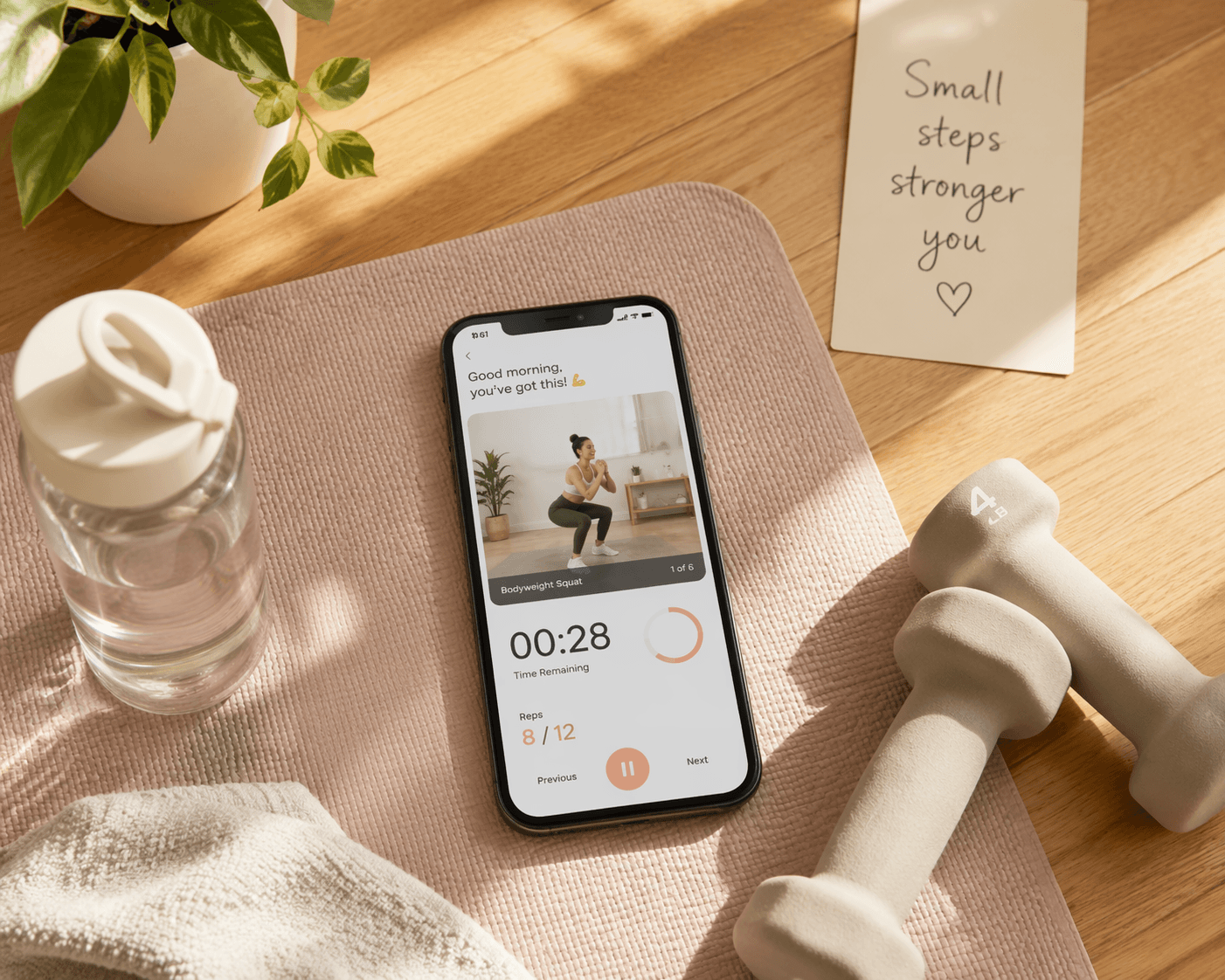
You downloaded a workout app. Maybe you even did one session. Then day two arrived, and everything hurt. You wondered if this was a mistake.
That morning — the morning after the first real effort — is where most beginners quit. Not because the workout was too hard, but because they expected something different. They expected to feel energized, not sore. They expected to see a change by week two, not still look and feel the same.
The First Month Is Not About Transformation
I have burned out three times. Each time the pattern was the same: I went too hard, measured the wrong things, and quit when the numbers did not move. The only way to get past week two is to stop expecting the first month to produce transformation and instead treat it as a practice run for the habit itself.
The single question that determines whether you will be opening the app on day 30 is not how much weight you lost or how many reps you did. It is whether you still opened it on day 8.
This roadmap assumes you have already chosen an app. If you have not, start with our decision framework first. Once the app is picked, the work is not in the downloading — it is in the doing.
Week One: Show Up, Get Sore, Do Not Overthink
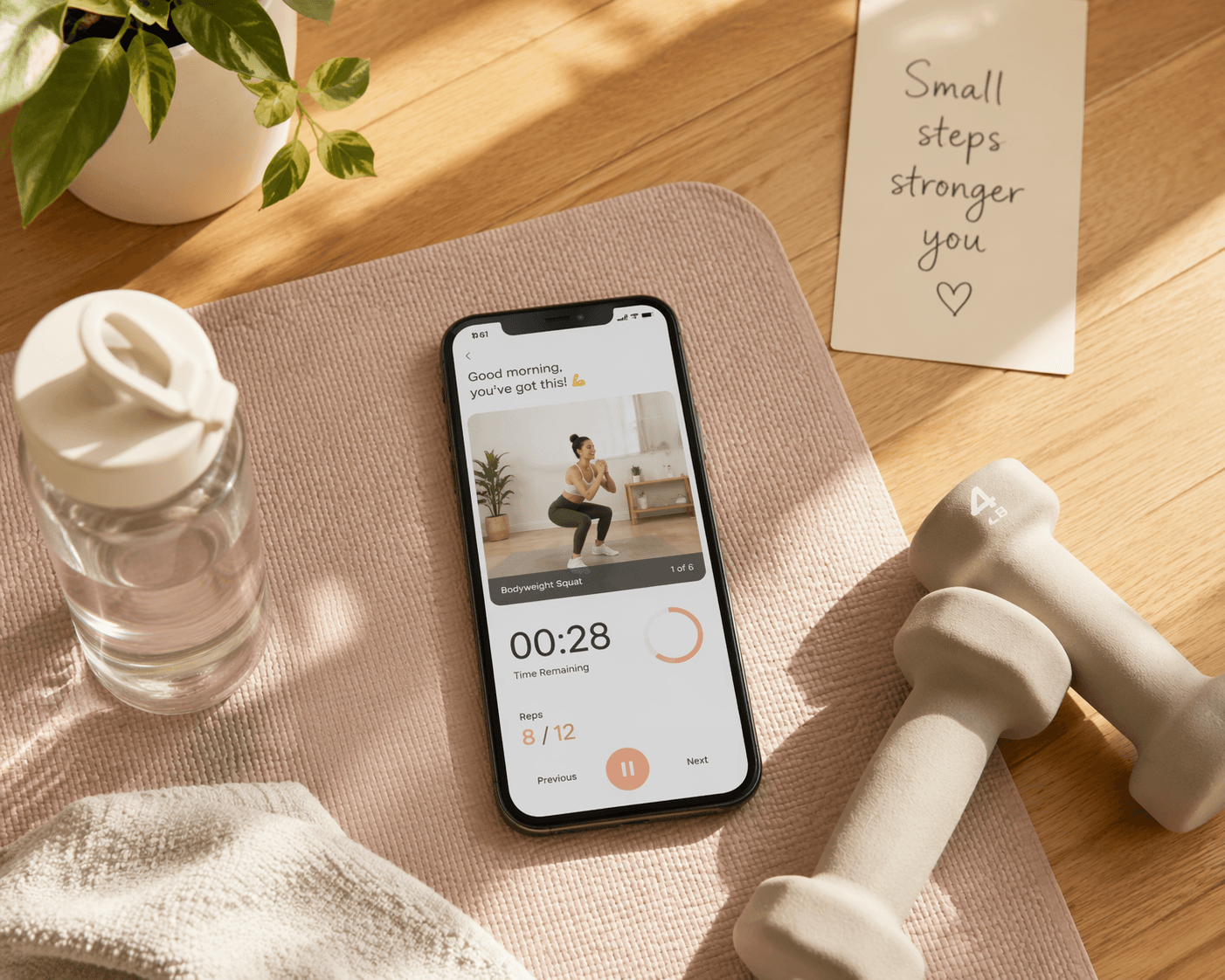
Pick three days of the week. Use the same three days every week. Pick the same time slot. You are not optimizing for the workout yet — you are optimizing for the cue that triggers it.
Here is what to do in those sessions:
- Select only beginner-labeled classes that last 15–20 minutes.
- Use every modification the instructor offers. If you cannot do a move, do the seated or low-impact version. Clear form instruction matters more than motivation here. If the app does not show alternatives, find one that does.
- Expect soreness to peak 24 to 48 hours after your first session. This is called delayed onset muscle soreness (DOMS). It is normal. It is not a sign that you did a good workout — it is a sign that your muscles are adapting to unfamiliar stress. It will fade by day four or five.
- Three days a week is the sweet spot for the first month. Do not add a fourth day until week three.
If you wake up on day two and cannot sit down without wincing, that is expected. Do not decide the workout was too hard. Decide to do the same thing again on day three, even if you modify every move. The habit is the goal, not the intensity.
Week Two: Your Brain Is Adapting (Yes, That Counts)
Repeat the same three workouts from week one. They will feel slightly easier. This is the early-adaptation phase, and it is not muscle growth — it is your brain learning to coordinate the movement more efficiently.
This is a well-established finding in exercise science. Griffin and Cafarelli (2005) showed that during the first few weeks of training, the increase in force output cannot be explained by muscle hypertrophy. Instead, your nervous system reduces inhibition, increases motor unit firing rates, and improves coordination between muscles.
I am not citing this to impress you. I am citing it so you understand that no visible change in week two is not a plateau. It is the exact kind of progress you should expect. The brain adapts first. The muscles follow later.
Stay with the same three days, same time, same 15–20 minute classes. Do not increase duration or intensity. The slight ease you feel is proof that the nervous system is doing its job. Let it finish.
Week Three: The Danger of Feeling Too Good
Now you add a fourth day. You also extend the session to about 25 minutes. You can try a slightly harder beginner class — but only if the app still labels it beginner.
- Add one new session on a day you did not previously work out. Keep the remaining three sessions exactly the same.
- Replace one 15-minute class with a 25-minute class of the same type. If the app has a 'beginner 2' or 'foundations' level, that is a safe step.
- Introduce exactly one modification progression. If you have been doing knee push-ups, try one set of full push-ups in the middle of the class. If it fails, go back to knees. The habit comes first.
The biggest risk in week three is overconfidence. You feel better, so you jump to five sessions or a 45-minute advanced class. That is how you trigger DOMS all over again and break the streak. The progression from 3 to 4 days is enough. Do not rush.
Week Four: What Has Changed (and What Hasn't)
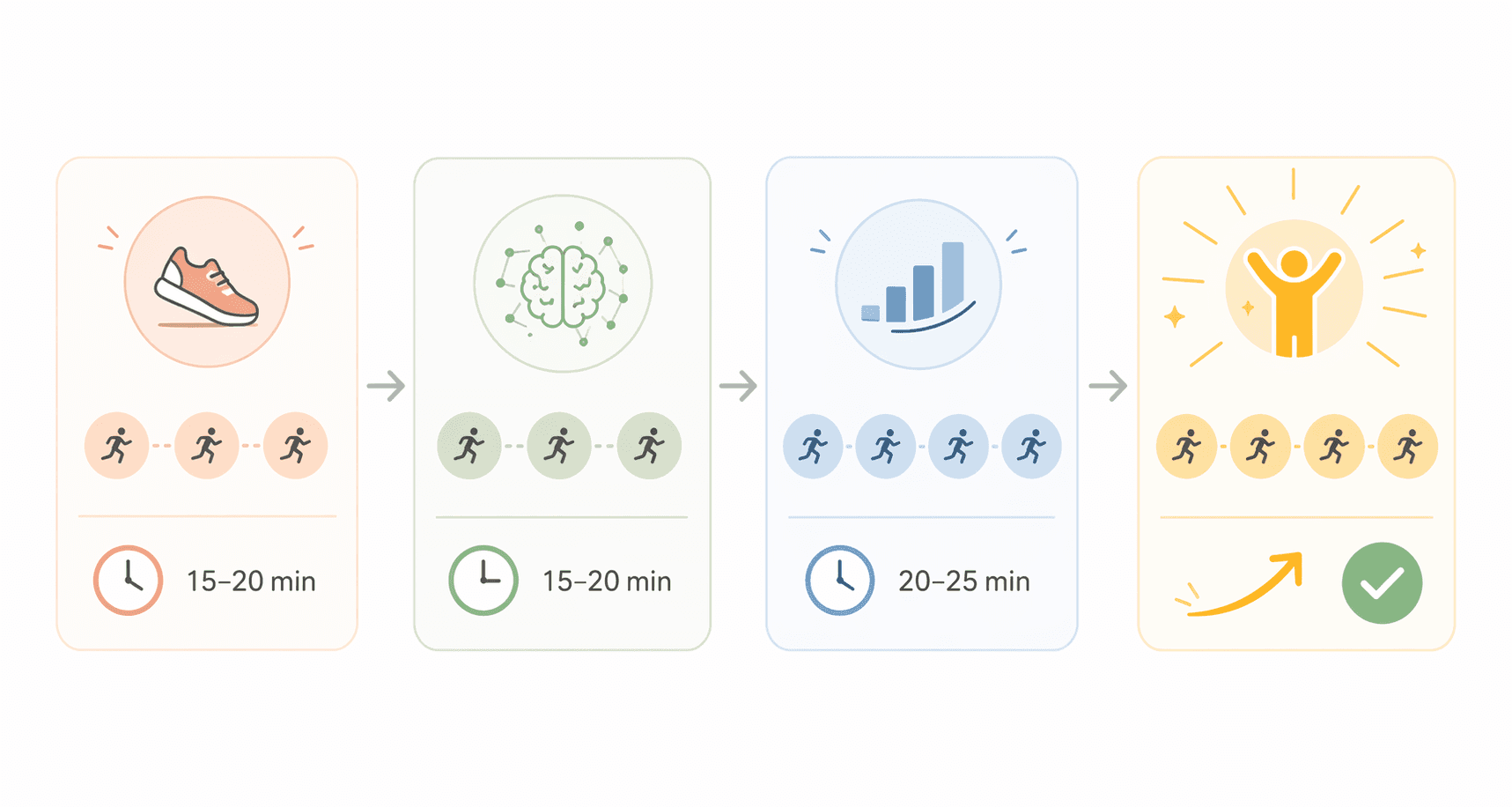
By week four, you will feel measurably more energetic during the day. Falling asleep may come easier. Movement — getting up from a chair, carrying groceries — may feel less clunky. These are real gains. They come from improved neuromuscular coordination and the cardiovascular conditioning that even 15-minute sessions produce.
Body composition will not have changed much yet. The scale will not have moved. That is fine. The first month is not a transformation window — it is the foundation period. If you feel better in your daily life, the system is working.
Week four is also the first time you should reassess your app. If the beginner content still feels right, stick with it. If you are consistently finishing classes without modifying, consider trying a paid tier or a more challenging program. Our 4-week cardio progression plan is one option if you want a structured next step beyond the app.
The One Number That Matters
By now you have a month of data. What should you look at? Not your weight. Not your rep max. Not your body fat percentage. The only number that correlates with first-month adherence is whether you completed the workout — yes or no.
I do not care if you did the hardest version. I care that you opened the app and moved your body for however many minutes you set out to. The scale can wait. That first month was never about the scale. It was about proving to yourself that you can show up. You did. Now keep going.
Comments
Join the discussion with an anonymous comment.