
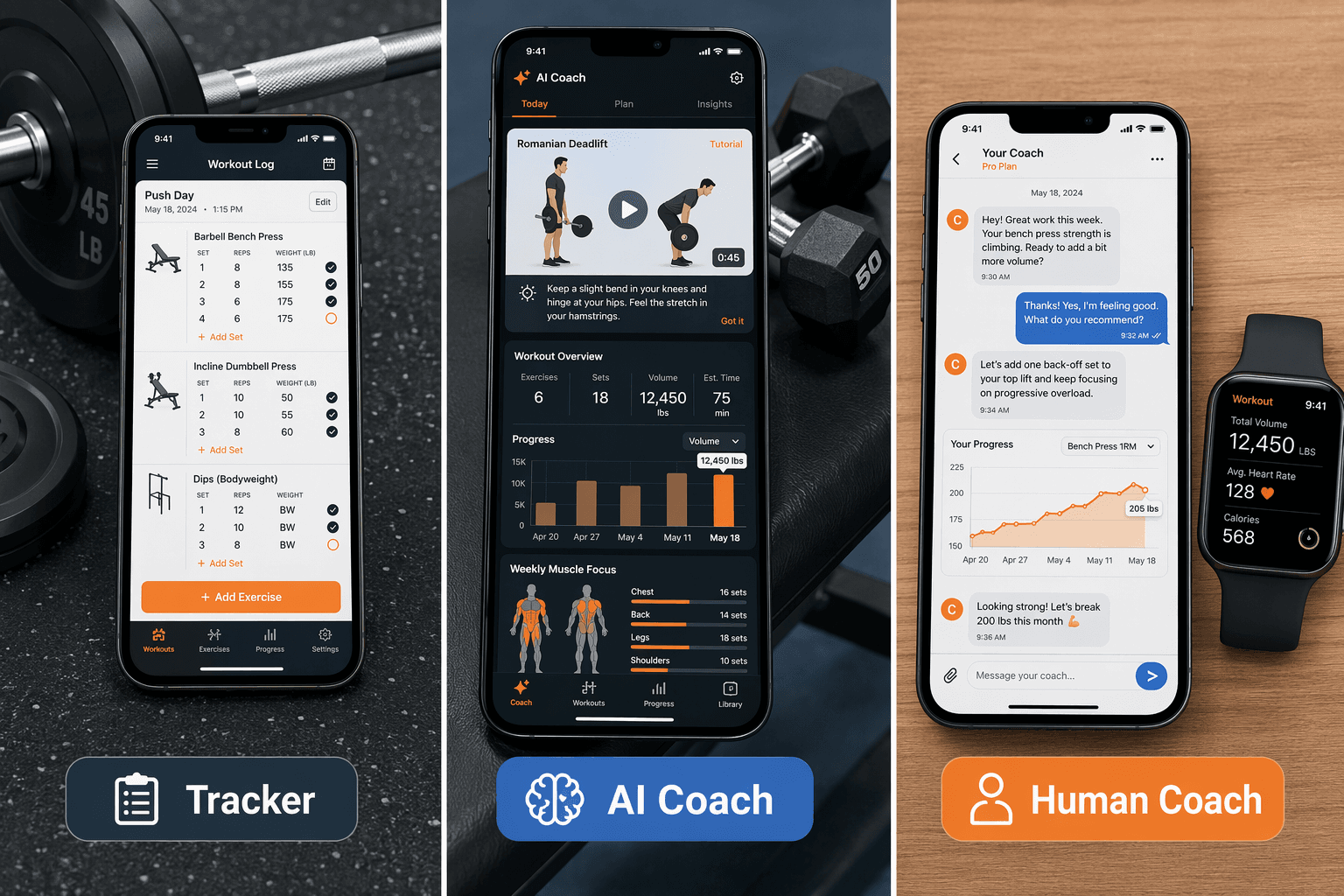
You finish a set, jot down weight and reps in a notes app, then do the math for next week's progression. A free app like Hevy or Caliber Free can log that for you, no charge. A paid app like Fitbod or JEFIT Elite would decide the progression for you, adjust the next workout based on today's performance, and surface a strength score when you're not sure if you're actually getting stronger. The question: is that step worth $10–$15 a month?
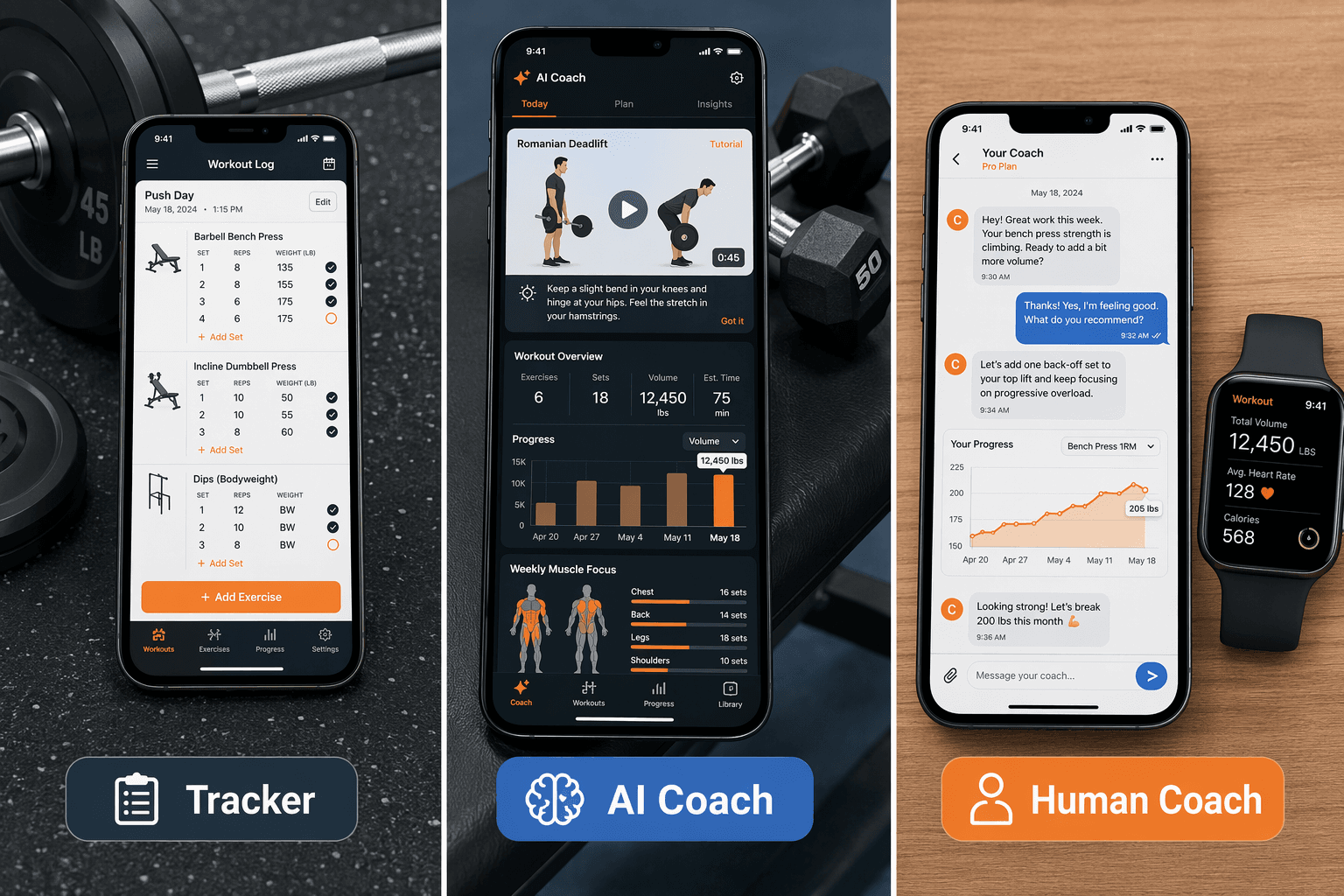
What Free Actually Delivers
Before you spend anything, know that the free tiers of several strength apps are not trial-size. They are full workout loggers. Caliber's free version includes a library of over 500 exercises, ad-free logging, and custom programs. Hevy's free tier gives core tracking, a social feed, and workout history with no ads—many consider it the most generous free strength app. Nike Training Club is entirely free but skews toward bodyweight and cardio, not pure strength. Boostcamp's free tier opens more than 1,000 strength programs, including over 100 designed by certified coaches. For an experienced lifter who already knows how to program progressive overload—when to add weight, when to deload, how to manage volume—any of these free apps will track the data faithfully. The gap is not in logging. The gap is in what happens between workouts.
What Free Apps Can't Do for You
About 40% of fitness app users abandoned an app because it was too complicated to log data. The friction of manual logging and self-programming is a real cost. Free apps leave that cost entirely on the user. Paid apps address three specific gaps:
- Adaptive progressive overload: An algorithm adjusts your weights and volume based on your logged performance. You don't have to decide whether to add 5 pounds or drop a set—the app recalculates after each session.
- Actionable analytics: Strength scores, recovery tracking, and fatigue management that convert raw logs into decisions: push, hold, or back off.
- Accountability features: Either algorithmic nudges (streak tracking, performance alerts) or actual human coaching (personalized feedback, form checks, weekly calls).
Fitbod's internal analysis claims that users who follow its AI recommendations improve their estimated 1RM about 27% faster over 12 weeks compared to users who build their own workouts. That figure comes from Fitbod's own data—hundreds of millions of logged sets—not from an independent trial. I would not treat it as a verified fact, but the mechanism is plausible: an algorithm that adjusts volume and intensity every session is likely to produce more consistent overload than a human who has to remember to do it. Use it as directional evidence, not proof.
The $10–15 Sweet Spot
You may have seen that the average workout app costs $34 per month. That number is real but skewed by premium coaching services. The apps that actually compete on adaptive progression hang around $10–15. That is the relevant range.
| Tier | Monthly Cost | What It Unlocks | Example Apps |
|---|---|---|---|
| Free | $0 | Core logging, basic routines, social feed | Hevy Free, Caliber Free, Nike Training Club, Boostcamp Free |
| Value | $10–15 | Adaptive progressive overload, strength scores, wearable sync, AI periodization | Fitbod ($12.99), Alpha Progression ($9.99), JEFIT Elite ($6.99), Boostcamp Pro ($14.99), Hevy Pro ($2.99) |
| Premium | $35 | Advanced periodization, full analytics, coach-designed programs | JuggernautAI ($35) |
| Coaching | $150–200 | Human coach, video form review, weekly check-ins, custom programming | Future ($199), Caliber Premium ($200), Caliber Pro ($19) |
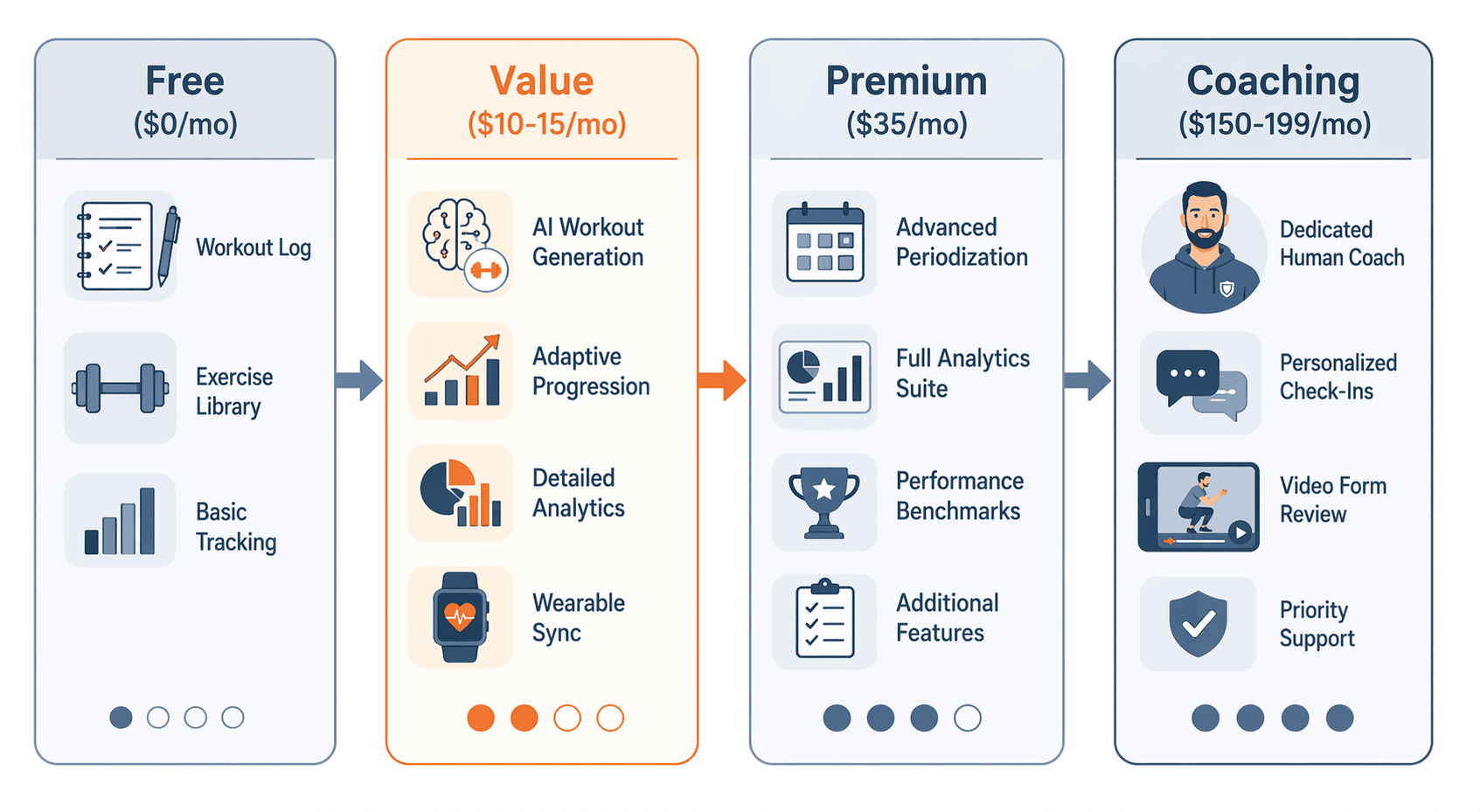
Note that Hevy Pro costs only $2.99 a month but adds only advanced metrics, not adaptive progression. If you want automatic progression, you need the $10–15 band. If you only want better charts, $2.99 works.
Which Tier Fits You?
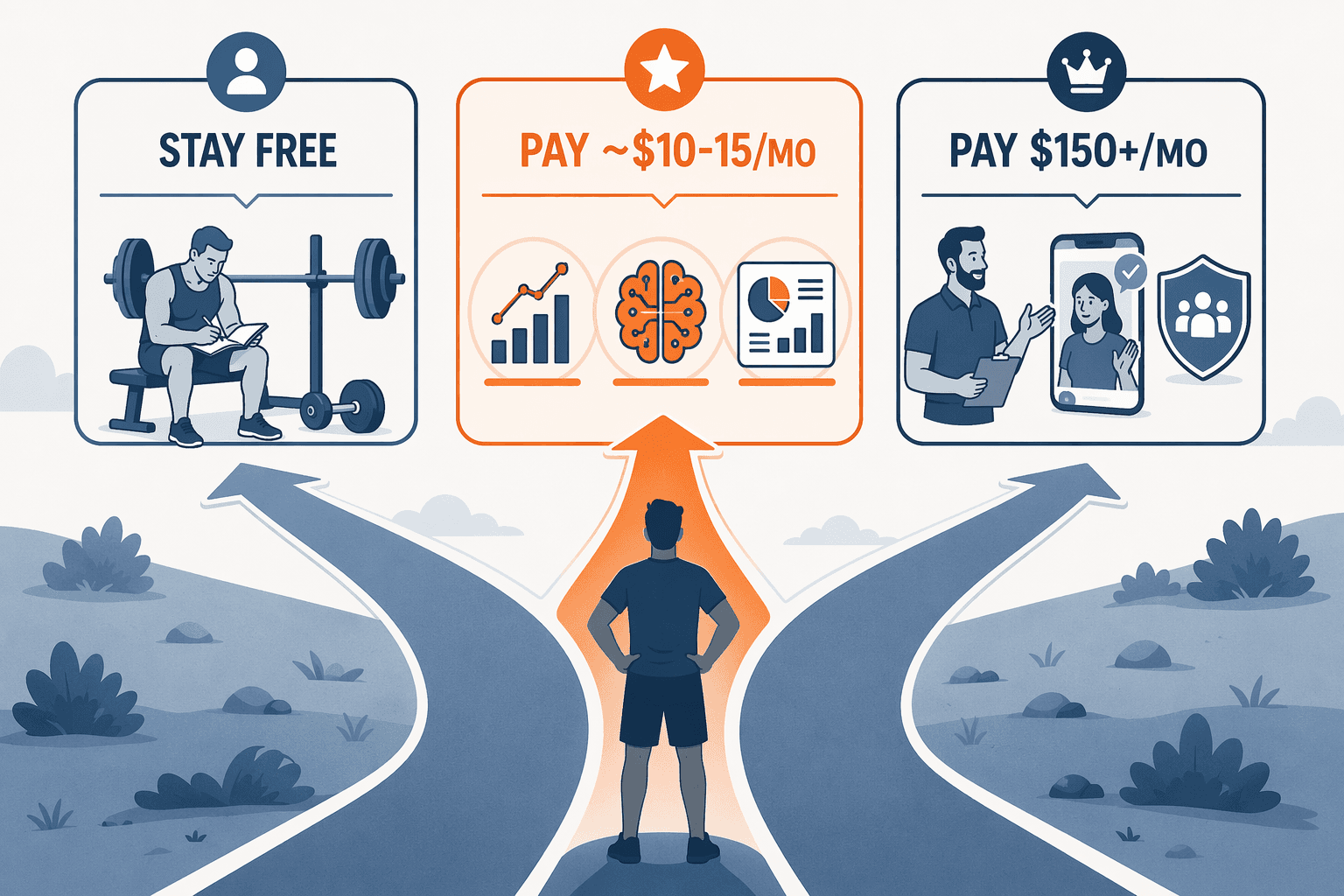
The decision comes down to how much of the programming work you are willing to do yourself.
- Stay free if you are an experienced lifter who already knows how to periodize, manage fatigue, and adjust volume. Hevy Free, Caliber Free, or Boostcamp Free will serve you indefinitely.
- Pay $10–15 if you are an intermediate lifter who wants guided progression without mental overhead. You know the lifts, but want an algorithm to decide next week's weights and flag when recovery is off. Fitbod, Alpha Progression, or JEFIT Elite fit here.
- Pay $150+ if you need human accountability—someone to watch your form, adjust programming based on conversation, and keep you honest. That is Future or Caliber Premium. No AI substitute for it yet.
For a more detailed walkthrough of when beginners should start paying, see our guide: Workout Apps for Beginners: Free vs. Paid — When You Actually Need to Spend Money and When Free Is Enough. If you are curious about how automated tracking reduces friction, the Best Strength Training Apps for Progressive Overload: Automated vs. Manual Tracking article covers the mechanism in more depth.
Hidden Costs: Annual Bills, Auto-Renewal, and iOS Lock-In
Before you subscribe, three practical traps:
- Annual billing: A $14.99 monthly subscription charged annually locks you into ~$180 upfront. If you stop after three months, that money is gone. Boostcamp Pro costs $14.99/month or $39.99/year—a discount if you're sure, a penalty if you're not.
- Auto-renewal is default. Many users pay for months they don't use. Set a calendar reminder to cancel or downgrade.
- Platform lock-in: Future, TR(Ai)NER, and Built Workout are iOS-only. Android users have strong paid options (Fitbod, JEFIT Elite, Alpha Progression) but the coaching tier is effectively unavailable.
For iOS users specifically, the Free vs Paid iPhone Fitness Apps: What You Actually Get at Each Price Tier article offers a complementary comparison focused on the Apple ecosystem.
Final Judgment: $15 a Month Is Fair for Most Home Lifters
Free tiers are not a trick. They are genuinely capable for experienced, self-programming lifters. But the majority of home fitness users—people who want to train consistently without designing their own periodization—will get more out of an app that handles progressive overload, surfaces strength trends, and removes the friction of manual adjustment. The $10–15 band represents a fair price for that shift. The coaching tier at $150+ is a different product, for those who know they need human accountability. For everyone else, a $12.99 subscription to Fitbod or a $14.99 subscription to Boostcamp Pro is likely to pay for itself in the form of skipped plateaus and fewer skipped workouts.
Comments
Join the discussion with an anonymous comment.