
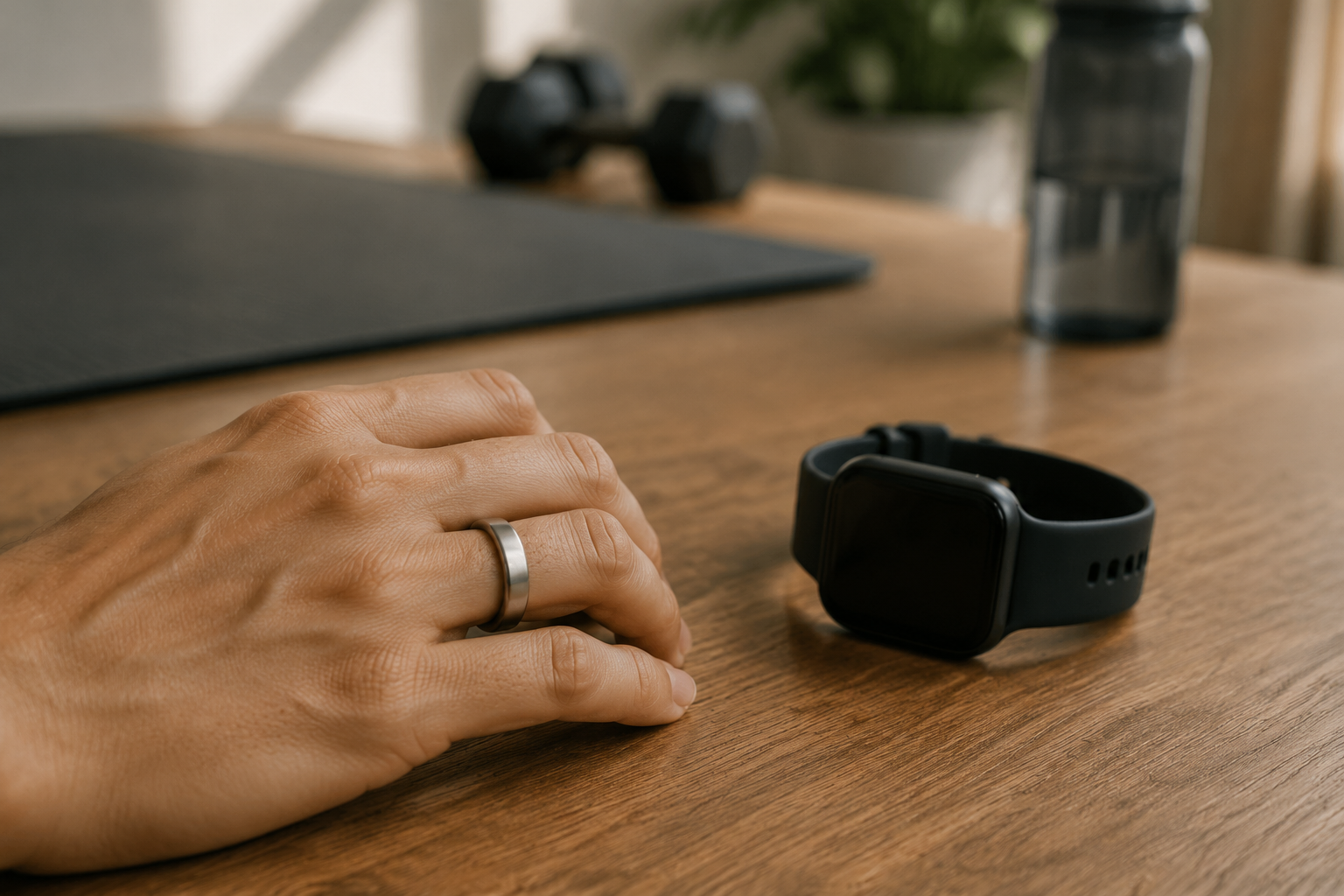
If you train at home and want to wear only one device, the Oura Ring can be enough—but only for a specific kind of routine. It works best as a fitness tracker when your workouts are mostly walking, steady indoor cardio, easy rides, yoga, Pilates, mobility, and low-impact sessions where you do not need to watch zones, splits, sets, or intervals in real time. After Oura’s June 2026 Live Activity Tracking update, that answer is more generous than it used to be: you can start workouts from the app, see real-time pace and distance through your phone’s GPS, use paired devices for heart rate, view heart-rate zones, and get route maps afterward on supported rings.[1]
But if your home training includes heavier dumbbells, pull-ups, deadlifts, barbell work, intervals, outdoor runs without a phone, or workouts where you adjust effort mid-session by looking at your wrist, Oura still makes a better recovery companion than a primary fitness tracker. The ring is excellent at telling you how you recovered. It is much less graceful when the workout itself needs live feedback, grip comfort, or durable contact with metal.
The Short Verdict by Workout Type
| Workout | Oura as the only tracker | Why |
|---|---|---|
| Walking | Usually enough | Phone GPS can provide pace and distance; the ring handles recovery context well. |
| Treadmill or indoor bike | Often enough | Useful for duration, effort trends, and post-workout review, especially if the session is steady. |
| Yoga, Pilates, mobility | Strong fit | Low grip conflict and recovery metrics matter more than live workout controls. |
| Bodyweight circuits | Mixed | Fine for general logging, weaker for intervals, transitions, and real-time intensity checks. |
| Dumbbell or barbell strength | Poor primary tracker | The ring can pinch, scratch, interfere with grip, or risk damage under load. |
| Outdoor running or riding | Conditional | More useful after Live Activity Tracking, but still phone-dependent for GPS. |
That table is the cleanest way to think about Oura. The decision is not really “ring versus watch” in the abstract. It is whether today’s workout asks the wearable to stay out of the way, or whether it asks the wearable to actively guide the session while you are moving.
Where Oura Now Feels More Like a Fitness Tracker
The June 2026 Live Activity Tracking update matters because it fixes one of the most annoying gaps in older Oura workout use: the feeling that you were reconstructing the session after it happened. Oura says the feature launched on June 4, 2026 for Oura Ring Gen3 and newer, with support for starting a workout from the Oura App, real-time pace and distance through phone GPS, real-time heart rate through paired Bluetooth devices such as Polar chest straps and Apple AirPods Pro, heart-rate zone breakdowns, lock screen widgets, and post-workout route maps.[1]
For steady home cardio, this is a real improvement. If you are walking outside with your phone, riding an indoor bike, doing an easy treadmill session, or taking a long low-impact class, Oura can now capture more of the session without making the workout feel like an afterthought. PCMag’s June 2026 update also noted the new live activity features while still emphasizing that Oura depends on the phone for GPS rather than carrying built-in GPS inside the ring.[2]
That phone dependency is not a small detail. A watch can sit on your wrist and handle a run, walk, or ride by itself. Oura still asks you to bring the phone if pace, distance, and route matter. For some people, that is no sacrifice at all; the phone is already in a belt, pocket, stroller caddy, or treadmill cup holder. For others, especially outdoor runners who deliberately leave the phone behind, it keeps Oura from becoming a full watch replacement.
The other caveat is timing. Live Activity Tracking is brand-new as of late June 2026, so there is not yet much long-term independent testing on how reliably it behaves across weeks of runs, rides, walks, paired chest straps, headphones, app states, and phone models. It is fair to call the update meaningful. It is too early to treat it as proof that Oura has closed the workout-tracking gap with Apple Watch, Garmin, Fitbit, or Whoop.
Walking, Treadmill Work, and Easy Cardio Are Oura’s Best Workout Use Case
Oura makes the most sense as a primary tracker when the workout has a simple shape: start, move steadily, stop, recover. A treadmill walk before work, a zone-two ride on an indoor bike, a long neighborhood walk, or a low-impact cardio class does not need much from the device during the session. You mostly want duration, heart-rate context, movement credit, and a recovery read the next morning.
That is where Oura’s low-profile design helps. It does not nag like a smartwatch, it does not take over the room, and it is easy to keep on all day. If your training is consistent but not data-hungry, the ring can reduce friction. You wear it, log the session, and let the app fold the workout into sleep, readiness, and activity trends.
The trade-off is that Oura is still not the best tool when you want to steer the workout second by second. A wrist display is easier to glance at while changing treadmill speed, adjusting resistance, or checking whether you are drifting above the target zone. Oura’s lock screen widgets help, but they do not change the basic interaction: you are still using a phone-centered setup for a lot of the live view.
Yoga, Pilates, and Mobility Fit the Ring Better Than Most Gym Work
For yoga, Pilates, stretching, and mobility, the Oura Ring is easier to defend. These sessions often produce a useful fitness effect without demanding constant mid-workout data. You are not usually checking split pace during a Pilates flow or counting heart-rate zones through a hip mobility sequence. Comfort, sleep tracking, readiness, and consistency matter more than live controls.
There are still small annoyances. A ring can press into the floor during planks, feel noticeable during certain hand-supported positions, or get in the way if you use props. But compared with a heavy dumbbell handle or a pull-up bar, the conflict is usually minor. For a recovery-minded home exerciser whose week is built around Pilates, walking, easy cycling, and gentle strength, Oura alone may be a perfectly reasonable setup.
Strength Training Is Still the Hard Stop
Strength training exposes the difference between a beautiful wearable and a useful workout tool. A ring sits exactly where a bar, dumbbell, kettlebell, cable handle, pull-up bar, or rowing handle wants to press. That creates two problems at once: comfort for your hand and safety for the ring.
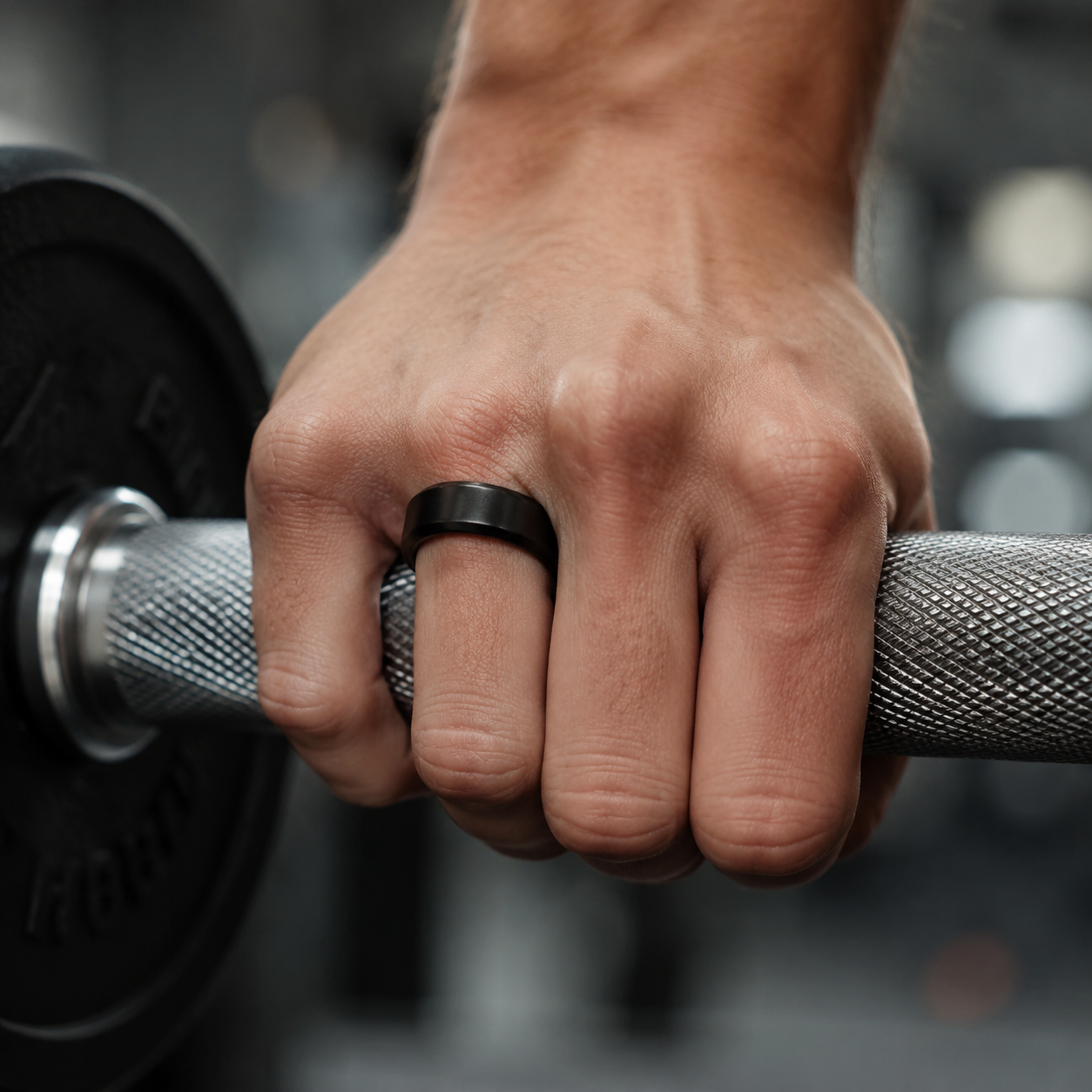
This is not a theoretical complaint from people who dislike smart rings. Business Insider’s long-term Oura reviewer wrote that she removes the ring for deadlifts and pull-ups because it pinches her skin, while Garage Gym Reviews warned that the ring may get scuffed from regular lifting.[3][4] Runner’s World was blunter, noting that pressure on barbells and dumbbells can easily break smart rings and that the reviewer had discovered this in the past.[5] Forbes Vetted’s Oura Ring 4 tester also removed the ring for heavier weights because of scratches.[6]
Once you remove the ring for the movements that matter most, it stops being the only tracker for that workout. You can still add or import the session later. You can still use Oura to judge whether yesterday’s lifting affected sleep, resting heart rate, HRV, or readiness. But it is no longer tracking the work in the same direct way a wrist-based device can.
Oura also does not solve the strength-specific data problem. A lifter may want sets, reps, rest times, load notes, interval structure, or at least a convenient screen to check heart rate between hard sets. Oura’s workout imports can bring in duration, calories, and heart-rate range from connected platforms, but not set tracking, rep counting, or the full heart-rate zone distribution from the imported device.[7]
For home strength training, the honest setup is usually simple: take the ring off before heavy gripping work, use a watch, band, chest strap, or training app for the session itself, then let Oura do what it does well afterward. If that sounds like wearing two systems, that is because strength training still benefits from two different jobs being handled by different tools.
Outdoor Runs and Rides Depend on Whether You Carry Your Phone
For outdoor running and cycling, Oura’s answer changed in June 2026, but it did not become the same answer as Garmin or Apple Watch. With Live Activity Tracking, the ring can now participate in a more complete workout record: real-time pace, distance, route maps, heart-rate zones, and lock screen access are all part of the update when the required phone and paired devices are involved.[1]
The phrase “when the required phone and paired devices are involved” is doing real work. Oura has no built-in GPS, a limitation noted across reviews and product comparisons from Digital Trends, Tom’s Guide, and PCMag.[2][8][9] If you run with your phone anyway and do not care about a watch face on your wrist, Oura can be enough for casual outdoor sessions. If you want to leave the phone at home, follow structured intervals, watch lap pace, or use live metrics without handling a phone, a wrist tracker is still the better primary device.
What Oura Tracks Exceptionally Well
The strongest argument for Oura is not that it has become a conventional fitness tracker. It is that its recovery data is genuinely useful, especially if you have never found a watch comfortable enough to wear through the night.
Oura’s sleep, resting heart rate, HRV trends, readiness score, temperature sensing, and illness-related signals are the reason people tolerate its workout compromises. A University of Oulu study found Oura measured resting heart rate with 99.9% reliability compared with medical ECG, though Business Insider noted the important caveat that Oura provided equipment and software for the study while reportedly having no role in the study design or analysis.[3]
That number should not be stretched beyond what it measures. Resting heart rate during sleep is not the same as heart-rate accuracy during burpees, kettlebell swings, hill repeats, or a sweaty interval ride. It does, however, support the idea that Oura is very strong at the quiet, overnight measurements that make recovery visible. If your main frustration with a watch is that you never sleep in it, Oura may give you better recovery data simply because you will actually wear it.
This is also where a recovery routine makes sense. If you want to use Oura for training decisions rather than just sleep curiosity, our guide to using Oura Ring to improve recovery and avoid overtraining is the more practical next step after deciding whether the ring fits your workout mix.
Ring 5 Makes Oura More Comfortable, Not Suddenly More Athletic
Oura Ring 5 launched on June 4, 2026, with a thinner body, longer battery life, and redesigned sensing architecture. Oura says Ring 5 is 40% thinner, offers up to 10.5 days of battery life, uses fewer but more precise signal pathways, comes in six finishes, and starts at $399.[10] PCMag named it the “Most Comfortable” smart ring in its June 18, 2026 update, while keeping Ring 4 as its “Best Overall” pick at $349.[2]
For fitness specifically, the upgrade is less dramatic than the comfort story. Oura Ring 4 also receives the same Live Activity Tracking update through software, as do Gen3 and newer rings.[1] That means Ring 5 may be the better choice if the thinner profile helps you tolerate the ring all day and night, but it is not a major workout-tracking leap over Ring 4. It still does not add built-in GPS. It still does not make barbell pressure friendly to smart rings. It still does not turn Oura into a watch.
The Subscription Changes the Watch Comparison
Oura’s small form factor can make the cost feel quieter than it is. Ring 4 costs $349 to $499, and the $5.99 monthly subscription brings the first-year total to about $421 to $571 before settling into roughly $72 per year afterward.[11] Apple Watch Series 11 is about $400 with no required health subscription in this comparison, Whoop 5.0 uses a $0 upfront model with a $200 to $360 yearly membership, and Fitbit Air is listed at $99 with an optional $10 monthly Premium plan.[11]
The subscription matters because it is not just a nice extra. Forbes reported in May 2026 that Oura users lose access to most health insights and historical data without paying.[11] If you are comparing Oura against a watch, compare the device plus the ongoing membership, not just the ring price. The more you plan to use Oura as your central health dashboard, the less optional that fee becomes.
The Hybrid Setup Is the Most Honest Recommendation for Many Home Exercisers
A hybrid setup sounds inefficient until you separate the jobs. A watch, Garmin-style device, chest strap, or fitness band handles the workout while it is happening. Oura handles sleep, readiness, HRV trends, temperature, and recovery after the workout is over. That split is especially sensible for people who lift, run intervals, do structured rides, or want real-time zone control.
Oura supports workout imports from Apple Health, Health Connect on Android, and Strava. Imported workouts can include duration, calories, and heart-rate range, but not set tracking, rep counting, or the importing device’s complete heart-rate zone distribution.[7] So the import pathway is useful, but it does not fully merge two ecosystems into one perfect record.
This is where the ring-versus-watch question becomes practical rather than philosophical. If you are still deciding which form factor belongs in your home gym, the broader comparison in Fitness Tracker Ring vs. Watch: Which Fits Your Home Gym Routine? may be more useful than comparing spec sheets one feature at a time.
Who Can Use Oura as Their Only Fitness Tracker?
Oura alone makes sense if your training is steady, low-impact, and recovery-minded. That includes people who walk daily, ride an indoor bike at moderate intensity, do Pilates or yoga, take low-impact classes, and care more about sleep, readiness, and consistency than live workout control. It also works better for people who already carry a phone during outdoor workouts and do not mind starting sessions from the app.
Oura plus a wrist tracker is the better setup if you lift weights, train with intervals, run or ride outdoors without a phone, monitor heart-rate zones during the session, or want the device to guide the workout instead of merely recording it. That is not a failure of the ring. It is the consequence of putting a tiny recovery sensor on a finger and asking it to do the job of a screen, a GPS watch, and a gym-safe training tool.
The cleanest answer is conditional: Oura can replace a fitness tracker for gentle, steady, recovery-first home training. For strength work, interval sessions, and GPS-first outdoor workouts, it is better as the device you sleep in—not the only device you train with.
References
- Live Activity Tracking, Oura Pulse Blog, June 4, 2026.
- PCMag June 18 2026 update, PCMag, June 18, 2026.
- Oura Ring 4 Review: Pros and Cons After 4 Years, Business Insider.
- Garage Gym Reviews Oura Ring review, Garage Gym Reviews.
- Oura Ring 4 Review, Runner’s World.
- Oura Ring 4 Review: I Tested It For 6 Weeks, Forbes Vetted.
- Oura workout imports from Apple Health, Health Connect, and Strava, Oura Support.
- I Thought the Oura Ring Would Be the Perfect Fitness Tracker — I Was Wrong, Digital Trends.
- I Ditched My Apple Watch for Oura for a Month, Tom’s Guide.
- Oura Ring 5 launch materials, Oura, June 4, 2026.
- Oura Ring Subscription: What You Get And What You Lose Without It, Forbes, May 10, 2026.
Comments
Join the discussion with an anonymous comment.