
The first useful question after opening a ring app is not whether the number looks good. It is which signal is actually steering today's training decision. HRV deserves the first look because RingConn treats it as a primary recovery signal, and Oura says its Readiness Score uses 14-day weighted averages while comparing recent patterns with the past two months [3][2].
Read HRV against your own baseline
HRV means more when you compare it with your own recent pattern than when you compare it with somebody else's app screenshot. Two weeks of consistent wear is the minimum useful window for a baseline, and before that the number is noisy enough to mislead more than it helps [3][2].
That is why one bad night is rarely the whole story. A late meal, a hard session, alcohol, stress, travel, or simply a rough sleep can pull HRV down without changing the bigger recovery picture. The question is whether the dip repeats long enough to change tomorrow's workout.
Sleep stages are useful, but they are still estimates
Sleep-stage graphs are the part people overread. The best consumer validation available comes from a 2025 systematic review and meta-analysis of 388 people: Oura Ring did not differ significantly from polysomnography for total sleep time, deep sleep, or REM sleep [1]. That is good evidence that the sleep picture is useful enough to trust cautiously, not a reason to treat every stage shift as a medical event [1].
That evidence is strongest for earlier Oura hardware, so it should not be read as a guarantee for every 2026 ring model. Even with good overnight tracking, the stages are best used as context: thin deep sleep and fragmented REM can help explain why the next day feels flat, but the HRV trend still does the heavier lifting.
Why one ring calls you ready and another does not
The disagreement is usually not that one app is right and the other is broken. Oura's Readiness Score, RingConn's Energy Score, and Ultrahuman's Recovery Index all draw from the same overnight inputs — HRV, resting heart rate, sleep stages, and temperature trends — but they weight those inputs differently [2][3][4].
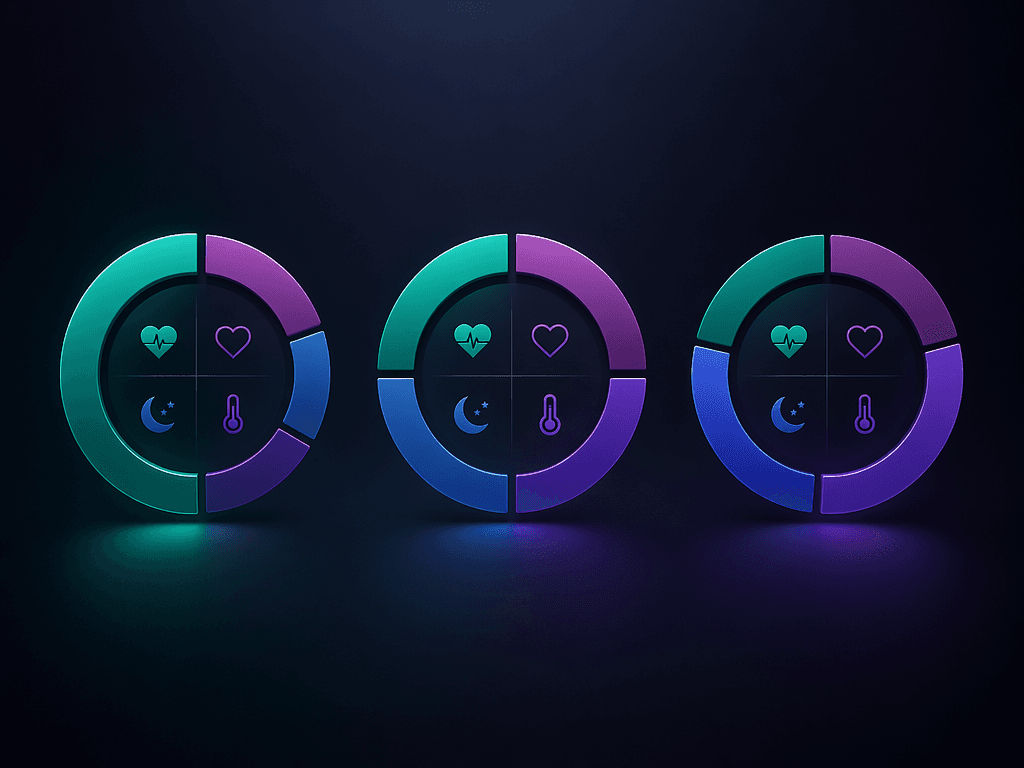
That weighting difference is enough to change the verdict from the same night. Wareable's side-by-side testing found Ultrahuman Ring Air compared well with Oura for sleep and recovery insights, which is useful as a comparison note, but it still leaves each platform free to translate the raw data differently [4].
If Ultrahuman is on your shortlist, check current U.S. availability before you plan around it.
What to do when the numbers do not agree
The point is not to obey every green screen or every red one. A readiness score in the 85 to 100 range is generally the green light, while repeated scores below 70 are a good reason to prioritize rest. The goal is to line up the ring's trend with your actual readiness, then choose the session that matches both.
- If HRV stays below your baseline for more than a night or two, lower intensity and move the session toward easy cardio, mobility, or a technique day.
- If readiness is high but sleep was poor, keep the workout but trim the top end: fewer sets, less load, or shorter duration.
- If skin temperature shifts by less than 1°C from your usual pattern alongside a falling HRV line, treat it as an early stress or illness cue and back off for a day while you watch the next reading.
- If the ring says you are under-recovered and your body feels under-recovered, believe the overlap. If the ring is green and you feel flat, let the body win.
Rings are much better at summarizing overnight recovery than at judging structured workouts, especially strength sessions, so do not expect today's squat work to be captured with the same confidence as last night's HRV. When the question shifts from reading data to choosing hardware, the buying guide can help: Best Fitness Tracker for Recovery.
If the data trend is paired with symptoms that are unusual for you, check with a healthcare professional rather than asking the app to make the call.
Comments
Join the discussion with an anonymous comment.