
How the Oura Ring Tracks Recovery: Readiness Score, HRV, and Body Temperature Explained
For home fitness enthusiasts wondering if the Oura Ring can guide training decisions, this explainer breaks down how its Readiness Score, Recovery Index, and body temperature tracking work—and why it's more useful for recovery than workout tracking.
When someone types “oura ring fitness tracker” into a search bar, they expect a device that counts reps, measures sets, and logs a workout. The Oura Ring does none of those things well. That’s exactly why it needs to be judged on different terms. I’ve tested a dozen wearables, and the first thing I check is where the accuracy claim comes from — an independent peer-reviewed study or a manufacturer blog post. Oura’s marketing leans hard on recovery figures. As it turns out, the hardware gives it an advantage that wrist devices can’t match.
The finger has a dense vascular network and strong blood flow. Oura’s own blog says “the finger provides stronger and more stable pulse signals than the wrist.” That is not just marketing — the physiology is real. A stable pulse signal means more reliable HRV and resting heart rate readings, which are the foundation of any recovery metric.
Oura claims its sleep staging algorithm achieves 79% agreement with polysomnography, compared to 60–65% for most wrist wearables. That figure comes from Oura’s own blog, so treat it as a best case. A PubMed study (n=35, healthy adults 20–50) found Oura’s sleep staging sensitivity between 76.0% and 79.5% and no significant difference from PSG for wake, light, deep, or REM sleep. The corroboration is reassuring, but one of the study authors sits on Oura’s Medical Advisory Board. That caveat matters.
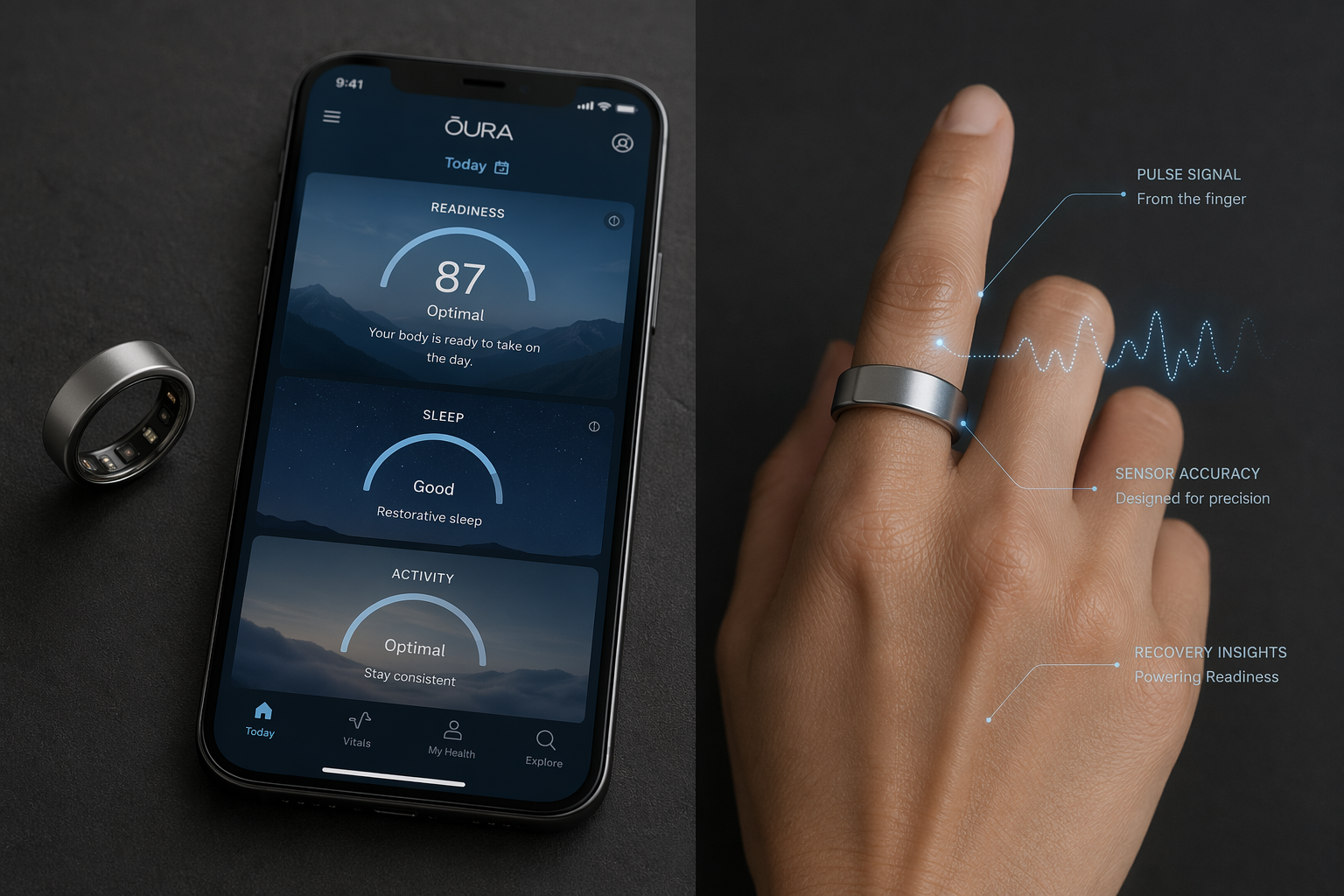
An independent peer-reviewed study in Physiological Reports (2025) tested several consumer wearables and found Oura Ring Gen3 and Ring 4 showed the strongest agreement for both HRV and RHR measurements. That is solid evidence that the finger sensor advantage translates into real-world accuracy for the two metrics that matter most for recovery assessment.
What the Readiness Score Actually Measures
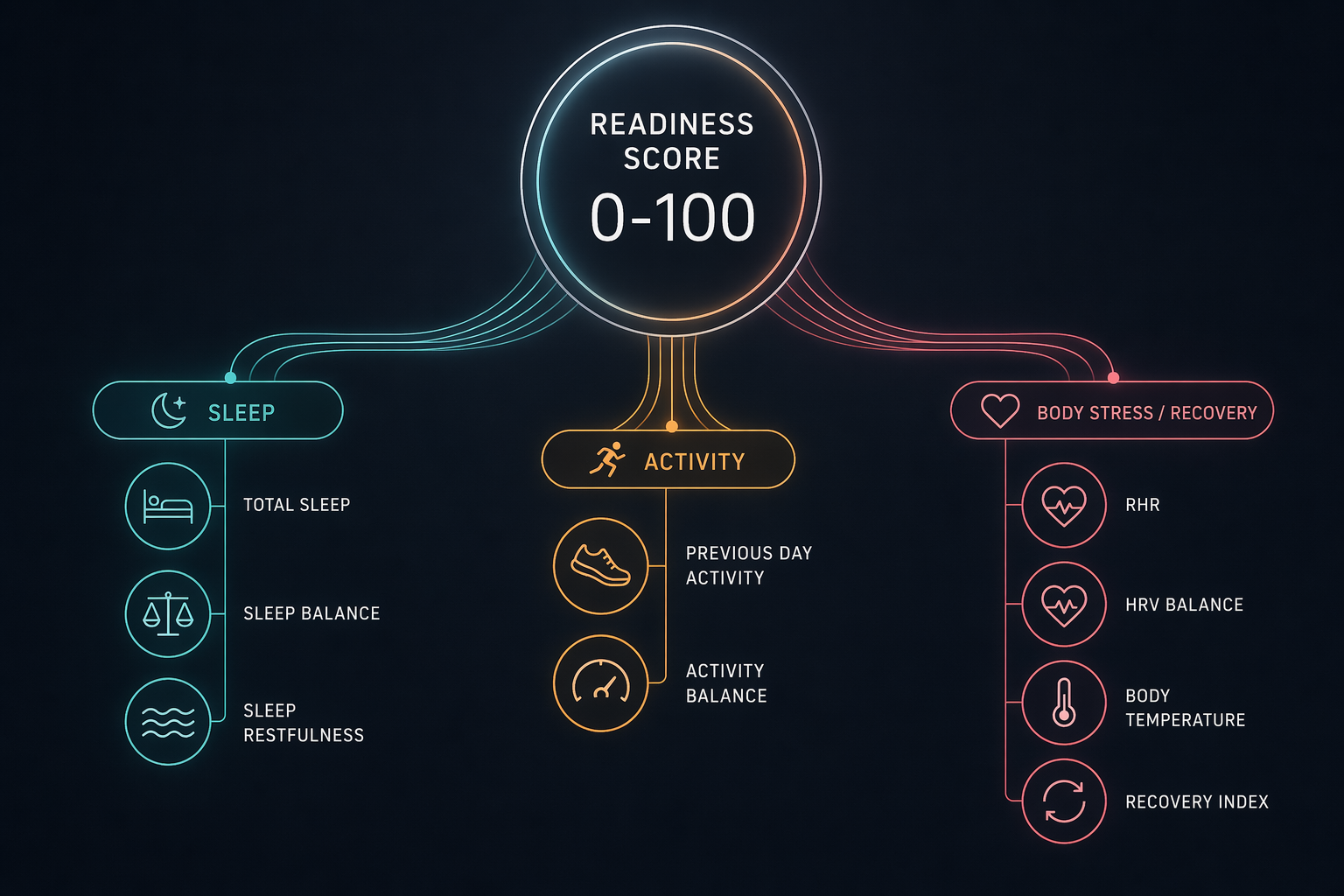
The Readiness Score ranges 0–100, with three tiers: 85+ (“ready for action”), 70–84 (“recovered enough”), and below 70 as a signal to recover. But what goes into it? Oura says the score is the sum of seven contributors grouped into three pillars:
- Sleep: Total Sleep, Sleep Balance (sleep debt over two weeks), and how restful the night was.
- Activity: Previous Day Activity and Activity Balance (training load over two weeks).
- Body Stress: Resting Heart Rate, HRV Balance, Body Temperature, and the Recovery Index.
Most fitness wearables give you a single “recovery” number and leave you guessing. Oura at least tells you which contributor is dragging the score down, and it tracks deviations over a rolling two-week window. A single poor night of sleep might not tank your readiness if your sleep debt is low and your activity balance is favorable. That’s genuinely useful.
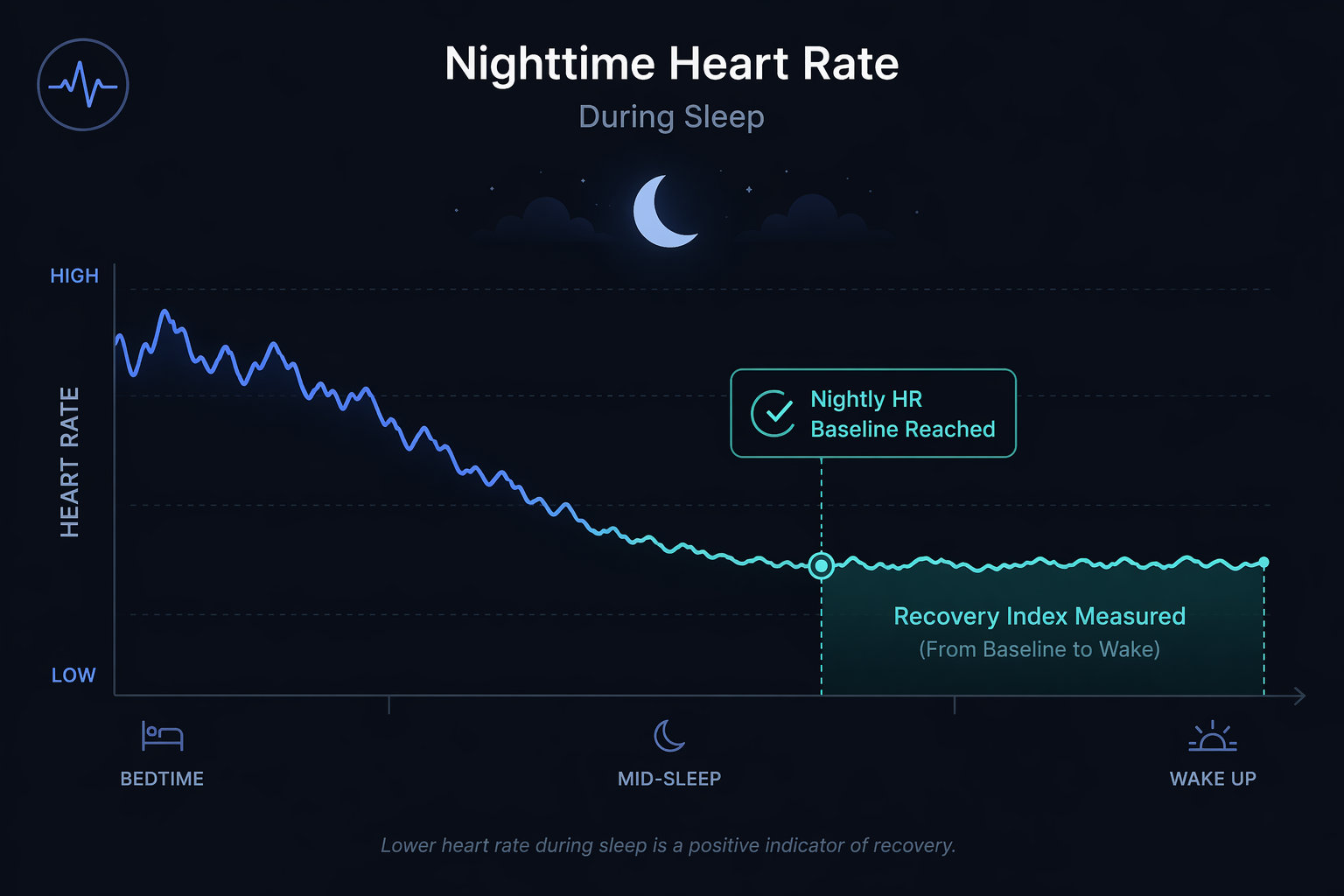
Among the seven, the Recovery Index deserves special attention. It measures something specific: after your heart rate reaches its nightly baseline, how many hours of recovery sleep did you get? The logic is sound — your resting heart rate drops through the early night until it plateaus, signaling that your body has fully disengaged from the day’s demands. Time spent sleeping after that point is deeper, more restorative. I find this metric genuinely useful. It moves beyond “total sleep time” and gets at quality of the recovery window.
Body Temperature and HRV: Early Warning Signals
Two other contributors — body temperature and HRV — act as early warning signals for stress or illness. Oura claims its temperature sensing detects changes as small as 0.13°C with >99% accuracy compared to research-grade sensors. That figure comes from Oura’s internal testing, so I apply the same qualifier: likely measured under controlled conditions. Still, a deviation that small is real.
A Runner’s World reviewer reported that Oura’s Symptom Radar predicted illness twice before they felt symptoms, based on skin temperature, RHR, and HRV. That is anecdotal — not a clinical trial — but it illustrates the practical value of combining these signals.
The ring also acts on its own data. Rest Mode automatically activates when it detects an elevated body temperature. When it kicks in, the Activity Score and activity-related contributors are removed from the Readiness Score, and the emphasis shifts to recovery signals — RHR, HRV Balance, Recovery Index, body temperature. You can also enable it manually for travel or planned rest days. It is a simple design choice that works: the device shifts from “go do something” to “please rest” without you having to override a goal.
Symptom Radar, introduced more recently, uses deviations in skin temperature, RHR, and HRV to flag potential illness onset before symptoms appear. The Runner’s World account is the most concrete user report I have seen. This feature is still young — I would not treat it as a diagnostic tool, but as an extra early alert it has real utility.
The Strength Training Trade-Off
This is not a design flaw; it is a functional trade-off. A ring cannot be both unobtrusive during sleep and comfortable under a barbell. The fact that reps and GPS are not Oura’s strengths reinforces the thesis: do not judge the Oura Ring by workout tracking. Judge it by how well it tells you whether you should train hard or back off.
Putting the Numbers to Work
| Readiness Score | Training Decision |
|---|---|
| 85+ | Push hard — you are fully recovered and ready for high intensity. |
| 70–84 | Maintain — you are recovered enough for a normal session, but watch for signs of fatigue. |
| <70 | Recover — prioritize sleep, active recovery, or a rest day. |
The Oura Ring is not a workout tracker. It is a recovery tracker. For home fitness athletes who need to know when to push and when to rest, the trade-off is worth making.
This is general fitness education, not medical advice. For diagnosis or treatment of pain or injury, consult a qualified clinician.
Pick your next session
Browse all routines to find an appropriately-spaced next session.
Spot something off?
This content sits adjacent to health guidance — tell us if a citation or figure needs a correction.