
The 58% Reality Check: Yellow Is the Norm
You check your Whoop recovery score, and it's yellow again. 57%. Another day in the zone most people feel is 'not good enough.' But here's the thing: the average nightly recovery across all Whoop members is 58% — solidly yellow. Yellow is normal, not a failure. The goal is not to hit green every morning — that's unrealistic. The goal is to move from red to yellow, or from the bottom of yellow to the top, on days when you need to perform. And that shift is achievable with a few evidence-based behaviors.
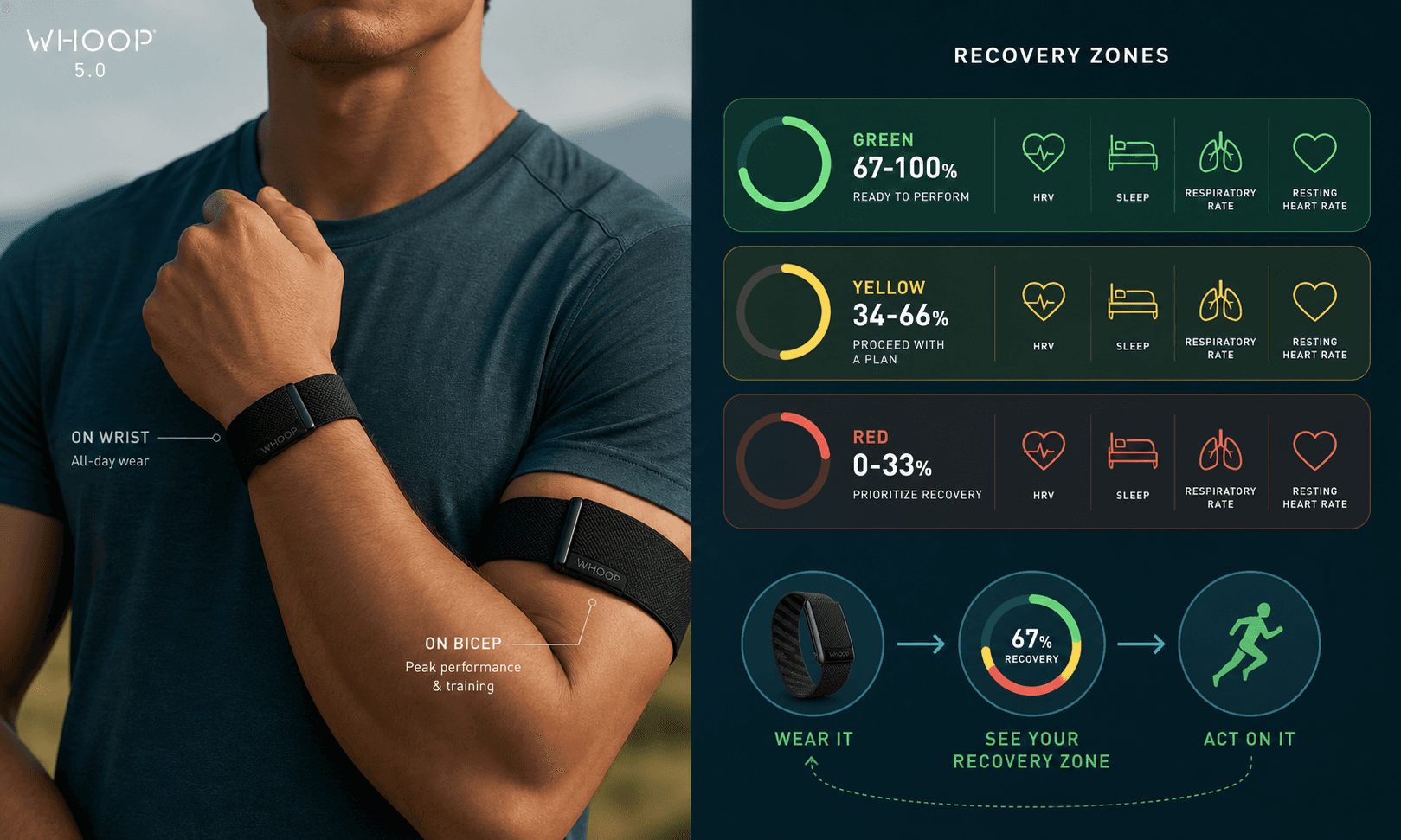
What Actually Moves the Needle
WHOOP's own member data — self-published in April 2026 — identifies the five most popular recovery activities people log in the app: meditation, stretching, breathwork, ice baths, and massage therapy. I would not call this rigorous science. The data is self-reported, self-published, and not independently audited (). But it is the best large-scale snapshot we have of what actual Whoop members do, and the patterns are consistent enough to act on.
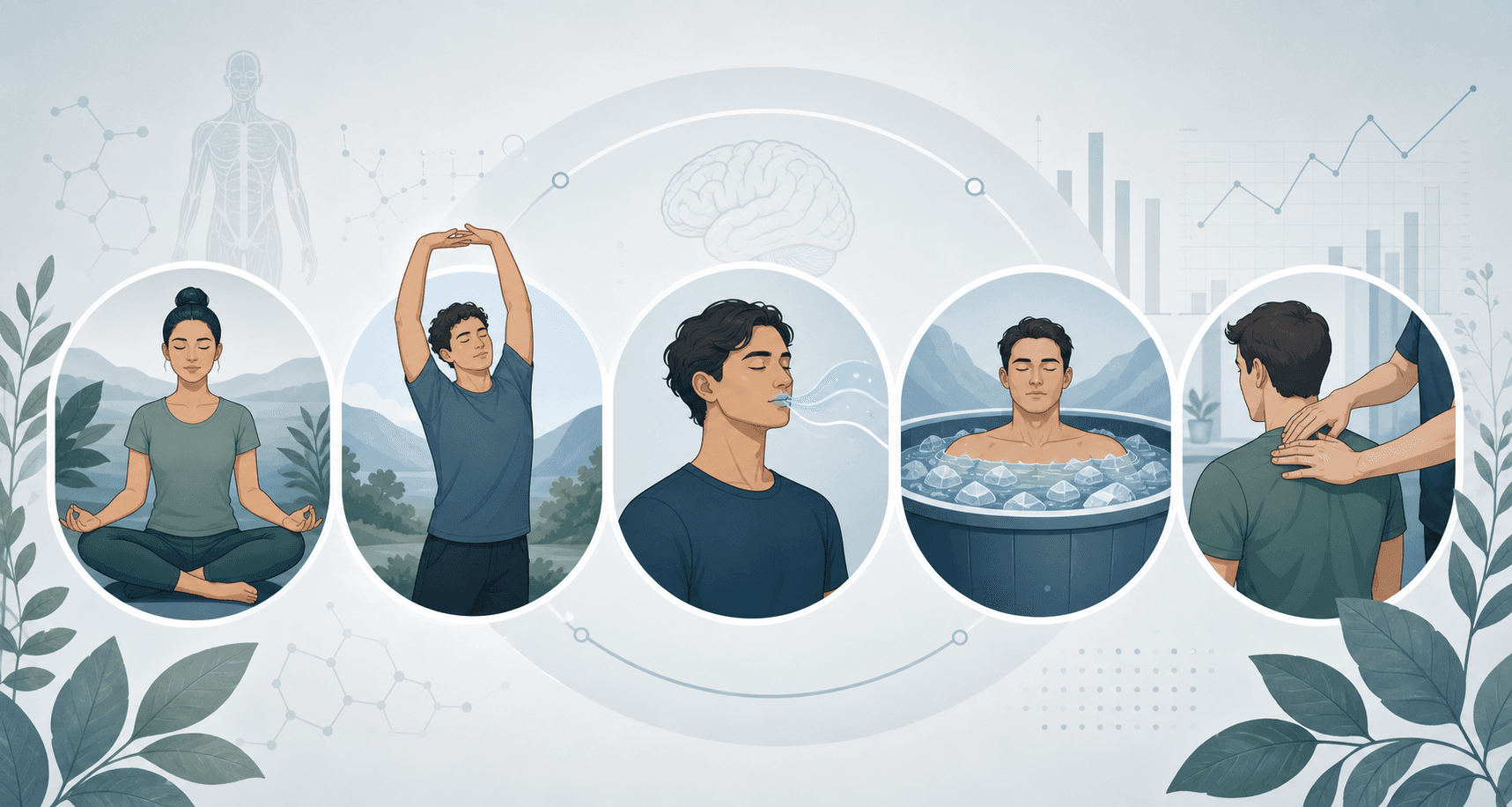
- Meditation — often linked to lower stress and better HRV.
- Stretching — can reduce muscle tension and improve sleep quality.
- Breathwork — activates the parasympathetic nervous system.
- Ice baths — may reduce inflammation and improve recovery perception.
- Massage therapy — the only one with a specific timing effect that Whoop measured.
Among these, massage therapy stands out because its impact changes with timing. WHOOP's member data shows that when people logged a massage closer to bedtime, their recovery score was 1% higher compared to baseline. When they logged it earlier in the day, the boost was only 0.6%.
| Massage timing | Recovery impact |
|---|---|
| Logged near bedtime | +1.0% |
| Logged further from bedtime | +0.6% |
1% is a small number. A 0.4% difference is even smaller. But the pattern is consistent across the member population, and that consistency is what makes it worth acting on. If you are going to get a massage anyway, moving it closer to bedtime costs nothing and might add a few percentage points to your recovery the next morning.
Journaling: Your Personal Recovery Decoder
The single highest-leverage change you can make is not adding a new activity — it is using the Whoop Journal. The journal lets you log daily habits like caffeine, alcohol, late meals, sleep partner, stress level, and then shows how each correlates with your personal recovery score over time. This is correlational evidence, not causation. But it is personalized correlation — measured on your body, over weeks or months. That is far more useful than aggregate advice like 'alcohol is bad for sleep' because it tells you how much alcohol impacts your specific recovery. For some people, one glass of wine drops their HRV by 10%. For others, the effect is negligible. WHOOP's own description of the journal (), echoed in a CNET review (), frames it as a discovery tool. I agree. Start with two or three habits you are most curious about — caffeine timing, alcohol, and stress rating. Log them consistently for two weeks and look at the correlations. That will tell you more about your recovery than any general list of recovery activities ever could.
Better Data, Better Score: Why the Biceps Band Helps
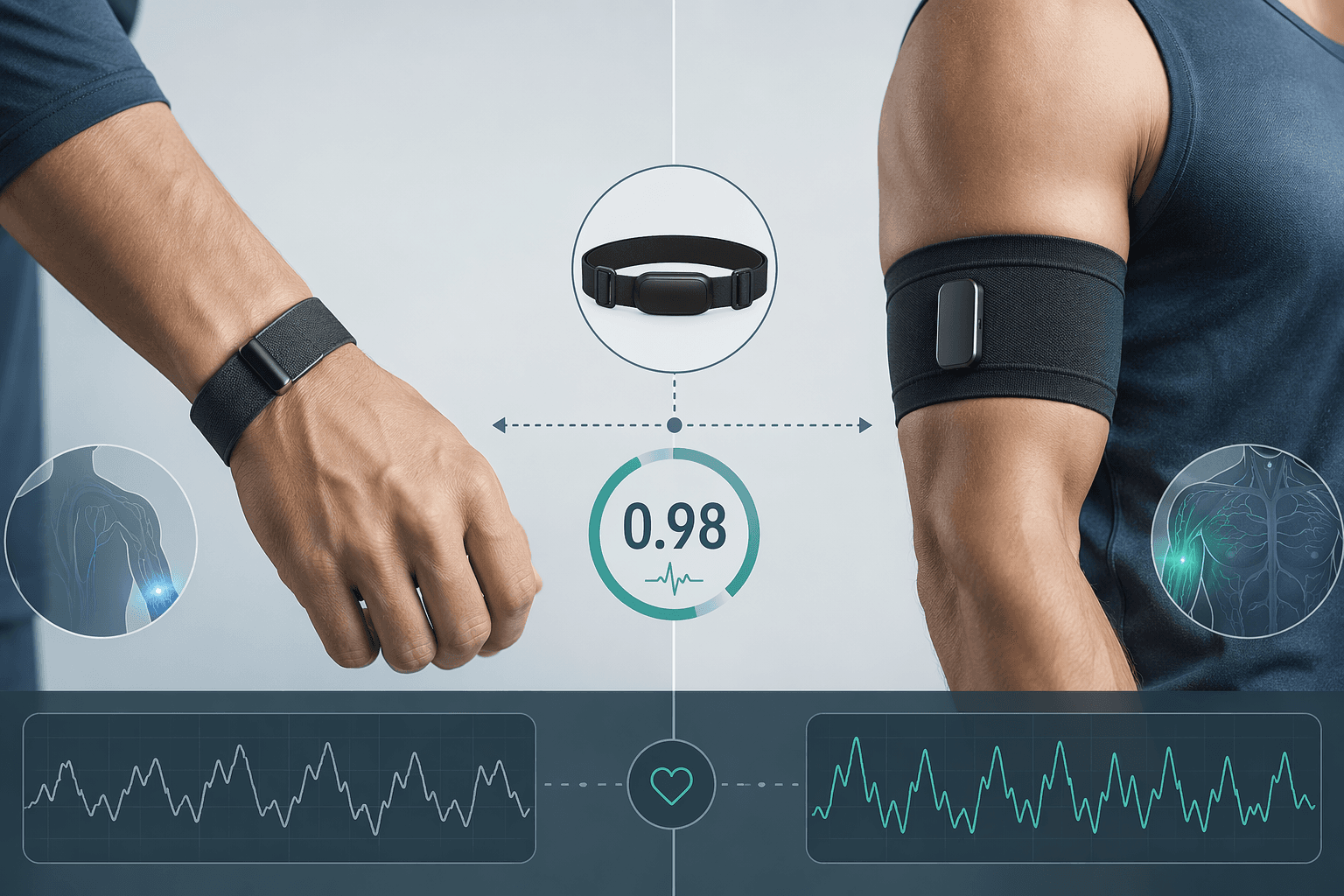
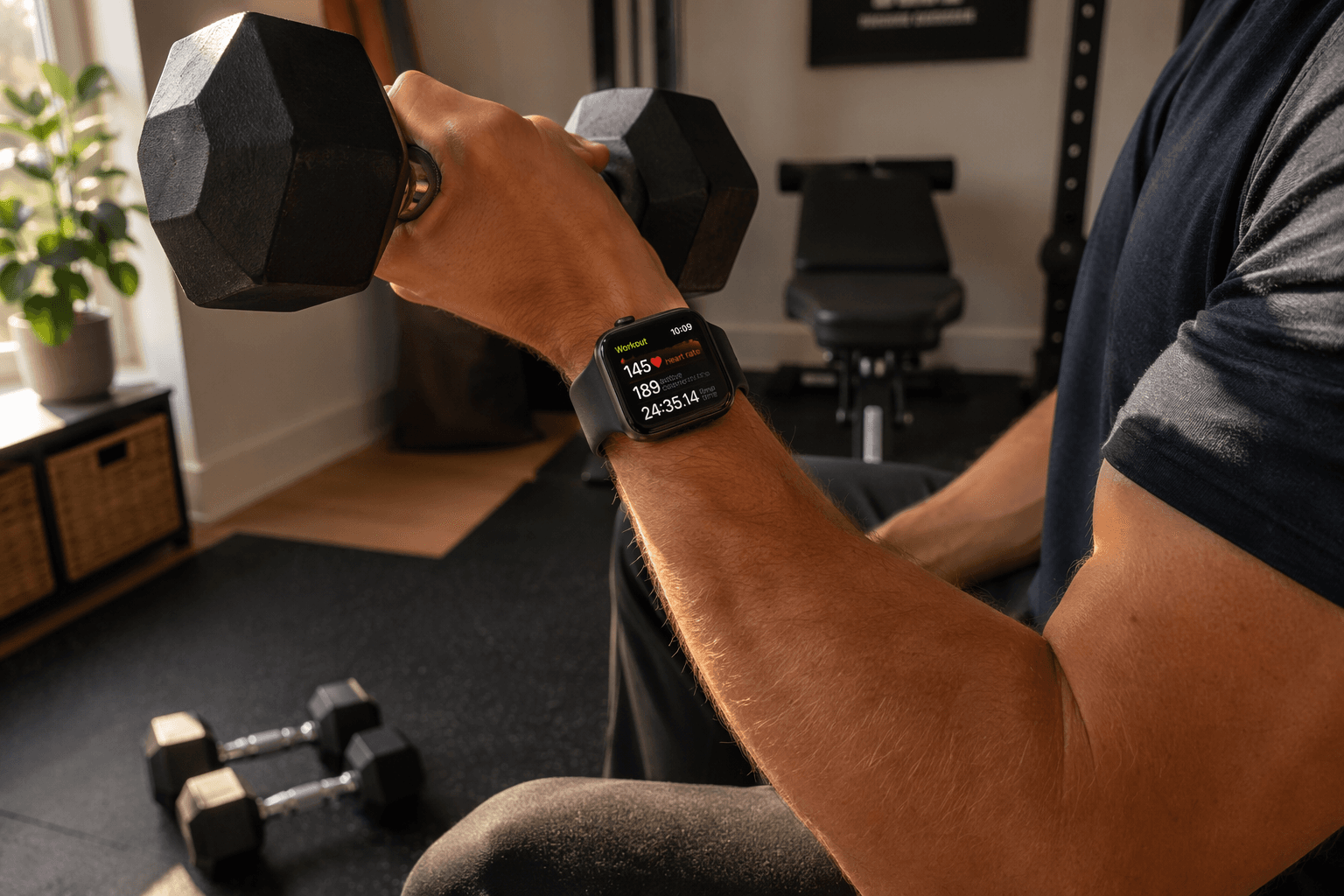
The recovery score relies on heart rate data — specifically HRV and resting heart rate. If the raw heart rate data is noisy, the recovery score will be less reliable. And there is good evidence that wearing Whoop on the wrist during sports like CrossFit, HYROX, or any activity with wrist flexion degrades heart rate accuracy significantly. The5krunner, an independent tester, measured Whoop's heart rate accuracy across 19 multi-sport workouts. When worn on the biceps, the Whoop achieved a correlation of 0.98 with a reference chest strap. On the wrist during high-intensity sports, the correlation deteriorated noticeably (). This is a single-subject test — one person, 19 workouts — but it is the most rigorous field data we have on Whoop's optomechanical sensor placement. The implication: if you train hard and wear Whoop on your wrist, your recovery score may be built on less accurate data. Switching to a biceps band during workouts — and especially during sleep — gives the algorithm cleaner HRV and RHR readings. Not a fancy hack, just better signal.
When to Ignore the Score: Avoiding Orthosomnia
There is a risk in this whole conversation: obsessing over the number. Orthosomnia — a term used to describe unhealthy perfectionism around sleep tracking — is real. The5krunner points out something worth remembering: readiness scores from all wearable vendors are invented. There is no accepted standard for measuring an individual's capacity to train or perform (). The recovery score is a heuristic. It is useful as a trend over weeks, not as a daily judgment on whether you should train. Remember that the average is 58%. Being in yellow is not a sign that something is wrong. If you find yourself feeling anxious about a red morning, or skipping a workout because your score is 55%, step back. The score is a tool, not a verdict.
Three Levers That Actually Move You Toward Green
None of this is revolutionary. But that is the point. The most effective changes are small, consistent, and grounded in the data you already have. Here is the summary:
- Pick one recovery activity from the top five — meditation, breathwork, ice bath, or massage (ideally near bedtime) — and do it consistently for two weeks. Log it in the app. Watch how your recovery responds.
- Start journaling two or three habits you suspect influence your recovery. Let the correlation data guide you. This is the most personalized lever you have.
- Consider wearing the Whoop on your biceps during workouts and sleep. Better HR data means a more reliable recovery score.
Improvement is not about chasing green every day. It is about understanding what moves the needle for you, and then doing a little more of that. Yellow will still be your home base most mornings. That is fine.
Comments
Join the discussion with an anonymous comment.