
Oura Ring 4 Total Cost of Ownership: How the Subscription Adds Up Over 1, 2, and 3 Years
A complete breakdown of the Oura Ring 4's upfront cost, mandatory subscription, and total ownership over three years, with comparisons to Whoop, Fitbit, and subscription-free rings to help budget-conscious buyers decide.
I wanted to know what the Oura Ring 4 actually costs. Not the sticker price — the total cost, the number that lands on your credit card across the months and years you own it. The answer is not just $349.
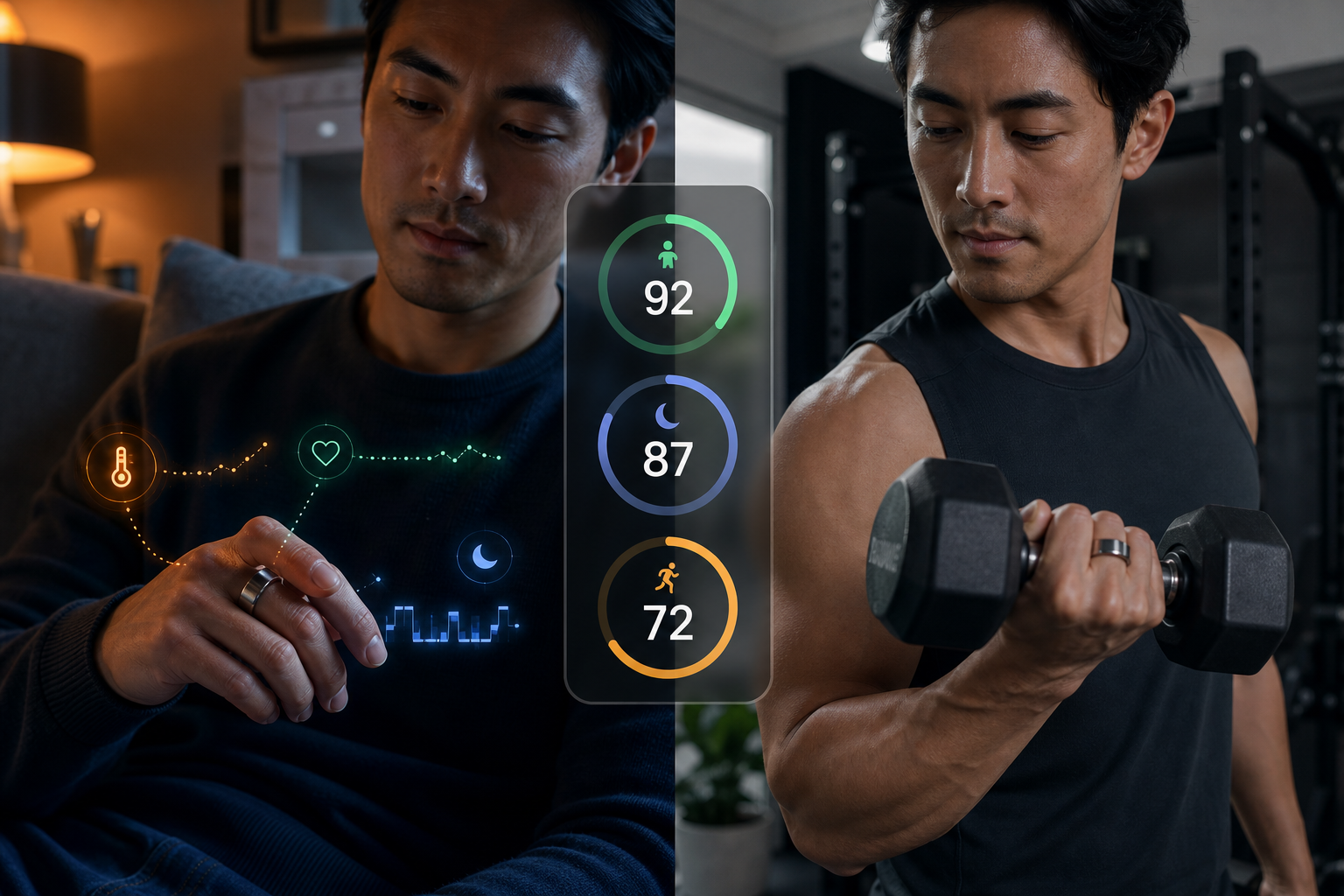
More Than $349
The base models — silver, black, stealth — start at $349. That is the number most articles lead with. But pick a premium finish — gold, rose gold, or the ceramic version — and the price jumps to $499. Forbes confirms the gold band at $499. PCMag and Fortune both cite the full $349–$499 range. The finish you choose changes the starting line, and that is before any subscription enters the picture.
- Silver, Black, Stealth (titanium): $349
- Gold, Rose Gold (titanium PVD): $499
- Ceramic (extra durable): $499
That $150 difference matters when you start factoring in the recurring fee.
The Subscription Isn't Optional
Here is the part that bothered me: the subscription is mandatory for a usable experience. Without it, the ring shows you exactly three scores — Readiness, Sleep, Activity — plus your battery level. No detailed trends. No daily insights. No API access. PCMag confirms that without the membership you cannot see the deeper data that makes the Oura Ring interesting. Your $349–$499 purchase alone gets you a locked door.
The membership costs $5.99 per month or $69.99 per year. First month is free. After that, it is a recurring charge tied to the device, not to your account.
What You Actually Pay Over 1, 2, and 3 Years
PCMag computed the totals for the $349 base model: $418.99 after one year, $488.98 after two, $558.97 after three. That is using the annual plan. I recalculated for the $499 finishes to show the real range.
| Finish | Year 1 | Year 2 | Year 3 |
|---|---|---|---|
| Base (silver/black/stealth) | $418.99 | $488.98 | $558.97 |
| Premium (gold/rose gold/ceramic) | $568.99 | $638.98 | $708.97 |
The subscription accounts for roughly $210 over three years. That is not trivial. But the key insight is that the premium finishes add $150 upfront and that difference persists every time you look at the total.
Oura vs. Whoop vs. No-Subscription Rings
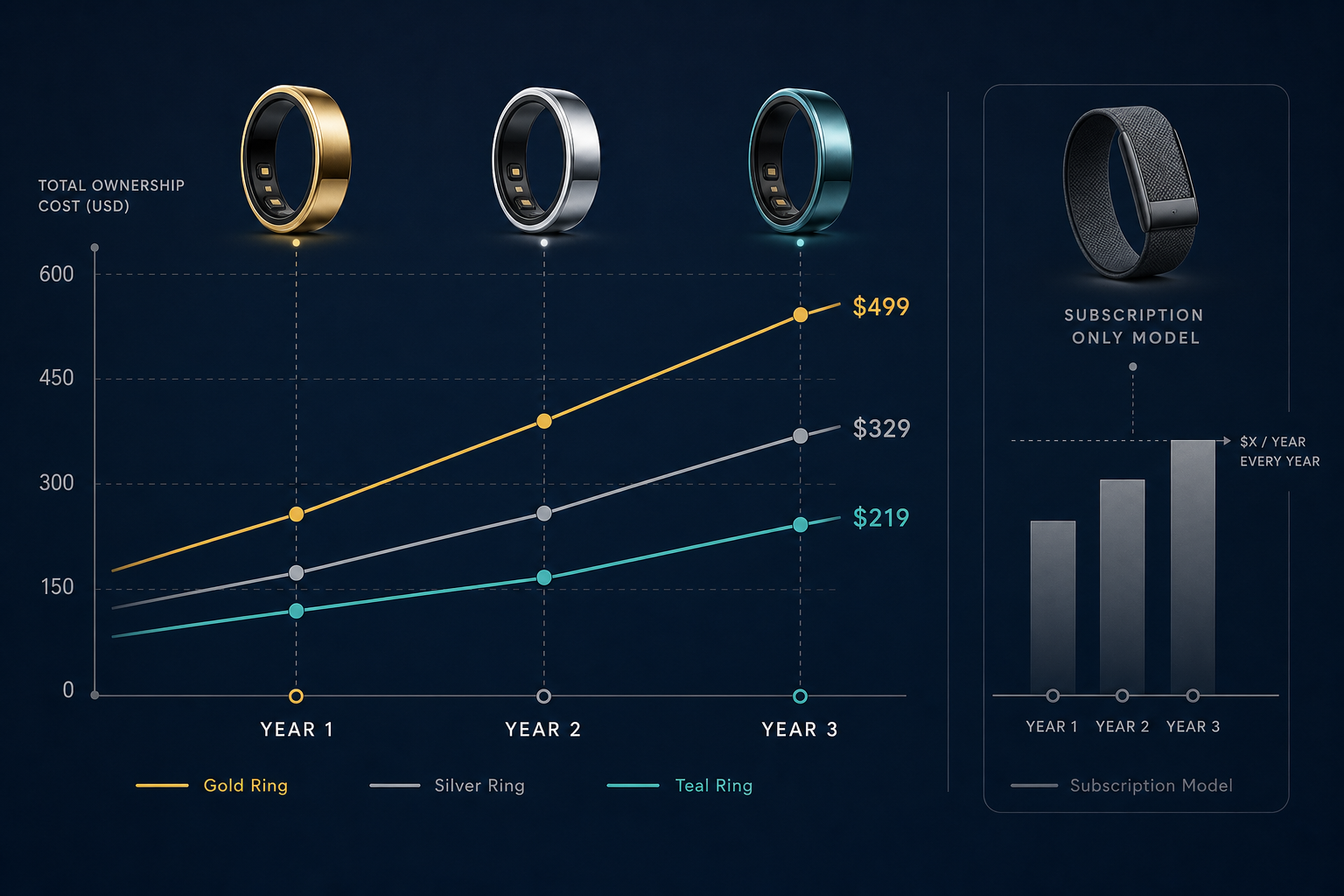
This is where the comparison gets interesting. Whoop 5.0's Peak tier costs $239 per year and includes the hardware in that fee — no upfront purchase. PCMag shows the 3-year totals: Oura $558.97 vs. Whoop $717. Oura wins after year two. But in year one, Whoop costs $239 while Oura costs $418.99, because Whoop has no separate hardware charge.
Then there are the subscription-free alternatives. The Samsung Galaxy Ring costs $399 with no subscription. The RingConn Gen 2 costs $299 with no subscription. Both are cheaper than Oura over any time horizon. But neither has Oura's validated sleep staging algorithm, which is a real differentiator. I asked myself: is algorithm depth worth the subscription? That depends on whether you actually use sleep staging data to guide your training.
| Device | Upfront | Annual Sub | 1-Year Total | 2-Year Total | 3-Year Total |
|---|---|---|---|---|---|
| Oura Ring 4 (base) | $349 | $69.99 | $418.99 | $488.98 | $558.97 |
| Oura Ring 4 (premium) | $499 | $69.99 | $568.99 | $638.98 | $708.97 |
| Whoop 5.0 Peak | $0 | $239 | $239 | $478 | $717 |
| Samsung Galaxy Ring | $399 | $0 | $399 | $399 | $399 |
| RingConn Gen 2 | $299 | $0 | $299 | $299 | $299 |
For a deeper dive on Whoop's subscription value, see our cost-benefit analysis of the Whoop subscription. And for a broader perspective on how subscription costs add up across dozens of trackers, read our 3-year total cost of ownership guide.
What Does the Subscription Actually Fund?
Oura CEO Tom Hale told Fortune in February 2026 that the subscription funds ongoing innovation: 14 new features and 2 integrations added in the past year. That sounds impressive. But it is Oura's own account — not independently audited. I do not doubt the company's innovation pace, but the question is whether those features matter to the average home fitness tracker buyer.
Oura has added two new integrations and 14 new features in the past year, funded by the subscription model.
The sleep staging algorithm is genuinely validated and a clear differentiator versus subscription-free rings. But many of those 14 features — new integrations with third-party apps, advanced trend visualizations — may be niche. If you are the kind of person who checks your readiness score every morning but never exports data, the subscription's value shrinks.
The Bottom Line
Oura includes a free sizing kit, a 1-year warranty, and a 30-day return window. That is standard. HSA/FSA eligibility and Affirm financing (starting at $25/month) are mentioned by Oura but could not be confirmed for the Ring 4 in the sources used for this article. Verify directly with Oura or your benefits administrator before buying.
The Oura Ring 4 is not an expensive device. The subscription is not unreasonable. But the combination matters: you are committing to $70 a year as long as you want the ring to work as advertised. Over three years, that is $210 — about 40–60% of the hardware cost itself.
If you care about sleep algorithm depth and plan to use the advanced trends for at least two years, Oura is cheaper than Whoop and offers more refined data than subscription-free alternatives. If you are budget-first and do not need Oura's ecosystem, the Samsung Galaxy Ring or RingConn Gen 2 will save you money from day one.
Still undecided on the form factor? Our guide to choosing between a fitness band, smartwatch, and smart ring breaks down the trade-offs.
The total cost ranges from $559 to $709 over three years. The subscription is not a scam, but it is not optional. Make sure the features it unlocks are features you will actually use.
This is general fitness education, not medical advice. For diagnosis or treatment of pain or injury, consult a qualified clinician.
Pick your next session
Browse all routines to find an appropriately-spaced next session.
Spot something off?
This content sits adjacent to health guidance — tell us if a citation or figure needs a correction.