If “fitness tracker” means the device that tells you what happened inside a workout, the Oura Ring starts behind a wrist watch before the first warm-up set. It has no built-in GPS, no screen for live pace or heart-rate zones, no rep counter worth building a program around, and a ring is not the friendliest shape when your hand is wrapped around a dumbbell.
If fitness tracking means deciding whether today’s training will help or just add more stress to a body that is already under-recovered, Oura becomes much harder to dismiss. That distinction matters most for home fitness, where there is no coach watching your bar speed, no class instructor telling you to scale down, and no external structure separating a productive session from a stubborn one.
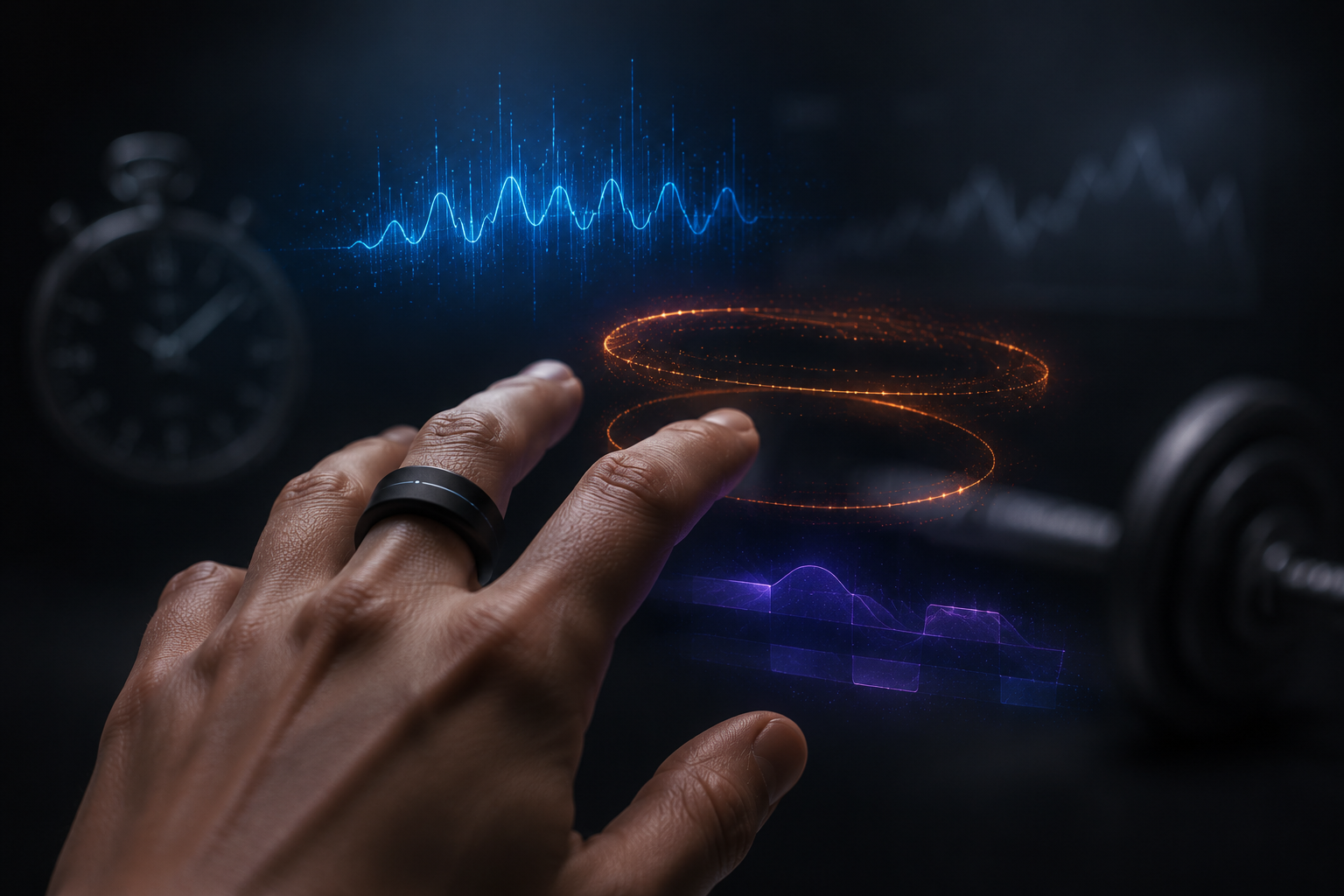
That is the honest frame for the Oura Ring as a fitness tracker. It is not a small smartwatch hiding on your finger. It is a recovery-first wearable that can guide training decisions well, while doing a mediocre job with parts of workout tracking that many athletes reasonably expect from a fitness device.
The kind of fitness Oura actually tracks
Oura’s strongest fitness use happens before the workout begins. The ring watches overnight heart-rate variability, resting heart rate, temperature deviation, sleep quality, activity balance, and recovery timing, then folds those signals into a Readiness Score. Forbes Vetted and PCMag describe the score as drawing from inputs including HRV balance over a recent window, resting heart rate, temperature deviation, sleep quality, activity balance, and recovery index, with temperature deviations around ±0.5°F or more treated as notable signals in the app experience.[1][2]
For a home athlete, that is not decorative wellness data. It changes the day’s training question from “Can I force the planned session?” to “What can I absorb today?” On a normal week, that might mean keeping the dumbbell session as written. After two short nights, a higher resting heart rate, and a readiness dip, it might mean cutting volume, switching intervals to zone 2, or treating mobility work as the session rather than as a guilty consolation prize.
The key is that Oura is measuring the systems that decide whether training adapts or merely accumulates. HRV can reflect autonomic nervous system balance. Resting heart rate can rise when the body is under strain. Temperature deviation can be useful context when sleep, illness, alcohol, late meals, or hormonal patterns are affecting recovery. Sleep timing and continuity determine whether a morning workout is starting from a stable base or from a deficit.
None of that tells you whether your final goblet squat set had two clean reps left. It does tell you whether the body doing those squats looks ready, neutral, or compromised before you load it.
Why the recovery case is unusually strong
The reason Oura deserves more than a polite “nice sleep ring” label is that its recovery data has better support than most casual wearable claims. In a 2025 peer-reviewed comparison summarized by AthleteData.health, the Oura Ring 4 showed HRV concordance of CCC 0.99 against ECG, with MAPE of 5.96%, across 536 participant-nights. The same comparison reported lower HRV concordance for Whoop 4.0 at CCC 0.94 and Garmin Fenix 6 at CCC 0.87.[3]
That does not mean every Oura number on every finger is laboratory truth. Ring fit, finger choice, skin tone, circulation, motion, and individual physiology can all affect real-world wearable readings. It does mean Oura’s HRV case is not merely brand language. For recovery-led training, HRV is one of the few wearable metrics that can change what a sensible person does with today’s workout.
Sleep is the other half of the argument. Oura’s validation material reports 94.4% sleep/wake sensitivity, 75.5% light-sleep agreement, and 90.6% REM agreement against polysomnography. A University of Tokyo study with 96 participants and 421,045 epochs found Oura did not significantly differ from polysomnography for total sleep time and sleep onset latency.[4]
For home training, total sleep time and sleep onset latency are not abstract. They are the difference between a morning circuit after real sleep and one after a night of scrolling, stress, and false confidence. A wrist tracker can also estimate sleep, but Oura’s form factor gives it an advantage for people who dislike wearing a watch overnight or who find a screen on the wrist too present at the exact time they are trying to wind down.
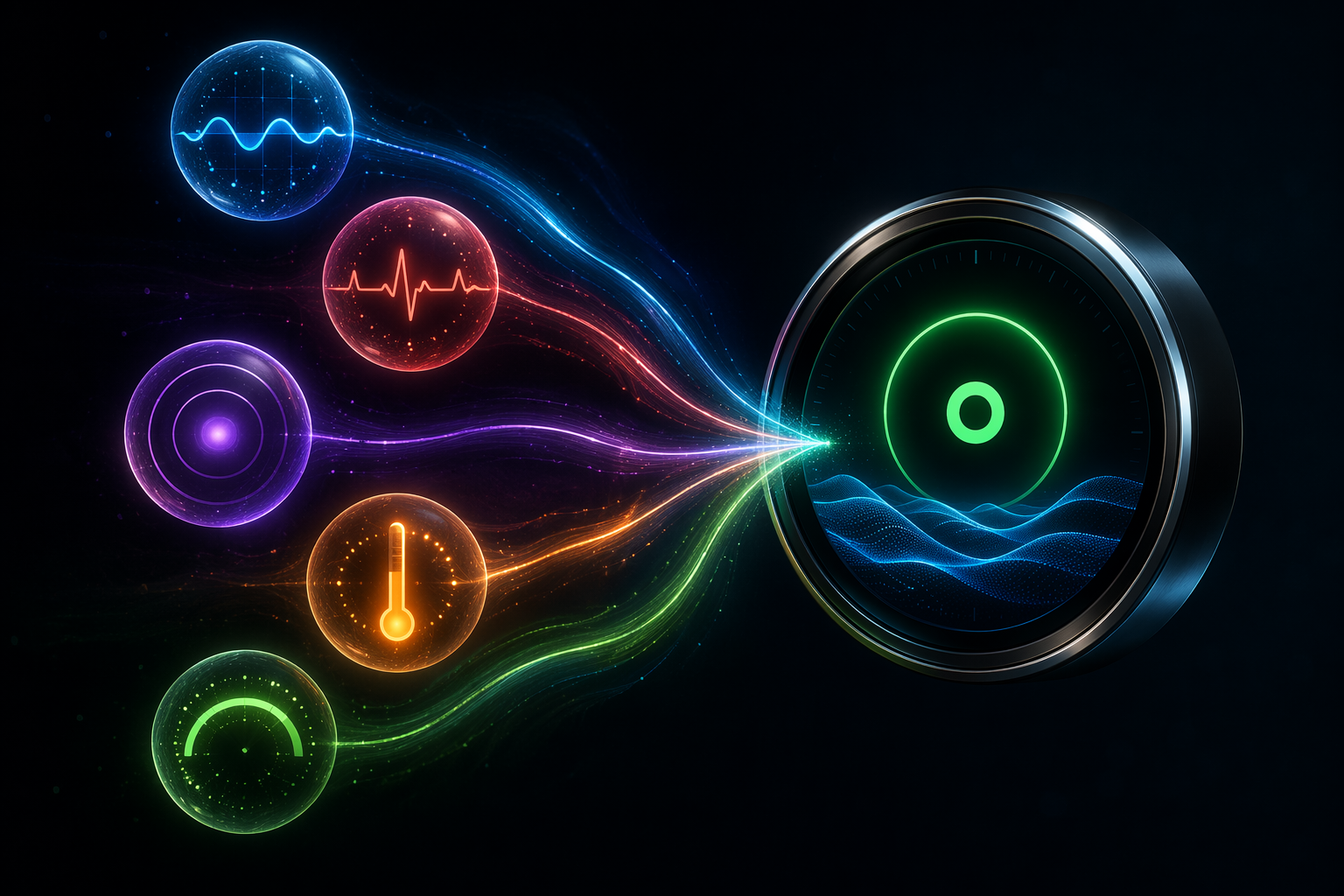
Oura’s newer wellness features fit here, with a careful boundary. Symptom Radar and Resilience use patterns such as temperature and HRV shifts to surface changes from a person’s baseline. Wirecutter and Runner’s World describe these features in the context of detecting possible illness or strain before obvious symptoms in some cases, often in the range of 1 to 2 days.[5][6]
That is useful training context, not a diagnosis. If the ring is flagging strain and your throat feels questionable, the smart move is not to admire the algorithm. It is to stop pretending the scheduled interval session is morally binding.
Where the ring falls short during the workout
The workout side is where the Oura Ring fitness tracker label becomes strained. Forbes Vetted calls Oura “not really designed to be a fitness tracker,” and its activity tracking is often retroactive rather than live in the way a watch user expects.[1] Sleep Foundation also notes that strength training can be hard for the ring to classify cleanly, with some activity recognition confusing exercise-like movement with ordinary tasks such as housework.[7]
That matters for the exact kind of training many people do at home. A bodyweight circuit can move quickly from push-ups to lunges to mountain climbers. A dumbbell complex can spike heart rate while the hand is gripping metal. A short interval session may be over by the time a lagging sensor has caught the peak. If the device misses the hard part and smooths the rest, the post-workout chart may look calmer than the session felt.
In our earlier smart ring vs. smartwatch home gym comparison, the Oura Ring 4 showed a 60 to 70 bpm gap against a Garmin Venu 3 during high-intensity work. That is not a tiny rounding issue if your training depends on intervals, heart-rate zones, or knowing whether a session actually reached the intensity you planned.
There is also the plain physical problem. Rings can feel awkward or uncomfortable during grip-heavy work, and weights can scratch them. Forbes Vetted and Cosmopolitan both raise form-factor caveats around exercise comfort and wear from training with equipment.[1][8] A screenless ring is elegant during sleep and daily life. Under a kettlebell handle, elegance is not the priority.
| Training need | Oura alone | Better fit |
|---|---|---|
| Morning readiness decision | Strong | Oura |
| Sleep and recovery trend | Strong | Oura |
| Live heart-rate zones | Weak | Garmin, Apple Watch, or similar wrist tracker |
| Outdoor pace and route | Weak because there is no built-in GPS | GPS watch or phone-supported setup |
| Strength-session recognition | Mixed | Manual logging or wrist-based device |
| Grip-heavy lifting comfort | Depends on exercise and tolerance | Often better without a ring |
The home gym test: what changes on a Tuesday
The best way to judge Oura is not by asking whether it can imitate a watch. It cannot. The better test is whether it improves the training week.
Imagine a normal home routine: two strength sessions, one conditioning session, one mobility or zone 2 day, and one flexible slot that becomes either extra training or recovery depending on how life went. Oura is most useful at the decision points between those sessions. A low Readiness Score after poor sleep and an elevated resting heart rate can move the conditioning day. A stable HRV trend and good sleep can give the green light for the harder dumbbell session. A temperature deviation can make an easy walk look more responsible than a sweaty circuit.
This is where recovery data earns its place. Home athletes often fail less from lack of effort than from poor timing. They train hard on the day the body is least prepared, then skip the day that would have been productive because soreness, work stress, or sleep debt finally arrives. A readiness-first device cannot solve discipline, programming, or nutrition. It can make the cost of forcing things harder to ignore.
What it will not do is coach the session in real time. If you are using EMOMs, threshold intervals, treadmill pace targets, cycling power, or heart-rate caps, Oura is not the instrument I would want in charge. It can record the event and add it to the broader load picture, but the live feedback loop belongs to a wrist-based tracker, chest strap, bike computer, or phone-supported system.
Cost has to be part of the fitness decision
Oura is not just a ring purchase. As of mid-2026, the membership is $5.99 per month or $69.99 per year.[2] That subscription is central to how the product works, because the most useful long-term readiness, sleep, and health-trend features live inside the app experience.
Three-year cost comparisons make the trade-off clearer. PCMag and AthleteData.health put Oura below Whoop Peak over a 3-year period, with Oura at $558.97 versus Whoop Peak at $717, while Garmin remains cheaper in ongoing cost because it does not require a subscription.[2][3]
That does not automatically make Garmin the better purchase. It means the question is whether Oura’s recovery-first experience is worth paying for when some traditional trackers provide workout data without a monthly fee. If you mostly want GPS, pace, intervals, and live heart rate, the subscription will feel like paying extra for the wrong center of gravity. If you want a low-friction recovery layer you will actually wear to bed, the cost is easier to defend.
Generation timing also matters. Around June 2026, Oura Ring 5 entered the picture with a reported 40% thinner design, up to 10.5 days of battery life, and a $400 starting price, while Gen 4 remained available at discounted pricing.[2][5] That makes a generic “buy Oura” recommendation less useful than usual. If the thinner design improves comfort and wearability for you, Ring 5 may be the better long-term recovery device. If the Gen 4 discount is substantial and you mainly want the established recovery experience, the older model may be the more rational buy.
Use it alone, or pair it?
Oura can be a primary fitness companion for a specific kind of home athlete: someone who trains moderately, cares more about consistency than peak output, does not need live metrics, and is willing to use readiness signals to adjust the week. That person may do dumbbell strength, bodyweight sessions, Pilates, mobility, walking, easy cardio, and occasional conditioning without needing a second-by-second dashboard.
For that user, the lack of a screen can be a feature. No buzzing watch face turns a recovery walk into a performance review. No mid-set glance encourages chasing a number that may not be accurate anyway. The ring collects the recovery context quietly, then asks for attention when the training decision is actually being made.
Oura should be paired with another device when the workout itself needs instrumentation. Runners who care about pace and route need GPS. Interval athletes need live heart rate that responds quickly. Lifters who want set structure, rest timing, or better session recognition will be happier with a watch, app, notebook, or dedicated strength-tracking workflow. Anyone training by zones should be careful about relying on a ring that can lag during high-intensity movement.
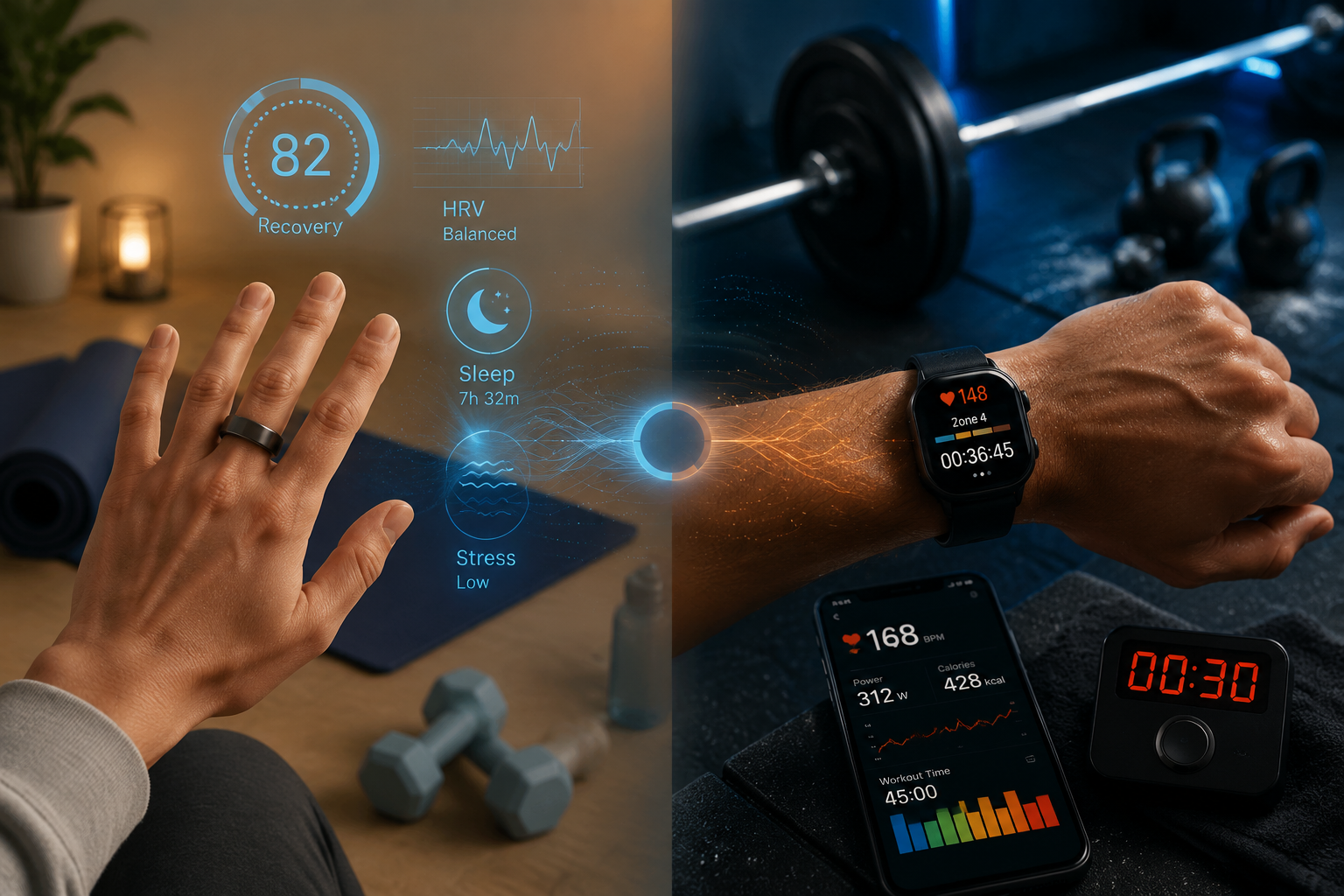
The two-device setup is not a failure of the Oura concept. It is an admission that recovery tracking and workout tracking are different jobs. A Garmin, Apple Watch, or similar wrist device can handle the session. Oura can handle the readiness layer, overnight trends, and the quiet question of whether more intensity is actually useful today.
That pairing does undermine the fantasy of one elegant object doing everything. For some people, that is a dealbreaker. For others, it is cleaner than wearing a large watch all night or pretending a wrist tracker’s recovery score is the main reason they bought it. The right answer depends on which data changes your behavior.
The practical verdict
The Oura Ring is a legitimate fitness tracker only if the word “fitness” includes recovery, readiness, sleep, and sustainable training decisions. For home fitness users who have learned the hard way that stress and sleep debt can wreck a training block, that is not a minor definition. It is often the definition that keeps the week intact.
It is not a complete workout-data tool. The heart-rate lag, absent built-in GPS, retroactive activity detection, unreliable strength recognition, grip discomfort, and potential scratching around weights are too relevant to wave away. Calling those limitations “not the point” is only fair if the buyer truly does not need that point covered.
For moderate home athletes, Oura can work as the main companion: wear it, watch readiness and sleep trends, log or confirm workouts when needed, and let recovery shape the week. For harder training, it belongs beside a wrist-based tracker rather than instead of one. That is the cleanest job description: Oura is the recovery half of a serious fitness system, and for the right home athlete, that half may be the one that finally changes the training.
References
- Oura Ring 4 Review 2026, Forbes Vetted
- Oura Ring 4 vs. Whoop 5.0 Comparison, PCMag
- WHOOP vs Oura vs Garmin, Athletedata.health
- Oura Ring Accuracy Validation Study University of Tokyo, Oura
- Oura Ring 4 Review, Wirecutter
- WHOOP vs Oura for Runners, Runner's World UK
- Oura Ring Review 2026, Sleep Foundation
- Oura Ring 4 Review (1 Year), Cosmopolitan

Comments
Join the discussion with an anonymous comment.