You wake up, open the app, and your smart watch’s recovery score is lower than expected. The awkward part is not the number itself. It is deciding what kind of authority to give it: cancel the dumbbell session, swap HIIT for mobility, or ignore the watch because yesterday felt fine.
The useful answer starts underneath the score. Most recovery features are built from a small set of overnight signals: heart rate variability, resting heart rate, and sleep quality. Some brands add training load, stress history, or recent sleep patterns. Then they turn those inputs into a branded readiness, recovery, or battery number that looks cleaner than the physiology behind it.

What Your Watch Is Trying to Estimate
Recovery is not one measurement. Your watch is trying to infer how ready your body appears to be for more stress by looking at signals tied to your autonomic nervous system, cardiovascular strain, recent sleep, and recent training. That is why a recovery score can fall after a hard workout, a short night, a stressful day, alcohol, illness, travel, or some combination the watch can only partly see.
That inference can be useful at home because home training often lacks external structure. There is no coach watching your warm-up, no group class schedule forcing an easier day, and no race plan telling you when to back off. A watch can catch patterns a notebook misses, especially when sleep, work stress, and workout load blur together.
The mistake is treating the morning score as a verdict. It is better read as a dashboard light: worth noticing, more meaningful when it repeats, and not specific enough to make every decision for you.
The Overnight Signals That Matter Most
If you want the deeper physiology behind these inputs, this heart-rate recovery guide breaks down HRV, resting heart rate, and heart-rate recovery in more detail. For daily use, the main thing is understanding what each signal can and cannot tell you.
HRV: Useful Inside Your Own Baseline, Messy Everywhere Else
Heart rate variability, or HRV, measures the variation in time between heartbeats. A higher HRV is generally associated with a more recovered autonomic nervous system, while a lower HRV can reflect accumulated stress or inadequate recovery, though it does not identify the cause by itself.[1]

The important phrase is “your own.” HRV is a poor bragging number because normal ranges are wide. Lifehacker cites Whoop user data showing that the middle 50% of 20-year-olds fall around 60–105 milliseconds, while users in their 60s fall around 30–50 milliseconds.[2] That example is helpful because it shows how broad normal can be, but it is still Whoop’s own user database, not a universal population standard.
A low HRV morning can mean you are under-recovered. It can also mean you slept poorly, are getting sick, drank the night before, are dealing with unusual life stress, or had a measurement quirk. A watch that compares today against your recent baseline is doing something more useful than a chart that tells you whether your HRV is impressive.
Resting Heart Rate: Blunter, but Still Worth Watching
Resting heart rate is easier to understand: if your overnight or morning heart rate is elevated compared with your own usual range, your body may be carrying extra strain. It is less subtle than HRV, but that bluntness can be useful. A higher-than-normal resting heart rate after a hard lower-body session and a short night is not mysterious. It is a reason to make the next workout less heroic.
The same restraint applies here. One odd morning is not a diagnosis. Repeated elevation, especially when paired with poor sleep, low HRV, and bad workout feel, deserves more attention.
Sleep Quality: The Input You Can Usually Act On
Sleep is the recovery input most people can translate into behavior without needing a physiology lecture. If your watch flags short sleep, fragmented sleep, or poor sleep consistency, the training decision is often practical: reduce intensity, shorten the session, or keep the workout but drop the expectation of a personal best.
Sleep scores can still look more precise than they are. Consumer wearables estimate sleep stages from movement and optical heart-rate signals; they are not reading your brain waves at home. But even an imperfect sleep estimate can help if it consistently shows that your hardest training days follow your worst nights.
From Raw Signals to a Readiness Score
The path from wrist sensor to training decision usually looks like this:
| Stage | What Happens | How to Treat It |
|---|---|---|
| 1. Overnight measurement | The watch records heart-rate patterns, movement, sleep signals, and related data. | Wear the same device consistently and keep the fit reasonably stable. |
| 2. Raw metrics | The app surfaces HRV, resting heart rate, sleep duration, sleep quality, stress, or load. | Compare each metric with your own recent baseline. |
| 3. Composite score | The brand combines selected inputs into a readiness, recovery, battery, or vitals-style signal. | Use it as a summary, not as the source of truth. |
| 4. Training adjustment | You decide whether to train hard, go moderate, recover, or watch for a pattern. | Make small changes unless multiple signals are clearly off. |
This translation layer is where smart watches become both helpful and annoying. A raw HRV trend says, “Something looks different from your baseline.” A branded score says, “You are 42% recovered,” or “Training readiness is low.” The second version is easier to act on, but it can also sound more certain than the data deserves.

Why Garmin, Whoop, Oura, Fitbit, and Apple Scores Are Not Interchangeable
Different brands can look like they are measuring the same thing because they all use recovery language. They are not necessarily measuring the same thing in the same way.
Garmin’s Training Readiness, for example, combines six inputs: Sleep Score, Recovery Time, HRV Status, Acute Load, Sleep History, and Stress History.[3] That is not a single recovery measurement. It is a composite judgment that blends last night, recent training, and recent stress into one interface.
Garmin’s Body Battery is a different style of feature: more like an energy gauge that rises and falls across the day. Whoop’s Recovery Score is built around strain and recovery framing. Oura’s Readiness Score leans heavily into sleep and daily readiness. Fitbit’s Daily Readiness Score gives a simplified train-or-recover style prompt. Apple’s newer training and vitals features are less like a single recovery brand and more like signals around load, overnight changes, and trends.
That does not make one of them automatically better for every home athlete. It means a “green” day in one system and a “medium” day in another should not be treated as a direct disagreement unless you know exactly which inputs each system used, how it weighted them, and how long it has known your baseline.
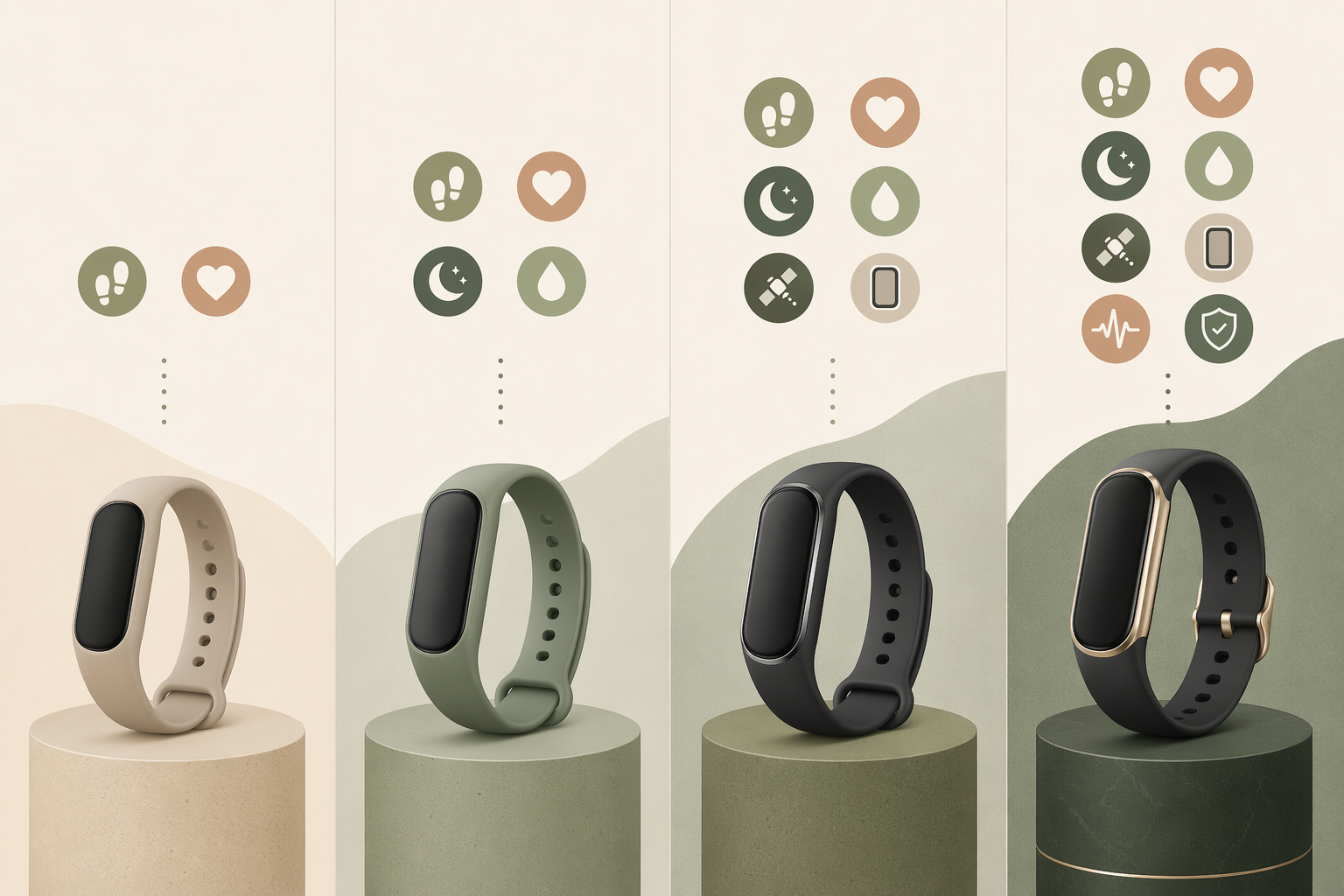
If you are still choosing a device, compare the recovery features alongside the workouts you actually do. A strength-focused home user, a yoga and Pilates user, and a HIIT user may care about different tracking priorities; this home workout tracker guide is a better place to sort that out than a generic spec sheet.
The Limits That Actually Change How You Should Use the Data
The biggest limitation is not that smart watches are useless. It is that recovery scores are proprietary. The companies decide which inputs count, how much they count, how quickly your baseline updates, and how the app translates uncertainty into a color or number. That makes these scores directionally useful but hard to validate from the outside.
Single-device stories can also mislead. CNET’s 30-mile smartwatch test compared five watches during one tester’s runs, which is useful as a real-world account but not proof that every user will get the same accuracy pattern.[4] A watch that performs well on one wrist, at one pace, in one context may behave differently for another person.
Even controlled studies have boundaries. A 2024 Scientific Reports smartwatch accuracy study used a young, healthy University College London cohort with a median age of 27, so its findings should not be stretched automatically to older users or clinical populations.[5]
The practical consequence is simple: do not compare your HRV with a friend’s HRV, do not compare yesterday’s Whoop score with today’s Garmin score, and do not treat a single low morning as proof that training would be harmful. The useful comparison is you, on the same device, over enough time for a pattern to emerge.
For a deeper look at which recovery scores have stronger or weaker validation, see this tracker recovery validation guide.
How to Use Recovery Data Without Letting It Run Your Workout
A good recovery workflow should make training calmer, not turn every morning into a courtroom hearing. Start with the composite score if that is what gets your attention, then check the raw reasons behind it: HRV, resting heart rate, sleep, stress, and recent load.
- If only the score is low but you slept well, feel normal, and the raw metrics are close to baseline, keep the workout and reduce nothing automatically.
- If HRV is low, resting heart rate is elevated, and sleep was poor, make the session easier before the warm-up has to prove it.
- If the same warning repeats for several days, look at weekly load, bedtime consistency, and non-training stress.
- If you are sick, injured, unusually fatigued, or dealing with symptoms that do not match the app’s confidence, listen to your body before the dashboard.
For home training, the adjustment does not need to be dramatic. A low-readiness day might mean replacing jump intervals with zone-two cardio, doing two sets instead of four, skipping max-effort finishers, or turning a strength session into technique work. A high-readiness day does not require you to chase intensity if the plan already calls for an easy day.
If you want a more structured way to make those calls, this recovery-data workflow guide lays out practical options for acting on the numbers without overreacting to them.
The most useful rule is boring because it works: pick one device, wear it consistently, compare yourself to your own baseline, and look for 2–4 week trends before changing how you train in any major way. Let the watch nudge the day’s plan. Do not hand it the final vote.
References
- Heart Rate Variability: The Key Health Metric People Aren't Tracking Enough, CNET.
- How Apple Watch, Fitbit, Garmin, Oura, and Whoop Compare on Measuring HRV and Resting Heart Rate, Lifehacker.
- Training Readiness, Garmin.
- I Ran 30 Miles Testing 5 Smartwatches to Find Out Which Ones You Can Actually Trust, CNET.
- s41598-024-74140-x, Scientific Reports.

Comments
Join the discussion with an anonymous comment.