
The Home Fitness Recovery Pyramid: What Works, What Doesn't, and Why
Intermediate home exercisers overwhelmed by conflicting recovery advice can use this evidence-based pyramid to prioritize methods—starting with sleep and nutrition, then layering in active recovery and foam rolling, while understanding where expensive tools like cold plunges and red light therapy actually fit.
You Don’t Need Gadgets to Recover
If you train at home three to six times a week, you have likely seen the ads: cold plunge tubs, red light panels, compression boots, massage guns that cost as much as a barbell set. The home fitness recovery industry has figured out that people who are already spending on equipment will also spend on feeling better afterward. The problem is that most of that spending is aimed at the wrong layer of the pyramid.
I have watched enough of these trends come and go on thin evidence to know that the question I ask myself is the same one I would ask a friend training in a spare bedroom with a $200 equipment budget: Does this actually help you recover, or does it just make you feel like you are recovering? The difference matters, because 38.6% of home fitness equipment users in the US spent under $500 on a single piece of equipment. Most people cannot drop another three hundred on a gadget that might not deliver.
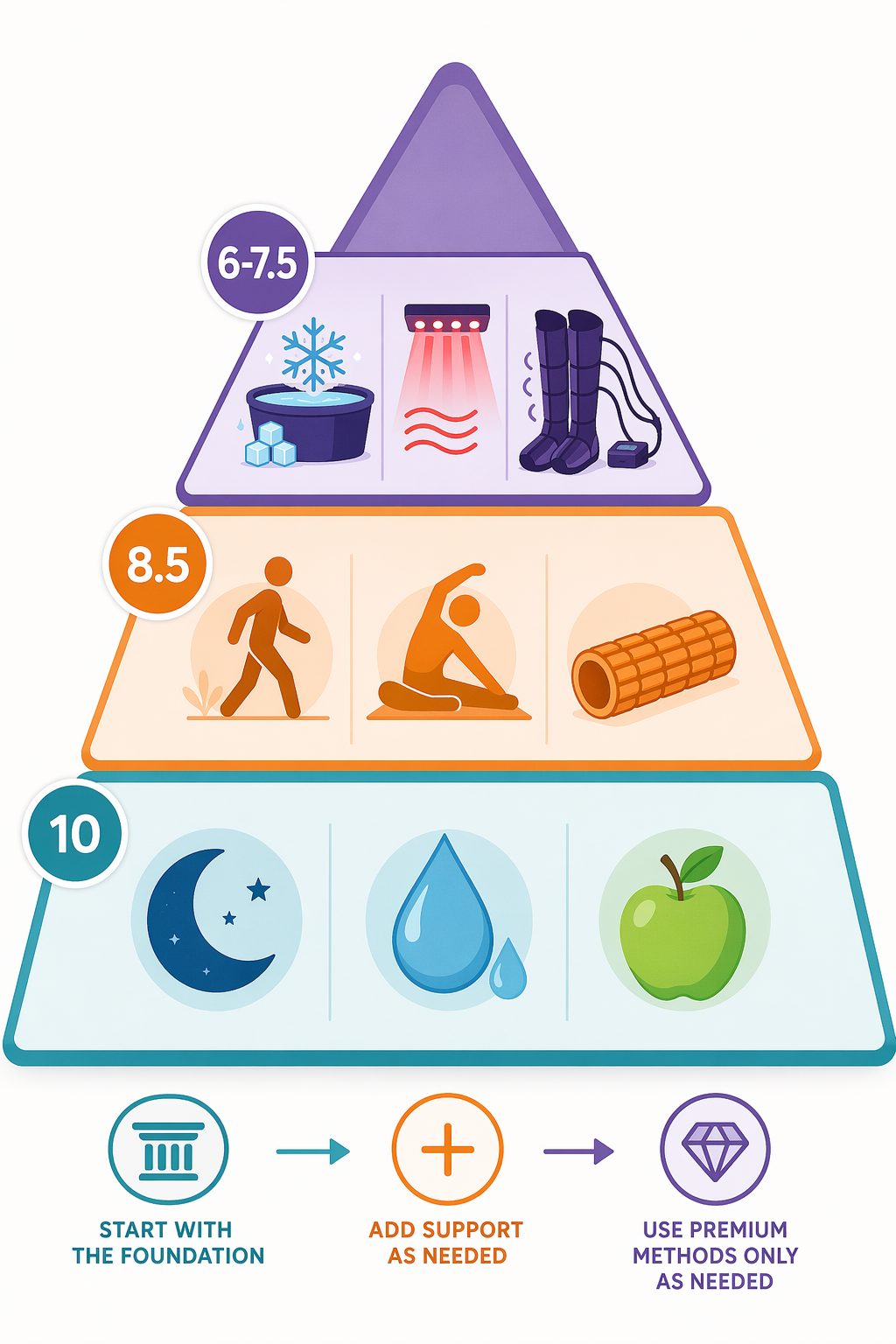
What follows is a pyramid ranking of recovery methods — not by how trendy they are, but by evidence strength, home practicality, and total cost. The top of the pyramid gives you about 80% of the benefit for zero extra spending. The bottom layers are optional and expensive. The order matters.
The Foundation Is Boring, and That’s the Point
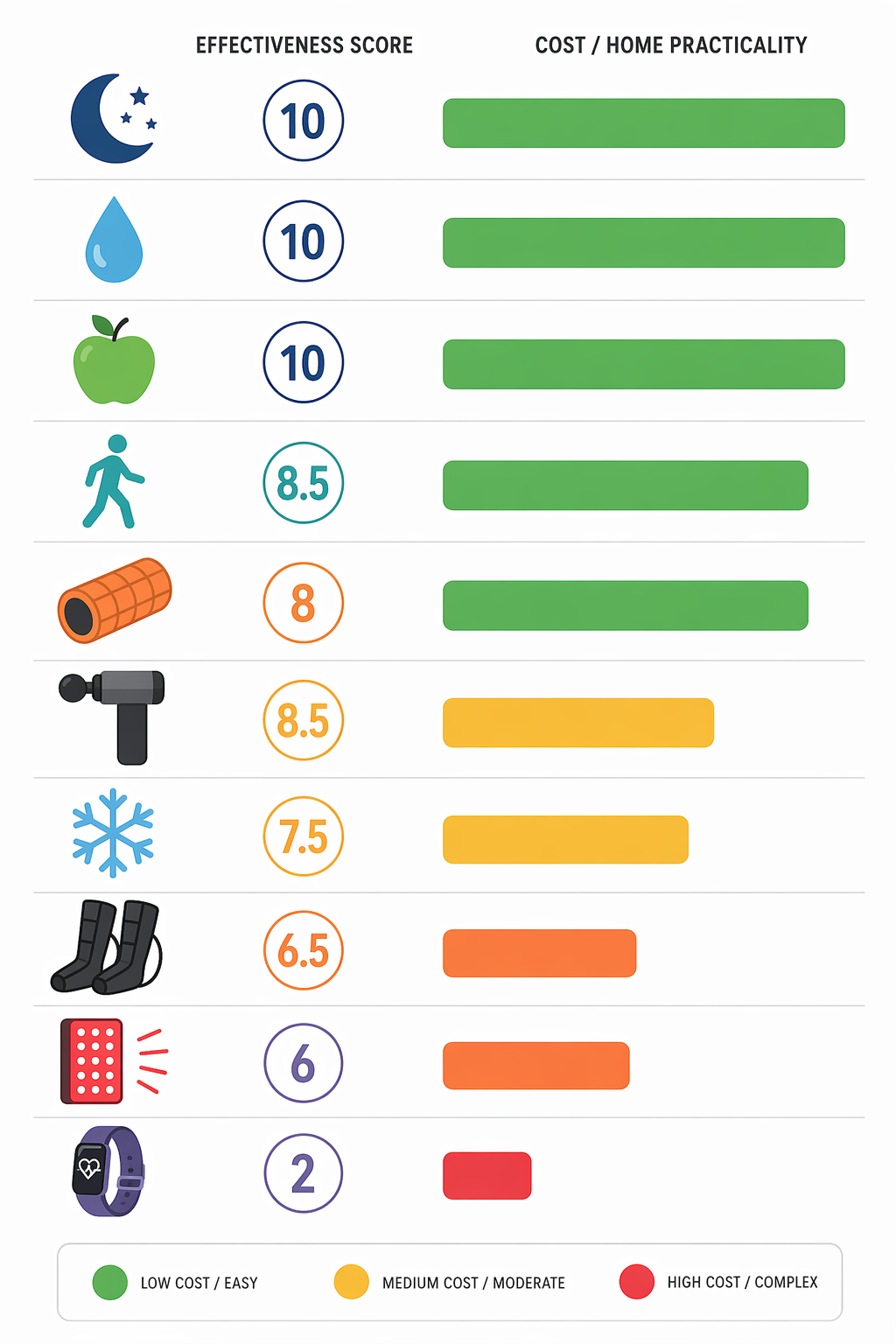
The base of the pyramid is sleep, hydration, and nutrition. Transparent Labs — a supplement company, so take their ratings as informed opinion, not independent data — gives recovery-focused nutrition a perfect 10/10 overall, with effectiveness 10 and convenience 9.5. I would not use their scale as a formula, but it matches what the broader evidence shows: if you are not sleeping enough and not eating enough protein and calories, no gadget will fix your recovery.
A 2019 meta-analysis in Sports Medicine found that athletes who incorporate structured recovery days improve performance 20–30% more than those who train every day at high intensity. That is not a small edge — it is the difference between plateauing and progressing. And it does not require a single purchase.
Next: Active Recovery and Foam Rolling – Almost Free, Nearly as Effective
Once the foundation is solid, the next tier adds significant benefit for almost no money. Active recovery — walking, light cycling, or any movement at 30–60% of max heart rate using the talk test — reduces delayed-onset muscle soreness by up to 40% compared to complete rest, according to that same 2019 meta-analysis. The “gadget” here is your own legs.
Foam rolling is rated 8/10 by Transparent Labs (effectiveness 8.0, convenience 7.0). The Daily Burn estimates soreness reduction of 25–50% from 10–15 minutes of foam rolling on recovery days, based on a 2019 Journal of Athletic Training review. Massage guns score identically (8.5/10) but cost ten times as much. The choice between them depends on whether you can tolerate the pressure of a foam roller and whether you already own one. We have a full technique guide on foam rolling and active recovery if you want the specifics.
| Method | Effectiveness (out of 10) | Convenience | Cost |
|---|---|---|---|
| Active recovery (walking, light cycling) | 8.5 | 9.0 | Free |
| Foam rolling | 8.0 | 7.0 | $20 – $50 |
| Massage gun | 8.5 | 9.0 | $100 – $300 |
The Premium Stuff: Cold Plunges, Red Light, Compression – Only If You Have Budget and the Right Goal
This is where the marketing budget lives. Cold plunges score 7.5/10 from Transparent Labs, with an effectiveness of 8.0 but a convenience of only 2.5. That low convenience rating reflects the setup, maintenance, and the unpleasantness of actually getting in. But the bigger caveat — the one most home fitness content conveniently skips — is that cold plunging can blunt muscle hypertrophy. The same inflammation that causes soreness also signals your muscles to grow. Dampening it with cold exposure may reduce the adaptation you trained for.
If your primary goal is muscle growth, cold plunges are probably not worth the effort and may even work against you. If you are training for endurance or recovery between events, the evidence is more supportive. But for a home exerciser training 3–6 times a week with dumbbells? I would put this on the “maybe later” list.
Red light therapy is rated 6/10 (effectiveness 7.0, convenience 4.0). The studies are too small to draw firm conclusions, and home panels cost several hundred dollars. Compression gear scores 6.5/10 (effectiveness 5.0, convenience 9.0) — it is easy to wear but the evidence is modest. None of these belong in the same tier as sleep or active recovery.
| Method | Rating | Key Caveat | Approximate Cost |
|---|---|---|---|
| Cold plunge | 7.5/10 | May blunt hypertrophy | $300 – $5,000 |
| Red light therapy | 6/10 | Small studies, high cost | $200 – $1,000 |
| Compression gear | 6.5/10 | Modest evidence | $50 – $200 |
Trackers: They Measure Recovery, They Don’t Create It
This one creates a tension — and I want to address it directly. Transparent Labs rates biometric bands (Whoop, Oura, fitness watches) a 2/10 overall, with an effectiveness score of 1.0. That is the lowest rating in their entire list. But if you have read our tracker comparisons, you might wonder: doesn’t a Whoop or Oura help you recover?
Yes and no. These devices measure recovery metrics — heart rate variability, sleep stages, readiness scores. They give you data. But data does not improve recovery; it only informs it. The band does not put you to bed earlier or hydrate you. It does not reduce inflammation. It tracks. The effectiveness rating of 1.0 reflects that distinction: wearing a band does not itself make you recover faster. What matters is what you do with the information. If the band prompts you to sleep an extra hour, great. But the band itself is just a notification system, not a recovery method.
If you are already using a tracker, keep it. But do not mistake measurement for treatment. For a deeper look at wearable recovery metrics, see our fitness tracker guides — and take the readiness score as a prompt, not a prescription.
Three Steps, in Order
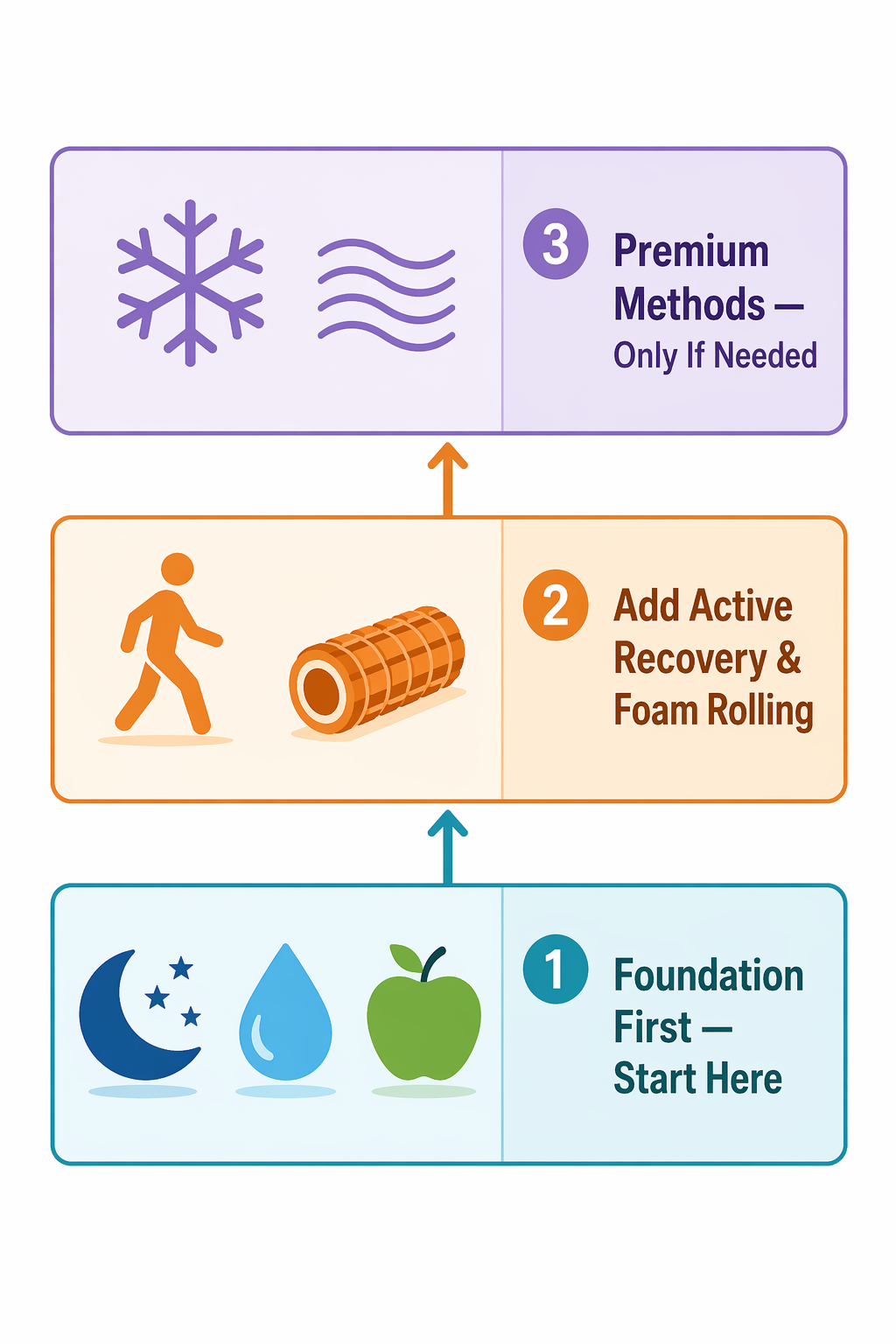
Here is the three-step decision guide that follows from the pyramid:
- Secure the foundation: sleep 7–9 hours, drink enough water, eat enough protein. Do this consistently before adding anything else.
- Add active recovery (walking, light cycling) on rest days. Add foam rolling 2–3 times per week. Total cost: $0–$50.
- Only after steps 1 and 2 are consistent, consider advanced modalities if your budget permits and your goals align. Cold plunges are acceptable if hypertrophy is not a priority. Red light therapy and compression are low priority.
| Tier | Benefit share | Cost | Example methods |
|---|---|---|---|
| Foundation | ~80% | Free | Sleep, hydration, nutrition |
| Middle | ~15% | $0 – $50 | Active recovery, foam rolling |
| Advanced | ~5% | $200+ | Cold plunge, red light, compression |
This pyramid pairs well with a structured training program. If you are looking for a plan that respects recovery, the science-backed 3-day full body dumbbell workout is built with recovery days in mind. And if you are still building out your gym, our budget tier guide can help you allocate your equipment budget without sacrificing recovery.
The Verdict: Free First, Gadgets Later
Here is the short version: 80% of your recovery benefit comes from sleep, hydration, and nutrition. Another 15% comes from active recovery and foam rolling. The remaining 5% is what the ads are selling. If a friend training in a spare bedroom with a $200 budget asked me what to buy for recovery, I would tell them to buy a foam roller and spend the rest on a better mattress.
The industry wants you to believe that recovery is complex and that you need specialized gear to do it right. It is not. The most effective protocol is also the cheapest. Start there, prove you can do it, and only then consider the gadgets.
This is general fitness education, not medical advice. For diagnosis or treatment of pain or injury, consult a qualified clinician.
Pick your next session
Browse all routines to find an appropriately-spaced next session.
Spot something off?
This content sits adjacent to health guidance — tell us if a citation or figure needs a correction.