
Best Home Gym Equipment by Budget: Complete Setup Guides for $500, $1,000, $2,000, and $5,000
Most budget-conscious buyers get paralyzed by endless product options. This guide gives you a concrete shopping path for four budget tiers—$500, $1,000, $2,000, and $5,000—with complete starter stacks and total cost of ownership including subscription fees.
Start with a question: can you train your whole body with a jump rope, a cheap bench, and a set of bands? Most roundups say yes. I say check the fine print. 38.6% of US home fitness buyers spent under $500 on a single piece of equipment, yet 35.6% cite cost as the main barrier to building a home gym. That gap — between what people spend and what they think they need to spend — is where bad decisions live.
This guide is different. I'll walk you through four real budgets — $500, $1,000, $2,000, and $5,000 — and show you the complete starter stack for each, including the total cost of ownership when subscriptions are involved. By the end you'll know exactly what you get for your money and, just as important, what you're giving up.
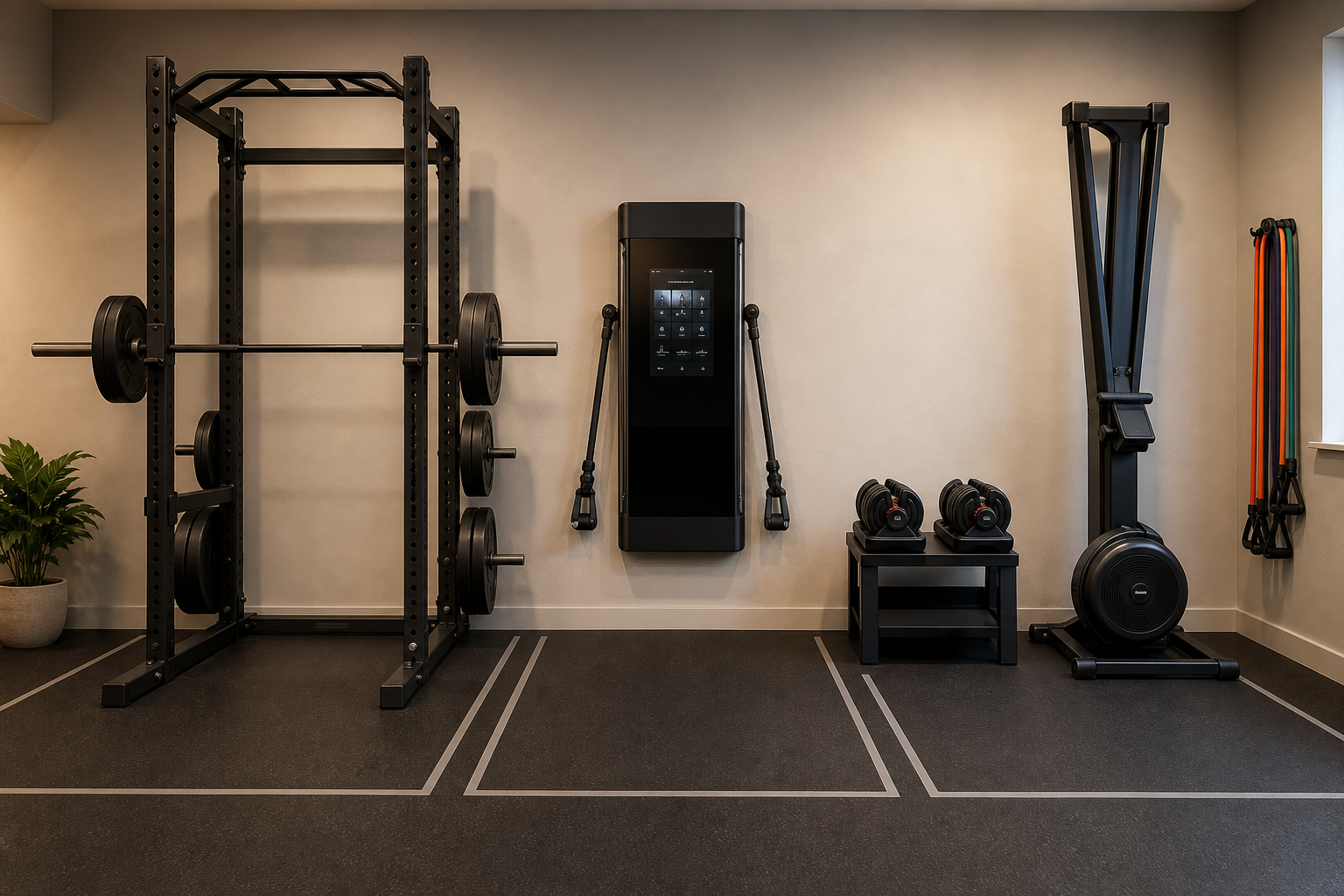
Under $500: What You Actually Get (And What You Don't)
You can build a functional starter gym for under $500, but the limitations are real. No adjustable bench, no barbell, and you'll top out at about 60 pounds total for most exercises. I've been there: a set of bands and a jump rope kept me going for a few months, but then my legs outgrew the resistance.
- WOD Nation Double Under Speed Jump Rope — $18.99. Cardio that costs as much as a lunch.
- CAP Cast Iron Hex Dumbbells — roughly $1 per pound. A set of 5–50 lb dumbbells runs about $250.
- Living.Fit Resistance Bands — $129. This gets you variable resistance up to around 100 lbs for rows, presses, and squats.
- Sportsroyals Power Tower — $210. Pull-ups, dips, leg raises. The backbone of bodyweight strength.
Total: roughly $610 if you buy a full dumbbell set, or about $360 if you grab only a few pairs. Still under $500? Not quite, but close — and it's a usable gym. Realistically, expect to upgrade within a year.
$500–$1,000: The Best ROI Per Dollar
Doubling your budget to $1,000 changes everything. Now you can buy a real power rack and proper adjustable dumbbells — the foundation for years of training. The only question is whether you also want a rowing machine.
- REP PR-1100 Power Rack — $380. 700-lb capacity, 14-gauge steel, spotter arms included. This is the foundation for squats, bench press, pull-ups, and rows.
- REP Fitness QuickDraw Adjustable Dumbbells — $336. Replaces 12 pairs of dumbbells, 5–60 lb range. Takes seconds to adjust.
- Concept2 RowErg — $990. This pushes you right to the $1,000 boundary, but it engages roughly 86% of your muscles and stores vertically in under 2 square feet.
If the Concept2 is too rich for this tier, substitute a jump rope and resistance bands from Tier 1. You'll still have a killer strength foundation with the rack and dumbbells for about $720. No subscriptions. No hidden fees. Just steel and iron.
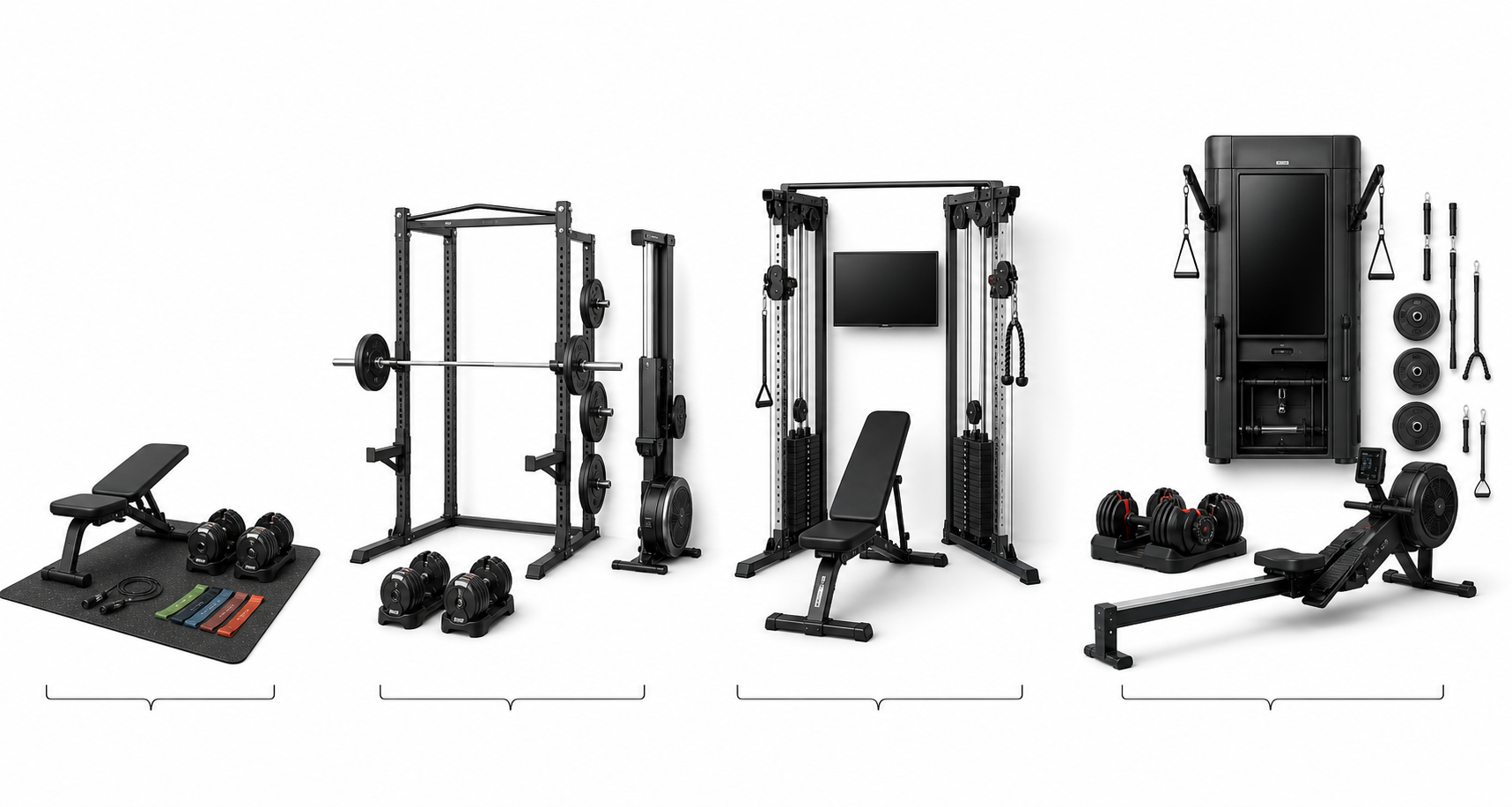
$1,000–$2,000: All-in-Ones and the Subscription Trap
At this level you can buy an all-in-one cable machine or a mid-range smart rower. But the critical difference is no longer the equipment — it's the monthly bill that follows.
- Bowflex Xtreme 2 SE Home Gym — $1,499. 210 lbs of power-rod resistance, upgradable to 410 lbs. No subscription. No screen. Simple, effective, permanent.
- NordicTrack RW900 Rowing Machine — $1,499. Includes iFIT for the first year, then $39 per month after that. Over five years that adds roughly $1,560 to the upfront price.
- Bells of Steel All-in-One Home Gym — $1,300. Combines a squat rack and functional trainer. Plate-loaded or 210-lb weight stack options. No subscription.
The NordicTrack RW900 is a fine machine, but it's a $2,500 treadmill after five years. The Bowflex and Bells of Steel stay at their sticker prices forever. If you want guided content, the subscription makes sense. If you just want to row, skip it.
$2,000–$5,000: Smart Gyms and the Math That Matters
This is where the smart gyms live — Tonal 2, Speediance, REP Ares 2.0 — and where the subscription math really hurts. I've seen people buy a Tonal thinking it's a bargain, then cancel after a year because the monthly fee stung. Here are the numbers.
- Tonal 2 — $4,295 + $59.95/month membership. Over five years that's $8,682. The 250 lbs of digital resistance is smooth and compact, but you're paying a premium for the convenience.
- Speediance Gym Monster — $3,199. Up to 220 lbs of digital resistance. No subscription required. That's the key differentiator: $3,199 and done.
- REP Fitness Ares 2.0 Functional Trainer — $2,999. Dual 260-lb weight stacks, upgradable to 310 lbs. Traditional cable training, no subscription. Mounts on the PR-1100 rack from Tier 2.
- Major Fitness B17 Flying Fortress — $4,199. All-in-one functional trainer with Smith machine and weight stacks expandable to 260 lbs per side. 1,500-lb J-hook capacity. No subscription.
The Tonal 2 is an engineering marvel, but $8,682 over five years is the price of a used car. Compare that to a REP Ares 2.0 at $2,999 — no recurring cost, and you'll never worry about a monthly bill when life gets busy.
The Subscription Trap: Upfront vs. Five-Year Total
This table puts the hidden cost side by side. The numbers are current as of June 2026 — always check for sales and updated pricing.
| Equipment | Upfront Price | Monthly Subscription | 5-Year Total |
|---|---|---|---|
| Tonal 2 | $4,295 | $59.95 | $8,682 |
| NordicTrack RW900 | $1,499 | $39 (after year 1) | $2,531 |
| Peloton Cross Training Bike+ | $2,695 | $49.99 | $5,694 |
| Bowflex Xtreme 2 SE | $1,499 | $0 | $1,499 |
| Concept2 RowErg | $990 | $0 | $990 |
| REP PR-1100 + QuickDraw Dumbbells | $716 | $0 | $716 |
The $1,499 NordicTrack RW900 costs nearly as much as the $1,499 Bowflex Xtreme 2 SE when you factor in five years of iFit. And the Bowflex doesn't stop working if you cancel a credit card. That's the difference between owning equipment and renting it.
There's no single best home gym equipment setup — only the one that matches your budget and your tolerance for recurring costs. Under $500? Accept the limitations and plan to upgrade. $500–$1,000? That power rack and dumbbells will carry you for years. Above $1,000? Run the five-year math on anything with a subscription. If you're below $1,000, the detailed roundup of best home gym equipment under $1,000 breaks down what to buy and what to skip. Prices quoted are from sources last checked in June 2026 — always verify current deals before pulling the trigger.
This result comes from one real apartment under the stated conditions — it is a strong signal, not a guarantee your space will measure identically.
Builds this evidence supports
Cable Machine Alternatives That Save Space and Money
Compare the best cable machine alternatives for home gyms – from resistance bands and pulley systems to suspension trainers and compact digital units – and find the right option for your space and budget.
How to Choose a Compact Home Gym That Works for Your Space, Budget, and Noise Tolerance
This article provides a structured decision framework for apartment dwellers and small-space residents to match their specific floor footprint, noise sensitivity, and budget to the most suitable compact home gym strategy — whether that's an all-in-one machine, modular build, smart digital system, or band/bodyweight setup.
The Garage Gym Reality Check: What Equipment Actually Fits in a Single-Car Garage
Most garage gym guides assume a two-car space. This article uses real dimensions, real equipment footprints, and three layout templates to show what fits—and what doesn't—in a single-car garage (10x20 to 12x20 ft).
Spot something off?
If this result didn't match your own space, let us know — floor-damage and noise claims carry real deposit-risk consequences if we get them wrong.