
You wake up, check your Oura Readiness Score, and now what?
You wake up, see a 72 on your Oura ring. Do you skip squats or just ease up? The ring won't tell you. Most articles list the score's components and stop. This one gives you a decision rule: a concrete framework to turn that single number into a training choice.
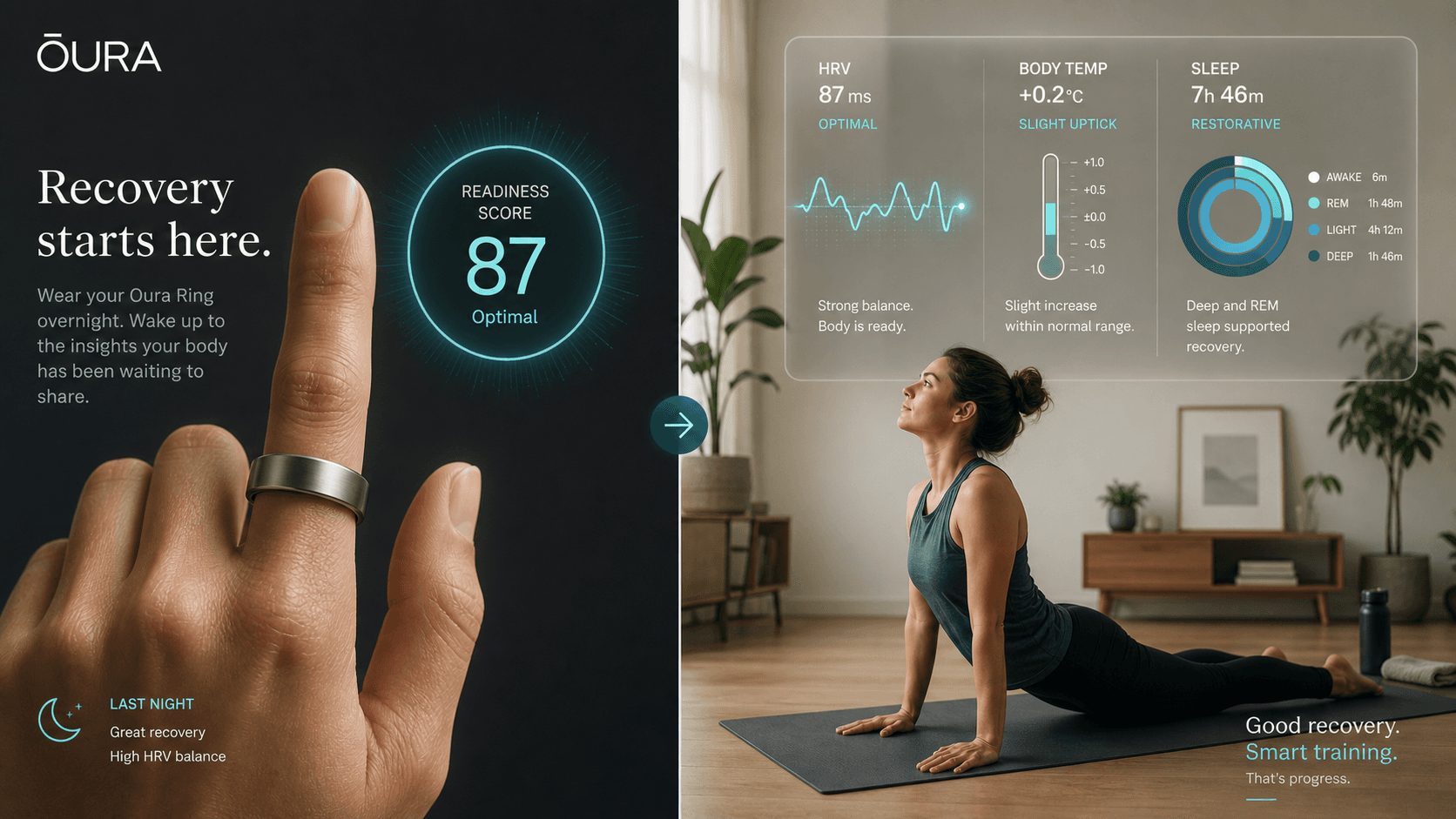
First, a necessary reality check: the Oura Ring is not a real-time workout tracker. Forbes calls its activity tracking the weakest feature — and they're right. The ring logs steps and heart rate after the fact, not during a set. If you want instant pace or rep feedback, a GPS watch or chest strap does that job better. But what the ring does exceptionally well is measure how well your body recovered overnight. That information, used correctly, changes how you train more than any live split ever could.
The Readiness Score isn't a grade — it's a decision rule
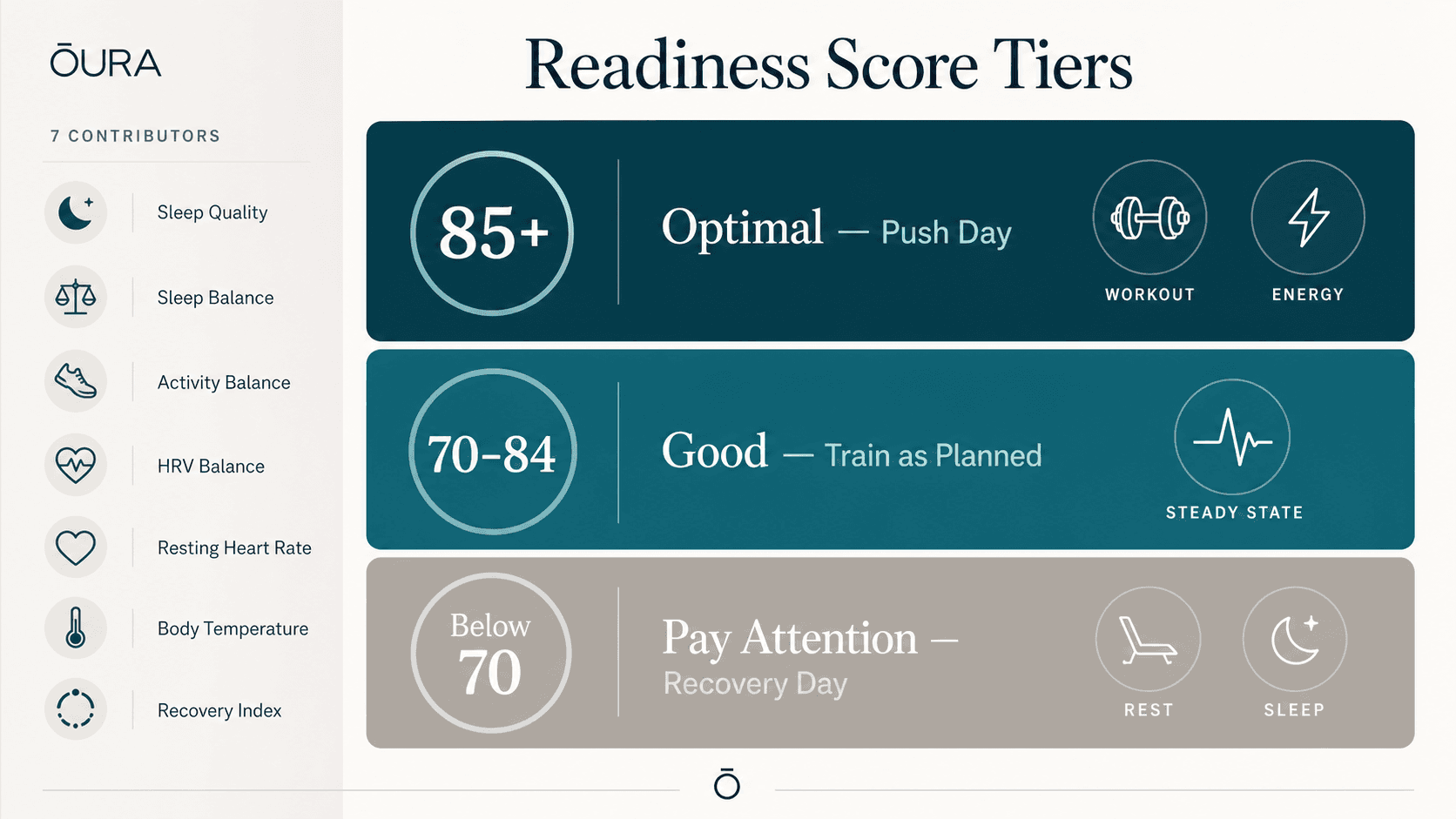
The Readiness Score is a composite of seven contributors across three pillars: sleep (Sleep, Sleep Balance), activity (Previous Day Activity, Activity Balance), and body stress (Resting Heart Rate, HRV Balance, Body Temperature, Recovery Index). Oura's own blog defines three tiers: 85 or higher is optimal, 70‑84 is good, and below 70 means pay attention. I've found these tiers useful as a starting filter — but only when you also look at the trend, not the snapshot.
The 14-day windows for Sleep Balance and Activity Balance are more important than a single night's score. A single night of bad sleep will lower your score, but the ring doesn't treat it as a catastrophe — it compares the last 14 days to your long-term average. That means you can afford an occasional late dinner without derailing your week. The same goes for Activity Balance: if you trained hard yesterday, today's score will reflect that, but it also weighs what you did over the past two weeks. This is trend-reading, not snapshot judgment.
Your HRV number means nothing without a baseline
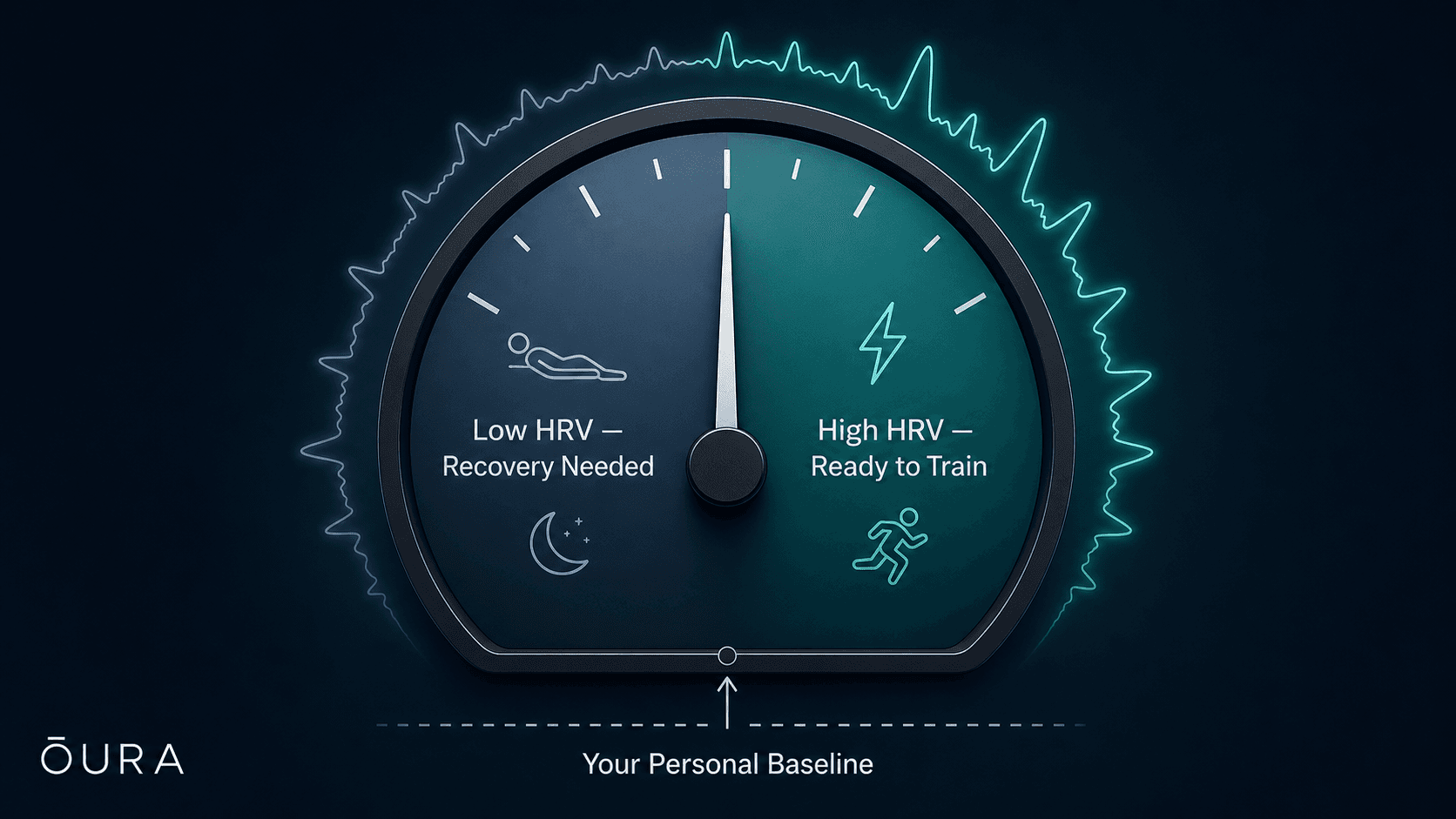
Heart rate variability (HRV) is the metric that most often gets misinterpreted. A 2025 peer-reviewed study found that Oura Gen4 achieved an HRV concordance of 0.99 with ECG — the highest among tested wearables (WHOOP 0.94, Garmin 0.87). That's impressive accuracy, but it doesn't matter if you don't know your own range. Oura's blog is clear: HRV is highly personal — there is no gold standard range. An elite athlete can have a high or low baseline. What matters is deviation from your own average. The ring builds that baseline after about two weeks of consistent wear. Oura advises using high HRV days as push days and low HRV days for purposeful recovery. A small drop after a hard session is normal. A large drop — say, 20% below your baseline — is an early warning. Consistently low HRV outside your normal range means you're not recovering enough between sessions. The practical takeaway: don't compare your HRV to a friend's. Compare today's number to where you were last week. If you're consistently 10‑15% below baseline, it's time to schedule a lighter day or a deload week. For a deeper look at how Oura's HRV accuracy stacks up against other devices, see our comparison of recovery-focused wearables.
When your temperature ticks up, listen before you cough
Oura's body temperature sensor tracks deviations from your personal norm — not an absolute threshold. Athletedata.health reports that this can catch illness 1‑2 days before symptoms appear. Triathlete also notes that the metric can flag early overtraining. So when you see a small, persistent rise (0.3–0.5°C above your baseline) over several days, that's your cue to pull back — even if you feel fine. A sudden spike of 1°C or more often correlates with an acute immune response, and that's when you should seriously consider rest. The key nuance: Oura measures deviation from your own baseline. A 36.8°C morning reading is irrelevant on its own. What matters is that your baseline is 36.5°C and you've been running 0.3°C higher for three days. That pattern is actionable.
The Recovery Index: your heart's overnight report card
The Recovery Index is one of the seven contributors to Readiness Score, but it doesn't get much attention. Oura defines it as a measure of how quickly after your heart rate reaches its nighttime baseline your body begins to receive recovery sleep. In practical terms: if your heart rate drops quickly and stays low, your recovery index is good. If it hovers elevated into the early morning hours, you didn't recover as well. This is especially useful after a late workout — you can see whether your nervous system settled down or stayed wired. I've found this tells me more about my readiness the next day than the overall score sometimes.
Push, hold, or rest: a practical decision framework
Now we combine everything. The table below shows how to translate your Readiness Score tier into a concrete training action. Use it as a starting point, then adjust based on HRV and temperature trends.
| Readiness Score | Label | Action | Workout types |
|---|---|---|---|
| 85+ | Optimal | Push day | Heavy strength, HIIT, max effort |
| 70–84 | Good | Train as planned | Normal session, watch fatigue |
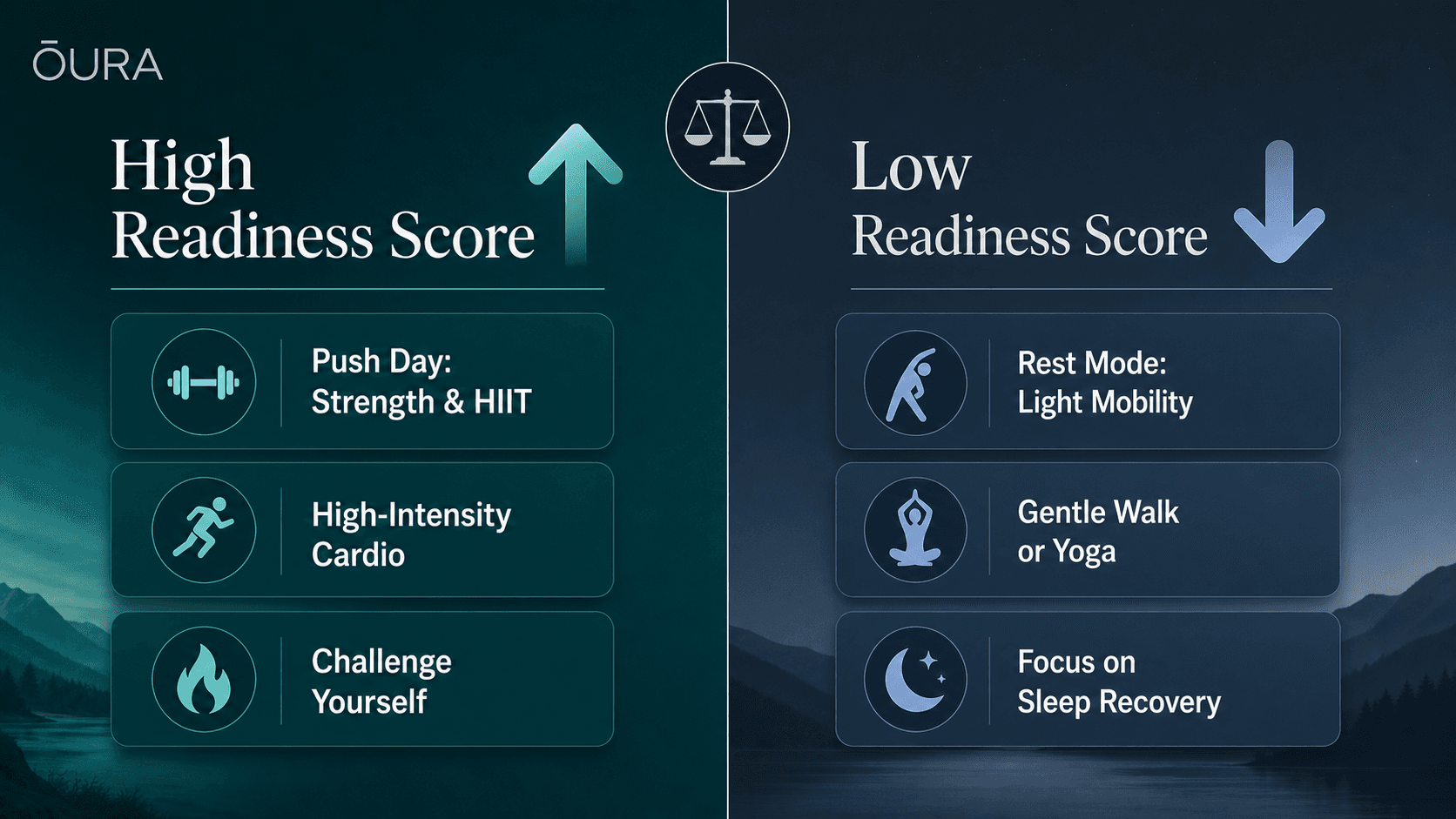
| Below 70 | Pay attention | Recovery day | Light mobility, walk, yoga, or rest |
A single low score is not a crisis. If your score is 68 but your HRV is within 5% of baseline and your temperature is stable, you can probably do a moderate session — just avoid red‑lining. Conversely, a score of 82 with a large HRV drop (20% below baseline) and a rising temperature trend is a false green light. Trust the combination, not the headline number.
When you decide on a recovery day, enable Rest Mode in the Oura app. This adjusts your daily activity goal and recalibrates the algorithm to prioritize rest. It's a small gesture, but it prevents the ring from nagging you to close your rings when you should be lying on the couch.
What the ring won't tell you (and why that's okay)
Oura has limitations, and pretending otherwise would undercut the trust this site aims for. Three matter most for home gym users:
- Accuracy on darker skin tones: Triathlete and multiple sources confirm that PPG‑based wearables, including Oura, can have reduced consistency on darker skin. This is a known industry issue, not unique to Oura. If you have a darker skin tone, be mindful that HRV and sleep stage readings may be less precise. I wish this got more attention in reviews.
- Discomfort during grip‑heavy exercises: Forbes and Sleep Foundation reviewers noted that the ring scratches and can be uncomfortable during weightlifting, rowing, or deadlifts. The practical solution: take the ring off for those sessions. You'll get your overnight recovery data regardless. It means missing heart rate during those lifts, but Oura isn't your real-time tracker anyway.
- Retroactive activity tracking: The ring logs workout data after the fact, not in real time. Forbes calls this its weakest feature. If you need live pace, heart rate zones, or rep counting, a chest strap or GPS watch is the right tool.
This last point leads to what I consider the optimal setup for serious home athletes: use Oura for sleep and recovery intelligence, and pair it with a dedicated workout tracker. I've written a full guide on why a two‑device setup works best for home gym users — it's not a compromise, it's a deliberate strategy to get the best of both worlds.
The bottom line: train with the ring, track with the watch
Oura's value is recovery intelligence, not workout performance. The Readiness Score, HRV trends, body temperature, and Recovery Index give you a daily window into whether your body is ready to handle a tough session or needs active recovery. But none of these numbers works in isolation. The real skill is reading them together — recognizing that a 82 score with a dropping HRV and a rising temperature is a different signal than the same score with steady baselines.
If you already own an Oura Ring, stop treating the morning number as a report card. Use it as a starting point for today's decision. And if you're still deciding whether the ring is worth the upfront cost plus the $5.99/month subscription, our practical guide for home gym users breaks down the trade‑offs. For those who are in, the next step is simple: open the Oura app, check your Readiness Score, and decide whether today is a push day or a recovery day — based on what your body actually tells you, not what your calendar says.
Comments
Join the discussion with an anonymous comment.