
The $3,000 gym nobody uses
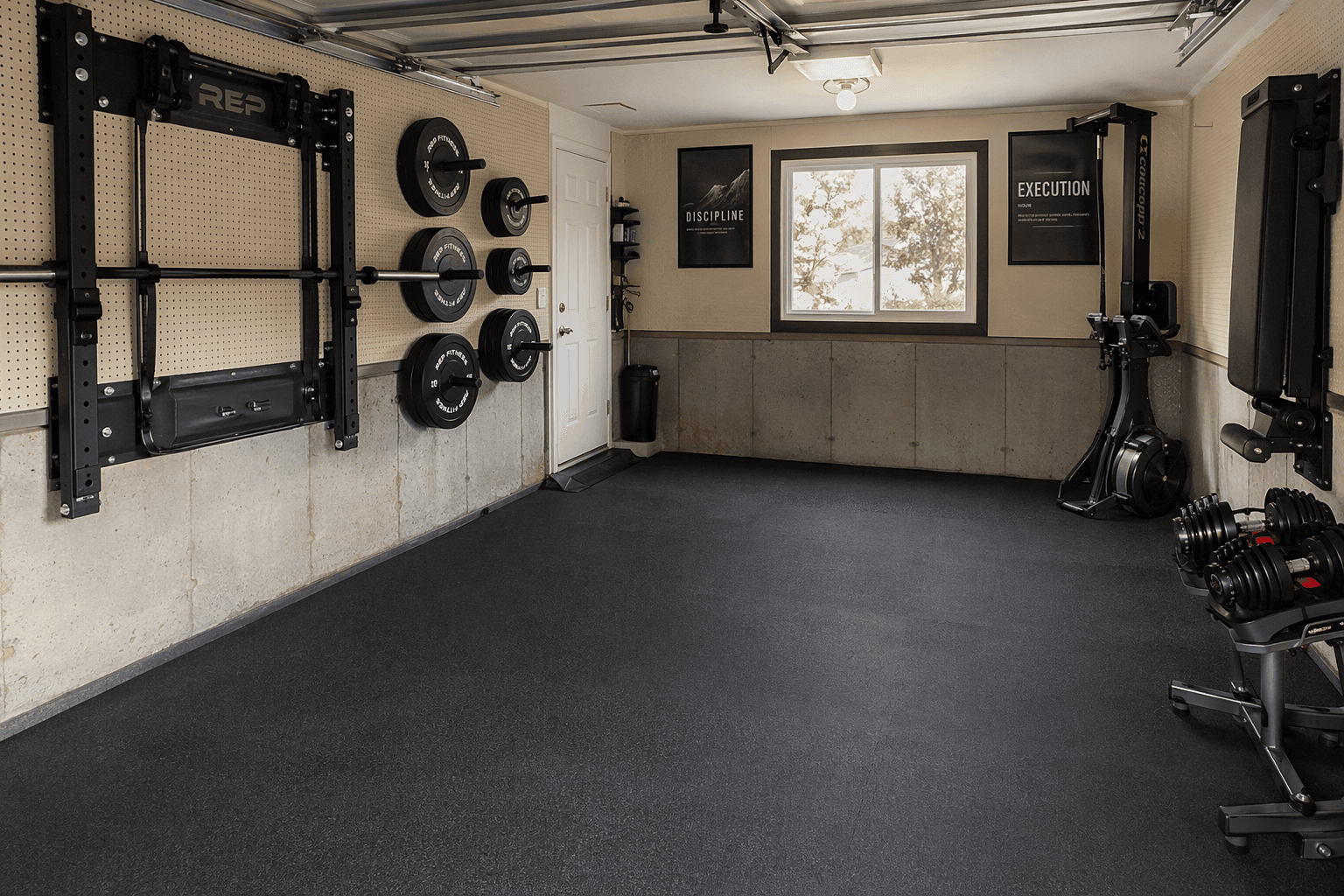
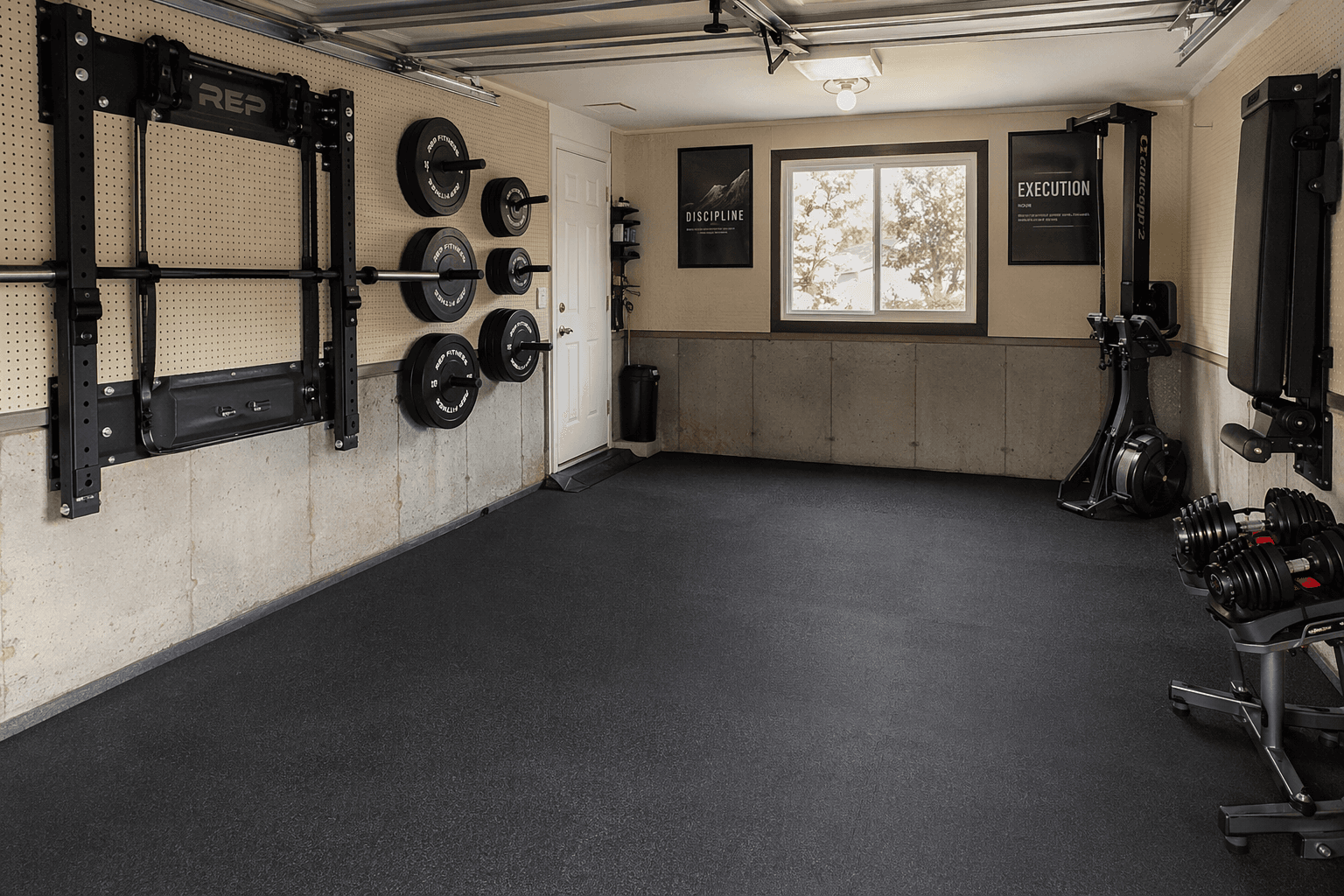
Late June in a non‑insulated garage in Phoenix. The air inside hits 105°F by 4 pm. Someone dropped $3,000 on a power rack, barbell, bumper plates, bench. By August the gym had seen three sessions. The barbell felt like a hot skillet. The concrete floor was so hot that lying down for bench press hurt even with a mat. In December the same garage dropped to 35°F. The bar was too cold to grip without gloves. The space heater warmed a three‑foot radius. The gym sat empty.
I have seen that pattern in a dozen garage conversions. People pick equipment first and environment never gets asked. They read best‑barbell lists, watch rack reviews, and order stall mats as an afterthought. Then the garage wins.
The industry won't tell you this
There is an information bias in the home gym world. Equipment brands, reviewers, and affiliates make money selling hardware — racks, bars, plates, benches. Nobody makes money telling you to insulate your garage door. So the advice landscape is lopsided: ten articles on what barbell to buy for every one that mentions climate control. This article is that one.
Below are the five infrastructure factors that separate a year‑round usable gym from one that collects dust: flooring, climate, moisture, layout, and sound. Each has trade‑offs that almost never show up in the buying guides. I will give you the numbers, the caveats, and a decision framework at the end.
What the floor costs (and what it hides)
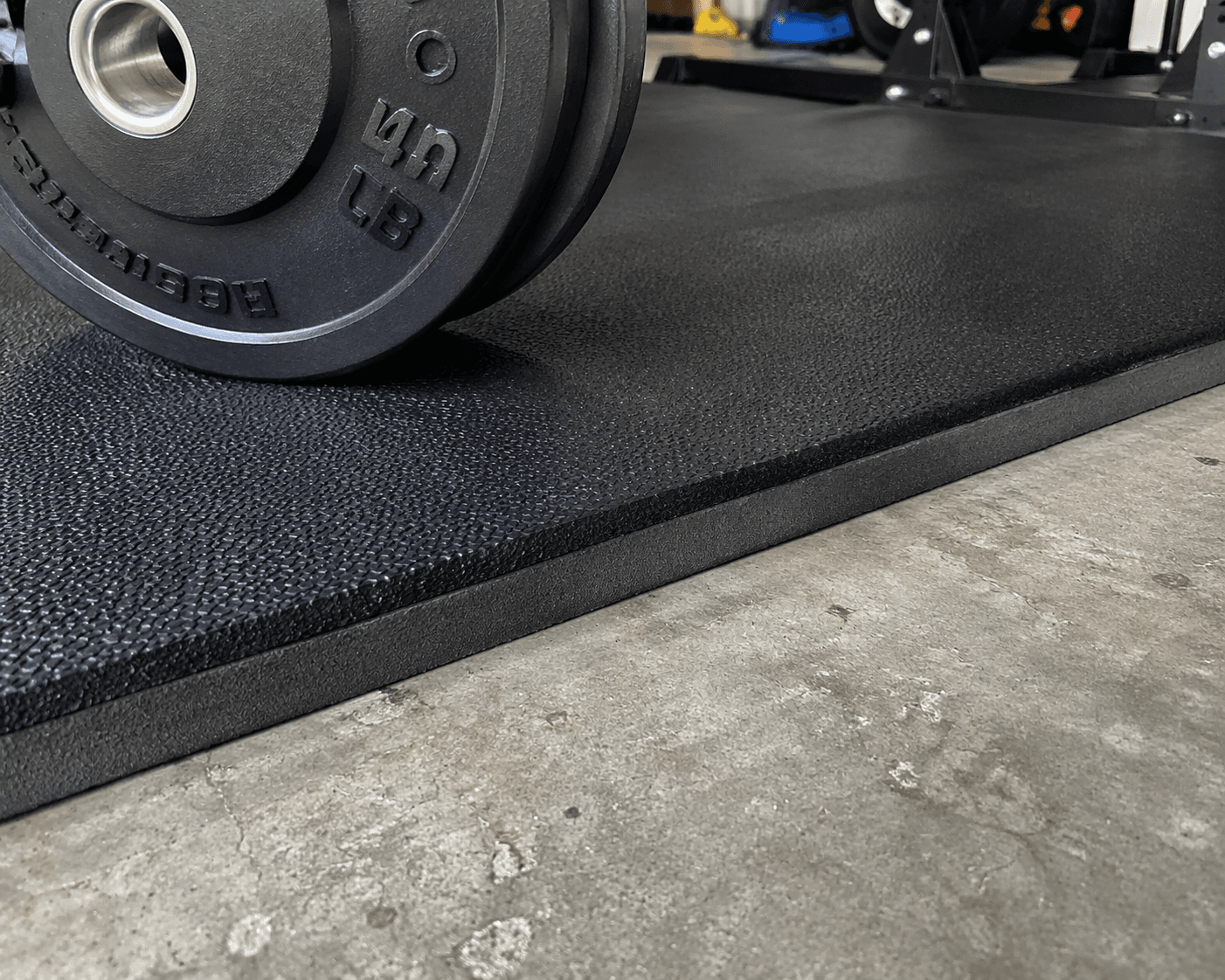
Most people assume any gym mat will do. It will not. Your garage floor is bare concrete — porous, prone to cracking under dropped weights, and it transmits impact noise straight to the rest of the house. The gold standard for garage gyms is the 3/4‑inch rubber horse stall mat. Tractor Supply sells them for $2.38 per square foot. A 4x6 sheet covers 24 sq ft and weighs about 100 pounds.
That $2.38 number is the sticker price. What the guides do not tell you is that delivery for six mats — enough for a 144 sq ft lifting area — can cost $500 because each mat is absurdly heavy. If you cannot pick them up from a local store yourself, factor that into your budget. I have seen people blow their whole flooring budget on shipping.
A 2025 peer‑reviewed study confirmed that rubber flooring reduces impact noise from dropped weights in residential settings. The Garage Gym Reviews testers gave the 3/4‑inch stall mats a noise dampening rating of 4 out of 5. That is strong, but I would not treat the peer‑reviewed claim as a precise decibel number without seeing the full study methodology. What matters is that a thick rubber layer absorbs a meaningful amount of sound — enough that your housemates will not hear every deadlift drop.
The garage door is the problem
The garage door is the largest uninsulated surface in a typical garage. Insulating it will reduce temperature loss through that surface by 30–50% according to Fringe Sport — a widely cited figure in building science, even if it is based on anecdotal experience rather than a formal study. That is the single most impactful climate fix you can make. A garage door insulation kit costs $100–300 and takes an afternoon to install.
Below is a ranked comparison of climate solutions by upfront cost and effectiveness. Regional variation matters — a space heater might be fine in Atlanta but pointless in Minneapolis.
| Option | Cost | Effectiveness | Notes |
|---|---|---|---|
| Box fan / space heater | $20–60 | Low | Useless below 40°F or above 95°F. Works only if you are already comfortable with the baseline temperature. |
| Garage door insulation kit | $100–300 | Medium to High | Reduces temperature swing by 30–50%. Best ROI of any climate fix. |
| Ductless mini‑split system | $1,500–3,500 (estimate) | High | Year‑round heating and cooling. Professional installation required. This estimate is from 2021 and likely low in 2026 — get local quotes. |
A box fan is not worthless. It can make a 90°F garage bearable if you are only lifting for 40 minutes. But when the temperature drops below freezing, a space heater will not heat an entire garage — it will warm a small radius around your body. That is fine for stretching, not for a full session. If you live in a place with true extremes, a mini‑split is worth the investment.
Rust isn't a coating problem — it's an environment problem
A friend of mine bought a stainless steel barbell to solve his rust issue. Within six months the knurling area was pitted. The problem was not the coating — it was the humidity. His garage sits on a concrete slab that sweats in the summer. Moisture condenses on the metal and no coating is immune long‑term if the air itself is wet.
The real solution is environmental control: a dehumidifier ($150–300) or a ventilation fan that cycles humid air out. Bare steel barbells will rust in a damp garage regardless of coatings. If your garage stays dry, even a bare steel bar can last years. If it is humid, a $400 stainless bar is a band‑aid compared to a $200 dehumidifier. Do not chase premium coatings before you fix the air.
Freezing weather brings another moisture‑related problem: your hands can freeze to a cold barbell. Fringe Sport recommends bringing the barbell inside before the workout or warming it with a hair dryer. This is a minor nuisance, but one more reason to address climate first.
Plan for the car, too
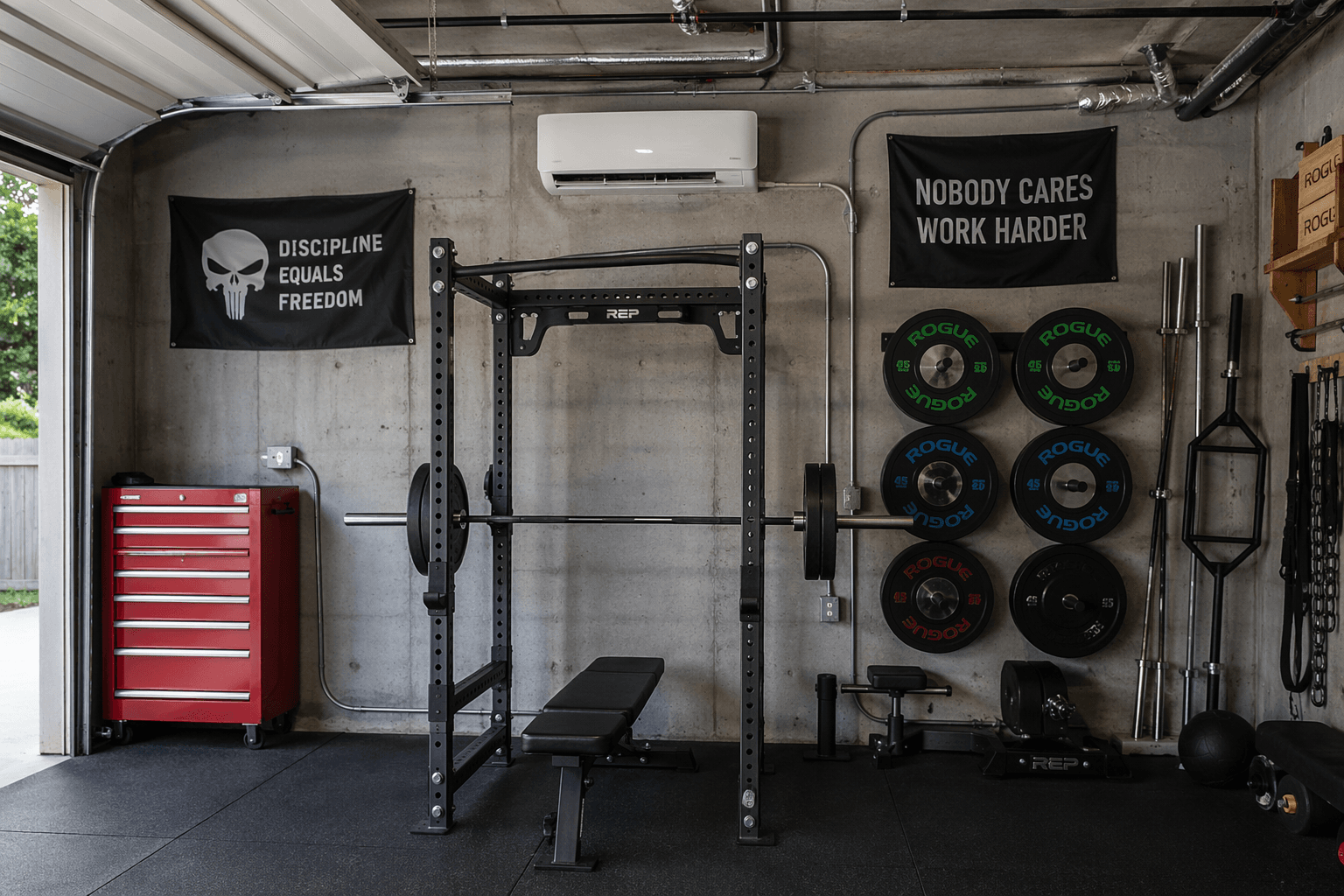
Most people share the garage with a car, storage, or lawn equipment. If you assume you can take over the whole space permanently, you are setting yourself up for frustration. The single‑car garage is about 12x22 feet. You can fit a good gym in half of that and still park a car — but only if you plan the zones upfront.
- Designate a strength zone (power rack, bench, plates) and a cardio zone (rower or bike that can be stored vertically). Leave a clear path from the car door to the house.
- Check your ceiling height. Most power racks require at least 81 inches. If you are over six feet tall, you will need 93+ inches for overhead press — measure before you buy.
- Keep wall‑mounted storage for floor items that can be moved. A rowing machine stored upright takes up 6 sq ft; laid flat it takes 8x4.
A multi‑use layout is harder to design, but it is more realistic. If you cannot commit to a permanent half‑garage gym, consider a foldable rack that mounts to the wall and collapses when not in use. That keeps the space flexible. The 7 Garage Gym Mistakes guide covers layout errors in more detail.
Your neighbors will hear that deadlift
Stall mats handle impact noise from dropped weights — that 4/5 rating from earlier is enough for most home gyms. But dropping a 250 lb deadlift from lockout still creates a low‑frequency thud that travels through concrete. If your garage is attached to the house, that thud travels through the wall studs.
For peak‑hour training (early morning or late evening), you may want additional treatments: mass‑loaded vinyl applied to the shared wall, or a layer of acoustic insulation inside the wall cavity. This is not a cheap fix — it adds $200–500 and requires drywall work. For most people, a simpler solution works: time your heavy sets for when no one is sleeping. I would rather do that than open a wall.
The peer‑reviewed study that confirms rubber flooring‘s effectiveness gives you confidence that stall mats are not snake oil. But the same study probably measured decibel reduction under controlled conditions — real‑world noise still depends on your specific floor construction. Mitigate what you can, and keep your neighbors in mind.
Where to spend your money first
By now you have the pieces. Here is how to prioritize them with your limited time and money.
| Priority | Action | Cost | Impact on usability |
|---|---|---|---|
| 1. Insulate the garage door | Kit, $100–300, 2‑hour install | $100–300 | High — reduces temperature swing by 30–50%, directly improves comfort for every workout. |
| 2. Install stall mats | $2.38/sq ft + delivery | $300–600 for typical 12x12 area | Medium‑High — protects concrete, dampens noise, enables dropping weights safely. |
| 3. Manage humidity | Dehumidifier or ventilation fan | $150–300 | Medium — prevents rust on equipment and makes the air more comfortable. |
| 4. Plan a multi‑use layout | Design zones, measure ceiling height | $0–50 for measuring tools | Medium — prevents layout collisions that kill usability. |
| 5. Add a mini‑split or secondary heat/AC | Only after the above | $1,500–3,500 estimate | Green‑field needed only if your climate demands it. |
The first two items — insulation and flooring — deliver the most benefit for the least money. If you do nothing else, do those. The rest can wait.
If you want a step‑by‑step process that includes both infrastructure and equipment, the Complete Garage Gym Blueprint walks through the entire conversion. But start here. Equipment is secondary. Environment is primary.
Comments
Join the discussion with an anonymous comment.