
The Garage Gym Environmental Checklist: Temperature, Moisture, Flooring, and Electrical
Most garage gym guides focus on equipment, but the real difference between a gym you use year-round and one that collects dust is how you handle temperature extremes, moisture, flooring, and electrical capacity. This guide covers the four environmental factors most setup guides skip, with product recommendations and installation guidance for homeowners and renters.
- Budget tier
- $300–$1,000
- Space type
- garage
Items included: —
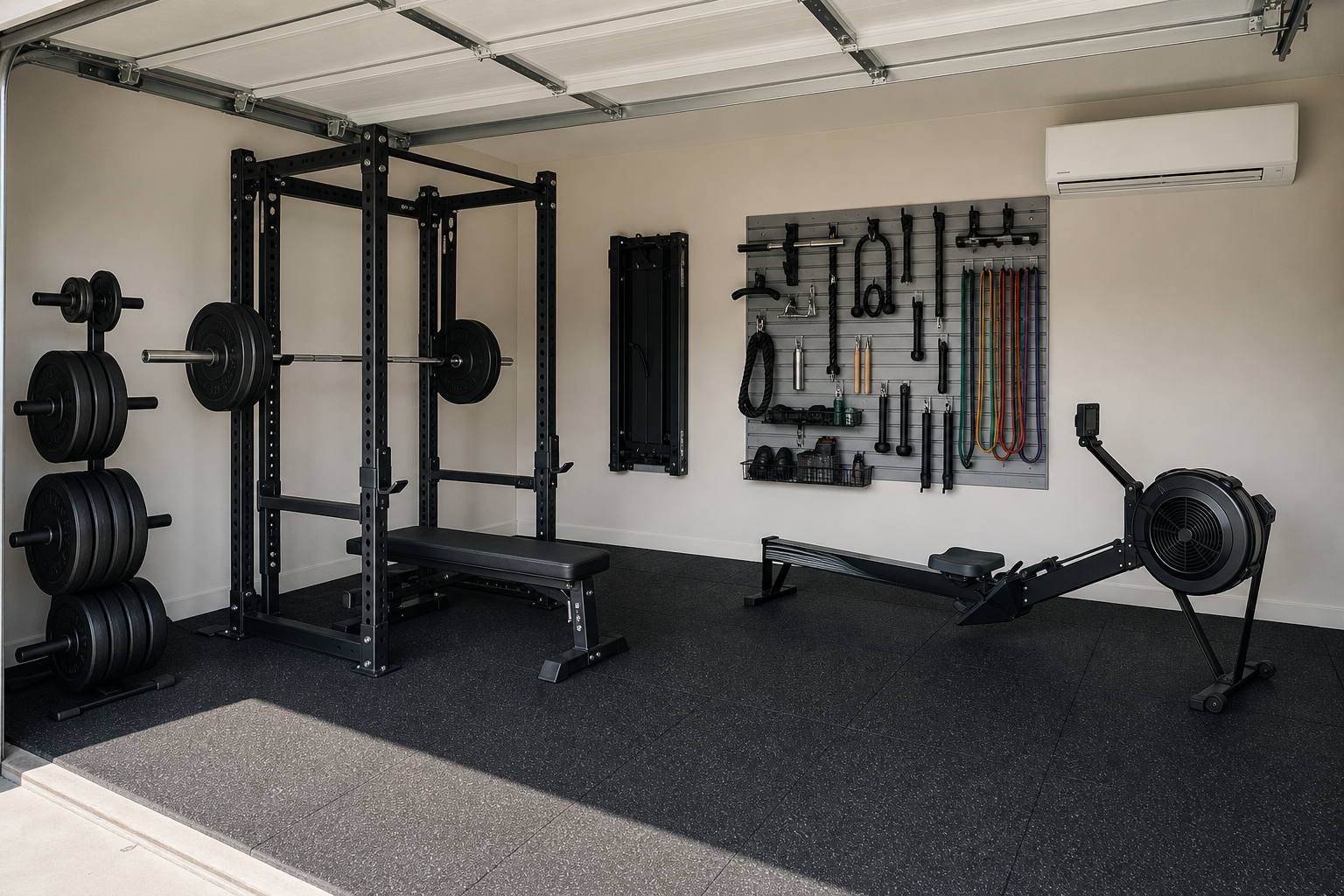
Why Your Garage Gym Fails (It’s Not the Equipment)
You spent hours researching the perfect power rack, picked a barbell that matches your budget, and ordered a set of bumper plates. A month later, the garage is either a sauna or a freezer, the barbell has rust spots, and the concrete slab has a hairline crack where you dropped a deadlift. The equipment wasn't the problem. The environment was.
Most garage gym setup guides treat the space as a blank room. They compare squat racks by weight capacity and treadmills by horsepower, but they never ask whether your garage can handle the temperature swing between July and January, whether the concrete floor will survive repeated drops, or whether the single 15-amp outlet can power a treadmill and a fan at the same time. These four factors — temperature, moisture, flooring, and electrical capacity — are the difference between a gym you use year-round and one that becomes an expensive storage unit.
Temperature: Keeping Your Garage Gym Usable Year-Round
A 2016 survey of over 500 people found that athletes often delay or skip training during extreme seasons. That finding is intuitive — nobody wants to deadlift in a 40°F garage in January or run on a treadmill in a 100°F garage in August. But the solution isn't just buying a heater or a fan. The first step is keeping the temperature you generate inside the space.
Insulation Is the Highest-ROI Dollar You'll Spend
Before you buy any heating or cooling equipment, insulate the garage door, the walls, and the roof. According to multiple garage gym builders, insulating the garage door and walls can reduce heating and cooling needs by 30 to 50 percent. That means a smaller, cheaper heater or air conditioner will do the job, and your energy bills will stay lower over the life of the gym.
Garage door insulation kits cost roughly $60 to $150 and take an afternoon to install. Fiberglass batts for the walls are inexpensive if the walls are unfinished. If your garage is already drywalled, you can still add insulation to the garage door and use a space heater or mini-split to manage the remaining temperature swing.
Heater Options: From Budget to Best
Once the space is insulated, you need a heat source. The right choice depends on your climate, garage size, and budget. Here's how the main options compare:
| Heater Type | Example Model | Price | BTU Output | Coverage | Best For |
|---|---|---|---|---|---|
| Mini-split heat pump | MR COOL 9,000 BTU | ~$899 | 9,000 BTU | Up to 350 sq ft | Year-round heating and cooling; gold standard |
| Infrared heater | Heat Storm 5,200 BTU | ~$109 | 5,200 BTU | Zoned / direct | Heating a small area directly |
| Electric oil-filled radiator | GoFlame 1,500W | ~$100 | 5,100 BTU | Small garages | Budget option for mild climates |
| Durable electric heater | NewAir 19,100 BTU | ~$153 | 19,100 BTU | Up to 600 sq ft | Larger garages with 240V outlet |
| Natural gas heater | Mr. Heater Big Maxx 80,000 BTU | ~$580 | 80,000 BTU | Up to 2,667 sq ft | Large garages with gas access |
The MR COOL mini-split heat pump is widely considered the top overall choice because it provides both heating and cooling in a single unit. It has a 5-year parts and 7-year compressor warranty and can heat up to 350 square feet. However, it requires a 220V electrical circuit and professional installation, which adds to the total cost.
For most climates, a $100 space heater combined with a $50 high-CFM fan handles about 80 percent of the need. That combination won't keep you comfortable during a polar vortex or a heat wave, but it covers the majority of training days in temperate regions.
Cooling Options for Summer Training
If you live in a climate where summer garage temperatures exceed 90°F, cooling is just as important as heating. A mini-split heat pump handles both, which is why it's the gold standard. For budget-conscious builders, a high-CFM floor fan or wall-mounted fan can make a significant difference in perceived temperature. Portable air conditioners are a compromise — they work but take up floor space and require a window or vent opening.
Moisture: The #1 Equipment Killer in Garage Gyms
Moisture is the most destructive environmental factor in a garage gym, and it's the one most new builders overlook. Cast iron plates, barbells, and steel racks will begin to rust within weeks in a humid garage without proper mitigation. The problem is compounded by concrete floors, which wick moisture from the ground and release it into the air.
The Three-Layer Moisture Defense
An effective moisture strategy has three layers:
- Vapor barrier on the concrete floor. If your garage floor doesn't have a vapor barrier beneath the slab, moisture will migrate upward. A roll-on or paint-on vapor barrier sealant costs about $50 to $100 and can be applied before you lay down rubber mats.
- Dehumidifier. A dehumidifier in the $150 to $300 range can keep relative humidity below 50 percent, which is the threshold where rust formation accelerates. Run it during humid months, especially after rain.
- Keep equipment off the floor. Store plates on a plate tree or pallet, not directly on concrete. Use a barbell rack that keeps the bar elevated. Rubber mats help, but they are not a substitute for keeping metal surfaces off the slab.
Rust Prevention for Barbells and Plates
Even with good moisture control, barbells need regular maintenance. A barbell rescue brush and oil kit can remove surface rust before it becomes pitting. Wipe down the shaft after each session, especially if you've been sweating on the bar. For cast iron plates, a light coat of 3-in-1 oil on the hub prevents rust where the plate contacts the bar.
Flooring: Protecting Your Slab and Your Equipment
Garage concrete slabs are not designed to absorb repeated impacts from dropped barbells. Without proper flooring, a 45-pound plate dropped from hip height can chip or crack the concrete. Flooring also provides traction, reduces noise, and protects your plates from direct contact with moisture-wicking concrete.
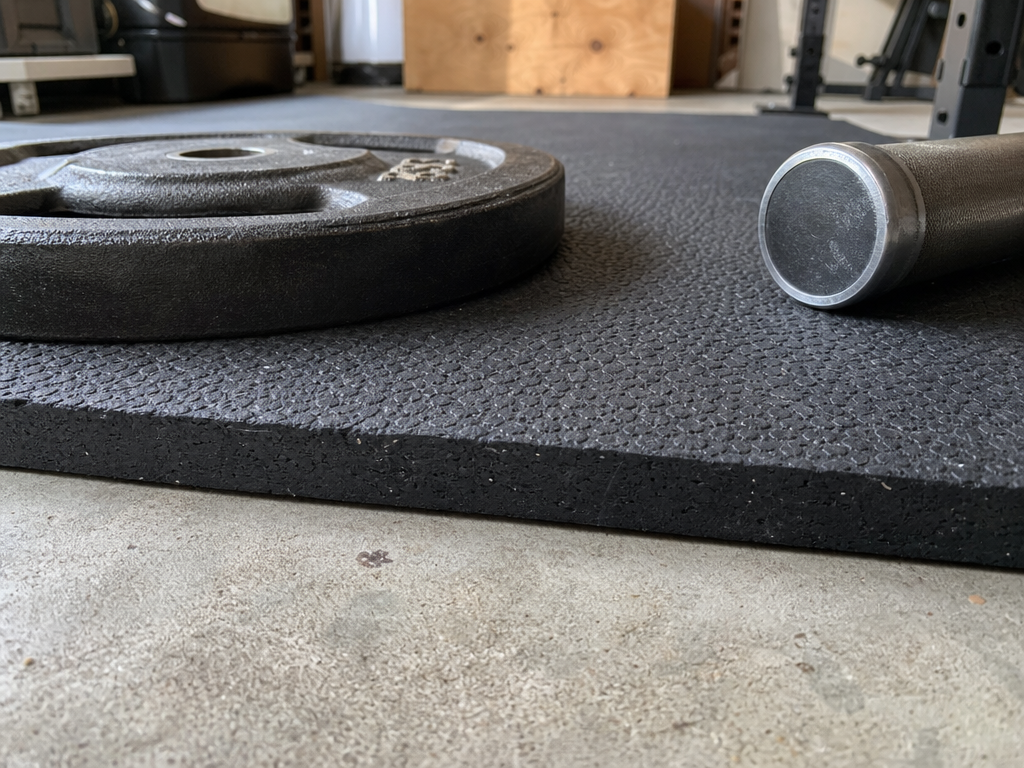
Horse Stall Mats: The Gold Standard
Horse stall mats from Tractor Supply or similar farm supply stores are the most recommended flooring option for garage gyms. At roughly $45 per 4x6-foot mat, they are affordable, extremely durable, and heavy enough to stay in place without adhesive. The 3/4-inch thickness is sufficient to absorb dropped barbells and protect the concrete slab.
Multiple sources confirm that 1/2-inch mats are insufficient for dropping weights. If you plan to do Olympic lifts, deadlifts, or any movement where the bar leaves your hands, 3/4-inch is the minimum thickness. For lighter use — dumbbell work, bodyweight training, or cardio — 1/2-inch mats may suffice, but the price difference is small enough that 3/4-inch is the safer choice.
Alternatives to Horse Stall Mats
| Flooring Type | Cost per Sq Ft | Thickness Options | Best For |
|---|---|---|---|
| Horse stall mats | ~$2.00 | 3/4 inch | Dropping weights, heavy lifting, durability |
| Interlocking rubber tiles | ~$3.00 - $5.00 | 1/2 to 3/4 inch | Lighter use, easier installation, modular layout |
| Rolled rubber flooring | ~$2.50 - $4.00 | 1/4 to 1/2 inch | Seamless coverage, lighter use, cardio zones |
For a detailed comparison of rubber versus foam flooring, see our Rubber vs. Foam Gym Flooring guide.
Electrical: What Your Garage Can (and Can’t) Handle
Most garage outlets are 15-amp circuits shared with other rooms in the house. That's fine for a radio and a fan, but it's not enough for a treadmill, an air bike, or a space heater running simultaneously. A treadmill can draw 10 to 15 amps on its own. Add a space heater pulling 12.5 amps, and the circuit breaker trips.
What Each Piece of Equipment Needs
| Equipment | Typical Amp Draw | Recommended Circuit |
|---|---|---|
| Treadmill | 10 - 15 amps | Dedicated 20-amp circuit |
| Air bike / fan bike | 8 - 12 amps | Dedicated 20-amp circuit |
| Space heater (1,500W) | 12.5 amps | Dedicated 15-amp circuit or shared with low-draw items |
| Mini-split heat pump | Varies (220V) | Dedicated 220V circuit |
| LED lights, fan, phone charger | Under 5 amps combined | Existing 15-amp shared circuit |
If you plan to run a treadmill or air bike, budget for a dedicated 20-amp circuit. This typically costs $200 to $500 to install, depending on the distance from the breaker panel and whether the garage is finished. For a mini-split heat pump, you'll need a 220V circuit, which adds another $300 to $800 to the installation cost.
Space Optimization: Making It Work with Your Car
The defining constraint of a garage gym is that it's still a garage. If you need to park a car in the same space, every piece of equipment must be chosen with coexistence in mind. This is where folding racks and vertical storage become essential.
Folding Racks for Parking Coexistence
Two folding racks dominate the market for shared garages. The PRx Profile PRO starts at $1,099 and folds to just 4 inches off the wall when not in use. It has a 1,000-pound weight capacity and is designed for CrossFit-style training. The Rogue RML-3WC Fold Back Wall Mount Rack costs $895 and uses a rotating hinge system that folds the rack flat against the wall. Rogue describes it as likely its best-selling squat rack, precisely because it solves the parking problem.
Both racks allow you to park a car in the garage while keeping a full barbell setup available. The trade-off is that they require wall mounting into studs, which means you need a wall with adequate structural support.
Vertical Storage Solutions
When floor space is at a premium, go vertical. Wall Control pegboard systems are a popular choice for storing bands, jump ropes, and small accessories. Plate trees keep weight plates organized and off the floor. Vertical bar storage racks hold multiple barbells against the wall. These solutions cost $50 to $200 and reclaim significant floor area.
For a deeper dive into layout strategies and equipment selection for shared garages, see our Garage Workout Equipment for Small Spaces guide.
A Phased Approach: What to Address First
Not everything needs to happen on day one. A phased approach lets you spread the cost and effort while ensuring the most critical factors are addressed before equipment arrives.
Phase 1: Before You Buy Equipment
- Insulate the garage door and walls. This is the single highest-ROI step and should be done before any equipment purchase.
- Apply a vapor barrier sealant to the concrete floor if moisture is a concern.
- Install a dedicated 20-amp circuit if you plan to use cardio equipment or a space heater.
- Measure your space and plan your layout, including parking requirements.
Phase 2: With Your First Equipment Purchase
- Buy 3/4-inch horse stall mats and lay them down before any heavy equipment arrives.
- Purchase a dehumidifier if you live in a humid climate.
- Buy a barbell maintenance kit and establish a cleaning routine.
Phase 3: As Your Gym Grows
- Add a mini-split heat pump or upgrade your heating/cooling setup.
- Install vertical storage solutions as you accumulate more equipment.
- Consider a folding rack if you need to reclaim parking space.
Some links on this page are affiliate links — they may earn us a commission at no extra cost to you. Our tier and tests are decided before we ever check which links pay; see our full affiliate disclosure.
Spot something off?
Noise and floor-damage claims carry real deposit-risk consequences if we get them wrong — tell us if your experience with this build didn't match what's above.