
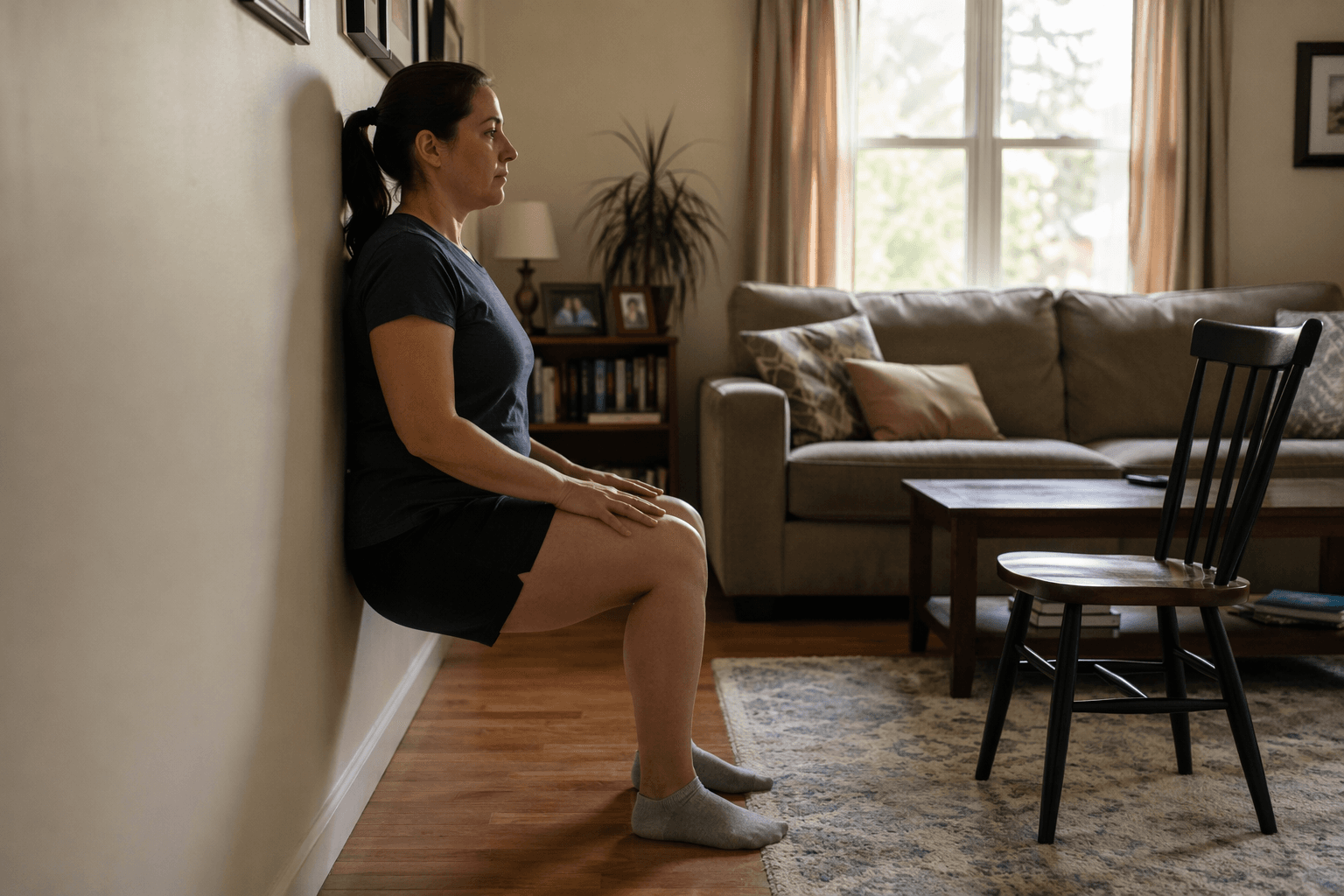
The 7-minute workout works—but not for the reason most articles tell you. It is not a physiological shortcut; it is a habit-formation tool. The evidence is in the gap between what people say and what they do.
A 2025 survey of 2,000 American adults found that 48% say they are too busy to exercise. The same survey found that 79% feel happier when they stick to a routine. The numbers are self-reported, but the gap is still telling: people want the outcome but cannot get started. The barrier is not motivation—it is initiation.
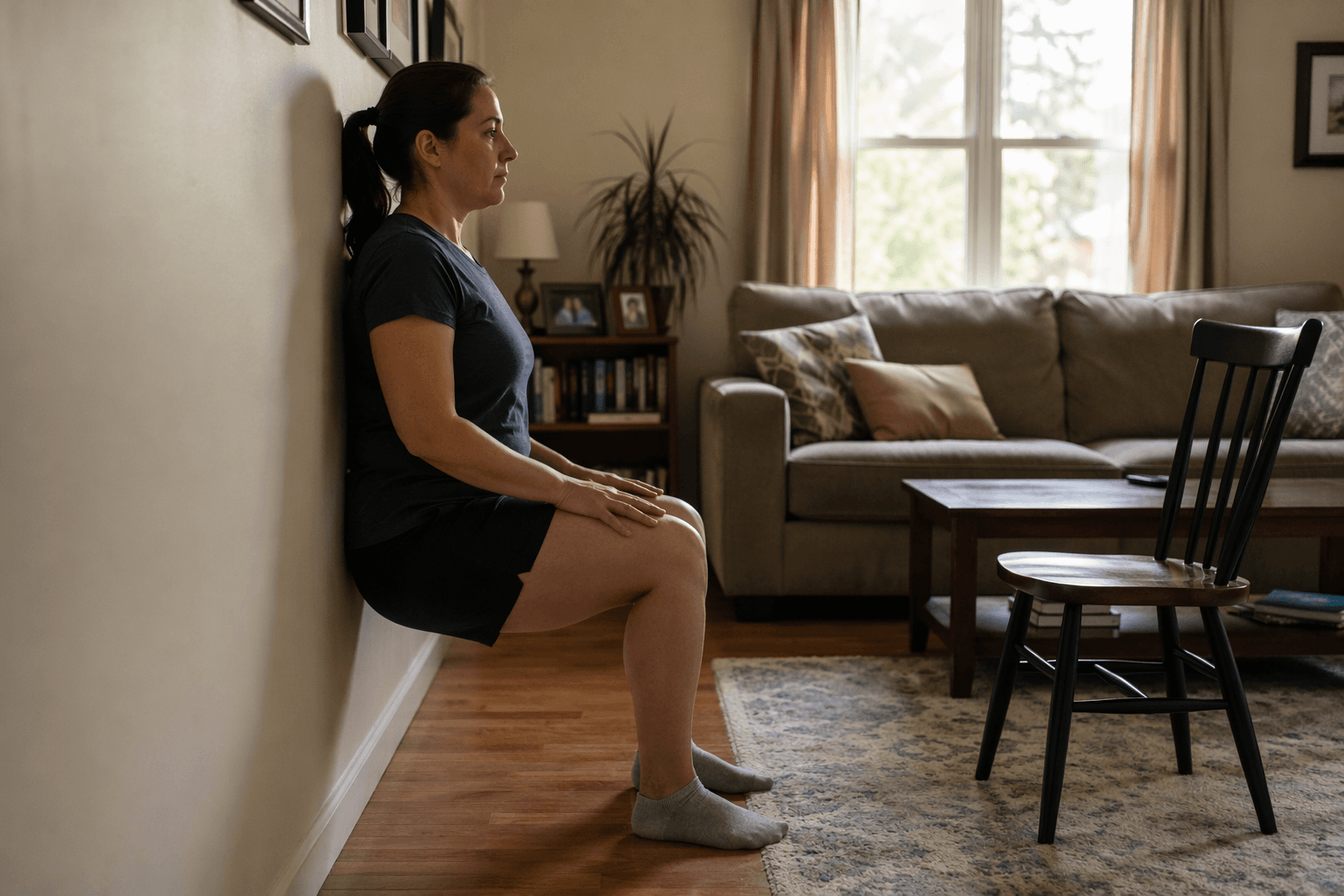
What stops a beginner is not the effort—it is the pile of small decisions: which workout, how long, what form, what if I am too sore tomorrow. The 7-minute workout removes three of those barriers at once. Time: seven minutes is shorter than the average commute. Intimidation: Chris Jordan, who co‑designed the program, says what matters is "your perception of an eight" on a one‑to‑ten scale. A beginner who goes at 80% of their capacity gets the same relative stimulus as an athlete. No one is judging because the scale is personal. Decision fatigue: the same twelve exercises, same order, same timing, every day. You never stand in front of a blank calendar wondering what to do.
“Your perception of an eight.” — Chris Jordan, quoted in The Washington Post, 2025
That self‑customization is the psychological key. The workout looks the same on paper for everyone, but the experience adapts. A beginner can do shallow lunges and slow push‑ups. A fitter person goes deeper, faster. Both obey the same instruction: work at an eight.
A 2023 study by Poon et al. published in the Journal of Sports Sciences had sedentary adults do the 7‑minute bodyweight circuit, moderate cycling, and traditional HIIT. The participants rated the 7‑minute workout as more enjoyable and less boring. All three raised heart rates enough to improve fitness. I do not buy the inference that enjoyment guarantees long‑term adherence—but it is a far better starting point than dread.
But don’t stop at one circuit
Here is where most articles mislead. The original 2013 ACSM paper (Klika & Jordan) specifies that the 7‑minute circuit is meant to be repeated 2–3 times—a total of 14–21 minutes. A single seven‑minute pass is an exercise snack, not the full meal. The Cleveland Clinic says the same thing: one circuit is a start, not the finish. If you think "I've done my workout" after exactly one circuit, you are missing the intended dose.
That does not make the single circuit worthless. It means the 7‑minute workout is a habit‑formation tool, not a permanent solution. Use it to build the practice of daily movement, then expand when the habit is firm.
How to build the habit
The progression is simple, and it mirrors the principle of starting small:
- Week 1–2: Do one circuit every day. Rest days can be a brisk 10‑minute walk. Focus on showing up.
- Week 3–4: Add a second circuit after a one‑minute water break. Total time: 15 minutes. Intensity stays at your perception of eight.
- Week 5 onwards: If both circuits feel manageable, diversify. Try a 20‑minute dumbbell routine, a bodyweight finisher, or swap in a low‑impact variant. The 7‑minute circuit remains your fallback for busy days.
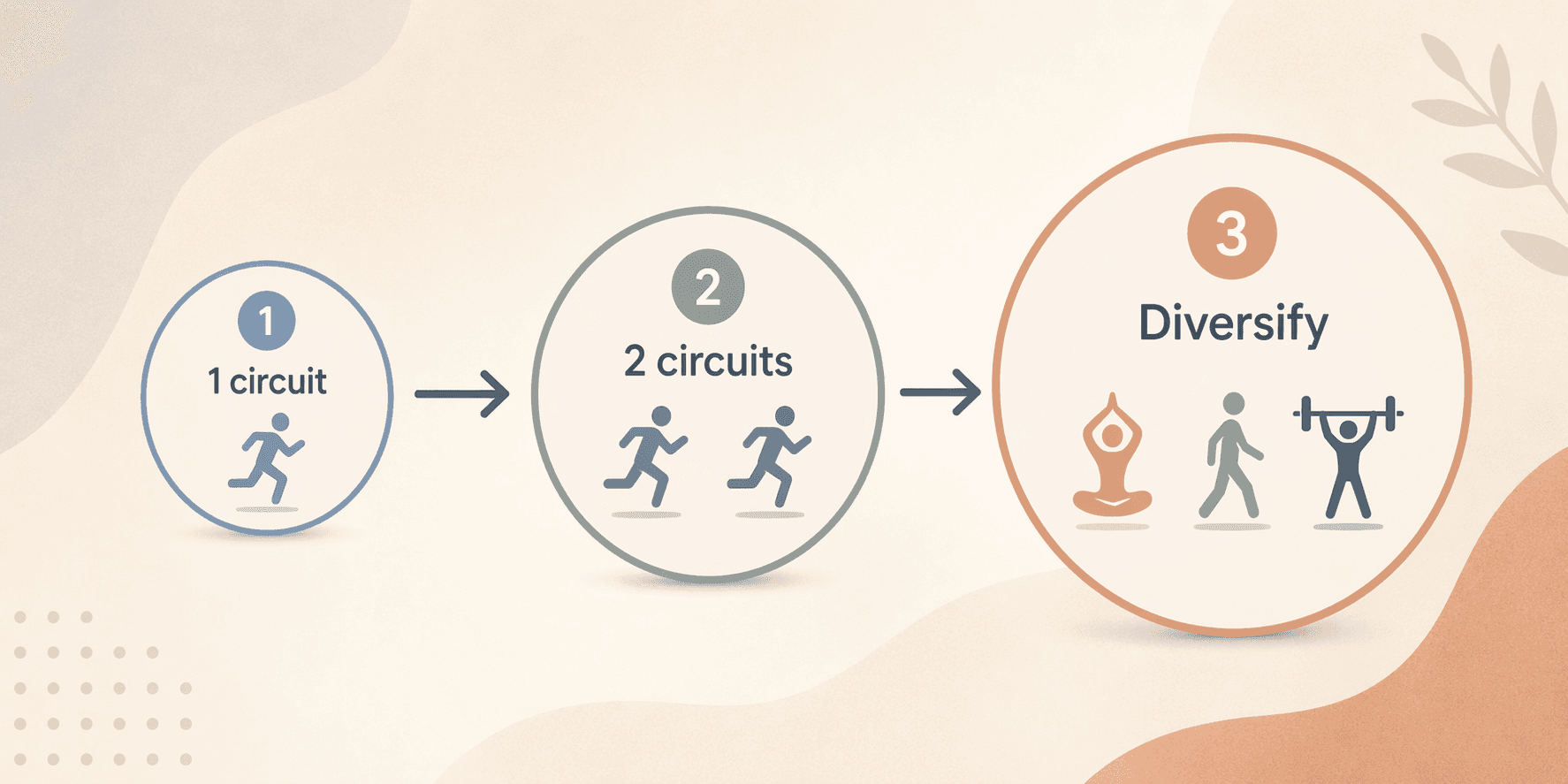
The danger is getting stuck at one circuit for months. When the single circuit stops feeling like a challenge—when you can complete it without breathing hard—it is time to move. Not because seven minutes is bad, but because progress requires progressive overload. A habit that stays too easy becomes maintenance, not growth.
When to move on
If you can complete a full circuit without feeling like you are working at an eight, you are ready to progress. If you are consistently doing two circuits and still feel fresh, add a third, or replace one with a different routine. The goal is not to stay at seven minutes; the goal is to use seven minutes as the foundation of a consistent practice.
The 7‑minute workout is not a magic pill. It will not transform your physique in a month. What it can do is build the one thing that makes every other workout possible: a consistent habit. That is its real value. Not the calorie burn, not the VO₂ bump, not the muscle pump. Once you are in the habit of moving daily, you can walk through to whatever comes next. The 7‑minute circuit is the cheapest, most effective key I have found for that door.
Comments
Join the discussion with an anonymous comment.